

Every Cyber Fraud Starts with Trust
Every time I read about cyber fraud, I wonder how many people still believe, “This won’t happen to me.” The reality is that scams no longer target only the elderly or the technologically unaware. They target anyone.
This recent case from Bengaluru is a perfect example. A 28-year-old woman was trying to apply for a home loan. She entered her details on what appeared to be a legitimate website but never completed the application.
Months later, she began receiving WhatsApp calls from international numbers. The scammers falsely claimed she had taken loans through apps such as Fibe, Tejas, and Rupee Redee, demanding repayment through another app while threatening legal action and even circulating morphed images if she refused.
The result? She reportedly lost nearly ₹48.5 lakh.
What’s alarming isn’t just the amount. It’s how convincing these scams have become.
Modern cyber fraud rarely begins with sophisticated hacking. It often starts with trust. Criminals invest time in creating convincing websites, professional communication, and believable stories because manipulating human behavior is usually easier than breaking advanced security systems. That makes awareness one of the most valuable forms of protection.
Why Modern Cyber Fraud Is More Dangerous Than Ever
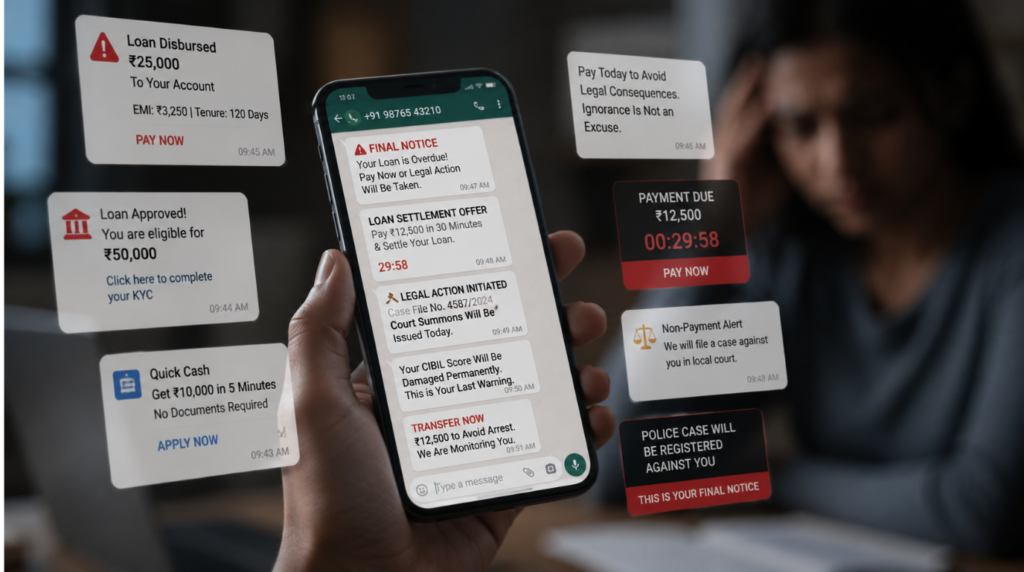
Today’s cybercriminals don’t rely only on hacking. They rely on psychology by creating urgency and fear. They make victims believe they have no choice but to comply.
As marketers, we often discuss customer journeys and trust-building. Ironically, fraudsters are becoming experts at both.
They understand how to build credibility through professional-looking websites, convincing messages, fake customer support, and relentless follow-ups.
This is why digital literacy has become just as important as digital adoption.
Simple Habits That Can Prevent Cyber Fraud
Before entering personal information anywhere online, pause for a few seconds and ask yourself:
- Is this the official website or app?
- Did I search for it myself, or did I click on a random link?
- Why is someone asking for my Aadhaar, PAN, selfie, OTP, or banking details?
- Why is there so much urgency?
Those 30 seconds of verification can save years of financial stress.
Developing these small verification habits may seem inconvenient at first, but they dramatically reduce the likelihood of becoming a victim of cyber fraud.
A few extra seconds spent checking a website, confirming a phone number, or contacting an official customer support team can prevent months or even years of financial and emotional hardship.
The newspaper also highlighted a few simple habits everyone should follow:
- Apply for loans only through official bank websites or verified apps.
- Never click loan links received via SMS, WhatsApp, or social media.
- Never share OTPs, PINs, CVVs, Aadhaar, PAN, or internet banking credentials.
- Don’t install APK files received from unknown sources.
- Regularly monitor your bank statements for suspicious transactions.
- Keep your devices updated and install apps only from official app stores.

Why Cybersecurity Is Now a Life Skill
Technology isn’t becoming less secure. In many ways, it’s becoming more secure than ever. The weakest link is often human trust.
As AI makes scams more personalised and convincing, our strongest defence won’t be better passwords alone, but better awareness.
Cyber fraud will continue evolving as artificial intelligence makes scams more personalized, convincing, and difficult to detect. The technology behind these attacks will improve, but so can our ability to recognize warning signs. Digital awareness is becoming one of the most important skills every internet user can develop.
I believe cybersecurity is no longer an IT department’s responsibility. It’s a life skill that every internet user must develop.
My Take
Cyber fraud isn’t just a technology problem anymore. It’s a human problem. In today’s digital world, protecting your money starts with protecting your attention. Every click, every download, and every piece of personal information you share online deserves a moment of verification.
As AI continues to make scams more convincing, awareness will become one of the most valuable digital skills we can develop. Technology will keep evolving, but so will the people trying to exploit our trust. I believe cybersecurity is no longer just the responsibility of IT teams or banks. It’s a life skill that every internet user must learn.
The best defence isn’t fear. It’s the habit of slowing down, asking the right questions, and verifying before you trust.
Looking for your next impactful read? Check out our curated selection of reviews to find principles that can elevate your career and business strategy.