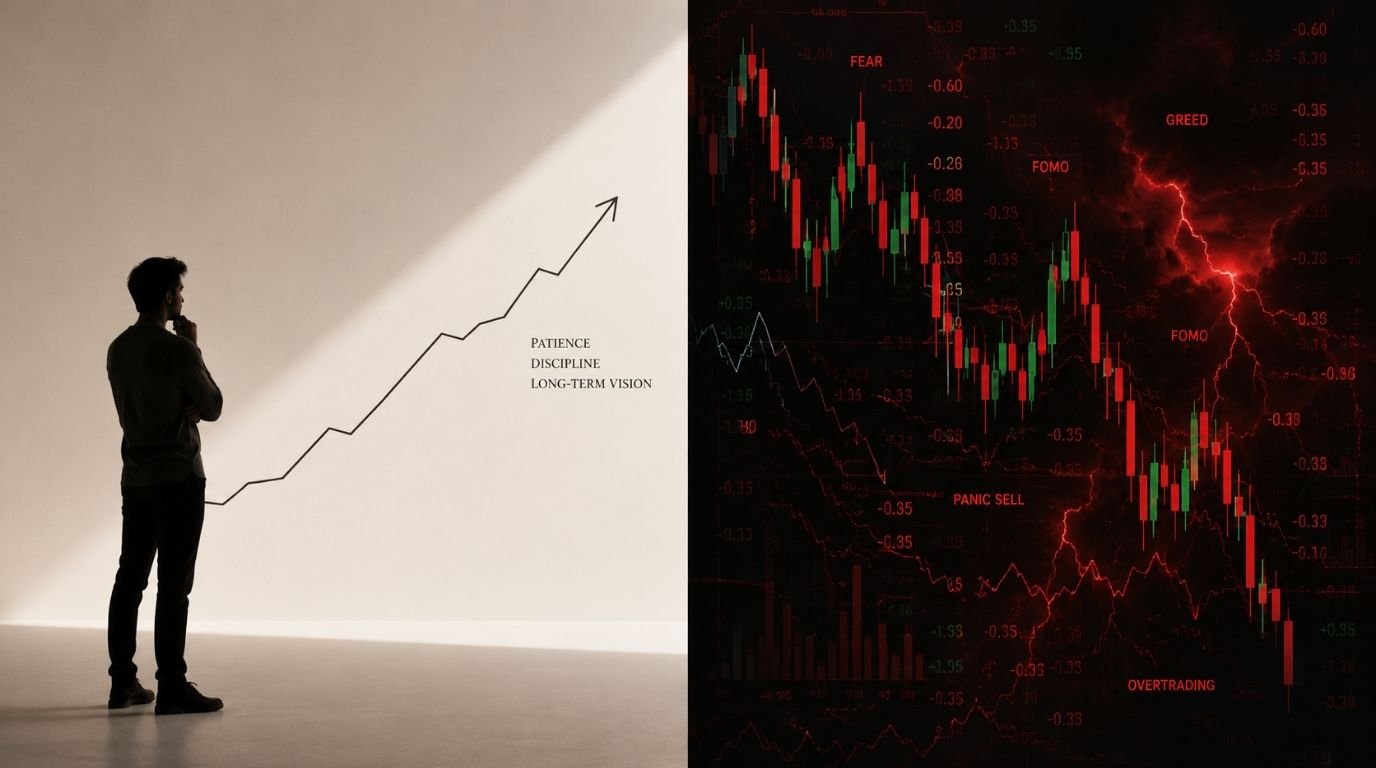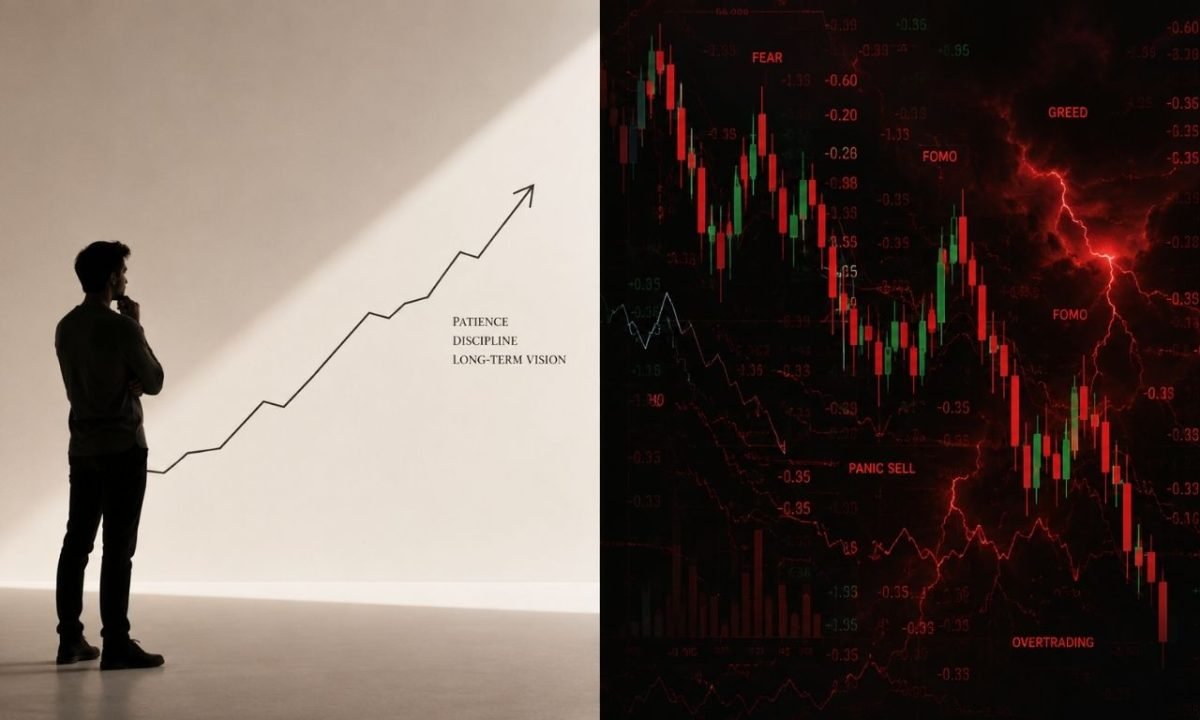

The Biggest Enemy of Investors Isn’t the Market. It’s Their Own Psychology.
Every investor knows the golden rule.
Buy low. Sell high.
Simple.
Yet, if you look at how most people actually invest, they end up doing the exact opposite.
They buy when everyone is talking about an asset.
They panic when prices fall.
They exit just before the recovery begins.
And then wonder why investing “doesn’t work.”
The reality is that the stock market isn’t usually beating investors.
Their own emotions are.
Performance Isn’t the Same as Investor Returns

One statistic from recent Bitcoin ETF data caught my attention.
While the ETFs themselves generated healthy positive returns, the average investor in those same funds actually lost money.
How is that even possible?
Because the fund’s performance measures what the investment did.
Investor performance measures what people did.
Those are two very different things.
People rushed in after prices had already risen.
Then they exited after the market corrected.
The investment performed well.
The investors didn’t.
FOMO Is One of the Costliest Investment Strategies
Every bull market creates the same headlines.
“This stock has doubled.”
“Bitcoin is at an all-time high.”
“AI stocks are unstoppable.”
The fear of missing out is incredibly powerful.
Instead of asking whether something is fairly valued, people ask only one question:
“What if it keeps going up without me?”
That single thought has probably destroyed more wealth than bad companies ever have.
The Market Rewards Patience, Not Excitement
The irony is that successful investing is often boring.
It doesn’t involve checking prices every hour.
It doesn’t involve chasing trending sectors every month.
And it certainly doesn’t involve making decisions based on social media excitement.
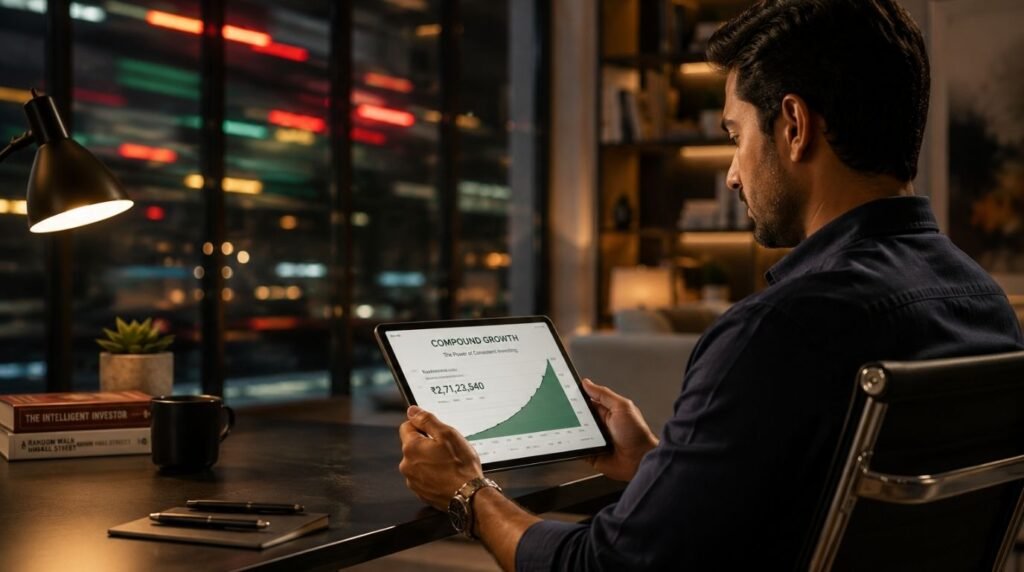
Compounding rewards consistency far more than adrenaline.
Unfortunately, our brains are wired for the opposite.
We seek action.
Markets reward patience.
The Marketing Lesson
As marketers, we understand the psychology of urgency.
Limited-time offers.
Trending products.
Scarcity.
Social proof.
All of these influence buying decisions.
Financial markets work in a similar way.
When everyone is buying something, the excitement itself becomes the marketing campaign.
The problem is that hype isn’t the same as value.
The smartest investors learn to separate the two.
My Take
I’ve realised that investing is less about understanding companies and more about understanding yourself.
Can you stay calm when everyone else is panicking?
Can you avoid chasing returns simply because everyone around you is making money?
Can you stick to a long-term plan when short-term headlines are screaming for your attention?
The market isn’t testing your intelligence.
It’s testing your discipline.
And in the long run, discipline usually beats excitement.
That’s why the biggest investment decision you’ll ever make isn’t choosing the right stock.
It’s choosing not to let your emotions make the decision for you.
Looking for your next impactful read? Check out our curated selection of reviews to find principles that can elevate your career and business strategy.