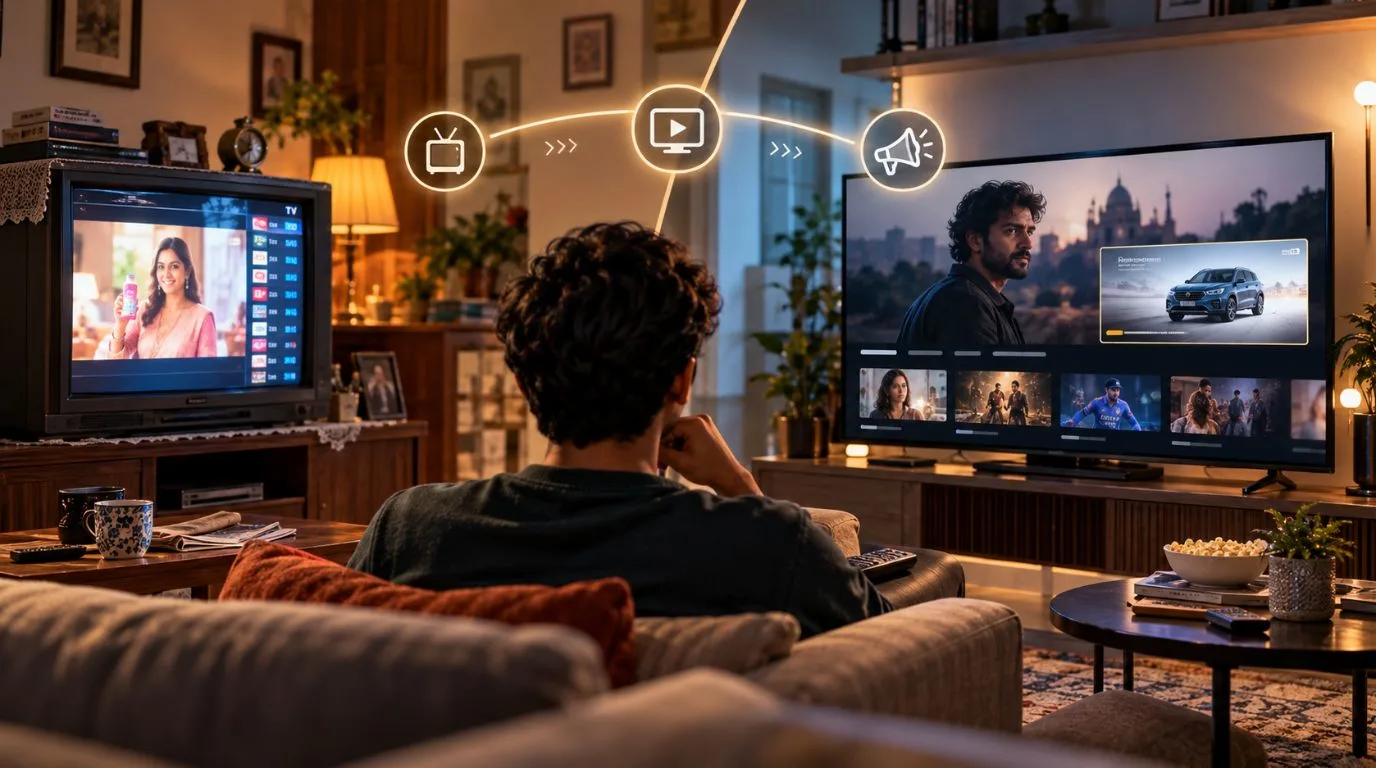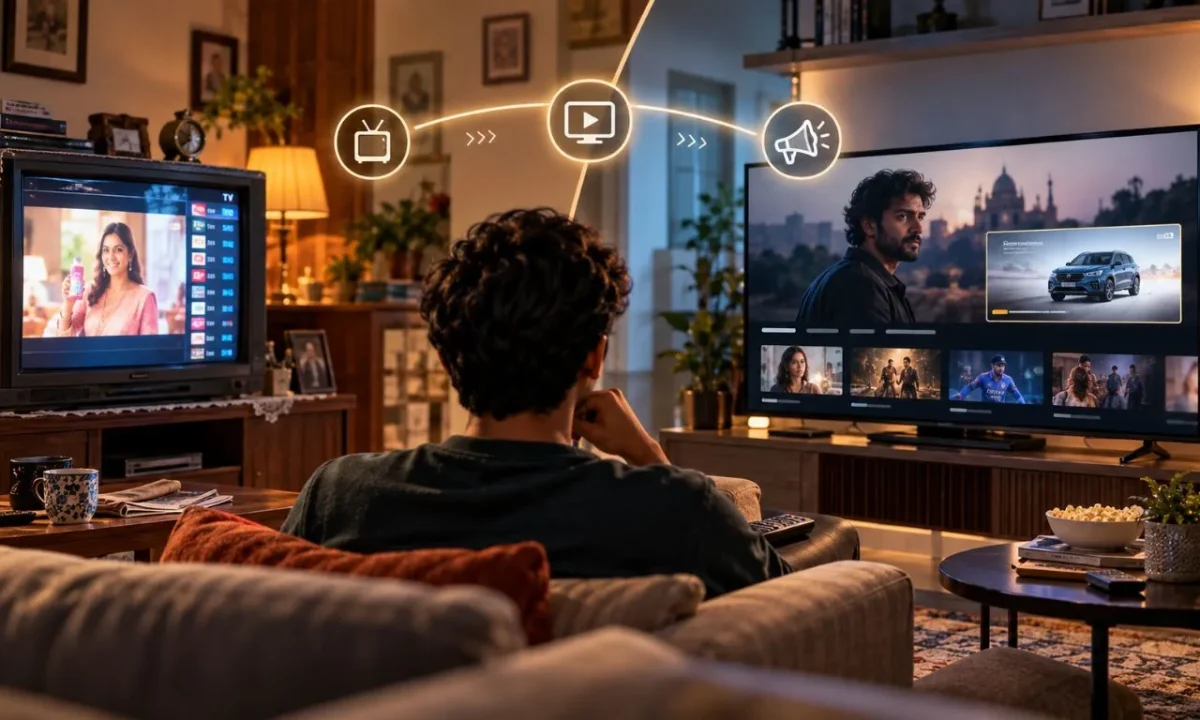

For years, one of the biggest reasons Indians moved from cable television to streaming was the desire for control. Cable came with fixed schedules, endless channels, and advertising interruptions. OTT promised something different: choose what you want, watch when you want, and leave the old television model behind.
But streaming platforms have discovered something television companies learned long ago. Advertising is too valuable to ignore.
That creates an uncomfortable question for the OTT advertising industry: if streaming starts filling the viewing experience with the same interruptions consumers once escaped, what exactly makes it different from cable?
What Happened?
The shift is already visible across India’s streaming market, although not every platform or subscription tier follows the same model.
JioHotstar, for example, currently offers three subscription tiers for new subscribers. Its Mobile and Super plans are ad-supported, while Premium is positioned as ad-free entertainment except for live sports and other live shows. The current Premium plans start at ₹299 per month, with quarterly and annual options also available.
At the same time, JioHotstar has built a substantial advertising business around streaming.
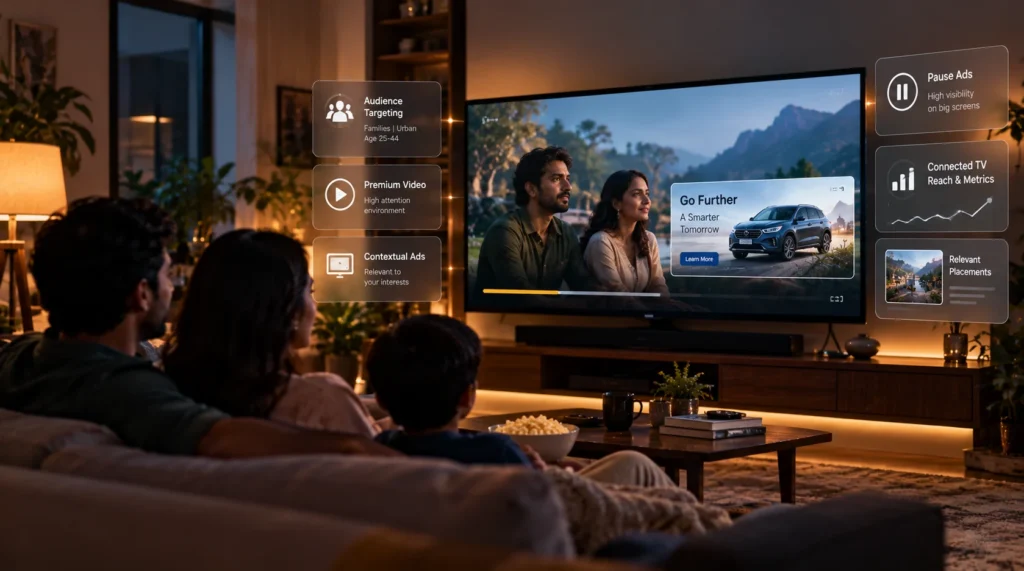
Its advertising platform offers non-skippable pre-roll and mid-roll video formats, with pre-roll available on both mobile and connected TV. JioHotstar also promotes a growing connected-TV advertising ecosystem with formats such as pause ads, CTV billboards, and contextual advertising.
So this isn’t simply a case of streaming services accidentally becoming more commercial.
OTT Advertising is becoming part of the streaming business model by design.
Why It Matters?
The interesting part isn’t that OTT platforms show ads. Advertising has always been one of the ways digital content gets funded.
The bigger issue is what happens when the advertising experience starts competing with the reason people subscribed in the first place.
Streaming changed consumer expectations around television. Viewers became accustomed to choosing their content, pausing it, skipping around, and watching on their own schedule. That created a new definition of convenience.
Now advertisers are increasingly following viewers onto connected TVs and streaming platforms because those screens offer something traditional digital advertising cannot easily replicate: a large screen, premium video content, and an engaged viewing environment.
JioHotstar itself says its connected-TV offering reaches more than 50 million active CTV users and accounts for 40% of India’s watch time, according to its CTV advertising playbook. JioHotstar Connected TV Playbook
For advertisers, that is difficult inventory to ignore. For viewers, however, every additional advertising opportunity creates another potential interruption. And that is where OTT has to be careful.
What Businesses and Marketers Need to Know
The first lesson is that more advertising inventory does not automatically mean better advertising. A viewer who is fully engaged with a film or series can be valuable to an advertiser. But that attention can disappear quickly if the interruption becomes frustrating.
The second is that connected TV is becoming a serious advertising channel.
JioHotstar is already developing formats specifically for the television screen, including pause ads, contextual formats, and other CTV placements. Its own advertising material positions CTV as a high-attention environment for brands. JioHotstar Connected TV Playbook
The third is that the OTT advertising experience is becoming part of the brand experience.
A consumer may not remember the advertiser as the company that interrupted their programme. They may simply remember being annoyed. That makes frequency, placement, creative quality and context increasingly important.
The fourth is that subscription models can create different expectations. Someone using an ad-supported plan has accepted advertising as part of the exchange. Someone paying specifically for a premium, ad-free experience has a different expectation.
That distinction matters.
The Number That Matters
450 million.
That’s the scale JioHotstar reported in January 2026, when it said the platform had more than 450 million monthly active users across India, alongside more than 300,000 hours of entertainment. Jiostar
That number explains why the advertising opportunity is so significant.
JioHotstar isn’t simply another streaming app selling a few video placements. At that scale, even small changes in OTT advertising strategy can create a substantial advertising ecosystem.
It also explains why connected TV matters.
The living-room screen is no longer just a place where people consume television. It is becoming another measurable digital advertising environment.
What Happens Next?
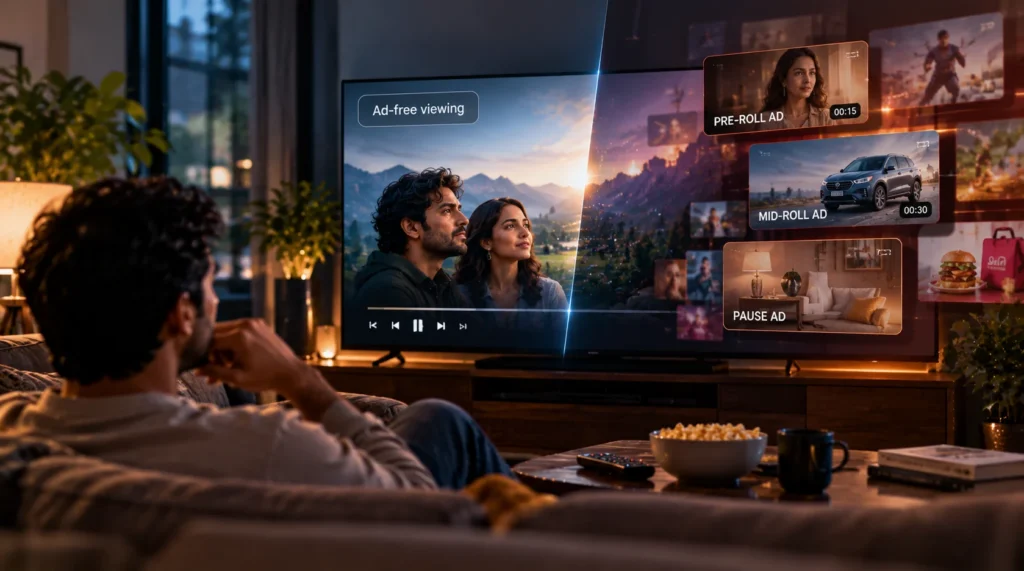
The next development to watch isn’t whether OTT platforms will use advertising. They already do.
The bigger question is how much advertising viewers will tolerate before the experience starts influencing their platform choices.
There is also likely to be a clearer separation between different subscription propositions. Some viewers will accept lower prices in exchange for OTT advertising. Others will pay more to reduce or remove interruptions.
Netflix offers an interesting contrast.
Its current India website continues to market Netflix around watching without ads, with plans ranging from ₹149 to ₹649 per month. Netflix
Globally, however, Netflix does have an ad-supported experience in markets where it is available, showing commercial breaks during most TV shows and movies. Netflix Help Center
That makes the broader industry direction clear.
Advertising isn’t disappearing from streaming. The real question is how platforms balance advertising revenue with the experience that made people leave traditional television behind.
DMT Take on OTT Advertising
The streaming industry’s biggest mistake would be to assume that viewers moved from cable to OTT simply because they wanted more content.
They also wanted less friction. They wanted control over when they watched, what they watched, and how they watched it.
Advertising doesn’t automatically destroy that experience. But excessive or poorly placed advertising can.
For marketers, the opportunity is enormous. Connected TV offers premium screens, video storytelling, targeting, and increasingly sophisticated advertising formats. JioHotstar is clearly building toward that future. Jiostar
But there is a limit to how much attention can be extracted from a viewer before the viewer starts protecting it. That could make respect for the viewing experience itself a competitive advantage.
Netflix’s current positioning in India is a useful example. Its website still sells the simplicity of watching without ads. Netflix
The irony is hard to miss.
Consumers left cable television partly because they were tired of advertising interruptions. Now streaming platforms are discovering just how valuable those interruptions can be.
The winner may not be the platform with the most ads, the most content, or even the biggest catalogue. It may be the platform that figures out how to monetise attention without making viewers regret giving it.
Sources
- JioStar, JioHotstar subscription plans and OTT advertising experience. Jiostar
- JioHotstar OTT advertising FAQ and pre-roll/mid-roll specifications. Hotstar Ads
- JioHotstar OTT advertising formats. Hotstar Ads
- JioHotstar Connected TV Playbook. JioHotstar Connected TV Playbook
- Netflix India plans and current viewing proposition. Netflix
- Netflix Help Center, ad-supported experiences.