
The Starlink India launch has become a major talking point in the country’s evolving internet market, where global tech ambitions meet established telecom power. SpaceX’s Starlink wants to enter a market dominated by players such as Reliance Jio and Bharti Airtel, raising questions about competition, spectrum allocation and the future of internet access.
However, the real story extends beyond two influential business figures. It concerns how India regulates emerging technologies, balances competing commercial interests and makes connectivity accessible to millions of people.
What Happened Between Musk and Ambani?
On October 7, 2026, Musk posted on X that unnamed “oligarchs” were blocking Starlink to protect their control over India’s internet market. The following day, K. T. Rama Rao challenged him to identify those responsible. Musk subsequently directed his criticism more pointedly at Ambani, sarcastically referring to him as “Prime Minister Ambani”.
The exchange brought renewed attention to Starlink’s delayed commercial entry into India. Yet Musk’s allegations do not establish that Ambani or Reliance Jio improperly obstructed the company.
Indian officials have maintained that satellite internet providers must meet applicable regulatory, spectrum and security requirements. The important question is whether these requirements are transparent, consistently applied and proportionate to the services being offered.
Public accusations might attract attention, but only evidence and regulatory decisions can establish whether unfair treatment has occurred.
Starlink India Launch: Why Entry Is Complicated
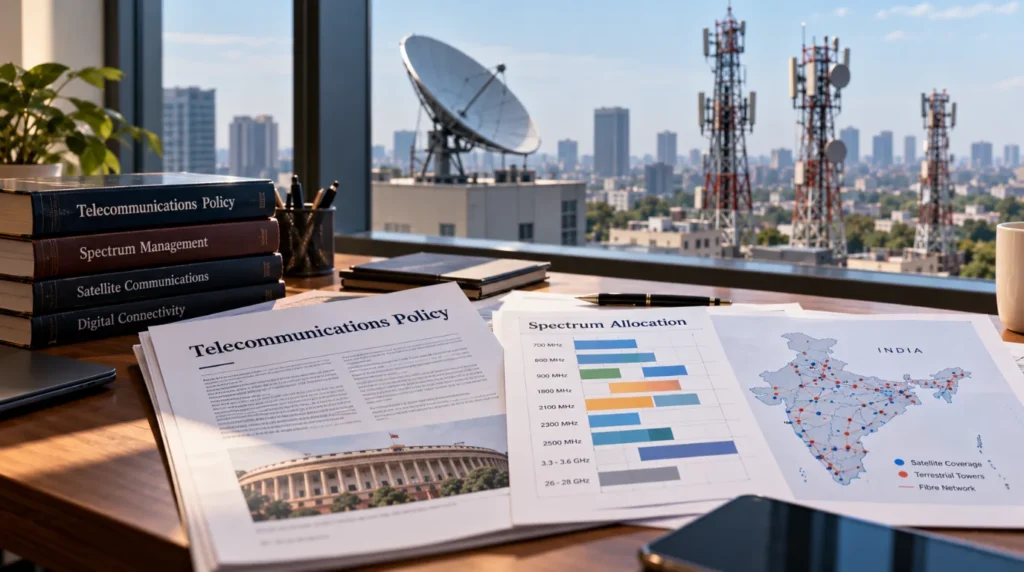
India represents a significant opportunity for satellite broadband. Its vast geography includes remote communities, industrial locations and regions where conventional internet infrastructure remains expensive to establish.
Unlike fibre broadband, satellite internet can deliver connectivity without requiring extensive ground infrastructure at every customer location. However, providers still need regulatory authorisations, spectrum access, security clearances, local distribution and a commercially viable pricing strategy.
Receiving preliminary approvals does not automatically mean a company can begin commercial operations nationwide.
This distinction matters because Starlink’s entry depends on completing the relevant regulatory processes, not simply deploying satellites or announcing partnerships. Its success will ultimately depend on whether it can translate its technology into an accessible and reliable service for Indian customers.
The Spectrum Debate: Competition or Fairness?
Spectrum is a limited public resource that enables wireless communication. How it is assigned affects the costs, operating conditions and competitive position of telecommunications providers.
Traditional telecom operators have invested heavily in infrastructure and spectrum. They argue that satellite providers should operate under rules that account for competitive fairness. Satellite companies, meanwhile, need workable access conditions to introduce and expand their services.
India’s Telecommunications Act, 2023, provides a framework for administrative spectrum assignment for specified uses, including relevant satellite services. The debate concerns how those provisions are implemented, what charges apply and whether the resulting framework supports fair competition.
The issue is not simply whether auctions or administrative allocation are inherently better. Policymakers must consider the differences between terrestrial and satellite networks while avoiding rules that unnecessarily favour established players or new entrants.
A transparent framework would benefit companies, investors and customers alike by reducing uncertainty around market entry.
The Twist: Jio and Airtel Are Also Starlink Partners
One detail complicates the narrative of a straightforward Musk-versus-Ambani rivalry.
In March 2025, Reliance Jio announced an agreement to explore bringing Starlink services to Indian customers through its retail and online channels. Bharti Airtel announced a similar agreement with SpaceX the previous day. Both arrangements were conditional on the necessary authorisations.
These partnerships demonstrate that competition and collaboration can coexist.
Jio and Airtel could use satellite connectivity to expand their service offerings while drawing on their existing distribution networks and customer relationships. SpaceX, in turn, could benefit from local market knowledge, established retail channels and customer support capabilities.
Their interests will not always align. Satellite services could compete with existing broadband products in certain markets, creating commercial tensions even between partners. Nevertheless, these agreements reveal a more complicated business reality than the public confrontation suggests. Companies can compete in one segment while collaborating in another.

Why Satellite Internet Matters for India
Satellite broadband could help connect remote communities, industrial sites, transport operations and businesses that require reliable communications beyond the reach of conventional networks. It may also serve as a backup connection for organisations that cannot afford prolonged internet outages.
However, satellite internet is not automatically superior to fibre or mobile broadband. In areas with established infrastructure, conventional services may offer better economics or more suitable performance. Pricing will therefore be critical. Equipment costs, recurring subscriptions, coverage and reliability will determine whether satellite connectivity becomes a practical option for Indian households and businesses.
Deloitte has projected that India’s satellite broadband market could reach $1.9 billion by 2030. This forecast highlights the opportunity but does not guarantee future revenue. Actual growth will depend on regulatory decisions, customer demand, competition and commercial affordability.
What Businesses and Marketers Should Watch
The Starlink debate offers three lessons for businesses.
- First, emerging technology creates opportunities unevenly. Companies should evaluate satellite broadband alongside fibre, fixed wireless and mobile networks according to their location, requirements and total connectivity costs.
- Second, partnerships can be as important as innovation. SpaceX’s agreements with Jio and Airtel illustrate how distribution, local expertise and customer relationships can help a technology reach the market.
- Third, regulatory certainty influences business planning. Announced partnerships and preliminary approvals should never be confused with confirmed commercial availability. Businesses need to understand which milestones have been completed before making investment decisions.
These lessons extend beyond telecommunications. In any emerging market, technological capability alone does not guarantee adoption. Pricing, distribution, regulation and customer trust remain equally important.
DMT Take: The Real Contest Is Over Access
The underlying issue is how India wants its internet market to evolve. Musk’s allegations deserve scrutiny, but they are not proof of improper interference. Equally, regulatory decisions should be judged by their transparency, consistency and practical outcomes.
Jio and Airtel have already shown that working with SpaceX can make commercial sense, even as competition between connectivity providers continues. Ultimately, spectrum policy, regulatory certainty, affordable pricing and effective distribution will determine whether satellite internet becomes a meaningful alternative for Indian customers.
Starlink may help extend connectivity to underserved regions, complement existing networks and create new opportunities for businesses. But achieving that potential requires more than ambitious technology and public promises. India needs a framework that supports innovation, protects fair competition and gives customers access to reliable services at sustainable prices.
The real contest is not simply Musk versus Ambani. It is about who gets to build India’s next layer of internet infrastructure, under what rules and at what cost to the people who will use it.
Sources
- Confirms Jio’s proposed Starlink distribution arrangement. Jio official announcement: Agreement with SpaceX
- Confirms Airtel’s proposed collaboration.Airtel official announcement: Agreement with SpaceX
- Framework for satellite communication authorisation and spectrum assignment. TRAI
- Recent developments and Musk’s pricing comments. Reuters: Musk vows affordable Starlink in India