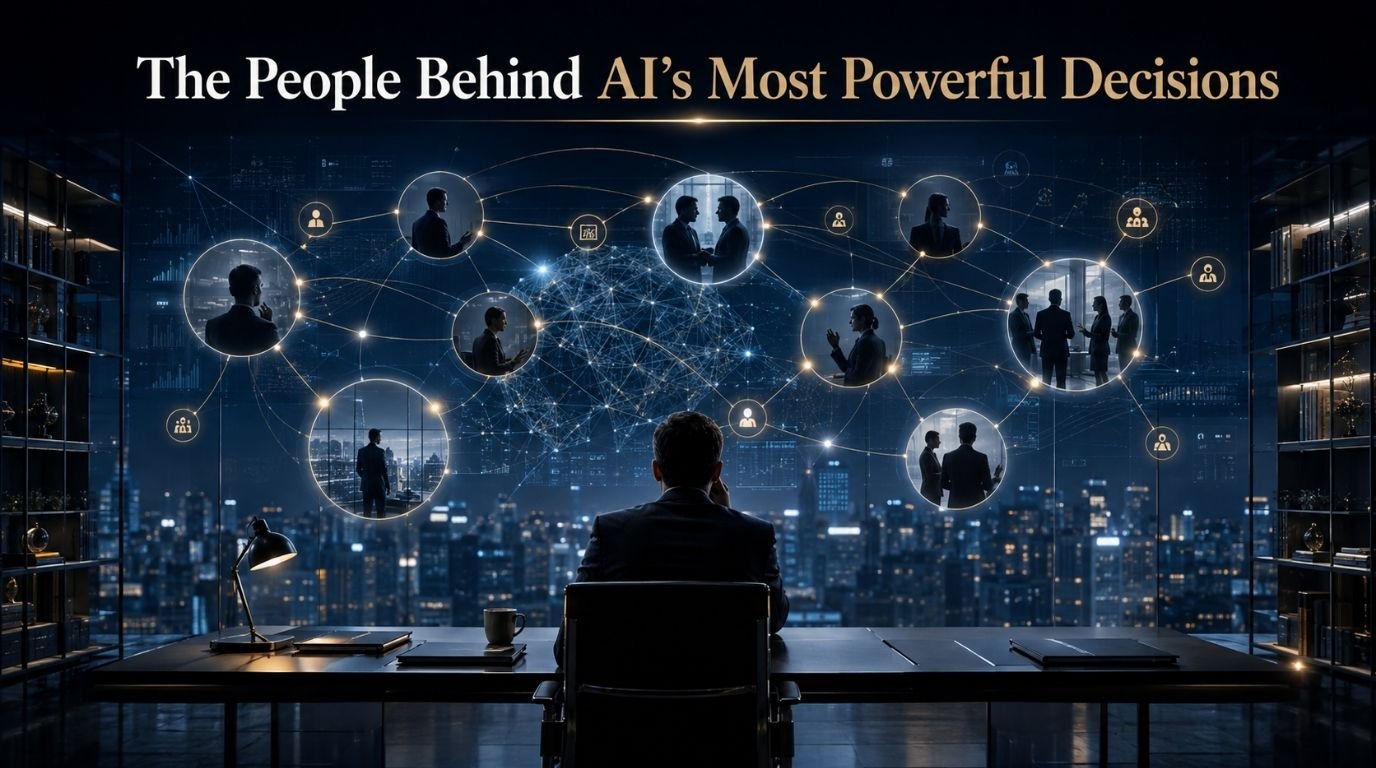
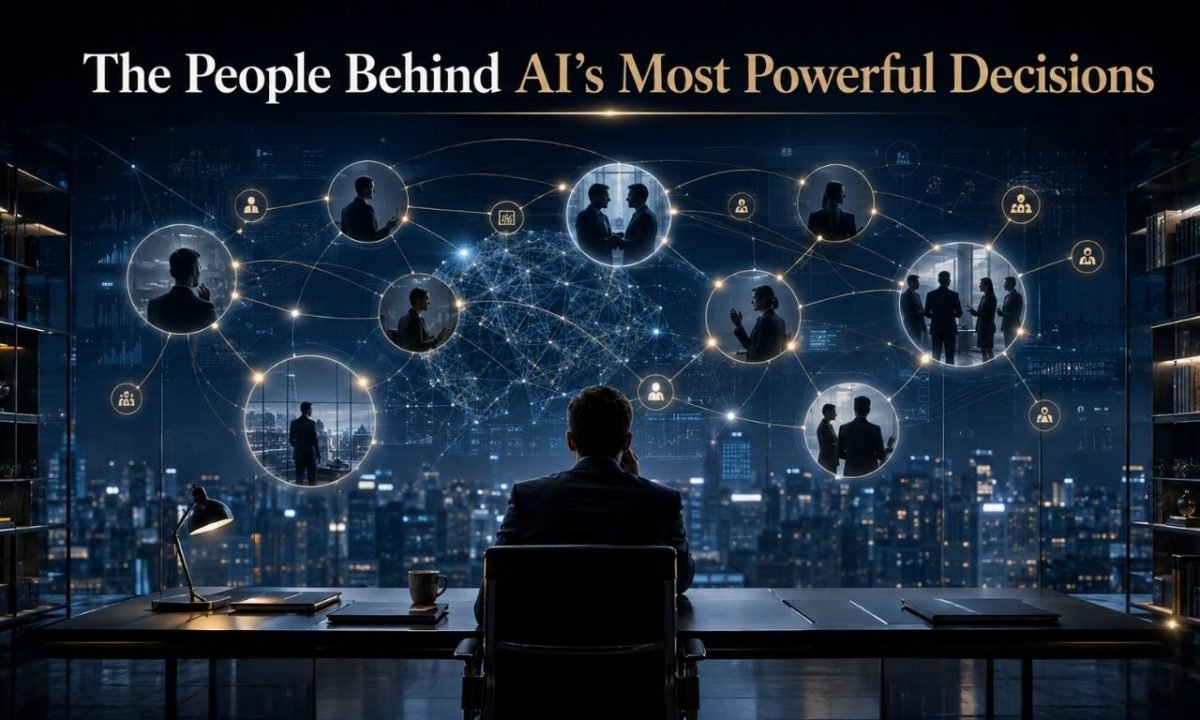

The People Behind AI’s Most Powerful Decisions
Theme: Influence, access and the hidden networks shaping the AI industry
There is something fascinating about the AI industry that goes beyond models, GPUs, valuations and billion-dollar funding rounds.
It is the people behind the people building AI.
A recent report about Anthropic CEO Dario Amodei and his wife, Cami Clark, caught my attention—not simply because of the personal angle, but because it raises a much bigger question:
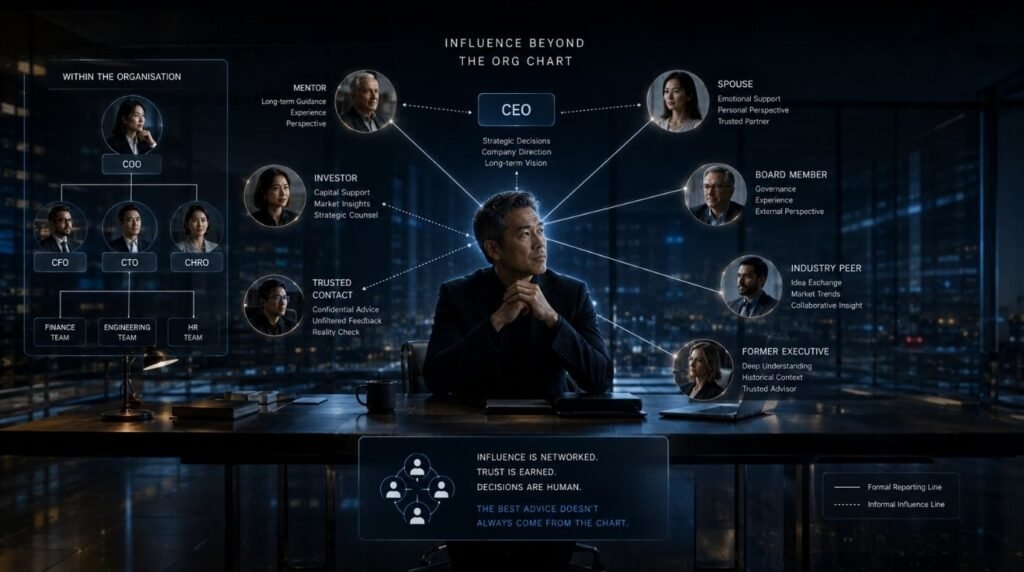
How much influence can exist around a technology company without appearing on its organisational chart?
According to the article shared above, Clark does not work at Anthropic, but is described as a sounding board and strategic adviser to Amodei. The report also says she helped introduce former Google CEO Eric Schmidt, who subsequently became an investor in Anthropic.
That, to me, is where the story becomes much more interesting than the headline.
Influence doesn’t always come with a job title
We have traditionally understood corporate influence through designations.
CEO.
CTO.
Board member.
Investor.
Advisor.
Employee.
But the modern technology ecosystem doesn’t always work that neatly.
A founder’s spouse, close friend, former colleague, investor, mentor or informal adviser can potentially influence thinking, introductions and relationships without holding an official position inside the company.
And I think this is becoming particularly relevant in AI.
The industry is moving at extraordinary speed. Companies are making decisions about partnerships, investments, talent, regulation, product direction and capital allocation while operating in an environment where there is very little historical precedent.
In such an environment, who gets access to the decision-maker can sometimes be almost as important as what their official designation says.
Silicon Valley has always been about networks
This isn’t necessarily new.
Technology has always been built around networks.
Founders introduce founders.
Investors introduce investors.
Executives move between companies.
Former employees become advisors.
Early investors bring in other investors.
And personal relationships frequently become professional relationships.
What is different today is the scale of the companies involved.
Anthropic isn’t just another startup anymore. It sits at the centre of one of the most consequential technology races in the world.
That means informal influence becomes more interesting from a governance perspective.
When a company is worth billions—or potentially much more—the question isn’t simply who works there?
It is also:
Who has the ear of the people who make the decisions?
The uncomfortable part: influence is difficult to measure
This is where I think businesses need to be careful.
Formal roles are easy to document.
An employee has a job title.
A board member has a defined responsibility.
An investor has a disclosed financial interest.
But informal influence is much harder to quantify.
Someone may never attend a board meeting but still influence a conversation.
Someone may never sign a company document but introduce a critical investor.
Someone may not have an official advisory position but still become a trusted sounding board for a CEO.
None of this automatically means anything improper has happened.
And that distinction is important.
Influence is not the same thing as misconduct.
But when the decisions being influenced affect billions of dollars, major technological infrastructure and potentially millions of users, transparency becomes increasingly valuable.
AI companies need a new kind of transparency

I believe AI companies will eventually face much greater scrutiny around governance.
Not just:
Who owns the company?
Who sits on the board?
Who invested?
But also:
Who advises the leadership?
Who has meaningful access to decision-makers?
Who influences strategic decisions?
Who is connected to major investors?
And where are potential conflicts disclosed?
The reason this matters is simple.
AI isn’t remaining confined to the technology department.
It is influencing education, healthcare, advertising, employment, finance, defence, media and almost every other industry.
The decisions made by AI companies increasingly have consequences outside the companies themselves.
That makes governance more important than ever.
The marketing lesson is surprisingly relevant
As a marketer, I find this story particularly interesting because marketing has always operated through influence networks.
We talk about influencers.
Creators.
Brand ambassadors.
Industry experts.
Community leaders.
Advisors.
Key opinion leaders.
But we often focus on visible influence.
The person with the largest following.
The person with the biggest title.
The person whose name appears on the campaign.
The more interesting influence is sometimes happening behind the scenes.
A single introduction can open a major account.
A private recommendation can change a business decision.
A trusted relationship can achieve what a thousand cold emails cannot.
This is why I have always believed that networking isn’t simply about collecting contacts.
It is about building trust.
The AI industry is becoming a relationship economy
We tend to describe the AI revolution using technical language.
Models.
Parameters.
Compute.
Tokens.
Data centres.
Chips.
Benchmarks.
But behind every major AI company are still human beings making decisions.
And humans operate through relationships.
Investors trust founders.
Founders trust advisors.
Executives trust people close to them.
Companies trust partners.
And those relationships can shape the direction of enormous businesses.
That doesn’t make the technology less important.
It makes the human layer even more important.
My takeaway
The story about Anthropic’s CEO and the influence of someone outside the company’s formal structure is ultimately bigger than one individual or one company.
It reminds me that power in technology doesn’t always sit neatly inside an organisational chart.
Sometimes it sits in relationships.
Sometimes it sits in introductions.
Sometimes it sits in conversations that never appear in a press release.
And as AI companies become more powerful, I think we will increasingly need to understand not only what these companies are building, but also how decisions around that technology are actually being shaped.
The next phase of AI won’t just be about better models.
It will be about capital, governance, relationships, influence and trust.
And perhaps the most important question for the AI industry won’t always be:
“Who built the model?”
It may increasingly be:
“Who influenced the people who decided what the model—and the company behind it—should become?”
Source: Article/image shared above, attributed to The Wall Street Journal. The personal and relationship-related details above are presented as claims reported in that source, rather than independently verified facts.
Looking for your next impactful read? Check out our curated selection of reviews to find principles that can elevate your career and business strategy.