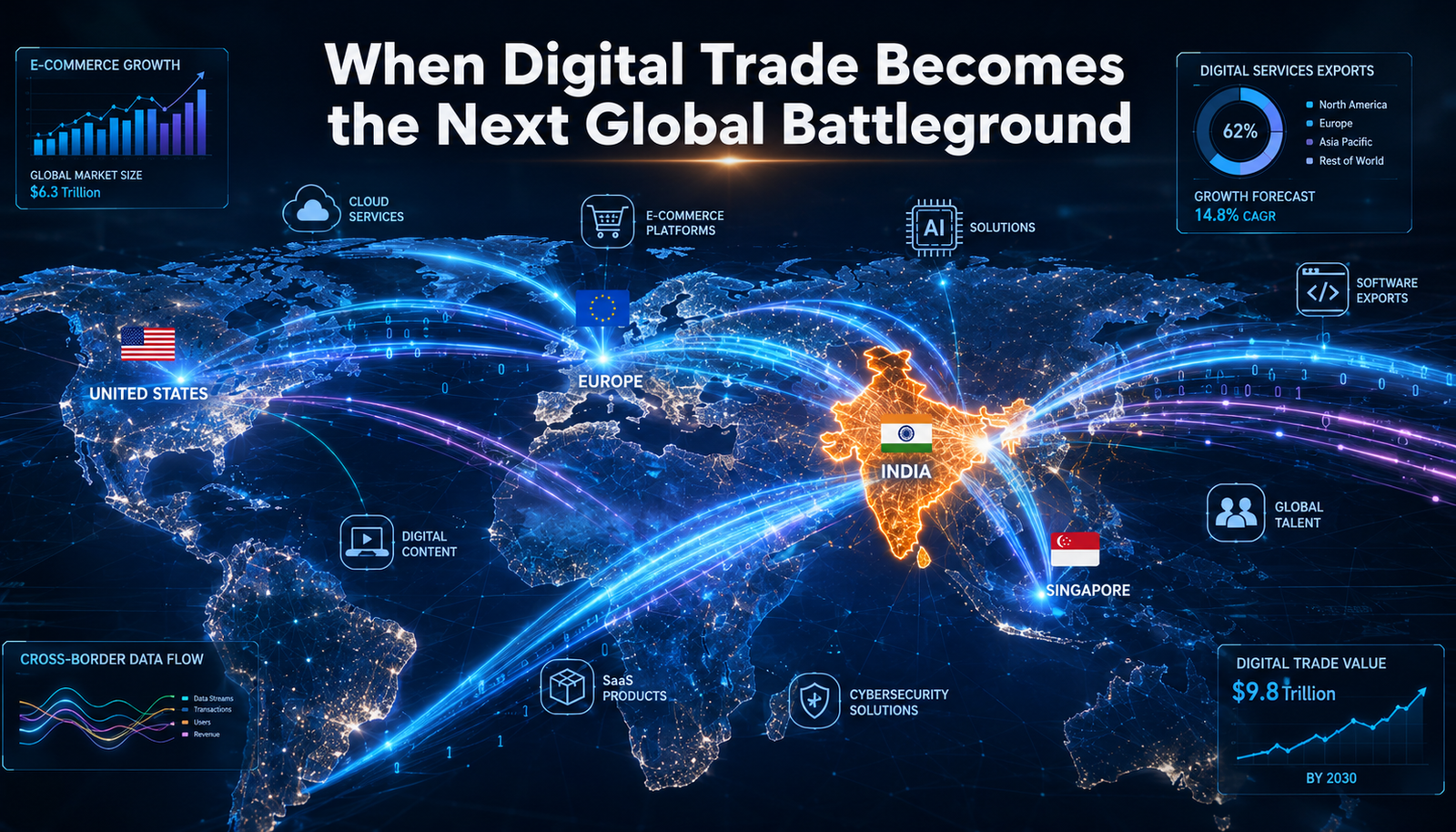
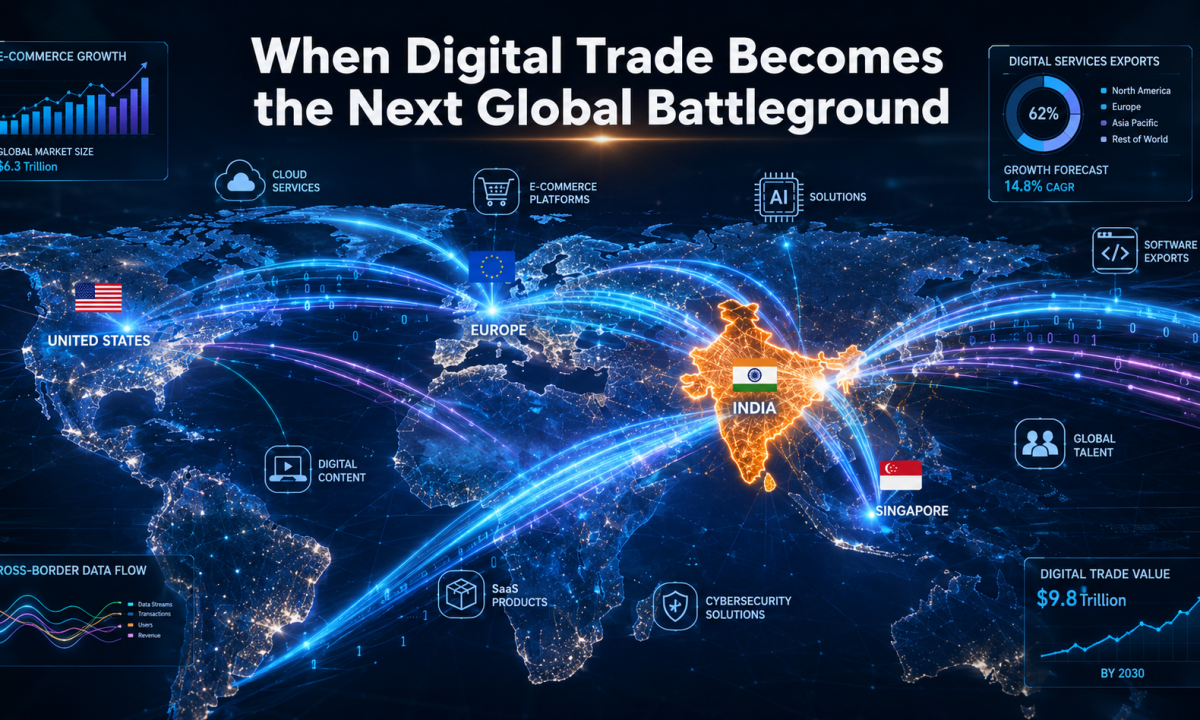

When Digital Trade Becomes the Next Global Battleground
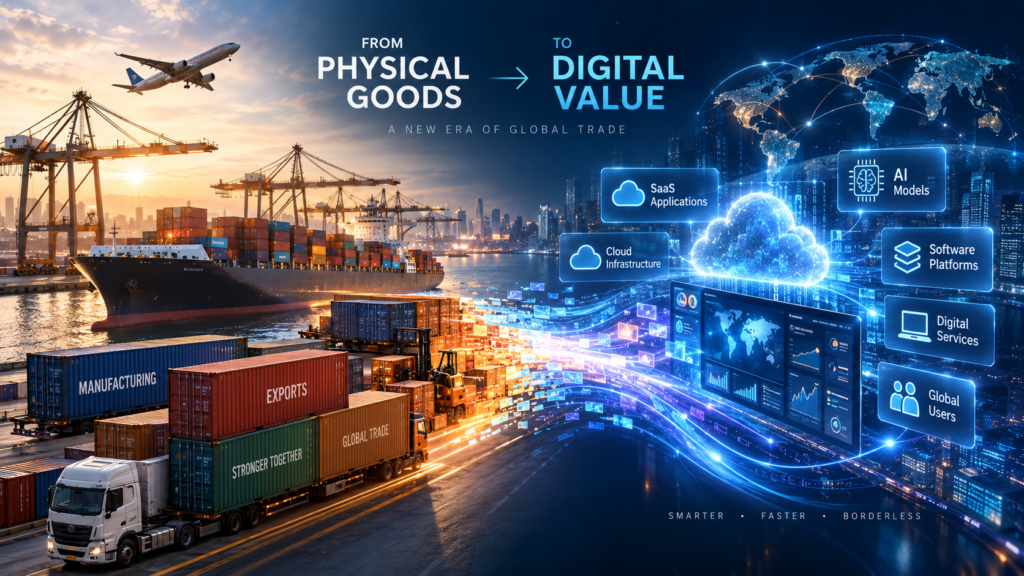
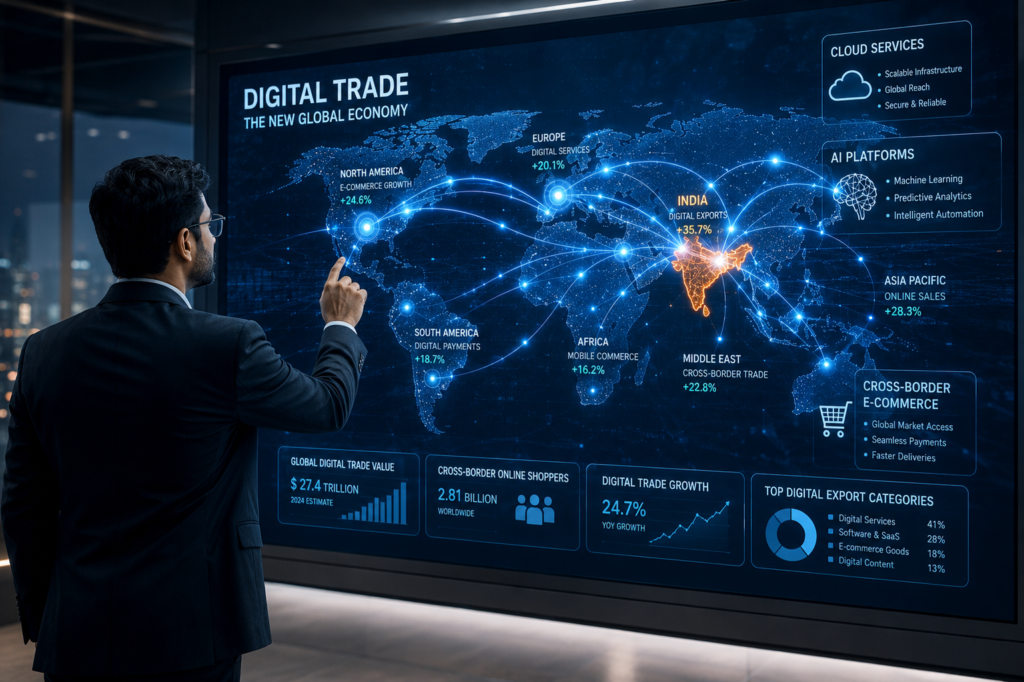
For years, we’ve spoken about exports as containers leaving ports, cargo ships crossing oceans and goods clearing customs. But the next export story isn’t travelling in a container. It’s travelling through the internet.
A software subscription, an online course, a SaaS product, a design file, a cloud service, an AI model or even a Netflix subscription—all of these are part of digital trade.
And that’s exactly why the recent WTO development caught my attention.
For nearly three decades, electronic transmissions moved across borders without customs duties under a WTO moratorium. That temporary arrangement has now lapsed after member nations failed to reach a consensus. While digital trade can continue, countries are now free to impose customs duties on certain electronic transmissions if they choose.
At first glance, this sounds like a policy discussion for governments. It isn’t.
It’s a business discussion.
Why Digital Trade Matters More Than You Think
India has become one of the world’s largest exporters of digitally delivered services.
According to the data shared, the United States remains India’s biggest digital trade partner, followed by the UK, Singapore, Germany and Ireland.
That means this policy conversation extends far beyond governments.
It touches nearly every modern digital business, including:
- SaaS companies
- AI startups
- Software developers
- Digital agencies
- Gaming companies
- Online education platforms
- Freelancers
- Creator economy businesses
- Cloud service providers
Whether you realize it or not, if your business sells something online across borders, you’re already part of the digital trade ecosystem.
The Real Challenge Isn’t Trade. It’s Uncertainty.
The uncertainty isn’t about whether digital trade will stop.
It’s about whether it becomes more fragmented, expensive and regulated across different countries.
As AI accelerates, software becomes borderless and digital products become India’s biggest export opportunity, governments are also looking at taxation, data sovereignty and revenue protection more closely.
For marketers, founders and digital professionals, this is another reminder that the future of business isn’t just about acquiring customers.
It’s about understanding regulations.
Tomorrow’s competitive advantage may not only come from better products or better marketing—it may come from knowing which markets remain easy to sell into, how digital taxation changes pricing, and how compliance becomes part of your growth strategy.
My Take
I’ve always believed India’s biggest exports won’t just be manufactured products.
They’ll be ideas, software, AI, education, creativity and digital services.
The internet removed geographical borders for businesses.
Policy may now decide how those borders evolve.
The companies that stay informed—not just innovative—will be the ones that win.
Source: World Trade Organization (WTO).
As the industry shifts, staying informed about the latest trends is essential for anyone. Click through to read another thread!