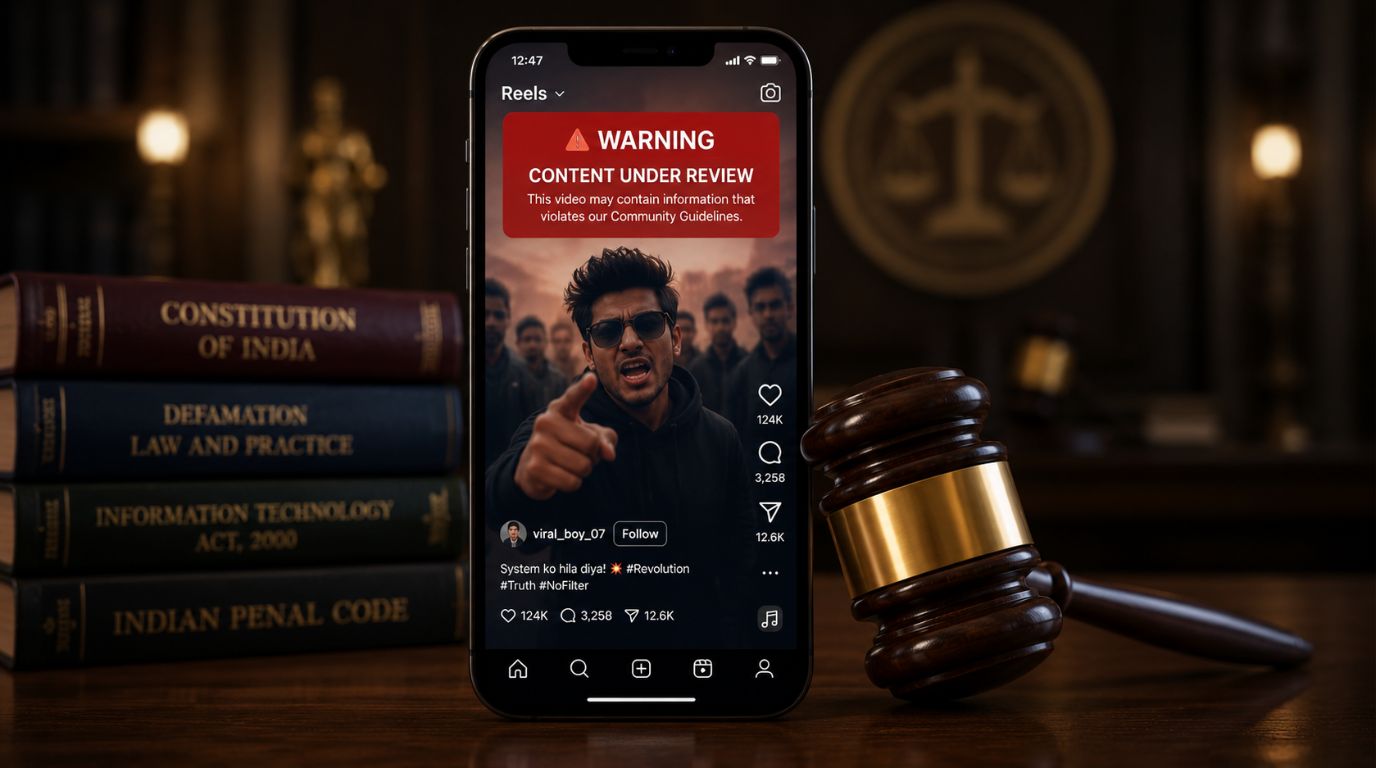
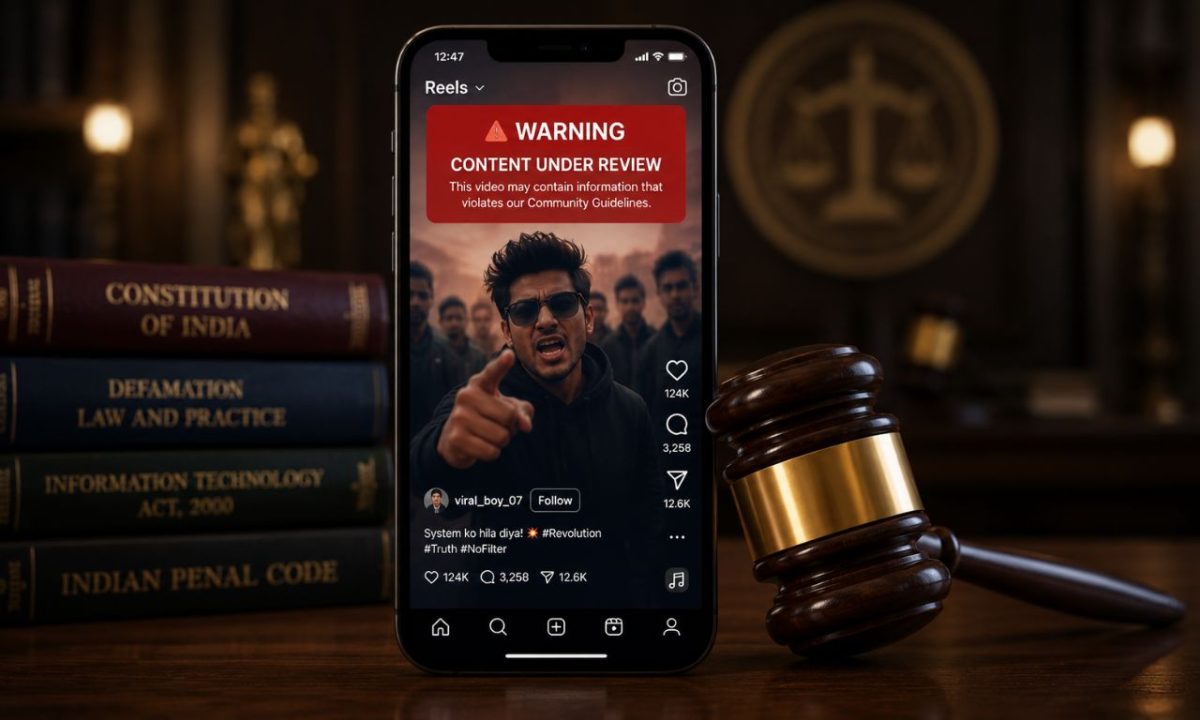

A recent Karnataka High Court ruling regarding an Instagram reel criticizing a major dairy brand’s flavored milk product has thrust a critical issue into the spotlight. It forces us to ask a difficult question: where does personal consumer criticism end, and where does social media defamation in India begin?
Social media has given everyone a microphone. A doctor can become a creator. A creator can become an influencer. And a single reel can reach millions of people before breakfast. But with that reach comes responsibility.
The Rise of Social Media Defamation in India
The Problem Isn’t Criticism. It’s Certainty. As consumers, we should absolutely question products. Brands should be held accountable.
If there are concerns about quality, ingredients, safety, or customer experience, people have every right to discuss them. The issue arises when opinions are presented as facts without evidence.
According to reports, the court questioned whether statements suggesting a product was “spurious” were backed by any testing or scientific validation. And honestly, that’s a fair question.
In today’s digital market, a highly alarmist statement gets far more views than a balanced, nuanced critique. Unfortunately, views and truth are rarely the same thing, making the spread of unverified claims a fast track to social media defamation in India.
The Difference Between Opinion and Defamation
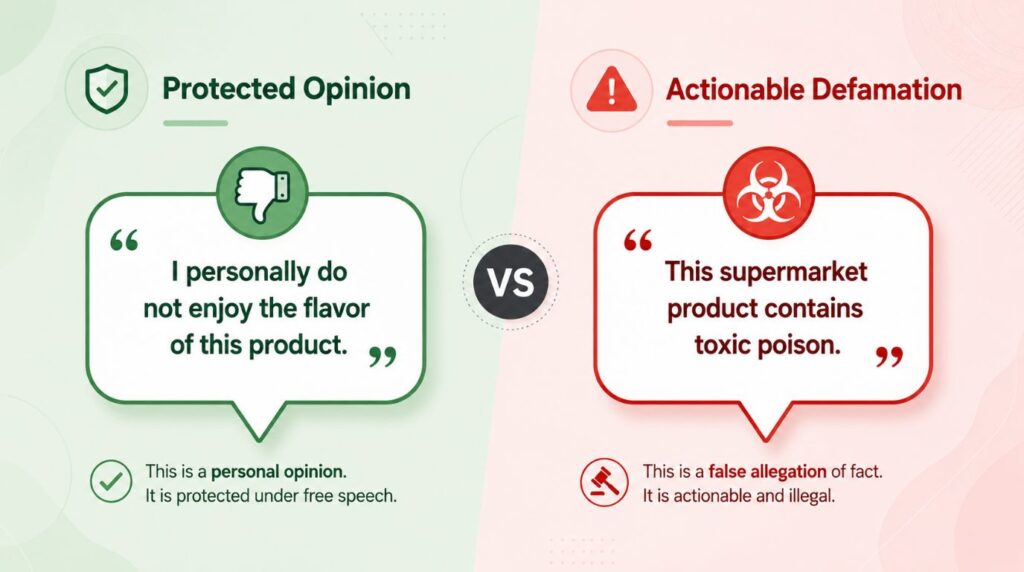
To protect yourself online, you must understand how the law separates a fair comment from a defamatory statement:
- Expression of Personal Taste (Protected): Saying “I do not like the taste of this strawberry milk” is a subjective opinion. It is protected under Article 19(1) of the Constitution of India.
- Factual Claim of Toxicity (Actionable): Stating “This brand’s milk is toxic, spurious, and causes cancer” is a factual claim. If you make this claim without verified scientific certificates, you are exposing yourself to charges of social media defamation in India.
The Viral Economy Rewards Outrage
Social media algorithms don’t reward accuracy. They reward engagement. Fear spreads faster than facts. Outrage spreads faster than nuance.
A reel saying, “I don’t like this product,” may get a few thousand views.
A reel saying, “This product is dangerous,” could get millions.
Because the viral economy incentivizes sensationalism, it heightens the risk of creators inadvertently committing social media defamation in India to drive engagement.
The Marketing Lesson

As marketers, we often discuss brand reputation management. But today, reputation can be affected by a single creator, a viral post, or even an unverified opinion. This means brands need to do three things better:
- Respond quickly.
- Communicate transparently.
- Educate consumers consistently.
Silence is no longer a strategy. The internet fills information gaps very quickly, whether the information is accurate or not.
A Bigger Question for Content Creators
The creator economy is maturing. Brands, regulators, courts, and consumers are all paying closer attention. The days of saying “it’s just content” are slowly disappearing.
If a creator can influence buying decisions, public perception, and consumer behaviour, then that influence comes with accountability. Freedom of expression remains important. But so does responsibility.
My Take on Social Media Defamation in India
I believe social media is one of the greatest tools ever created for consumer awareness. It has exposed scams, forced brands to improve, and given ordinary people a voice. But credibility is becoming the most valuable currency online.
Before posting that next viral reel, ask a simple question: Am I sharing an opinion, or am I making a claim?
Because opinions are protected. Claims require proof. And in a digital landscape where everyone has the power to publish instantly, understanding social media defamation in India is no longer just a legal precaution—it is a baseline requirement for survival.
As the industry shifts, staying informed about the latest tech news is essential for anyone. Click through to read another thread!