
We casually throw around words like millionaire, billion-dollar company, and now even trillion-dollar valuations. But here’s an uncomfortable truth: our brains are terrible at understanding really big numbers. If you’ve ever stopped to ask yourself how much is a trillion dollars, you’re not alone. When it comes to a trillion, we’re not just a little off. We’re wildly off.
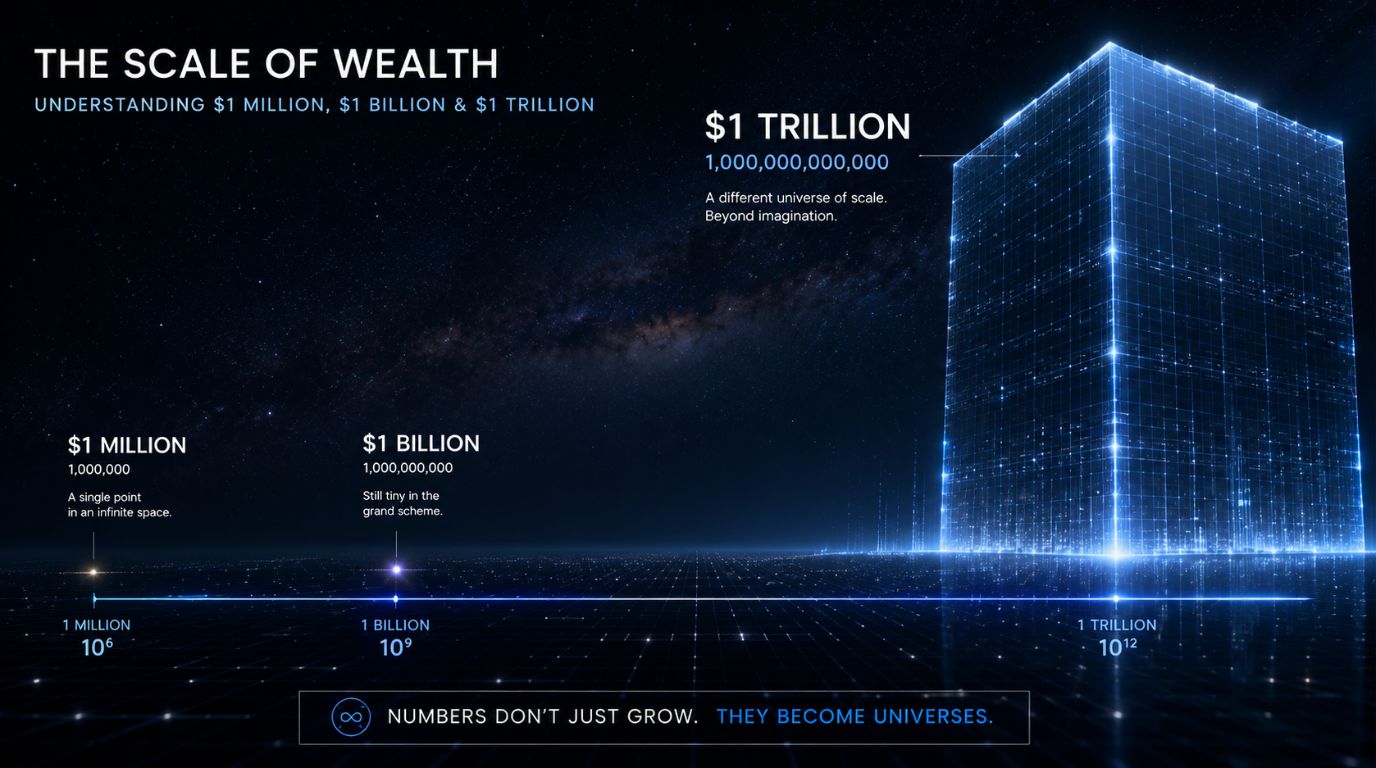
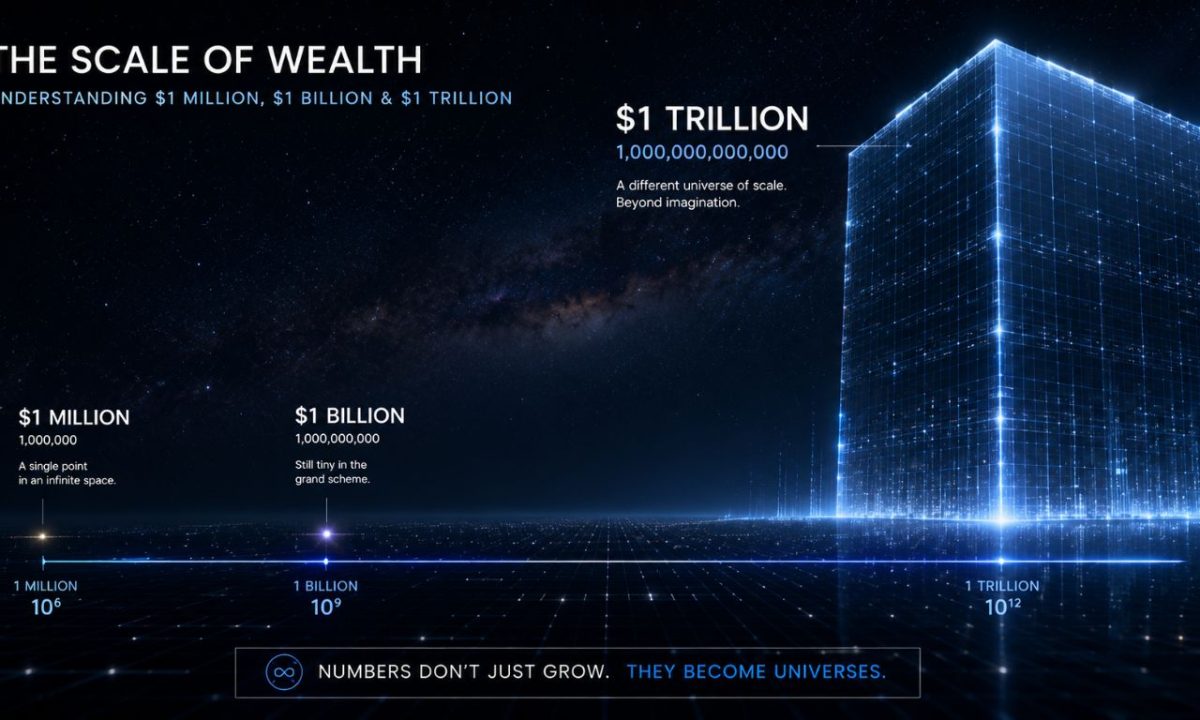
A recent article highlighted something fascinating: if you drew a line with $1 million on the left and $1 trillion on the right, where would $1 billion fall?
Most people place it somewhere near the middle. That feels right. Except it’s completely wrong.
Difference Between a Billion and a Trillion Dollars
A billion dollars sits almost all the way near the $1 million mark. That’s because a trillion isn’t simply “a lot bigger” than a billion—it’s 1,000 times bigger. When you try to map out how much is a trillion dollars, each jump isn’t incremental; it’s exponential.
- 1 million = 1,000,000
- 1 billion = 1,000,000,000
- 1 trillion = 1,000,000,000,000
Each jump isn’t incremental. It’s exponential. And that’s where our intuition breaks down. To truly visualize how much is a trillion dollars, consider time instead of money:
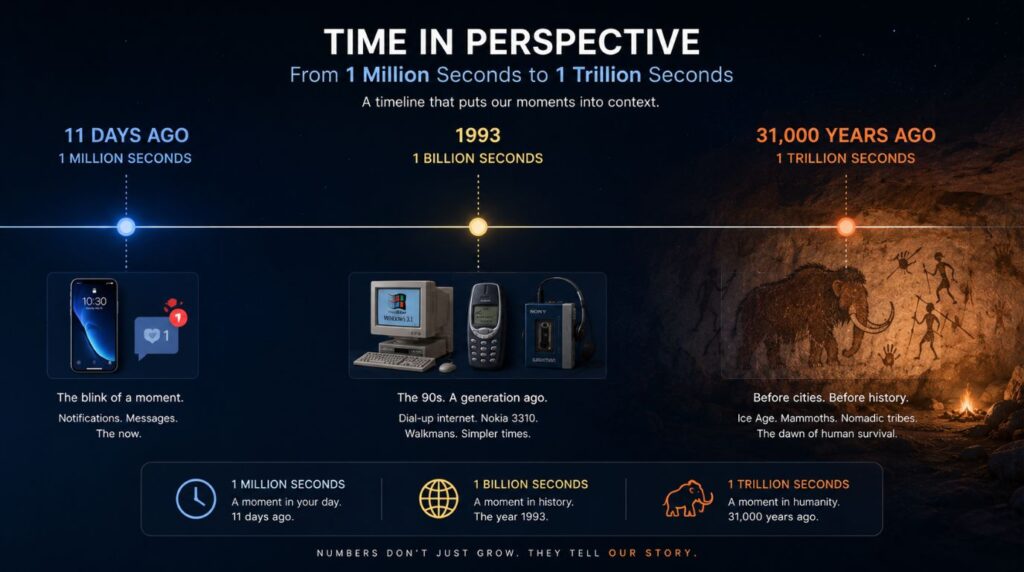
- One million seconds ago was about 11 days ago.
- One billion seconds ago was around 1993.
- One trillion seconds ago?
Humans hadn’t even invented agriculture yet. A trillion seconds takes you back more than 31,000 years. Suddenly, a trillion doesn’t feel like just another big number. It feels almost incomprehensible.
Example
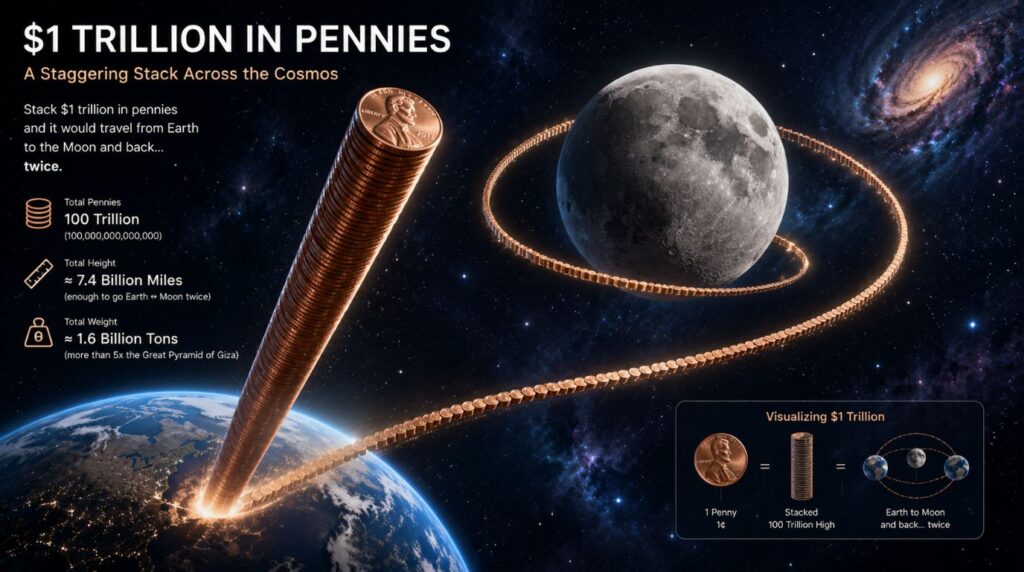
To truly grasp how much is a trillion dollars, another example from the article is even more visual. Imagine stacking pennies:
- A million pennies create a stack roughly a mile high.
- A billion pennies stretch nearly 1,000 miles.
- A trillion pennies?
That stack would reach the moon—and back. Twice. No wonder even mathematicians struggle to visualize these scales.
This isn’t merely an academic problem
It affects how we understand the modern economy. When we try to conceptualize how much is a trillion dollars in corporate terms, the numbers start sounding ordinary because we hear them repeated so often:
- Apple crossed $3 trillion.
- Nvidia surged past multi-trillion-dollar valuations.
- Some predict the first trillionaire may emerge within our lifetimes.
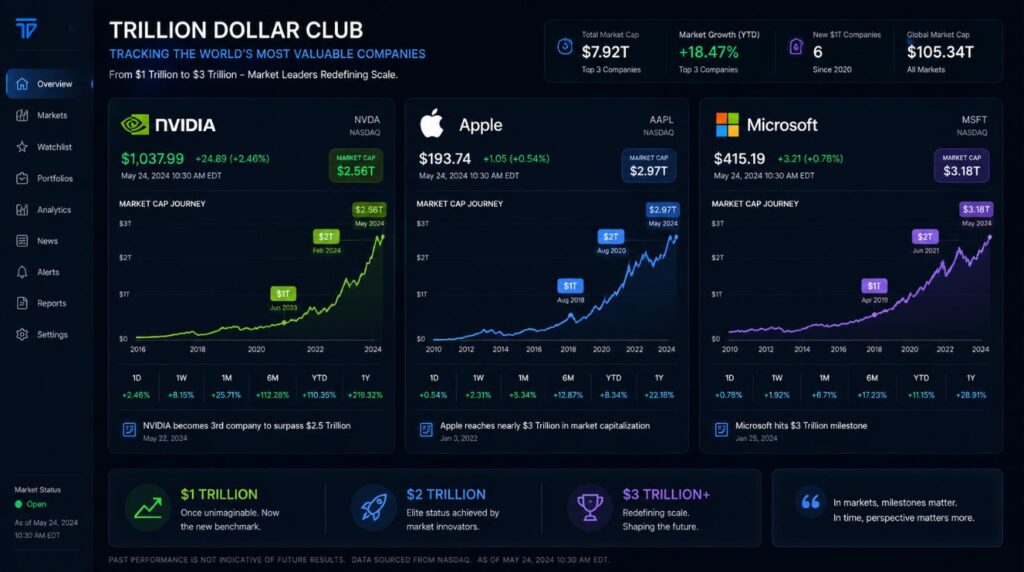
But when we hear these numbers repeatedly, they start sounding ordinary. They’re anything but ordinary.
Our brains evolved to understand dozens, hundreds, maybe thousands—not trillions. That’s why researchers call these numbers “notoriously difficult to understand.” Yet public policy, government budgets, AI investments, and corporate valuations increasingly operate in the realm of billions and trillions.
The AI boom alone is expected to attract hundreds of billions of dollars in investment over the coming years. Governments announce trillion-dollar infrastructure packages. Tech companies spend tens of billions on data centers as if they’re routine business decisions.
From Billions to Trillions: Understanding Modern Economic Scale
The numbers keep getting bigger. Our intuition doesn’t.
My Take on How Much a Trillion Dollars Is
Perhaps the biggest takeaway is this: when someone says “it’s only a few billion dollars,” remember that a billion is already unimaginably large.
And a trillion?
That’s a different universe altogether. The next time you wonder how much is a trillion dollars, pause for a moment. Because chances are, none of us truly understand how big it really is.
As the industry shifts, staying informed about the latest tech news is essential for anyone. Click through to read another thread!