

What We Wear to Work Says More About Work Than Fashion
For decades, the professional dress code in workplace has followed an unwritten rule. The more formal you look, the more professional you’re perceived to be. Suit. Tie. Blazer. Formal shoes. Even if the temperature outside is 38°C.
Japan is quietly questioning that assumption.
Under its long-running “Cool Biz” initiative, employees are increasingly encouraged to swap heavy business suits for lighter clothing—even shorts in some workplaces—to stay comfortable during extreme summer heat. The objective isn’t to make offices casual. It’s to make them practical, healthier, and more energy efficient.
This policy shift opens up a conversation every modern leader needs to have about the role of a professional dress code in workplace settings today.
Are We Measuring Performance or Appearance?
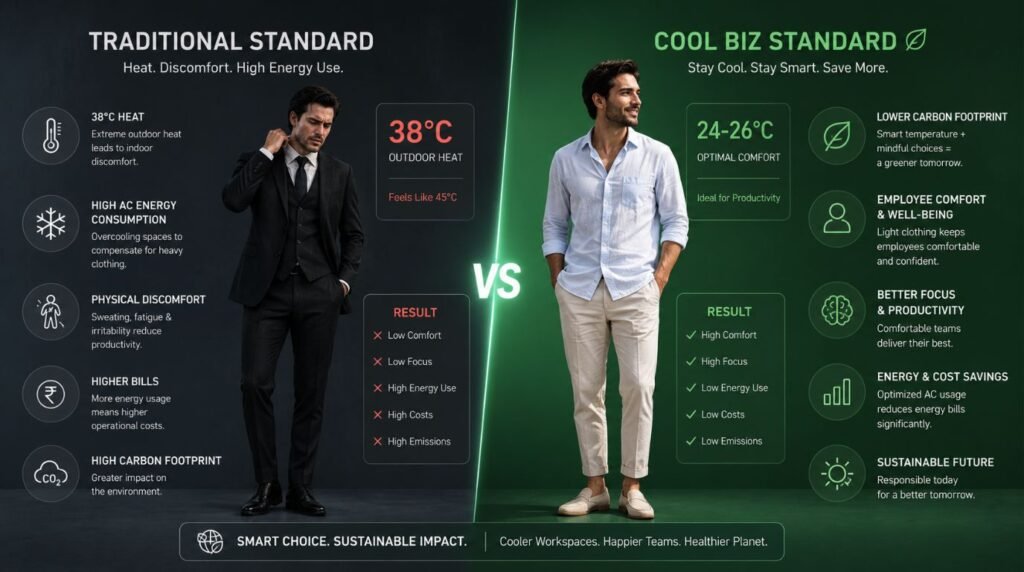
Many workplaces still reward appearances. Someone wearing a blazer is often perceived as more serious than someone wearing a polo T-shirt, even if both produce identical work.
But knowledge work has changed. Software isn’t written better in a suit. Marketing campaigns don’t perform better because someone wore leather shoes. A sales presentation isn’t more persuasive because of a tie.
When evaluating a professional dress code in workplace environments, true value lies in outcomes, not outfits.
Comfort Isn’t the Enemy of Professionalism
A common objection raised by traditionalists is that relaxing the professional dress code in workplace policies degrades organizational standards.
That concern conflates clothes with character. Genuine professionalism stems entirely from behavior:
- Showing up on time and being fully prepared.
- Treating colleagues and clients with respect.
- Communicating clearly and transparently.
- Consistently delivering high-quality results.
None of those behaviors require a three-piece suit. If lighter, breathable clothing helps employees stay focused during sweltering summer months, updating your professional dress code in workplace guidelines becomes a smart productivity decision rather than a fashion debate.
The Workplace Is Evolving
The pandemic permanently changed how we think about work.
Hybrid work challenged the need for offices every day. AI is challenging how work gets done. Flexible hours are changing when work happens. Perhaps dress codes are simply the next thing to evolve.
That doesn’t mean every company should allow shorts and sandals tomorrow.
Different industries have different customer expectations. A luxury hotel, investment bank, and creative agency will naturally have different standards. But maybe it’s time to ask whether some of our rules still solve today’s problems—or simply preserve yesterday’s traditions.
What This Means for Leaders
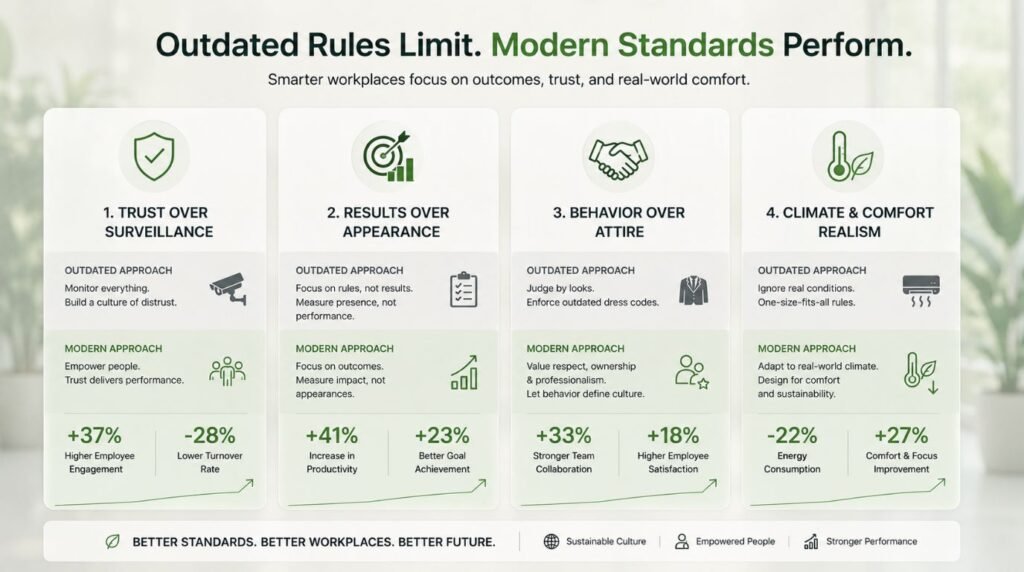
Organizational culture isn’t built by dress codes—it is built on trust.
Employees who feel trusted and comfortable consistently outperform those who feel micro-managed and monitored. When leaders over-index on attire, they inadvertently signal that appearances matter more than performance.
The strongest organizations establish a clear, modern professional dress code in workplace framework: focus on results first, and make everything else secondary.
The Bigger Picture of Professional Dress Code in Workplace
This isn’t really a story about shorts. It’s a story about questioning assumptions. Every generation inherits workplace rules that made sense decades ago.
The smartest organisations periodically ask a simple question: “Does this rule still serve a purpose?”
Sometimes the answer is yes.
Sometimes it’s simply, “We’ve always done it this way.”
And those are usually the rules worth revisiting. As climate change, employee expectations and workplace culture continue to evolve, I suspect we’ll see more companies redefining what “professional” actually looks like.
Perhaps the future office won’t be remembered for what people wore. It’ll be remembered for what they built together.
As the industry shifts, staying informed about the latest skills-first hiring news is essential for anyone. Click through to read more such threads!