

Summary
The recent wave of tech layoffs isn’t just about cutting costs; it’s an infrastructure rewiring. Current corporate restructuring trends indicate that businesses are shifting toward a “lean company” era, rebuilding their operational backbone around AI leverage. This post explores why traditional corporate equations are breaking and how professionals can adapt as software becomes foundational workplace infrastructure.
The Corporate World Is Quietly Rebuilding Itself Around AI
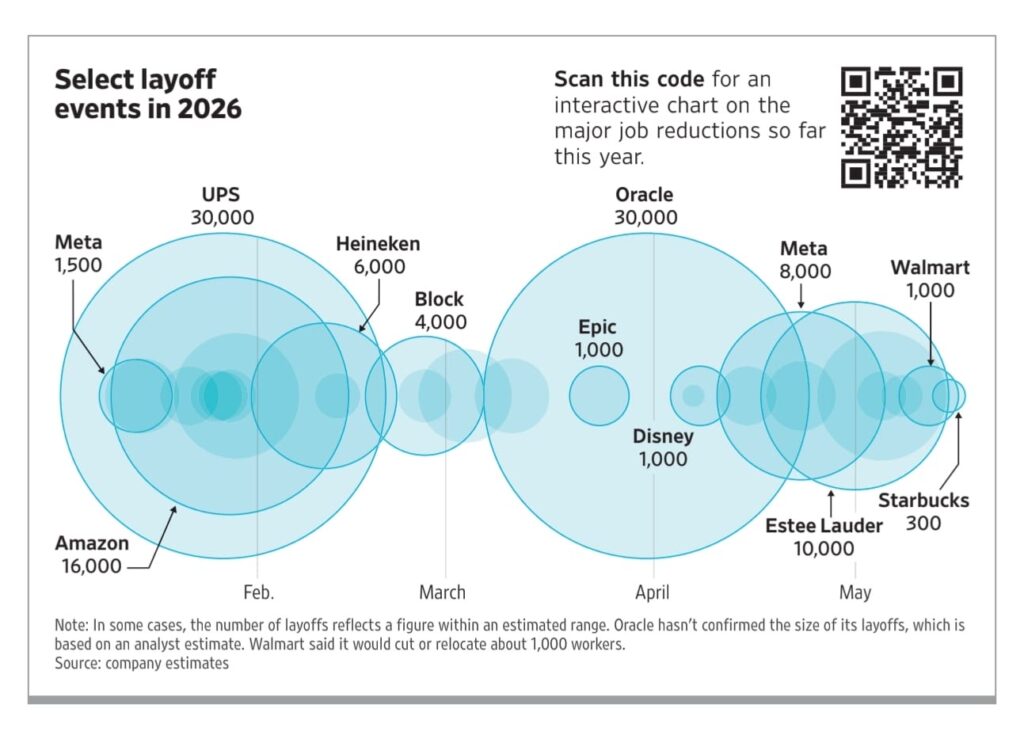
The Layoff Headlines Aren’t Random Anymore. What we are witnessing across tech and retail giants is a fundamental shift in corporate restructuring trends driven by deep AI integration.
Every few weeks now, another company announces layoffs. And it’s no longer limited to struggling startups. The list suddenly includes:
- Meta
- Amazon
- Oracle
- UPS
- Disney
- Walmart
- Starbucks
At this point, layoff announcements have started feeling like recurring software updates.
“Bug fixes, performance improvements, and 8,000 fewer employees.”
Dark humor aside…
I think we’re witnessing one of the biggest corporate restructuring trends in modern workplace history. And most people are still treating it like a temporary bad quarter. It’s not.
This isn’t just cost-cutting. It’s Infrastructure Rewiring.
That’s the part many people are missing. Earlier layoffs usually happened because:
- revenue dropped
- markets crashed
- companies overhired
- funding dried up
Now?
A completely new variable has entered the equation: AI leverage.
Companies are increasingly asking: “How much output can fewer people produce with AI tools?”
That question changes everything.
The Old Corporate Equation Is Breaking
For decades, scaling meant:
- more employees
- more managers
- more departments
- more process layers
Now, AI is compressing workflows dramatically. One employee with:
- ChatGPT
- automation tools
- AI copilots
- AI coding assistants
- AI analytics
can suddenly perform work that earlier required:
- researchers
- junior analysts
- coordinators
- copywriters
- support teams
That doesn’t mean humans disappear. But it absolutely changes hiring math.
Ironically, Tech Companies Created The Problem Themselves
This is the funniest part. For years, Silicon Valley sold AI as “Tools to increase productivity.”
Now shareholders are asking: “If productivity increased so much… why is headcount still this large?”
Congratulations.
Corporate capitalism, read the release notes carefully.
We’re Entering The “Lean Company” Era
And honestly?
I think future companies will look radically smaller than today’s giants. The next billion-dollar company may not have:
- 20,000 employees
- giant office campuses
- massive middle-management structures
It may have:
- AI systems
- automation pipelines
- highly specialized talent
- lean operators
That shift is already happening quietly.
Important Part Nobody Talks About Enough: Corporate Restructuring Trends
This doesn’t automatically mean: “No jobs.”
It means: “Different jobs.”
Historically, technology destroys certain roles…while creating entirely new ecosystems around them.
The internet killed:
- video rental stores
But created:
- creators
- influencers
- SaaS
- e-commerce
- digital marketing
- app economies
AI will likely do something similar.
The Real Risk Isn’t AI
It’s staying professionally static while the world changes. Because the market now rewards:
- adaptability
- AI fluency
- communication
- strategic thinking
- creativity
- systems thinking
Ultimately, these shifting corporate restructuring trends reveal that middle management and routine coordination roles are highly vulnerable to software optimization. Human leverage work is becoming more valuable.
Middle Management May Be In Serious Trouble
This is the uncomfortable conversation companies haven’t fully admitted publicly yet. AI is incredibly good at:
- reporting
- summarizing
- monitoring
- coordination
- workflow management
Which historically consumed massive amounts of corporate labor. That means entire organizational structures may shrink. Not because companies hate employees. Because software is becoming operational infrastructure.
The Workplace Is Starting To Split Into Two Groups
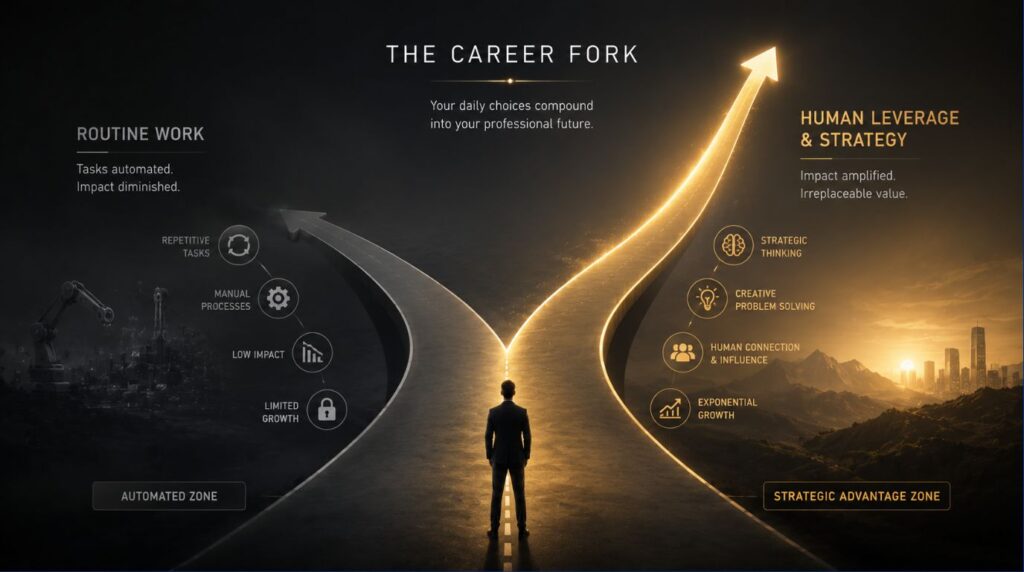
Group 1:
People are using AI casually.
Group 2:
People are rebuilding entire workflows around AI.
The second group will likely move disproportionately faster over the next few years. And that gap may become enormous.
Also… Can We Admit Something Slightly Absurd?
For years, companies demanded employees:
- return to office
- attend more meetings
- improve productivity
- optimize workflows
Then AI arrived, and companies basically said:
“Actually, the workflow itself may not need this many humans.”
That’s a brutal psychological shift for workers globally. As automation pipelines compress workflows, modern corporate restructuring trends heavily favor lean operations over massive headcounts.
But I’m Surprisingly Optimistic Long-Term
Here’s why.
Every major technological transition initially looks terrifying because we measure the future using current job categories. But humans are unbelievably adaptive. Ten years ago:
- prompt engineer
- AI content strategist,
- creator economy manager, and
- no-code automation consultant
barely existed. Today, they’re real careers. The next decade will create roles we can’t fully predict yet.
The Biggest Winners Will Be People Who Learn Faster Than Fear Spreads
That’s the real game now.
Not panic. Not denial. Adaptation.
Because AI is no longer “coming.” It’s already sitting inside:
- Excel sheets
- customer support
- design software
- coding platforms
- ad platforms
- search engines
- video editing
- enterprise operations
The transition has already started.
Final Thought on Corporate Restructuring Trends
I don’t think the future becomes “human vs AI.”
I think it becomes: humans amplified by AI
vs humans resisting change entirely.
And the corporate restructuring trends are around that reality faster than most employees realize. Understanding these massive corporate restructuring trends is essential for any professional looking to stay valuable in an economy that heavily rewards human leverage over robotic repetition.
Meanwhile, somewhere in corporate America…an exhausted HR manager is preparing another layoff email, using AI to make it sound more empathetic.
As the industry shifts, staying informed about the latest AI news is essential for anyone. Click through to read more such threads!