
Summary
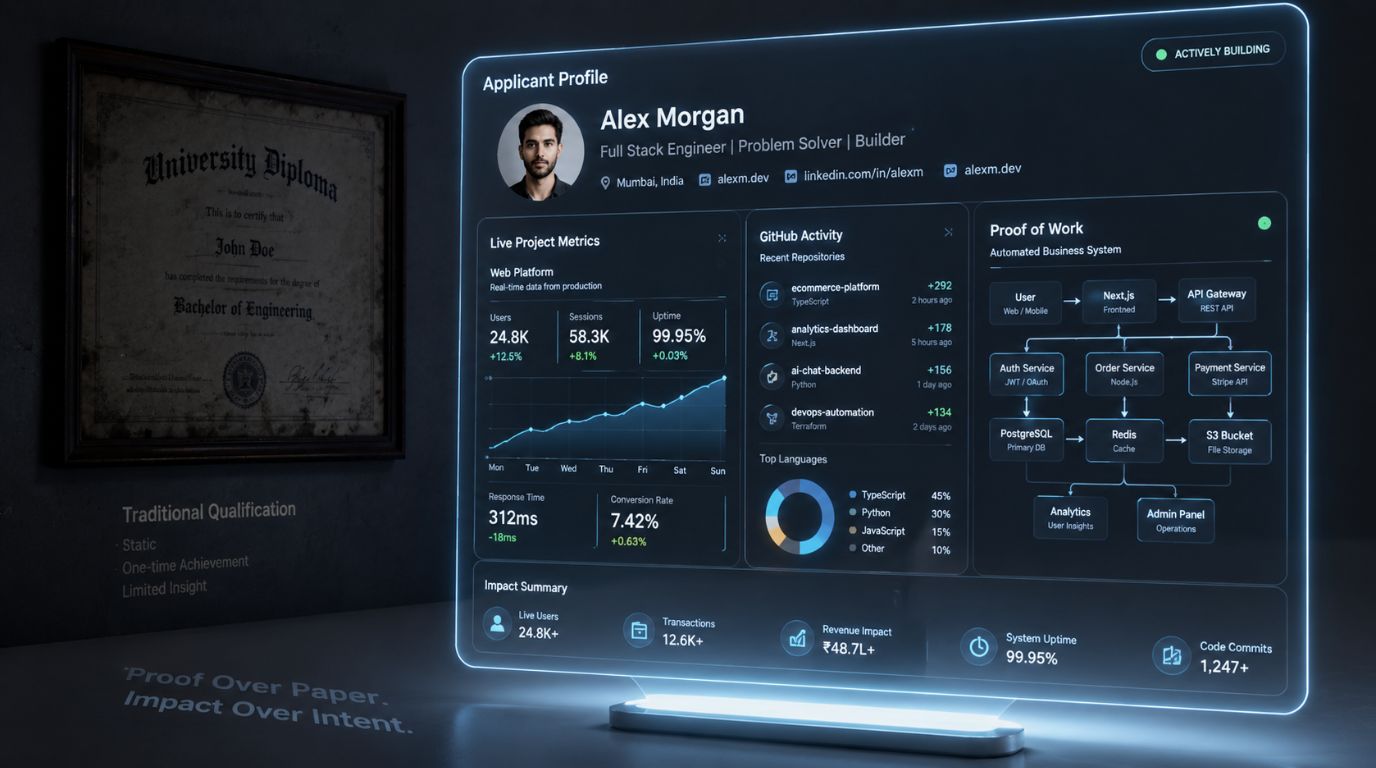
The traditional professional playbook is broken. For decades, a Master’s degree or an expensive MBA was an automatic guarantee of career security. Today, current labor data indicates a massive shift toward skills-first hiring as organizations prioritize real-world execution over framed paper credentials. This article breaks down why the explosion of generative AI has accelerated this skills-first hiring trend, how universities lost their monopoly on specialized knowledge, and how professionals can build a multi-layered portfolio to stand out.
Are Degrees Losing Value… Or Are Skills Becoming Louder?
There was a time when a Master’s degree felt like a cheat code
The formula looked simple: Graduate → Get experience → Do MBA/Master’s → Unlock better job → Upgrade life
For years, that script worked. People didn’t just buy education. They bought certainty. They bought a signal. They bought a shortcut.
Today?
That equation is getting rewritten.
The Problem Isn’t That Degrees Became Bad. The Problem Is That Degrees Became Common.
Imagine if everyone suddenly owned a VIP pass.
Eventually…Nobody is VIP anymore.
The article highlights something interesting: Master’s programs have exploded over the last two decades.
More programs. More specializations. More online degrees. More AI-related certifications.
Which means the market signal became noisier. A qualification only works when it helps you stand out. If everyone has it, differentiation starts moving elsewhere.
Employers Are Quietly Moving Toward Skills-First Hiring
Earlier, the question was: “What degree do you have?”
Now, increasingly it sounds like: “What can you actually build?”
Can you:
- solve problems?
- communicate clearly?
- think critically?
- Use AI effectively?
- manage projects?
- execute?
Because businesses ultimately hire outcomes. Not framed certificates.
AI Accidentally Accelerated This Shift to Skills-First Hiring
AI changed something huge. Information became cheap. Learning became faster. Execution became easier. Today, someone can learn:
- performance marketing
- coding
- design
- analytics
- automation
- content creation
from YouTube, communities, and AI tools faster than before. The monopoly universities had on knowledge is slowly shrinking. Knowledge is becoming accessible. Application is becoming valuable.
This Does NOT Mean “Don’t Study”
Social media loves extreme conclusions.
The internet will now say: “Degrees are dead.”
Not true. Some professions still absolutely require formal education:
- medicine
- law
- engineering
- research
- healthcare
And strong education still creates:
- structure
- networks
- credibility
- discipline
The question is no longer: “Should I study?”
The question is: “What extra advantage am I building alongside studying?”
The Winning Combination Might Look Different Now
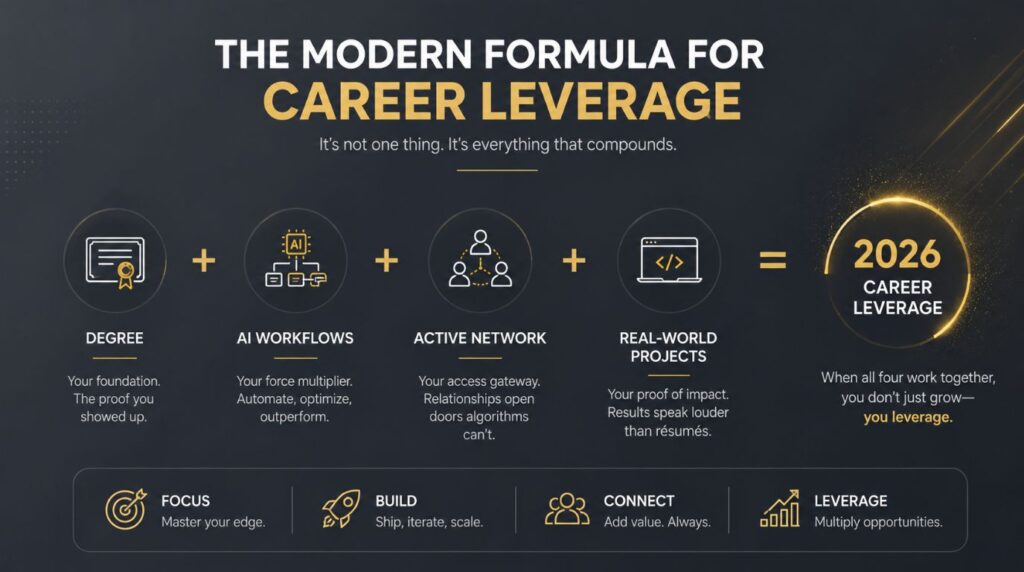
Instead of: Degree = Career
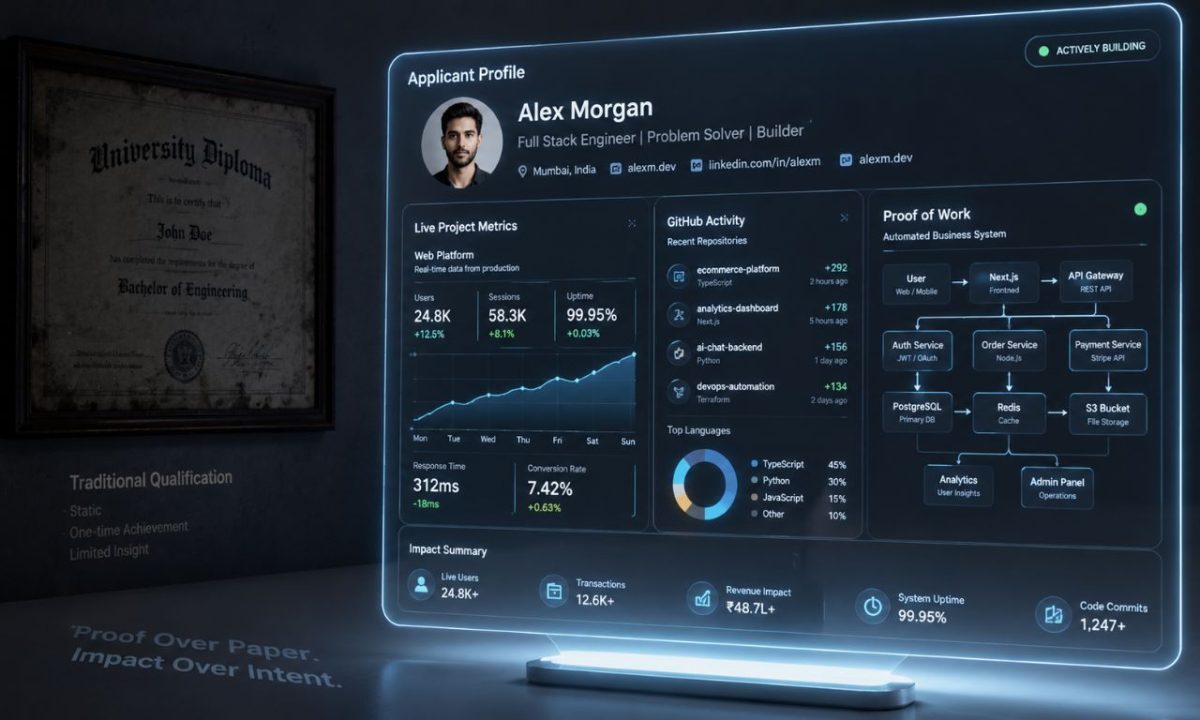
The future may increasingly become: Degree + Portfolio + AI Skills + Network + Execution = Career
That changes everything. Because two people with the same MBA may now look completely different in the market.
One says, “I completed an MBA.”
The other says: “I completed an MBA, built three projects, automated workflows using AI, and grew a side business.”
Very different signal. Same degree.
To succeed in an economy shaped by skills-first hiring, the modern professional must combine their educational credentials with a dynamic portfolio, applied AI fluencies, and clear proof of work that demonstrates exactly what they are capable of achieving.
The Most Expensive Thing You Can Buy Is False Certainty
And maybe that’s the biggest lesson here. Many people never bought a Master’s degree for learning. They bought it, hoping it would remove uncertainty. But careers never worked that way.
Technology simply exposed it faster.
Final Thought on Skills-First Hiring
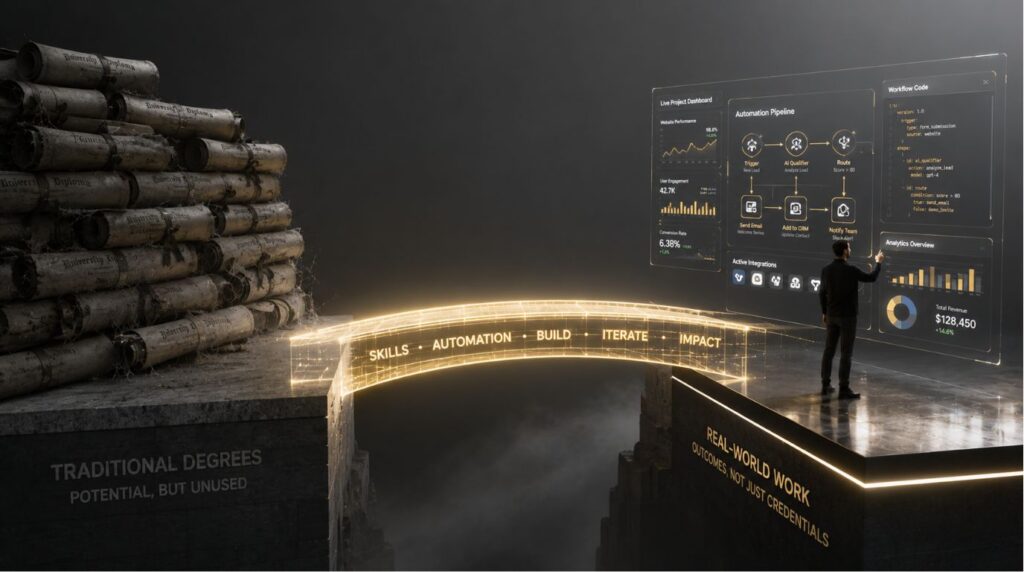
The degree itself is not losing value. The automatic guarantee attached to it is.
And honestly…that might not be bad news. Because for the first time in a long time, people are increasingly being rewarded not just for what they studied…but for what they can actually do.
As the industry shifts, staying informed about the latest skills-first hiring news is essential for anyone. Click through to read more such threads!