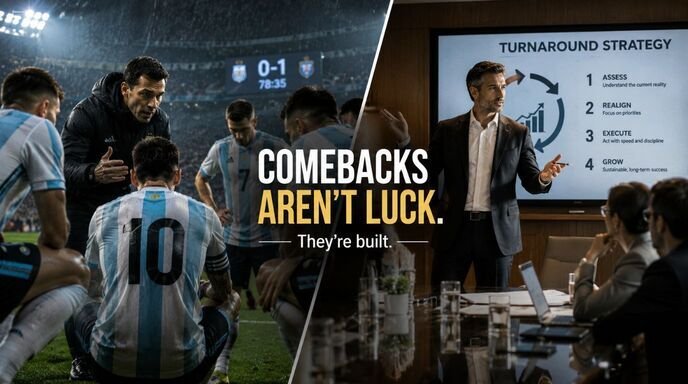

Some victories are about talent; others are about tactics, and then some victories are purely about belief.
The teams remembered long after the final whistle are often those that develop a comeback mindset: the ability to stay composed, adapt, and believe when the odds are against them.
Watching Argentina come from behind in two consecutive knockout games reminded me of why some athletes stop being players and become legends.
Not because they never fall, but because they refuse to stay there.
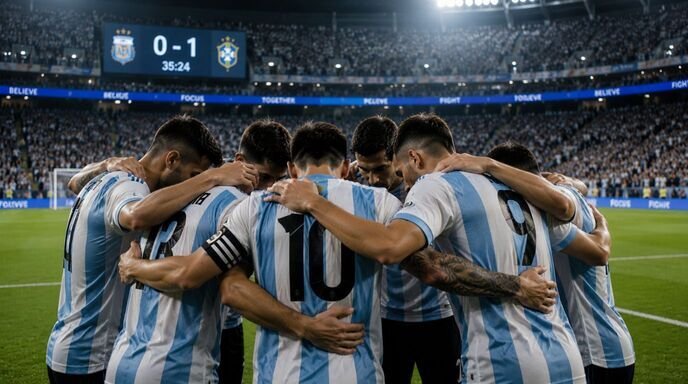
The Scoreboard Never Tells the Full Story
When a team concedes first, the game changes.
Pressure builds, and doubts creep in. The opposition gains confidence. The crowd becomes louder, and every minute feels shorter. Yet the best teams somehow become calmer.
That’s what separates champions from contenders. Their comeback mindset changes the way they see the scoreboard, and they start aiming for the win.
Why the Comeback Mindset Changes Everything
Sport teaches us something business often forgets. Momentum isn’t permanent, and neither is failure.
One goal can change a game; one decision can change a company; one campaign can revive a brand, and one conversation can change a career.
The teams that survive aren’t always the most talented. They’re usually the ones who don’t panic. A true comeback mindset isn’t built in moments of victory. It’s built through setbacks, resilience, and the confidence to keep moving forward when others expect you to give up.
The Business Lesson Behind Every Comeback Mindset

Whether you’re building a startup, running marketing campaigns, teaching students, or leading a business, there will be moments when things don’t go your way.
Budgets get cut, clients leave, campaigns fail, algorithms change, and competitors move faster.
The easy option is to accept defeat, but the harder option is to believe the game isn’t over yet. Champions almost always choose the second option.
The same mindset applies to every ambitious professional. Career setbacks, failed pitches, rejected proposals, and difficult projects can feel like you’re falling behind.
But success often belongs to those who stay patient, adapt quickly, and keep taking the next right step instead of letting one setback define the outcome.
What Lionel Messi Teaches About Leadership
At this stage of his career, Lionel Messi doesn’t need to prove his greatness. He’s already won almost everything there is to win. Yet what continues to amaze me isn’t his trophies but his composure.
When the team is behind, he doesn’t rush or get frustrated. He simply keeps playing.
A comeback mindset is the difference between giving up and getting stronger. Leadership isn’t always loud. Sometimes it’s quiet confidence that tells everyone else, “We’ve still got this.”
Pressure Reveals Character
Anyone can perform when they’re leading. The real test comes when you’re trailing. That’s when preparation meets mentality; when experience matters, and leaders emerge.
That’s exactly what we’ve witnessed in these back-to-back comebacks. This is the reason why the greatest leaders, whether on the pitch or in business, don’t focus on the score in the moment.
They focus on the next decision, the next opportunity, and the belief that the outcome can still change. With a comeback mindset, failure becomes fuel for growth.
My Take
The greatest victories are rarely comfortable. They’re messy, emotional, and uncertain until the final whistle. That’s what makes them unforgettable.
Whether it’s football, business, or life, the lesson remains the same: You don’t become legendary because you never fall behind.
You become legendary because people stop counting you out.
Because somehow, every single time: You find a way back.
As the industry shifts, staying informed about latest trends is essential for anyone. Click through to read another thread!