
For years, we’ve been told not to click suspicious links. Today, that’s no longer enough.
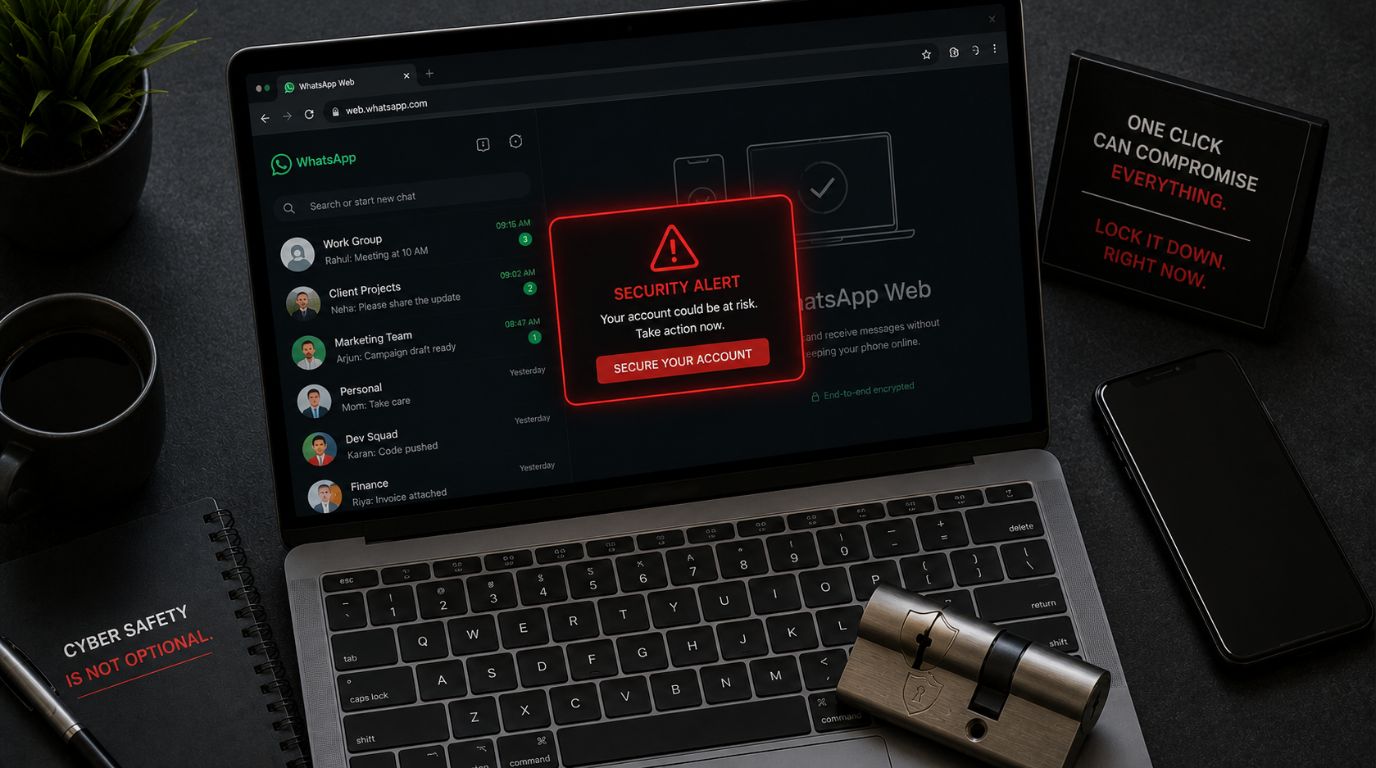
The national cybersecurity watchdog’s official CERT-In WhatsApp malware warning is a stark reminder that cybercriminals are rapidly changing their playbook. Instead of sending generic phishing messages from strange, anonymous numbers, they are increasingly using compromised accounts to send malicious payloads directly from people you already know.
That is what makes this current wave of attacks so dangerous. The threat doesn’t hide behind a strange email address; it hides behind the trusted faces of your friends, colleagues, and family.
The Reality of the CERT-In WhatsApp Malware Warning
The latest advisory outlines a highly sophisticated, large-scale distribution campaign designed to bypass traditional security awareness. Because WhatsApp has evolved into a central tool for both personal chats and corporate communications, understanding the underlying threat outlined in the CERT-In WhatsApp malware warning is critical for anyone working online.
When a message arrives from a trusted business client or a family member, our defense mechanisms naturally drop. We assume the document is safe because we trust the sender.
However, the CERT-In WhatsApp malware warning points to a much deeper structural exploit: hackers are hijacking legitimate, active accounts to spread Trojan downloaders to existing contact lists, leveraging built-in human familiarity to bypass psychological firewalls.
The Biggest Security Risk Is Familiarity
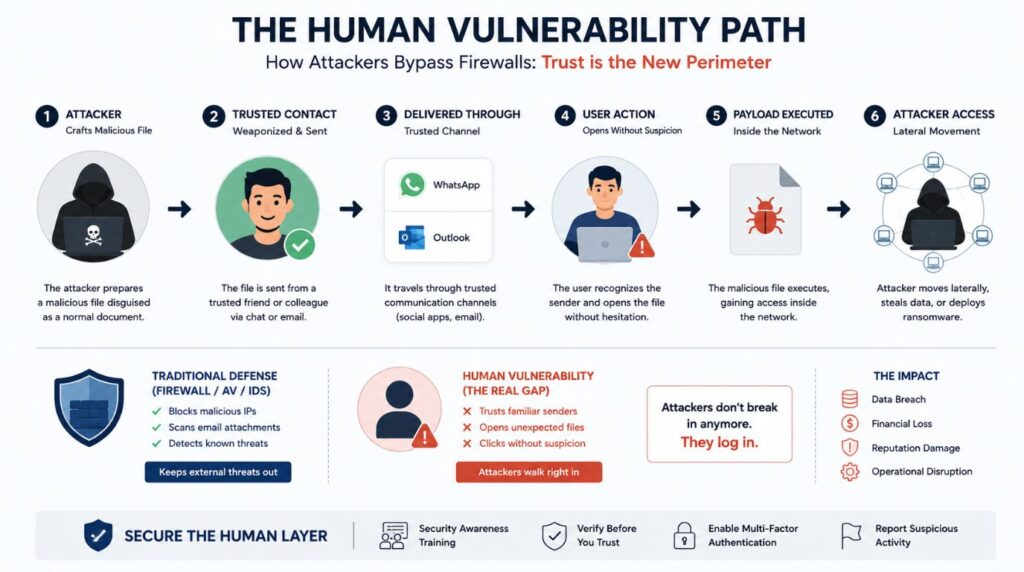
When a file comes from a friend, colleague, client, or family member, our guard naturally drops. We assume it’s safe. Attackers know this.
According to the advisory, malicious VBScript (.vbs) files are being distributed through WhatsApp Desktop and Web. Once opened, these files can potentially give attackers remote access to your device, allowing them to steal passwords, install additional malware, access sensitive business data, and even spread the attack further.
The technology isn’t the scary part. Human trust is.
Social Engineering Is Winning
Cybersecurity today is less about hacking computers and more about hacking people.
Every phishing email…
Every fake OTP…
Every “urgent payment” request…
Every unexpected attachment…
…is designed to exploit one thing:
Human psychology.
AI is making these attacks even more convincing. Fake voices, realistic emails, cloned writing styles, and personalized messages are becoming frighteningly common.
The weakest password in most organizations is no longer “123456.” It’s misplaced trust.
Why Misplaced Trust Is a Cybercriminal’s Best Tool
Cybersecurity today is becoming less about finding complex exploits in secure computer code and more about finding weak points in human psychology. Social engineering is winning the war on data privacy.
According to the official CERT-In WhatsApp malware warning, malicious Visual Basic Script (.vbs) Files are being distributed through WhatsApp Desktop and Web clients. Once a user clicks on these files, the script executes quietly in the background.
A Few Seconds Can Save You: CERT-in WhatsApp Malware Warning
Before opening any unexpected attachment on WhatsApp:
- Verify with the sender through a phone call.
- Avoid opening unknown script files or executable attachments.
- Keep WhatsApp and your operating system updated.
- Enable two-factor authentication wherever possible.
- Never assume a trusted contact automatically means a trusted file.
Cybersecurity is increasingly becoming a habit, not just a software solution.
What This Means for Marketers and Professionals

As entrepreneurs, marketers, and consultants, we exchange $100\text{s}$ of digital files every week. We send creative layouts, invoice PDFs, Excel reports, and project presentations across multiple devices without a second thought.
But in today’s threat landscape, $1$ single careless click can compromise an entire corporate database. Digital literacy is no longer just a technical skill for IT departments; it is a foundational professional competency.
Ultimately, the best way to protect your business against the threats highlighted in the CERT-In WhatsApp malware warning is to establish a culture of continuous skepticism. When it comes to digital safety, verify first, and trust second.
As the industry shifts, staying informed about the latest tech news is essential for anyone. Click through to read another thread!