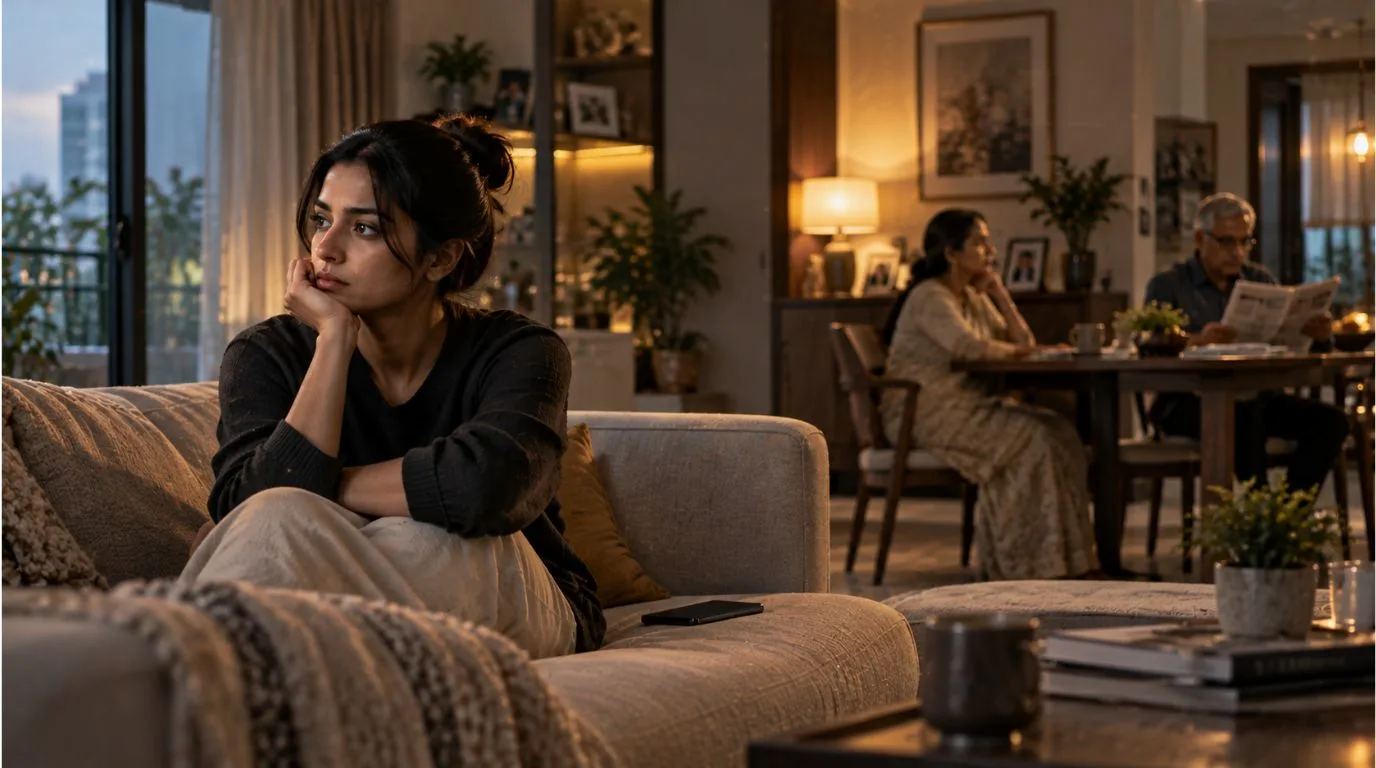

When Family Becomes A Choice: Why More Adult Children Are Walking Away From Their Parents
There was a time when the phrase “family is everything” was almost non-negotiable. You could disagree with your parents. You could fight with them. You could move to another city. You could even stop speaking for a while but eventually, you were expected to go back.
Today, that assumption is changing due to the rising phenomenon of family estrangement. More adult children are questioning whether biological relationships automatically deserve lifelong access, loyalty, and emotional priority. Some are setting stronger boundaries. Some are choosing limited contact. And some are choosing complete family estrangement.
The article I came across recently describes this as part of a broader generational shift — one where younger adults are redefining what constitutes a healthy relationship, often resulting in family estrangement and I think there is a much bigger story here than simply “children are cutting off their parents.”
The Definition Of Family Is Changing
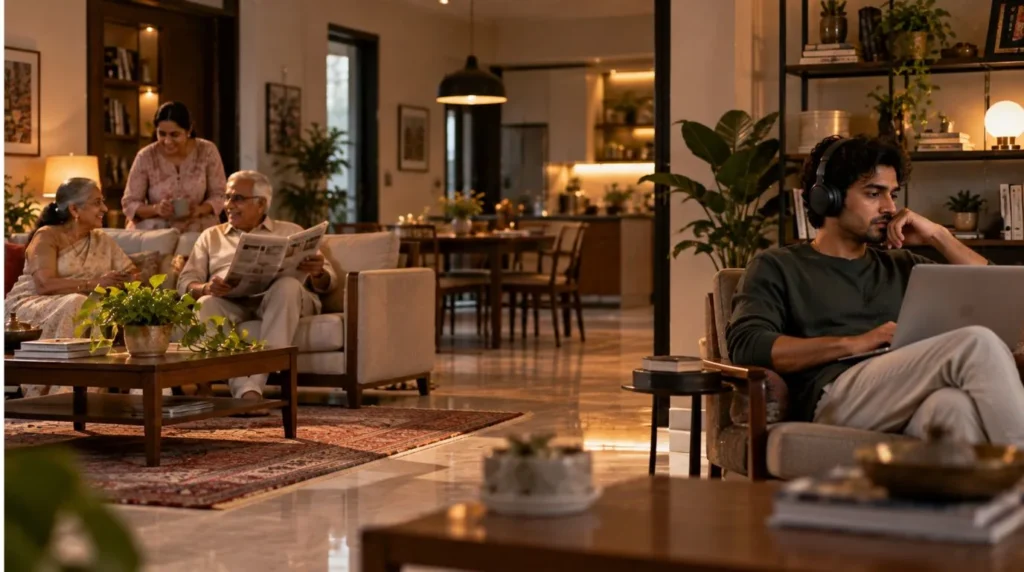
Historically, family relationships were often treated as permanent. You didn’t necessarily have to like your family. You didn’t even have to agree with them but you stayed connected because they were family. That social contract is weakening, leading to a rise in family estrangement.
Researchers have described this detachment as a deliberate reduction or severing of contact within a relationship, and studies suggest that family estrangement is not as rare as many people assume. Research in the US has found substantial levels of parent-adult-child family estrangement, although estimates vary considerably depending on how the separation is defined and measured.
What has changed is not simply the existence of family conflict. It is our willingness to tolerate it indefinitely, making family estrangement a more visible choice.
Independence Has Become More Than Financial Freedom
The article carries a particularly striking line:
“This generation struggles to achieve independence.” I think that deserves a second look. Previous generations generally defined independence in fairly straightforward terms:
- Get a job.
- Earn money.
- Move out.
- Get married.
- Start your own family.
Today, independence is increasingly psychological as well, which changes how people view family estrangement. Young adults want the ability to decide:
- Who they spend time with
- What they believe
- How they live
- What boundaries they set
- What behaviour they will tolerate
- How much access family members have to their lives
When these desires clash, it can create enormous friction that ultimately leads to family estrangement with parents who grew up with a completely different definition of family.
Enter The “Concept Creep”
One of the most interesting ideas discussed in the article is “concept creep.” The basic idea is that concepts such as toxic, abusive, unsafe, and harmful can gradually expand to cover a wider range of behaviours, sometimes accelerating decisions around family estrangement.
There is an important positive side to this. Previous generations may genuinely have tolerated behaviour that should never have been tolerated.
- Physical abuse was often hidden.
- Emotional abuse wasn’t always recognised.
- Children were frequently told to simply “adjust.”
So greater awareness can be a good thing but there is another side when evaluating family estrangement. If every disagreement becomes “toxic,” every criticism becomes “abuse,” and every uncomfortable conversation becomes “trauma,” then we may eventually lose the ability to distinguish between a difficult relationship and a dangerous relationship, leading to premature family estrangement.
Psychologist Nick Haslam’s recent work on concept creep makes a similar argument: psychological concepts have broadened over time, potentially improving recognition of genuine harm while also increasing the risk of over-pathologising ordinary distress and conflict. That distinction matters enormously in the context of family estrangement.
But Let’s Not Blame One Generation

This is where I think discussions around family estrangement often become unnecessarily polarised. It is very easy to say:
“Today’s youngsters are too sensitive.”
Or:
“Today’s parents don’t understand boundaries.”
I don’t think either explanation is sufficient to explain the growth of family estrangement. Family relationships are complicated. Sometimes adult children walk away because they have genuinely experienced abuse, manipulation, neglect, or sustained emotional harm.
Research also recognises that distancing through family estrangement can sometimes be a healthy response to an unhealthy environment but sometimes relationships deteriorate because both sides have developed completely different expectations.
One person thinks:
“I am your parent. I have every right to tell you what to do.”
The other thinks:
“I am an adult. You don’t get to make decisions for me.”
Both people may believe they are defending something legitimate and that’s where the conflict begins.
Social Media Has Changed The Conversation
There is another factor that I find fascinating. Family problems used to remain largely inside families.
Today, they are discussed publicly. TikTok, Instagram, Reddit, podcasts, and online communities have created enormous spaces where people share experiences of difficult parents, boundaries, emotional abuse, and family estrangement.
That has created something powerful:
Validation.
Someone who previously thought, “Maybe this is just how families are,” can now discover thousands of people describing remarkably similar experiences. That can help people recognise genuine problems but it can also create an echo chamber.
If every story is presented as evidence that cutting someone off is the ultimate form of self-care, reconciliation, compromise, and difficult conversation can start looking like weakness, making family estrangement the default solution. I think that’s where we need nuance.
“Democratised Kinship” Is A Fascinating Idea
The article also refers to what sociologist Rin Reczek calls “democratised kinship.” The idea is simple but powerful:
The value of a family relationship increasingly depends on its quality, rather than merely its biological connection. In other words:
Being someone’s parent may give you a relationship. It doesn’t automatically guarantee unlimited access to their adult life. That is a profound cultural shift. Previous generations largely operated under the principle of:
Family first.
The emerging principle driving family estrangement may be: Healthy relationships first — even within family.
The Parent-Child Relationship Is Becoming More Negotiated
I think this is ultimately what we’re witnessing.
The parent-child relationship used to have a very clear hierarchy.
- Parents raised children.
- Children obeyed parents.
Eventually children became adults, but the hierarchy often remained emotionally intact. Today, many adult children want something different. They want their parents to become peers.
Not necessarily equal in experience, but equal in the right to make personal choices and parents are having to learn a difficult lesson to avoid family estrangement: Parenting doesn’t end when children become adults. But the nature of parenting has to change.
- Advice may need to replace instruction.
- Conversation may need to replace authority.
- Respect may need to replace control.
The Real Question Isn’t “Who Is Right?”
For me, this is the most important takeaway. The conversation around family estrangement shouldn’t become another generational war. Parents aren’t automatically wrong. Adult children aren’t automatically right and adult children aren’t automatically selfish either. There are genuine situations where distance is necessary.
There are also situations where two people have simply stopped listening to each other. The challenge is figuring out which one you’re dealing with because once a relationship is completely broken, rebuilding it can be extraordinarily difficult.
Recent research continues to show that family estrangement is complex and influenced by circumstances, family dynamics, and individual differences rather than one simple cause.
My Take
I think the biggest change isn’t that people are walking away from their families. It is that people increasingly believe they have the right to decide what a family relationship should look like.
That’s a major cultural shift. The old model said:
“You are family. Therefore, you stay connected.”
The emerging model says:
“You are family. Therefore, the relationship should matter enough for both of us to make it healthy and perhaps the real challenge for both generations is learning that boundaries don’t have to mean abandonment, and disagreement doesn’t automatically mean abuse.
Sometimes the healthiest thing you can do is walk away. Sometimes the bravest thing you can do is stay and have the difficult conversation. The real maturity lies in knowing which one is necessary.
Rin Reczek’s research on family estrangement
As the industry shifts, staying informed about the latest tech news is essential for anyone. Click through to read another thread!