
Apple Pay Is Coming to India. But Is It Coming for UPI?
Theme: Apple Pay’s entry into India and what it could mean for the digital payments ecosystem
Date: 10 August 2026
There are some product launches that are about convenience. And then there are launches that make you sit up and look at the market differently.
Apple Pay entering India, reportedly by October, falls into the second category for me.
India already has one of the world’s most developed digital payment ecosystems. We have UPI, wallets, contactless cards, QR codes and a consumer who has become remarkably comfortable with paying digitally.
So, at first glance, why would we need another payment platform?
Because Apple isn’t really entering India to compete with UPI. It is entering to own a little more of the payment experience around the iPhone.
Apple Pay without UPI?
The most interesting part of the report is that Apple Pay may launch initially with credit cards on global networks such as Visa and Mastercard, rather than UPI.
That is a fascinating choice.
UPI is deeply embedded in Indian consumer behaviour. From paying a ₹20 chai bill to transferring money to a friend, UPI has become almost invisible because it is so convenient.
Apple Pay therefore has to play a different game.
The proposition is not necessarily “replace UPI.”
It is more like:
“You already have an iPhone. You already have a credit card. Why not simply tap your phone?”
And that is where Apple has a very strong advantage — the ecosystem.
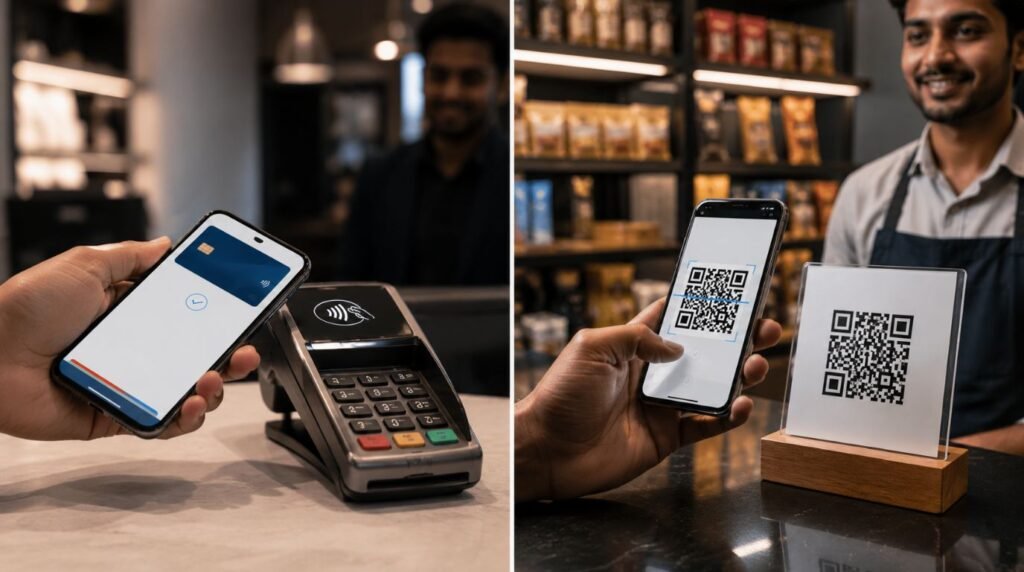
Users can save their cards in Apple Wallet and make contactless payments at compatible point-of-sale terminals using NFC.
No pulling out a wallet. No entering card details. No searching for a physical card.
Just tap.
The real battle could be credit cards
This is where I think the story gets particularly interesting for marketers.
The article suggests Apple is negotiating with major credit-card issuers over the share of interchange fees generated from transactions.
In simple terms, every time a customer uses a credit card, there is an economic value sitting behind that transaction.
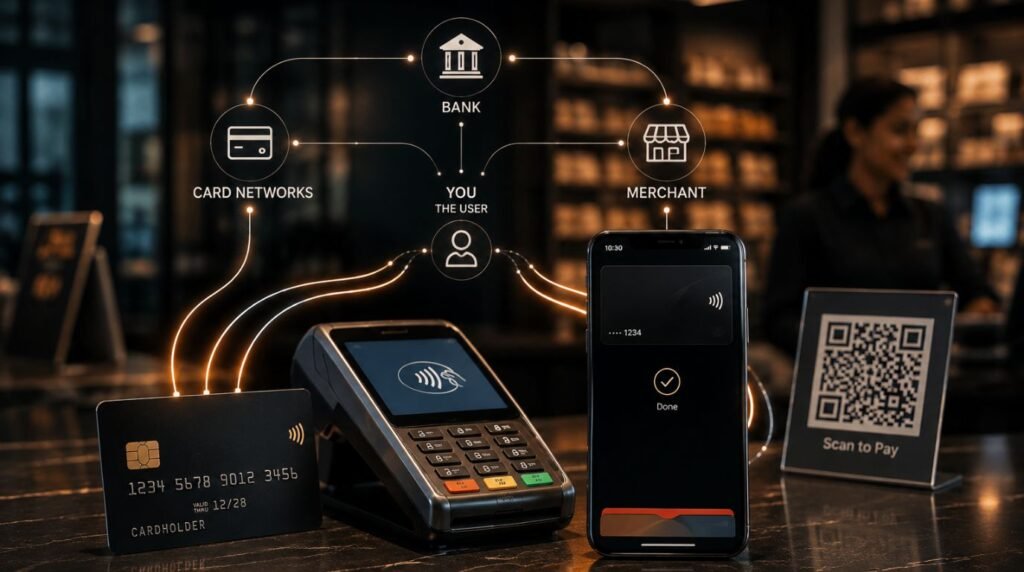
Apple wants a share of it.
And banks want their share.
So the competition isn’t only between Apple Pay and other payment apps.
It is also about who owns the payment interface.
Today, the physical card is one interface.
Tomorrow, the smartphone could increasingly become that interface.
And when that smartphone happens to be an iPhone, Apple naturally wants to be sitting between the consumer and the transaction.
What does this mean for marketers?
I think this is bigger than payments.
Whenever a new technology removes friction from a transaction, consumer behaviour changes.
Amazon did it with one-click commerce.
UPI did it with instant bank-to-bank payments.
Apple Pay is trying to do it with the physical act of paying.
And marketers should pay attention to this because friction is one of the biggest silent killers of conversion.
We spend millions optimising landing pages, creatives and checkout journeys.
Then sometimes ask customers to take six unnecessary steps before they can pay.
The future of commerce is increasingly about making those steps disappear.
Apple has one big problem
India doesn’t need to be convinced that digital payments work.
That battle has already been won.
The challenge for Apple is convincing consumers that Apple Pay is better than what they already use.
That’s a much harder marketing problem.
If I can scan a QR code in seconds using UPI, why should I change?
If my credit card is already contactless, why should I use my phone?
The answer will have to be convenience, security, ecosystem integration and eventually perhaps loyalty or other benefits.
And that is where Apple will have to build a very strong proposition.
My takeaway
I don’t see Apple Pay’s India launch as another payment app entering an already crowded market.
I see it as another step towards payments becoming invisible.
The biggest payment innovation may not be a new wallet, a new QR code or another app.
It may simply be removing the payment experience altogether.
We have already moved from cash → cards → phones.
The next evolution is perhaps:
I don’t pay. My device does.
And if Apple can make that experience compelling enough for India’s premium smartphone users, the company won’t need to beat UPI.
It will simply need to own the moment when an iPhone user decides to tap.
For marketers, that’s the lesson I find most interesting: the winner isn’t always the brand with the biggest feature. Sometimes, it’s the brand that removes the most friction.
As the industry shifts, staying informed about the latest tech news is essential for anyone. Click through to read another thread!