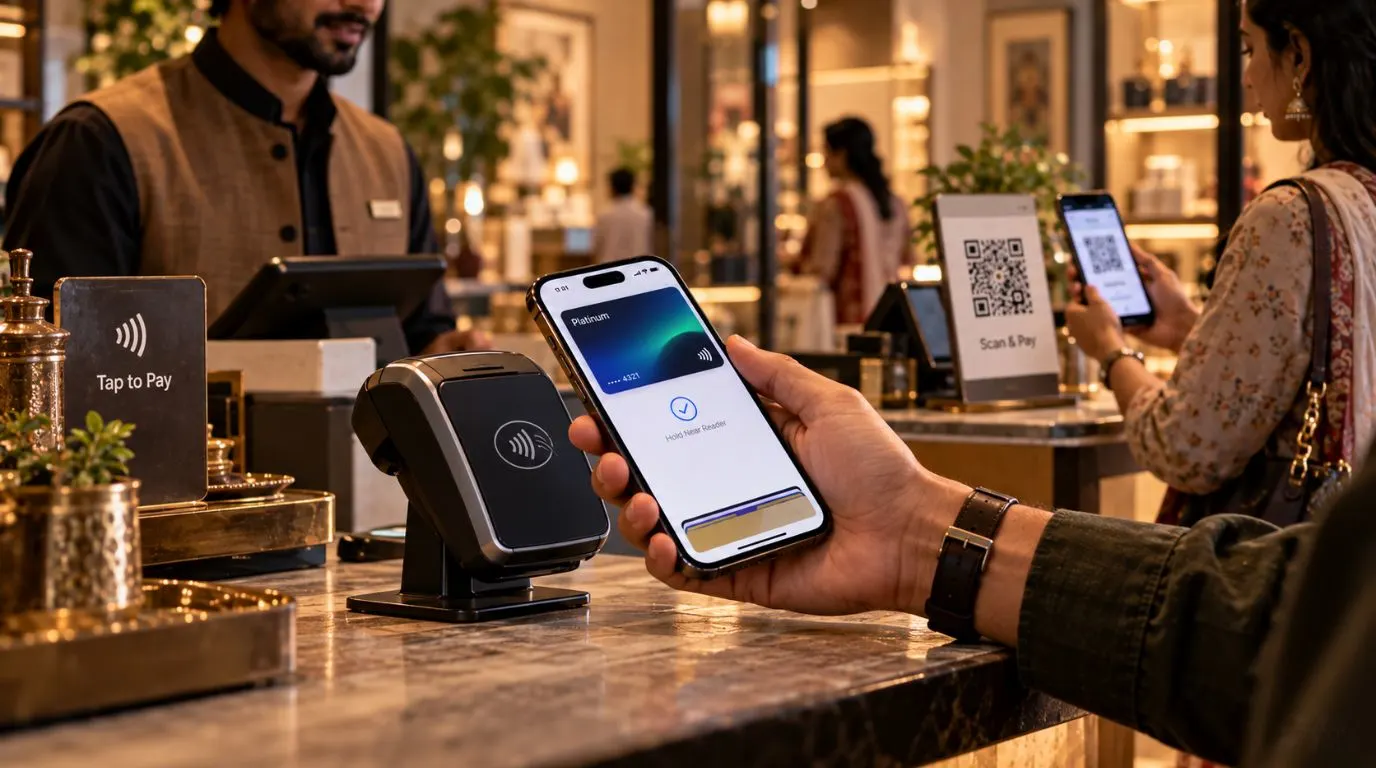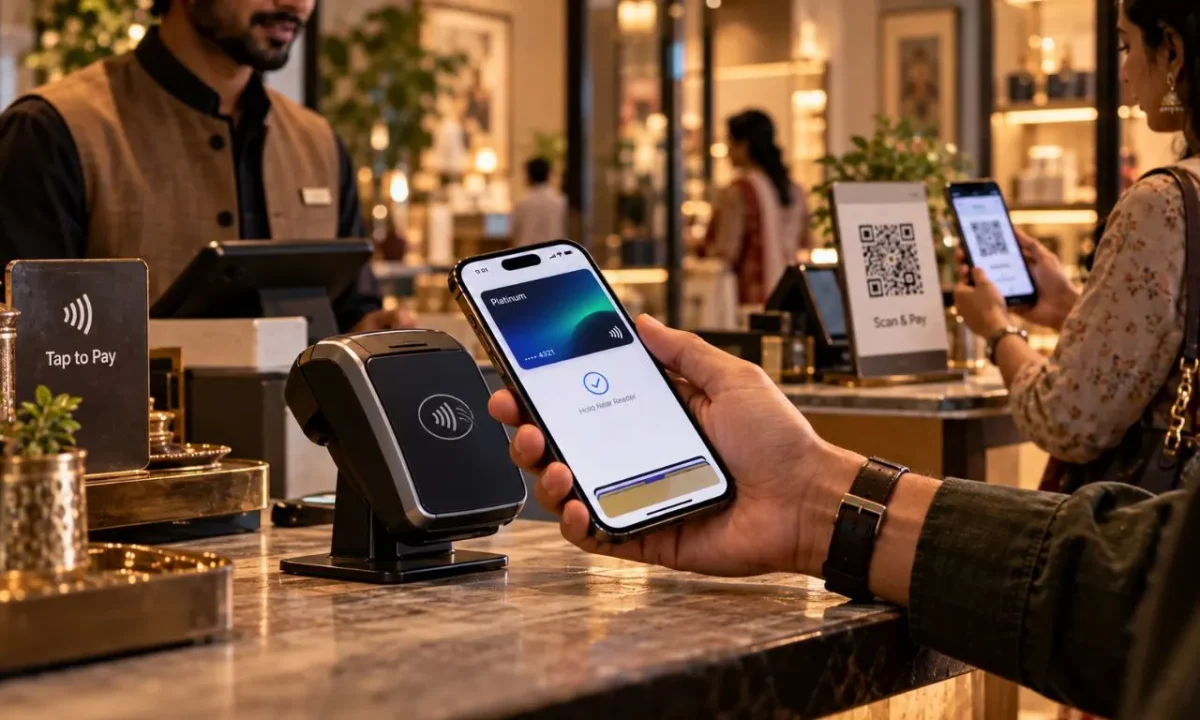

After waiting for 12 years, apple pay in india has finally launched.
And yet, my first reaction isn’t simply “Finally!” for apple pay in india.
It is:
“Interesting. But how much of India’s payments market can apple pay in india actually address?”
The reason is simple.
India doesn’t have a payments problem.
We have a UPI problem for anyone trying to enter payments without UPI.
apple pay in india officially launched on 30 September 2026, initially supporting eligible Axis Bank Visa and Mastercard credit cards. Users can make contactless payments through iPhone, iPad and Apple Watch, with Mac support coming later.
But there is one enormous omission:
apple pay in india does not support UPI.
And it doesn’t support RuPay cards either at launch.
That makes this a fascinating Indian launch.
APPLE PAY IN INDIA IS NOT REALLY ENTERING “DIGITAL PAYMENTS”
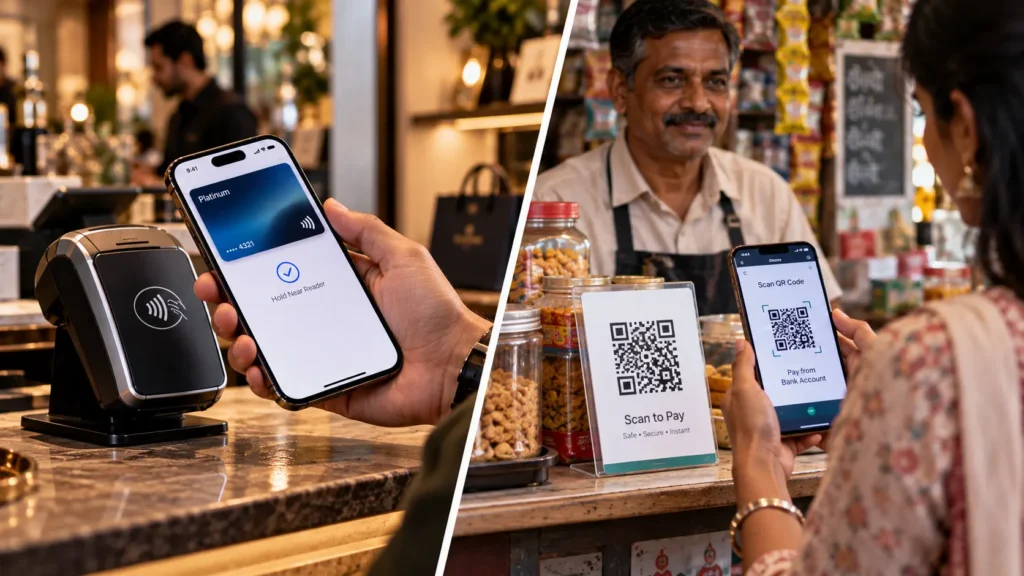
It is entering a very specific part of digital payments:
Card payments.
That’s an important distinction for apple pay in india.
In many markets, opening apple pay in india essentially means putting your bank cards into your phone and using your phone as your wallet.
India is different.
Here, consumers have become accustomed to opening an app, scanning a QR code and paying directly from a bank account.
No card.
No card number.
No traditional card network.
No physical wallet.
Just:
Scan → Pay → Done.
That is what apple pay in india is walking into.
And according to Reuters, UPI accounts for around 84% of India’s digital payment volumes.
So the initial product of apple pay in india isn’t trying to replace India’s dominant payment mechanism.
It is offering an alternative way to use a credit card.
FOR NOW, IT’S AN AXIS BANK STORY
At launch, eligible Axis Bank-issued Visa and Mastercard credit cards can be added to the wallet for apple pay in india.
Axis Bank had approximately 16.3 million credit cards outstanding in August, according to RBI data cited by Reuters.
That gives apple pay in india an immediate user base.
But it is still only one bank.
And that’s where the next stage of the strategy for apple pay in india becomes important.
Apple has held discussions with other major issuers including HDFC Bank and ICICI Bank, but agreements had not been finalised at launch.
SBI Card was also not supported at launch for apple pay in india.
So the eventual scale of apple pay in india will depend heavily on how quickly Apple expands its banking partnerships.
AND THEN THERE’S THE RUPAY QUESTION
This is perhaps the most interesting part.
RuPay is India’s domestic card network.
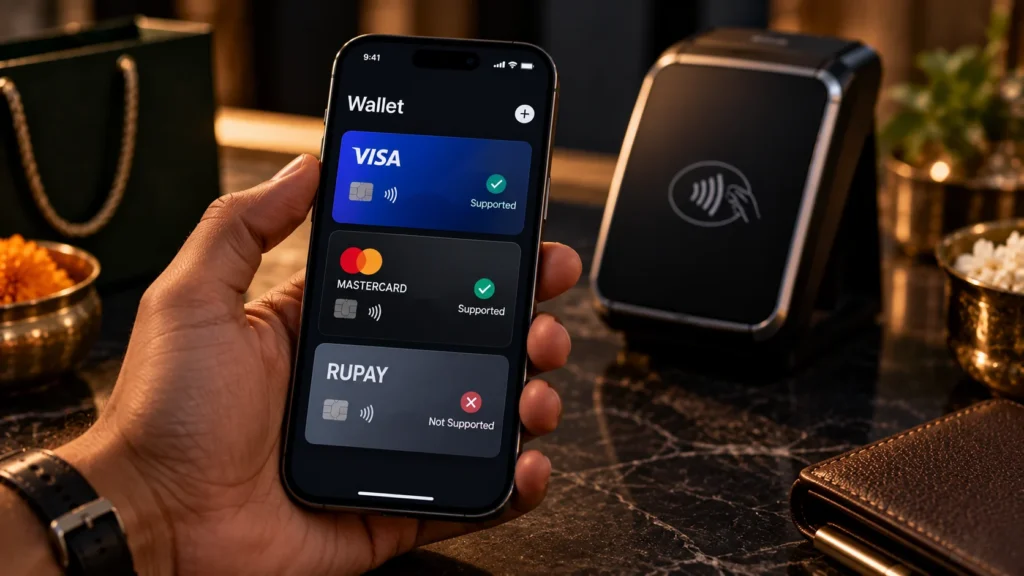
Yet RuPay cards aren’t supported by apple pay in india at launch.
So even if an iPhone user has an Axis Bank credit card, they need to check which network their card runs on to use apple pay in india.
Visa?
Yes.
Mastercard?
Yes.
RuPay?
Not currently.
That’s a fairly unusual situation for an Indian payments product.
And it reinforces the fact that apple pay in india is a card-network integration, rather than a universal Indian payments wallet.
WHAT DOES APPLE PAY ACTUALLY OFFER?
If you have an eligible card, the experience of apple pay in india is quite different from pulling out the physical card.
At a supported contactless terminal, users can authenticate with Face ID, Touch ID or a device passcode and tap their iPhone or Apple Watch.
There is no need to enter a card PIN or OTP at checkout with apple pay in india.
Apple says the actual card number isn’t stored on the device or its servers. Instead, apple pay in india uses a device-specific account number and transaction-specific security mechanisms.
Online and in-app payments can also be completed without repeatedly entering card details, billing information and other checkout information.
That’s where I think apple pay in india has an interesting proposition:
Convenience + Apple’s ecosystem + card rewards + contactless payments.
THE REAL BATTLE MAY BE ABOUT THE APPLE ECOSYSTEM
For me, this is where the launch of apple pay in india gets more interesting.
Apple isn’t necessarily trying to convince an Indian consumer to stop using UPI tomorrow morning.
It is potentially trying to make the Apple ecosystem more useful as a financial interface via apple pay in india.
Your iPhone becomes your wallet.
Your Apple Watch becomes your wallet.
Your stored cards become immediately accessible.
Your payments become another reason to remain within the Apple ecosystem.
And that is strategically important for apple pay in india.
Because Apple has historically been very good at making hardware, software and services work together.
apple pay in india extends that ecosystem into something extremely personal:
Money.
THE PREMIUM CUSTOMER QUESTION
There is another interesting aspect.
Apple’s Indian user base represents a relatively premium segment of the smartphone market.
The initial support of apple pay in india for credit cards also means the service is entering through consumers who already have access to formal card-based credit.
That gives apple pay in india a very different starting point from a mass-market UPI app.
It doesn’t need every Indian consumer to use apple pay in india.
It needs a meaningful number of Apple users to find it useful enough to make it part of their everyday behaviour.
That is a much smaller — and potentially more focused — proposition for apple pay in india.
WHY THE UPI ABSENCE MATTERS
Imagine the everyday Indian consumer.
You go to a neighbourhood shop.
The merchant says:
“UPI?”
You scan.
Payment done.
You need:
An eligible card + supported network + supported payment terminal.
That’s a different proposition.
apple pay in india therefore isn’t competing with UPI on exactly the same terms.
It is competing for situations where card-based contactless payment makes sense.
That could include organised retail, premium merchants, travel, restaurants, online commerce and other environments where card payments are already common.
BUT THERE’S A BIG MARKETING OPPORTUNITY HERE
Apple cannot simply tell Indians:
“Here’s apple pay in india.”
Most consumers will ask:
“Why do I need it? I already have UPI.”
That is the marketing question apple pay in india has to answer.
And the answer probably isn’t “because it’s another payment app.”
It has to communicate a specific benefit.
Maybe:
No OTP at checkout.
Tap with your iPhone or Watch.
Keep using your existing card rewards.
Don’t repeatedly enter card details online.
Use the security built into your Apple device.
Those are tangible benefits for apple pay in india.
THE FUNNIEST PART OF THIS LAUNCH?
Apple has spent years building a reputation around making complicated things simple.
And then it arrives with that initially requires consumers to understand:
Which bank?
Which card?
Which network?
Which device?
Which merchant?
Is it NFC-enabled?
And most importantly:
No UPI.
That isn’t necessarily a weakness of the technology.
It is a reflection of how different India’s payments ecosystem is.
APPLE PAY MAY ACTUALLY BE MORE IMPORTANT FOR APPLE THAN FOR PAYMENTS
This is my biggest takeaway.
I don’t think the immediate story is:
india is going to replace UPI.”
There is nothing in the current launch to support that.
The more interesting story is:
Apple is adding another layer to its ecosystem in India.
The company already sells iPhones, iPads, Apple Watches and services.
Now the iPhone can increasingly become a payment instrument as well.
That creates another reason for customers to keep their financial behaviour inside the Apple experience.
And if Apple eventually adds more banks, more card networks and potentially other payment capabilities, the proposition for apple pay in india could become much broader.
But that’s future territory.
FOR NOW, IS A VERY DIFFERENT APPLE PAY
The global Apple Pay proposition meets a very Indian reality.
India has UPI.
And UPI has fundamentally changed what Indians expect from digital payments.
So Apple isn’t launching into an empty market.
It is entering one of the world’s most developed real-time digital payment ecosystems — but initially through the much smaller card-based segment.
That makes the launch fascinating.
Not because Apple Pay is necessarily going to replace what Indians already use.
But because Apple is finally testing whether its enormous hardware ecosystem can create meaningful space for itself in India’s payments behaviour.
For now, the message is pretty simple:
If you have an eligible Axis Bank Visa or Mastercard credit card, your iPhone can now be your wallet.
If you use RuPay?
Not yet.
If you want UPI?
Not here.
And if you use HDFC, ICICI or SBI Card?
You’ll have to wait for further integrations.
After waiting 12 years, Apple Pay has finally arrived.
But in India, Apple isn’t entering the payments market on India’s terms. It’s asking whether Indians will make room for Apple’s version of payments.
That, to me, is the much more interesting story.
But that’s future territory.
Apple Pay’s India launch and Axis Bank partnership
As the industry shifts, staying informed about the latest tech news is essential for anyone. Click through to read another thread!