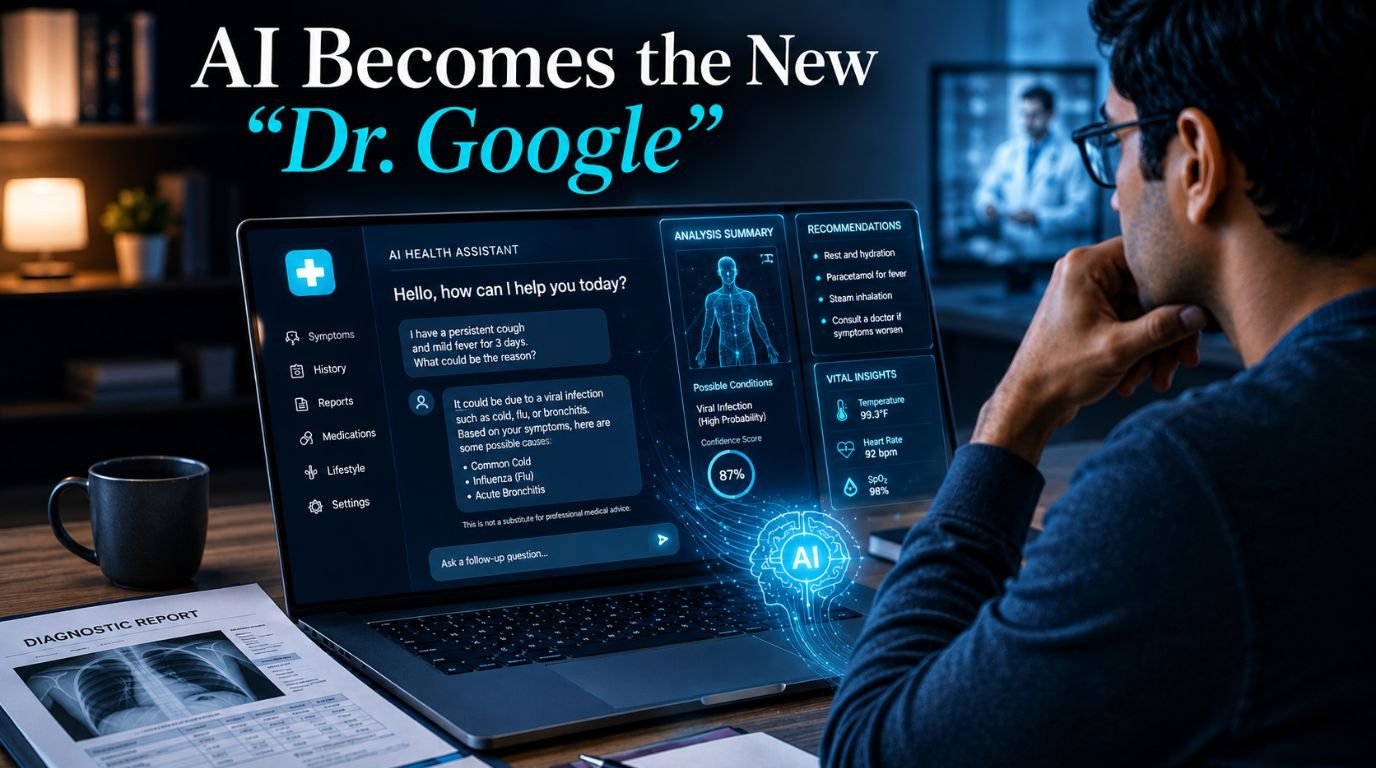
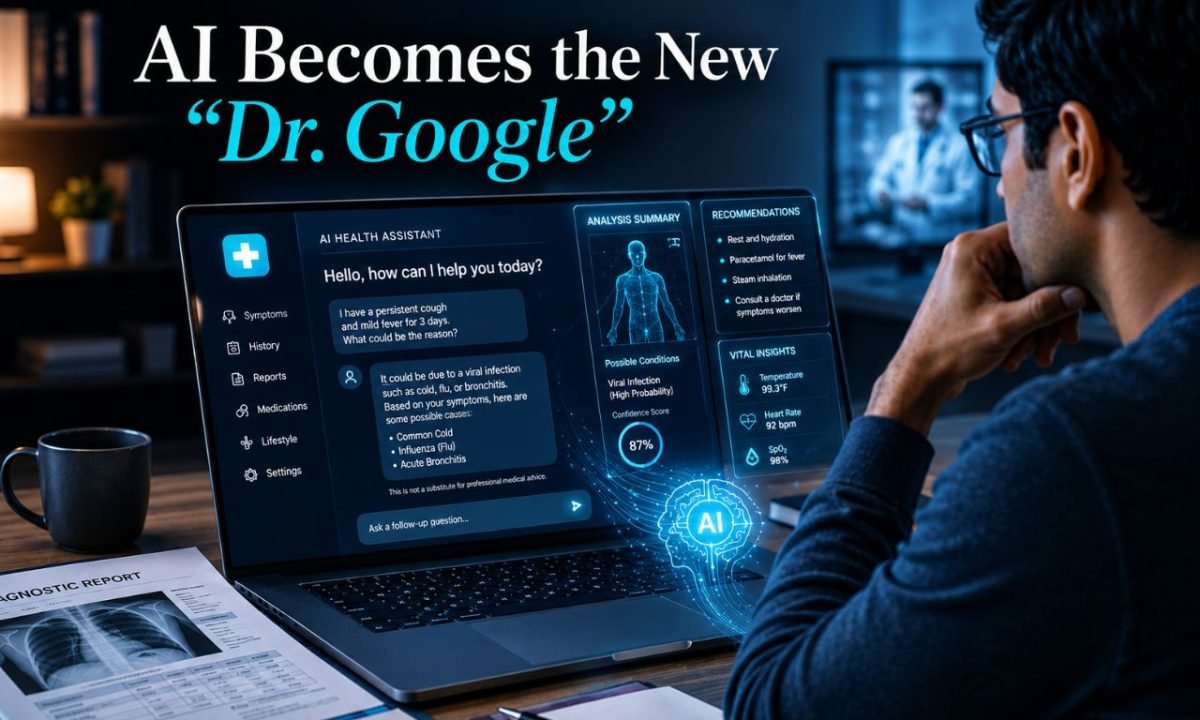

AI Has Become the New “Dr. Google” — And That Should Worry Us
Theme: The growing use of AI for medical advice
There was a time when patients would search their symptoms on Google and arrive at a doctor’s office convinced they had a rare disease.
Now, Google has competition.
It is AI.
And personally, I find this development both fascinating and slightly worrying.
A recent article highlights how patients are increasingly uploading medical reports, imaging results and other health information into AI chatbots before speaking to their doctors. The attraction is obvious: AI can take complicated medical terminology and explain it in language that is easier to understand.
But there is a very important difference between understanding medical information and interpreting it medically.
From “Dr. Google” to “Dr. AI”
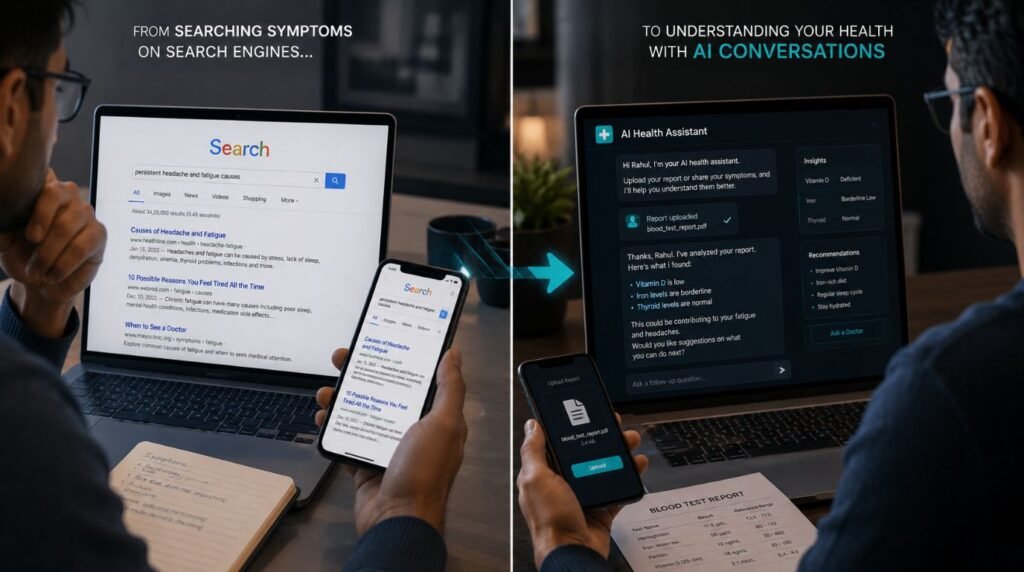
Most adults today can access their medical test results online before they even meet their doctor.
That has already changed the doctor-patient relationship.
Now imagine taking that report, uploading it to an AI chatbot and asking:
“What does this mean?”
Within seconds, you could get an explanation.
That sounds incredibly useful.
And sometimes, it probably is.
AI can help break down complicated terminology, explain what a particular test generally measures and help patients prepare questions for their doctors.
The problem begins when explanation quietly becomes diagnosis.
And I think that distinction is going to become increasingly difficult for consumers to understand.
Why AI Medical Advice Can Be So Convincing
AI can hallucinate.
AI can misunderstand context.
AI can confidently provide an incorrect answer.
We already know all of this.
But the bigger problem, in my opinion, is how convincing the answer sounds.
If an AI gives me a paragraph that says something in a confident, authoritative tone, I may instinctively assume that the answer is reliable.
Healthcare doesn’t work that way.
Two patients can have similar test results and require completely different treatment because of their age, medical history, lifestyle, symptoms, previous treatments or dozens of other factors.
The article gives an example of doctors being concerned that AI could struggle to distinguish between different types of injuries where treatment recommendations vary depending on the specific circumstances.
That is where context becomes everything.
AI sees the report. The doctor sees the patient.
This is probably the most important distinction.
An AI model might see a blood report, an X-ray or an MRI result.
A doctor sees the person attached to that report.
The doctor can ask:
- What symptoms are you experiencing?
- How long have you had them?
- What medications are you taking?
- What is your medical history?
- Has this happened before?
- What changed recently?
- How are you responding to treatment?
That conversation is incredibly difficult to replicate through a chatbot.
And this is where I believe we need to be careful about the way we position AI in healthcare.
AI should make patients better informed, not make them believe they no longer need doctors.
How Patients Can Use AI Responsibly for Health Information

This is where I don’t agree with the extreme reaction of simply saying, “Don’t use AI for health information.”
That isn’t realistic.
People are already using it.
And there is genuine value in using AI as an educational layer.
Imagine receiving a medical report filled with terminology that you don’t understand.
Instead of spending hours searching random websites, you could ask AI:
“Explain these terms to me in simple language and give me five questions I should ask my doctor.”
That, to me, is a much healthier use case.
AI becomes a translator.
Not a doctor.
The privacy question is equally important
There is another issue that deserves much more attention: what happens to the medical information we upload?
Medical reports contain extremely sensitive personal information.
If consumers start casually uploading blood reports, scans, prescriptions and clinical notes into AI systems, privacy cannot be an afterthought.
We have spent years teaching people not to share OTPs and passwords with strangers.
We now need to teach people that medical data is also extremely valuable data.
The convenience of getting an instant explanation should not automatically mean giving away sensitive information without understanding how it is handled.
What this means for marketers
This story is also a fascinating lesson in consumer behaviour.
People don’t necessarily want more information.
They want information they can understand.
That is why AI is becoming so powerful.
It takes something complicated and conversationally simplifies it.
The opportunity for healthcare brands, pharmaceutical companies, hospitals and health-tech businesses is therefore enormous.
But there is a fine line.
The brands that use AI responsibly can become trusted educators.
The brands that use AI merely to push products, make exaggerated claims or exploit patient anxiety could destroy that trust very quickly.
Healthcare marketing has always depended on credibility.
AI makes that requirement even more important.
My takeaway
I don’t think the question is whether people will use AI for medical information.
They already are.
The real question is whether we will learn to use it responsibly.
For me, the ideal relationship is simple:
AI explains.
Doctors interpret.
Patients decide with informed professional guidance.
The danger begins when those three roles get confused.
We have already moved from “Let me Google this symptom” to “Let me ask AI.”
The next challenge is making sure that convenience doesn’t turn into false confidence.
Because when it comes to healthcare, a confident wrong answer isn’t just a bad search result. It can influence a real human decision.
And that is one area where I still believe the smartest technology in the room should know when to say:
“Please speak to your doctor.”
As the industry shifts, staying informed about AI trends is essential for anyone. Click through to read another thread!