
A Throne Doesn’t Make a King. Character Does.
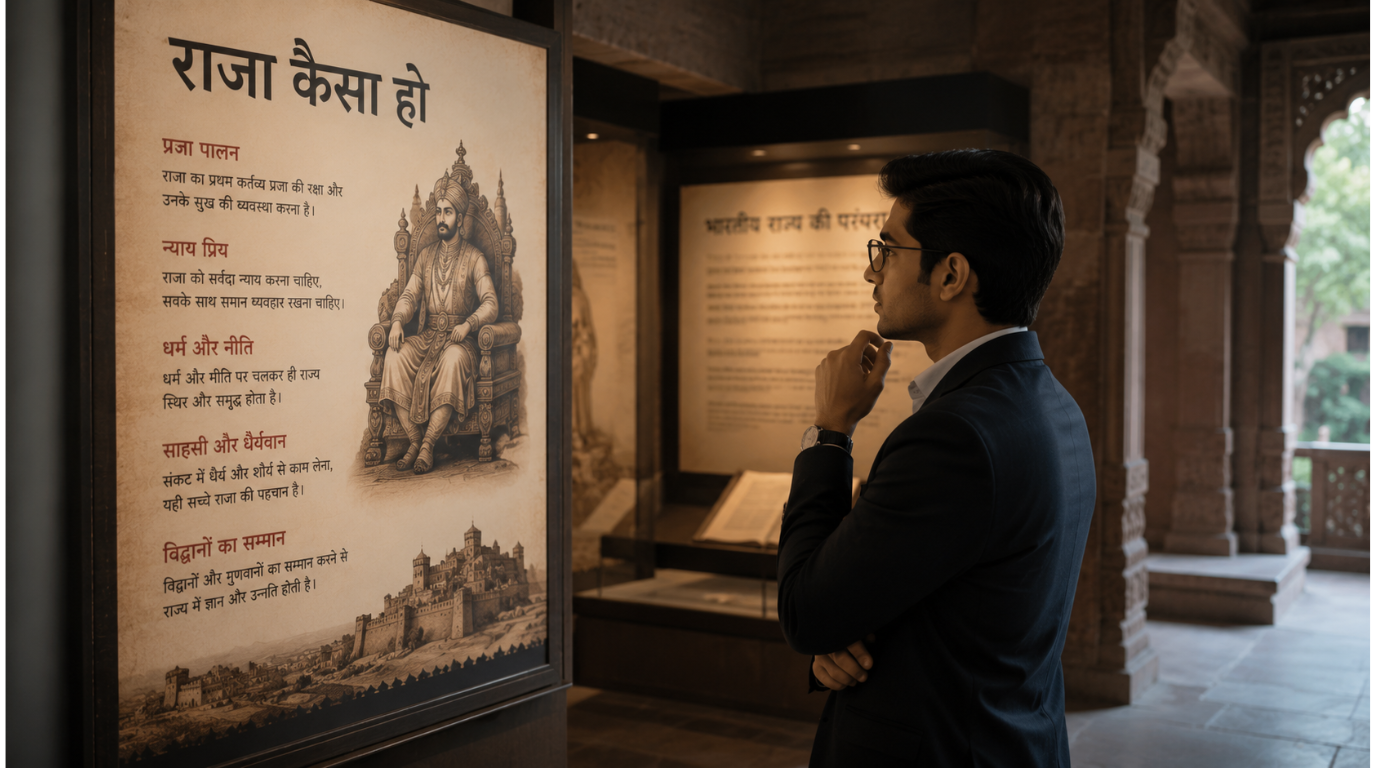
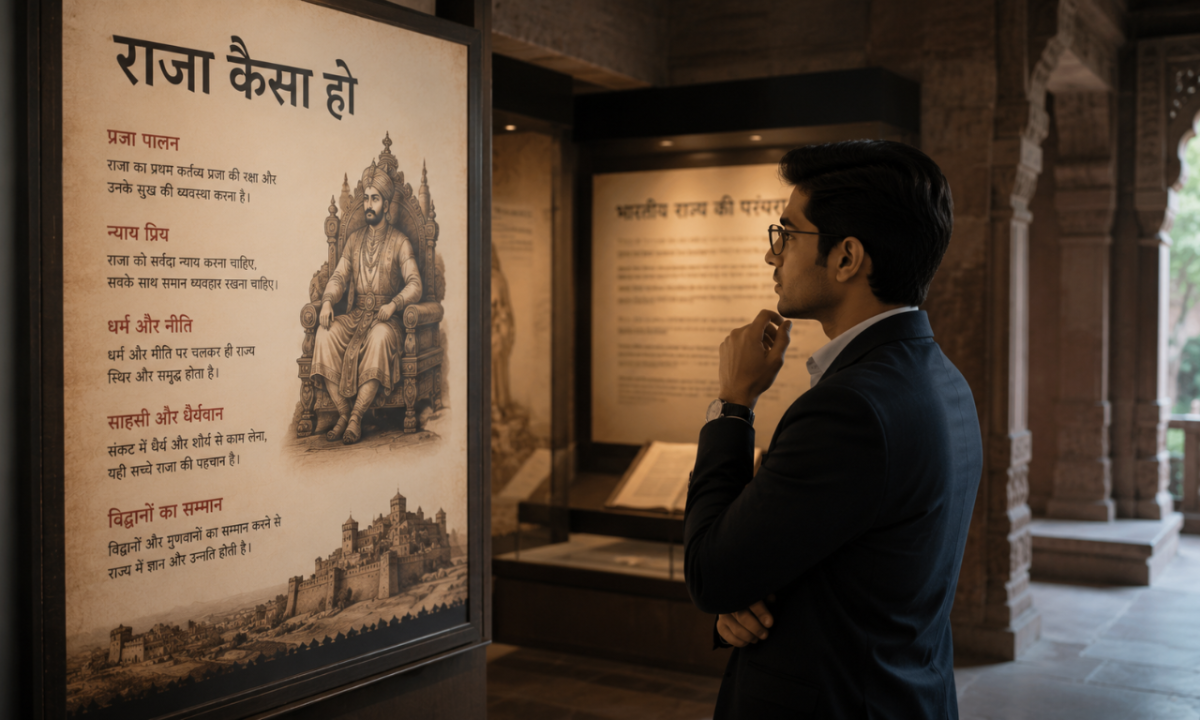
During my travels, I came across this fascinating display titled “राजा कैसा हो” (What Should a King Be Like?).
At first glance, it looked like another historical or spiritual poster. But the more I read, the more I realised it wasn’t talking only about kings. It was talking about leadership.
The poster describes an ideal ruler as someone who possesses the qualities of nature itself:
- As swift and decisive as Indra
- As impartial as Yama
- As illuminating as the Sun
- As fearless as Fire
- As disciplined as Varuna
- As calm and comforting as the Moon
- As prosperous as the Lord of Wealth
What struck me was that none of these qualities mention wealth, status, power or authority. They all describe character.
That’s what makes this message timeless. While the world has transformed through technology, globalization, and artificial intelligence, the foundation of great leadership has remained remarkably consistent. People may follow authority for a while, but they stay loyal to leaders who demonstrate integrity, fairness, and courage every day.
Why Position Doesn’t Make Someone a Leader

Today, we don’t have many kings. But we have CEOs, founders, managers, politicians, creators, teachers, and even influencers.
Every one of them leads someone. And somewhere along the way, we’ve started confusing position with leadership.
A fancy designation doesn’t automatically make someone a leader; neither does a large following on LinkedIn nor a corner office.
Real leadership is about making difficult decisions fairly, protecting the people who trust you, taking responsibility when things go wrong, and remaining humble when things go right.
As someone who trains future marketers and works with founders, I’ve noticed something interesting. The best leaders aren’t always the smartest people in the room. They’re usually the ones who make everyone else in the room feel smarter. They listen more than they speak, ask questions instead of giving orders, and build trust before they build businesses.
In today’s workplace, technical expertise may open doors, but leadership qualities determine whether people choose to follow you. Teams perform at their best when they feel respected, heard, and inspired rather than controlled. Trust has become one of the most valuable assets any leader can earn.
The Balance Every Great Leader Must Learn
Perhaps the most important lesson from this ancient wisdom is balance.
A leader cannot always be soft, nor can they always be harsh. Sometimes they need the warmth of the moon and other times the fire of the sun to stand against what’s wrong.
Leadership is knowing when to be which.
The strongest leaders understand that every situation demands a different response. Sometimes leadership requires empathy and patience; at other times, it demands decisiveness and accountability. The wisdom lies in recognising the difference and acting with purpose rather than emotion.
Technology, AI, and businesses are changing. But the qualities that define great leadership have remained surprisingly constant for centuries. Maybe that’s why this centuries-old message still feels incredibly relevant today.
My Take

The throne, the office, the job title may change. But the leadership qualities embedded in your character never go out of fashion. And in the long run, people don’t remember the power you had. They remember how you used it.
People may admire authority, but they choose to follow character. Titles can earn respect for a moment, but integrity earns trust for a lifetime.
Perhaps that’s why the greatest leadership lessons don’t come from boardrooms alone. Sometimes, they come from timeless wisdom that reminds us what truly matters when power is placed in our hands.
As the industry shifts, staying informed about the latest skills-first hiring news is essential for anyone. Click through to read more such threads!