
The Fastest Trader May Not Be the Smartest. Just the Richest.
For years, we’ve heard the phrase, “Information is power.” It seems we’re now entering an era where information is also a subscription business driven by high-frequency trading data.
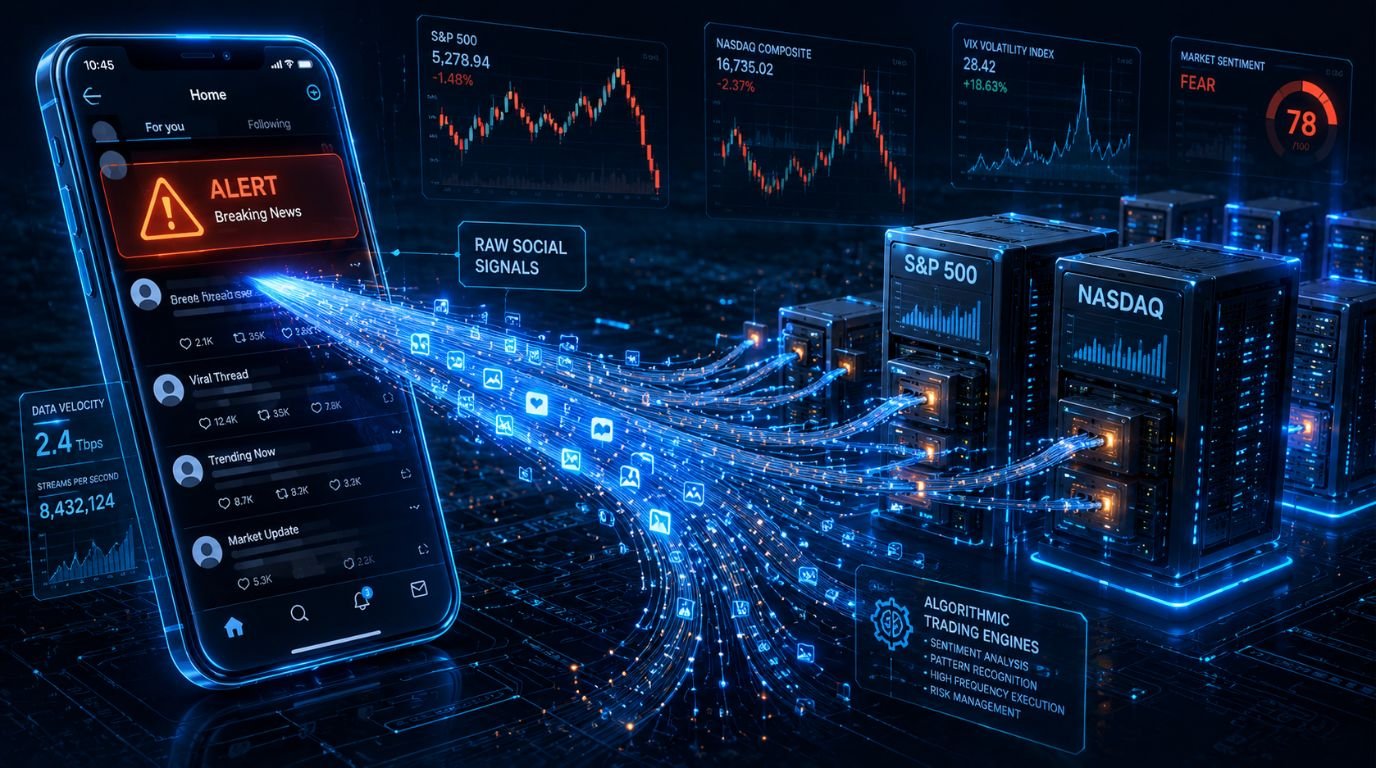
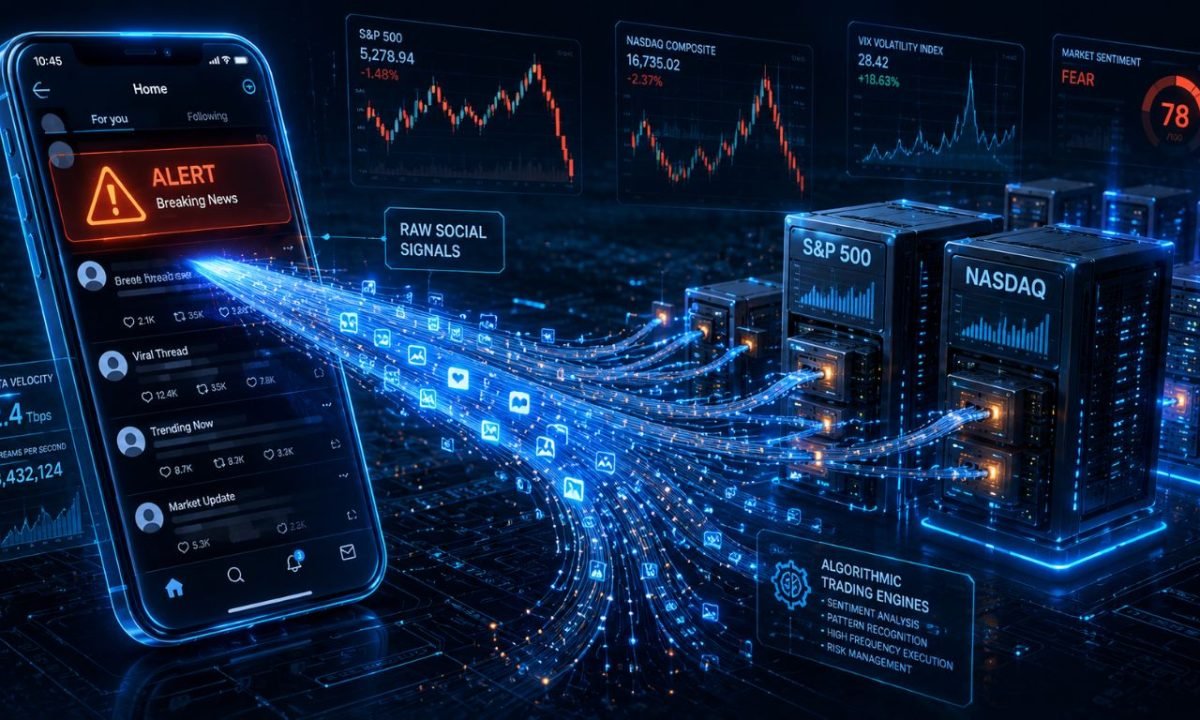
A recent report suggests that Donald Trump’s social media company has explored offering hedge funds and institutional investors an ultra-fast feed of his Truth Social posts for as much as $100,000 per month. The premise is simple: if a presidential post can move markets within seconds, then whoever receives that high-frequency trading data first gains a massive financial edge.
It’s difficult not to pause and think about what this means.
Markets Are No Longer Just Reacting to Earnings
Traditionally, stock markets moved because of quarterly results, economic data, interest rate decisions or geopolitical events.
Today, a single social media post can wipe out billions—or create them. We’ve already seen markets react instantly to posts about tariffs, AI companies, cryptocurrencies and international conflicts. Whether the information is complete or not often becomes secondary. The first reaction usually wins.
The question is no longer what happened? It’s who got the high-frequency trading data first?
Speed Is Becoming a Product
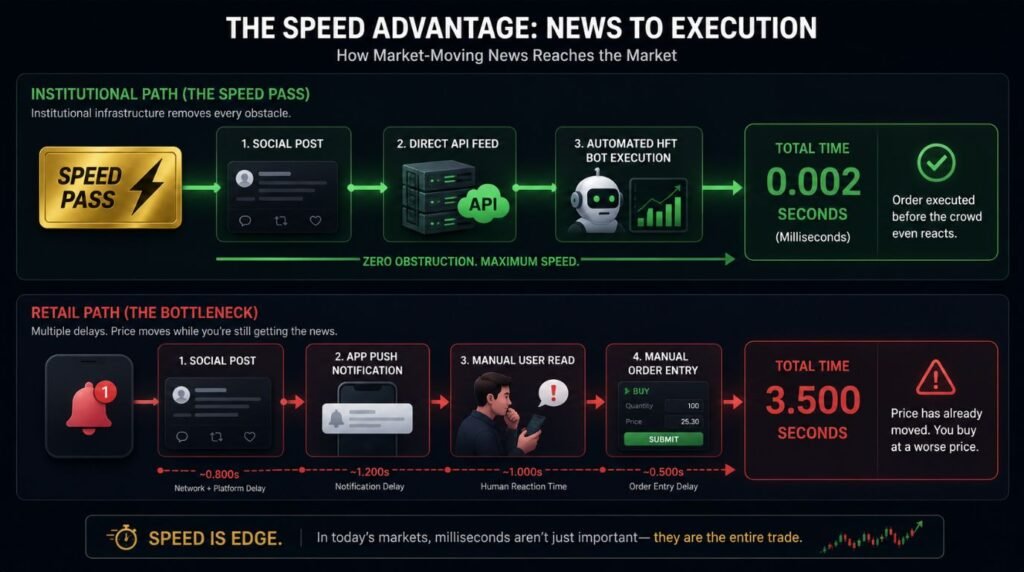
Quantitative funds and high-frequency trading firms have always paid millions for faster data connections because milliseconds matter. Paying for real-time social feeds feels like the next logical evolution of high frequency trading data.
Instead of paying for faster internet cables, firms could now be paying for faster access to influential social media posts.
Strangely, social media itself is becoming market infrastructure. Not because of the technology. Because of the influence.
The Democratization of Information… or the Opposite?
One of the foundational promises of the internet was equal access to information. The monetizing of high-frequency trading data from social channels directly challenges that ideal.
If important market-moving updates become available to paying institutions before everyone else, the playing field changes. Retail investors may still receive the same information. Just a few seconds later. And in today’s markets, a few seconds can be worth millions.
What This Means for Marketers
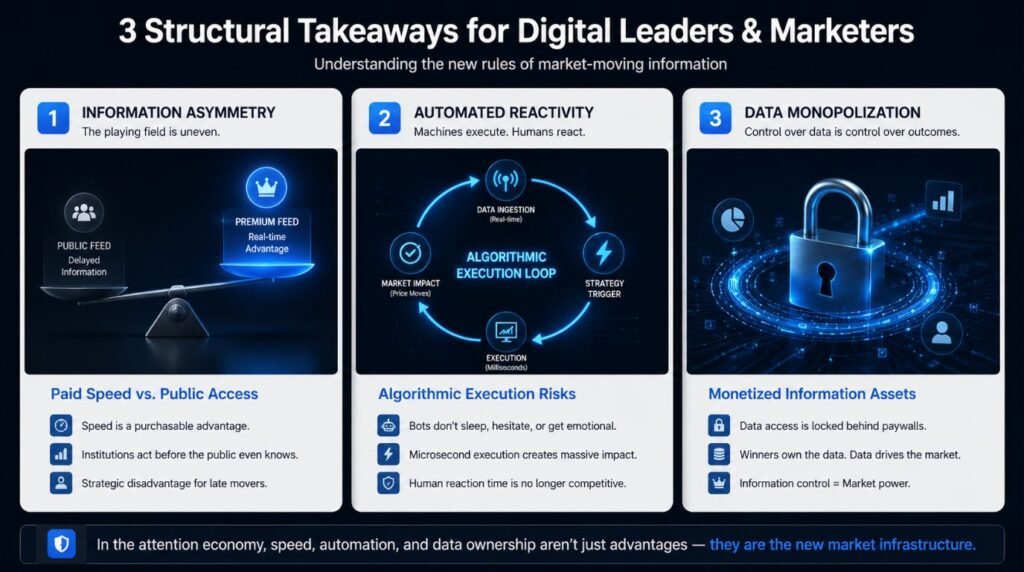
As marketers, we’ve always believed that timing matters. This story reinforces that. Whether it’s finance, advertising, or ecommerce, the value of information isn’t just in what you know.
It’s in when you know it.
Brands are already paying for faster analytics, real-time dashboards, and AI-powered alerts because delayed information often leads to delayed decisions. Speed is quietly becoming a competitive advantage.
The Bigger Question
I’m less fascinated by the $100,000 price tag than by what it represents. We’re moving toward a world where attention, influence and information are increasingly becoming premium assets.
The platforms that once helped people communicate are now influencing elections, moving stock markets and shaping global conversations. That changes how we think about social media.
It isn’t just content anymore. It’s infrastructure.
And perhaps the biggest lesson is this: In the digital economy, information is no longer free. The fastest version of it might become one of the most expensive products ever sold.
Source: Financial Times reporting on Truth Social’s proposed premium data feed for institutional investors.
As the industry shifts, staying informed about digital trends is essential for anyone. Click through to read another thread!