
Meta’s New Subscription Era: The Day “Free” Social Media Started Looking Expensive
Meta Wants You to Pay. And Honestly, This Was Inevitable.
For nearly two decades, Meta built one of the greatest business models in history.
Billions of people used:
For free.
In return, Meta monetized attention through advertising.
It was a beautiful arrangement.
Users got free products.
Advertisers got access to audiences.
Meta got billions in revenue.
Everyone won.
Until AI entered the chat.
The AI Bill Has Arrived
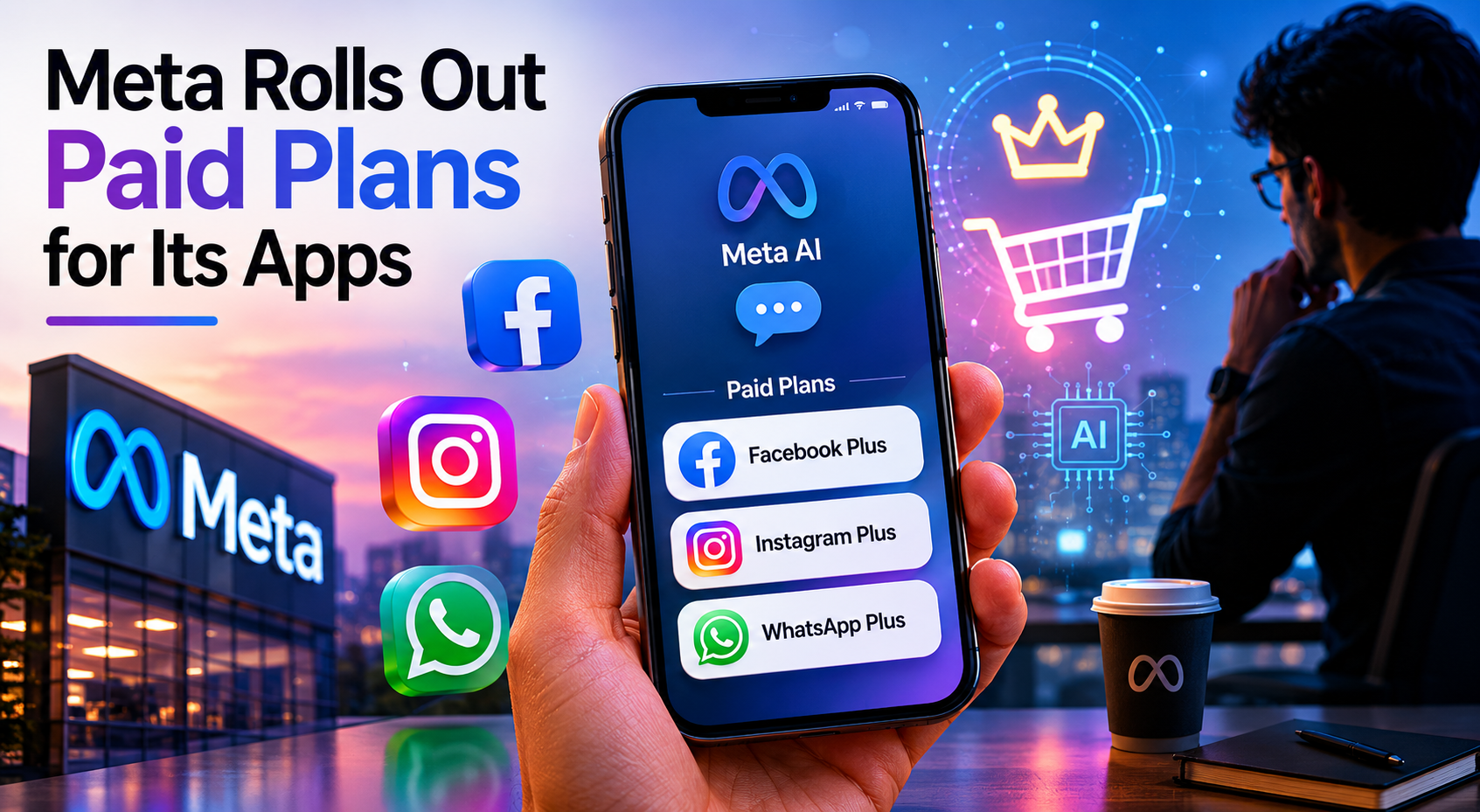
The latest reports suggest Meta is rolling out paid plans across its ecosystem while introducing subscriptions for Meta AI.
Why?
Because AI is expensive.
Really expensive.
We’re talking about:
- Massive data centers
- Thousands of GPUs
- Energy consumption at unprecedented levels
- Billions of dollars in infrastructure investments
For years, social media companies scaled users.
Now they’re scaling intelligence.
And intelligence comes with a much larger bill.
The End of the “Everything Free” Internet?
The internet has been slowly moving in one direction.
Subscriptions.
Netflix.
Spotify.
YouTube Premium.
LinkedIn Premium.
X Premium.
ChatGPT Plus.
And now Meta is joining the party more aggressively.
The assumption that every digital product should be free is beginning to crack.
Consumers increasingly face a choice:
Option A
Use the free version and accept limitations.
Option B
Pay for convenience, speed, features, and better experiences.
That model is becoming the default across tech.
What This Means for Marketers
This development is fascinating from a marketing perspective.
Meta has always been one of the largest advertising businesses on the planet.
Now it is actively diversifying revenue streams.
That changes incentives.
The more revenue Meta generates directly from users, the less dependent it becomes on advertising alone.
And that’s an important strategic shift.
Smart businesses don’t rely on a single source of revenue.
Meta is simply applying that principle at global scale.
The Real Battle Is Not Social Media
Most people will see this as a Facebook, Instagram, or WhatsApp story.
I don’t.
I see it as an AI story.
Every major technology company is trying to answer the same question:
How do we pay for AI at scale?
OpenAI has subscriptions.
Google is introducing premium AI products.
Microsoft bundles AI into enterprise software.
Meta is now creating its own subscription ecosystem.
Different approaches.
Same challenge.
Someone eventually has to pay for the compute.
Will Users Actually Pay?
That’s the billion-dollar question.
People are surprisingly willing to pay when they perceive value.
They paid for streaming.
They paid for cloud storage.
They paid for premium productivity tools.
The challenge for Meta isn’t charging.
The challenge is proving the subscription is worth it.
A blue tick was one thing.
An AI assistant that genuinely saves time, improves productivity, and helps businesses grow is something entirely different.
Final Thoughts
For years, Meta’s business model was simple:
More users → More attention → More ads → More revenue
The next decade may look different:
More users → Better AI → Premium experiences → Subscription revenue
Whether these subscriptions succeed or not, one thing is becoming clear.
The AI era is transforming not just products.
It’s transforming business models.
And the companies that spent years teaching us everything should be free are now teaching us a different lesson:
Intelligence has a cost.
And increasingly, somebody has to pay for it.
What fascinates me isn’t that Meta is charging users.
What fascinates me is that AI is forcing every technology company to rethink how they make money. The products may look the same on the surface, but underneath, the economics of the internet are being rewritten.