
Summary
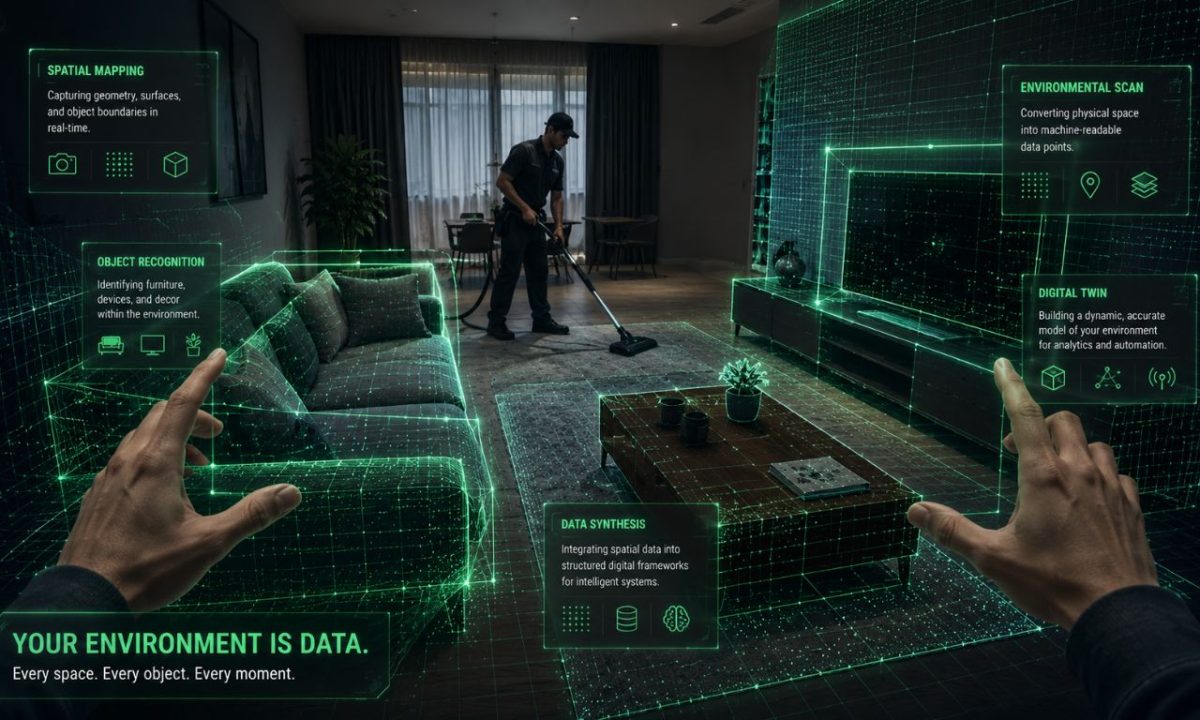
Your home isn’t just a living space anymore—it’s a premium commodities market. As tech companies move beyond scraping textbooks and websites, the race for physical AI training data has arrived inside our kitchens and living rooms. This article breaks down how service workers and everyday chores are quietly being utilized to build spatial datasets for future robotics, why invisible data collection poses a major threat to user consent, and why corporate trust is becoming the most valuable product on the market.
Your Maid Might Be Cleaning Your House, But Your House Might Be Training AI
Welcome to the weirdest sentence I’ve read today!
Imagine this: You book a home cleaning service.
Someone arrives at your house. They clean your kitchen. They mop your floor. They organize your room. Normal so far.
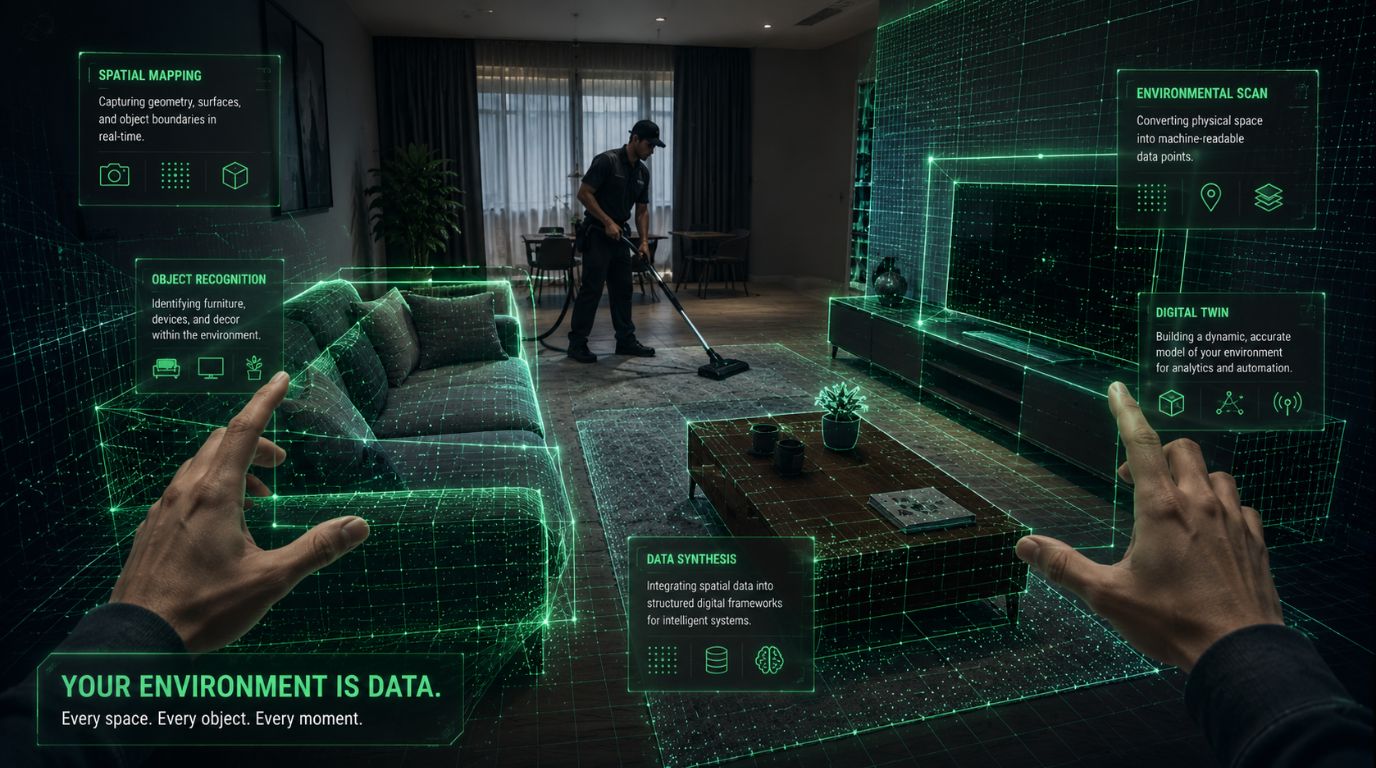
Then you realize: There’s a camera attached to their head.
And suddenly your house isn’t just a house anymore. It has quietly been converted into an asset class for physical AI training data.
AI Is Slowly Entering Places We Never Expected
For years, we thought AI training looked like this:
- giant data centers
- coders writing algorithms
- people labeling images
- computers processing text
Turns out today, the development of physical AI training data looks like:
- living rooms
- kitchens
- bedrooms
- cupboards
- dining tables
Because AI systems that operate in the physical world need something important: Reality.
Messy reality. Not perfect internet images.
The Next Gold Rush Might Be Human Behavior
AI has already consumed:
- websites
- books
- videos
- social media
- articles
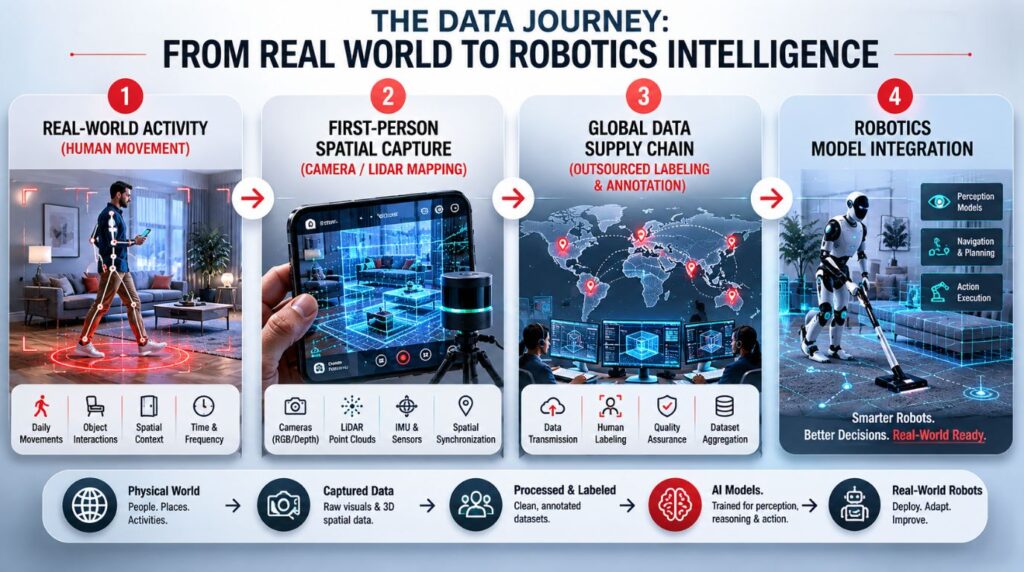
Now companies are racing toward something new: First-person real-world data.
Because if robots eventually need to:
- clean homes
- arrange objects
- navigate spaces
- understand movement
They need to learn how humans actually interact with the world. And your home is full of that information.
The Problem Is Not Technology

It’s Consent And Awareness. This is where things become uncomfortable.
Most people ask: “Is the data anonymous?”
But maybe the bigger question is: “Do people fully understand what they’re agreeing to?”
Because terms like:
- derived data
- movement mapping
- anonymized footage
- training datasets
sounds harmless.
Until you realize that homes contain incredibly personal information:
- photographs
- documents
- habits
- routines
- lifestyle patterns
- family behavior
Your house is basically a biography with furniture. Collecting physical AI training data without explicit, plain-English transparency turns home services into an invasive surveillance apparatus.
We Are Entering The Era Of Invisible Data Collection
And honestly…that may be the biggest shift.
Earlier data collection looked obvious: “Accept cookies?”
Today, it increasingly looks invisible.
Because nobody books a cleaning service thinking, “Fantastic. Today I’ll help train future robotics models.”
Trust Is Becoming The Most Valuable Product
Companies often think they’re competing on:
- price
- speed
- convenience
Increasingly, they may compete on:
- transparency
- privacy
- trust
Because customers are becoming smarter.
People don’t only ask: “What does this app do?”
They also ask: “What happens to my data after this?”
Huge difference.
AI Might Be Learning About Humans Faster Than Humans Understand AI
And that’s the strange part. We’re creating physical AI training data that knows:
- how we move
- what we touch
- how we behave
- how we live
while many people still don’t fully understand what they’re sharing.
Final Thought on Physical AI Training Data
As systems learn how we move and behave faster than we can comprehend the technology, protecting our spatial privacy is crucial.
For years, people joked: “The walls have ears.”
In 2026, the updated version might be: “The walls have datasets.”
Because the future of AI may not just be built in laboratories. It may quietly be built inside homes. Including yours. Ensuring that your personal environment doesn’t blindly become someone else’s physical AI training data is the first step toward reclaiming digital agency.
As the industry shifts, staying informed about tech trends is essential for anyone. Click through to read more such threads!