
Nuclear Energy Is Having an AI-Fuelled Comeback
Theme: The race to power the next generation of AI
I have been following the AI infrastructure story for a while, and one thing has become increasingly clear to me: the next big AI bottleneck may not be chips. It may be electricity.
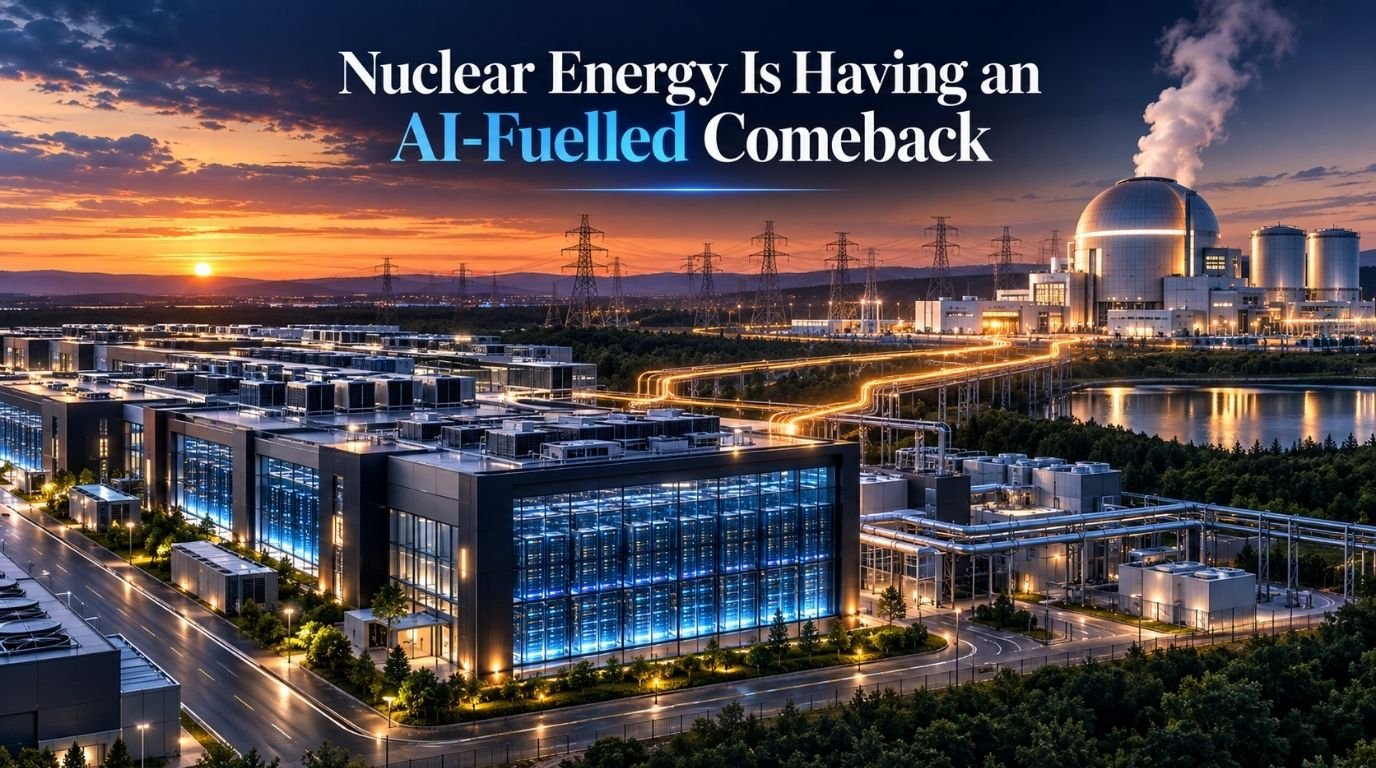
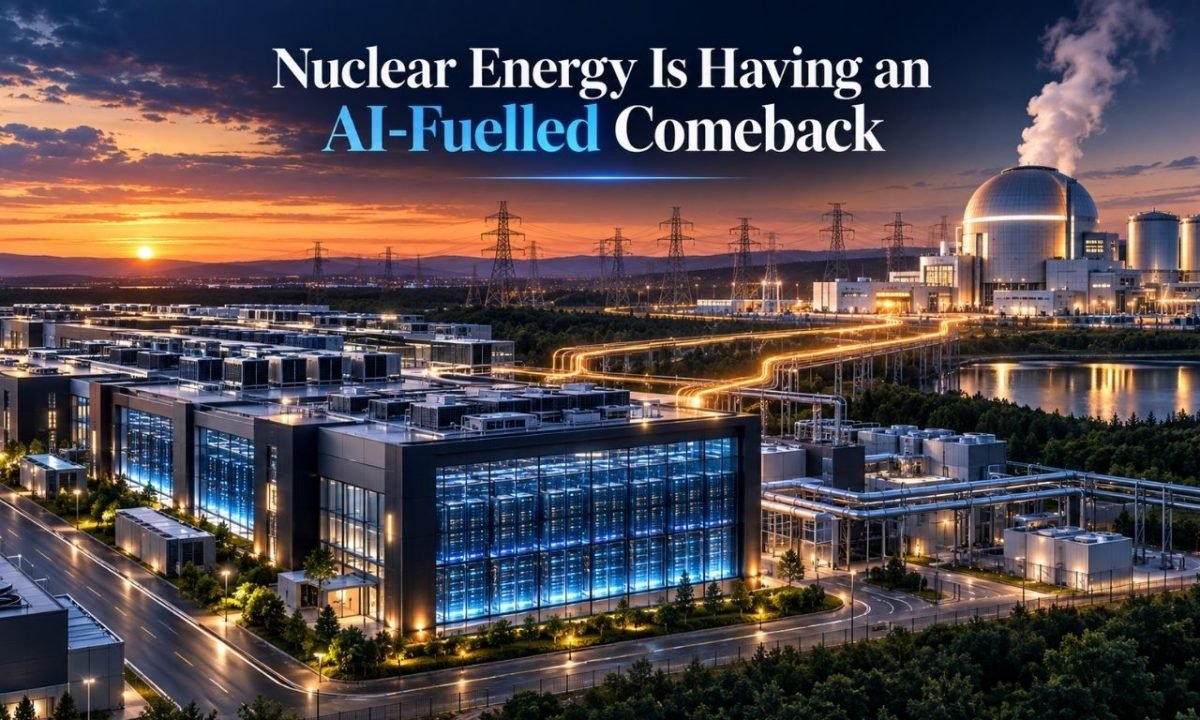
The graphic shared above makes that point beautifully. It shows the growing interest in traditional nuclear reactors, small modular reactors (SMRs) and even microreactors—and, importantly, their potential use for powering data centres.
0C28FA16-062E-43B8-B5C6-48FFF85D479D.jpeg
And this is where AI and nuclear energy suddenly become an interesting combination.
AI Needs More Than Computing Power
We talk endlessly about GPUs, models, data and cloud infrastructure.
But none of these things work without electricity.
AI data centres consume enormous amounts of power, and their demand is arriving at precisely the time when many grids are already struggling with capacity constraints.
That is why nuclear is suddenly back in conversations that, until recently, were dominated by solar, wind, gas and batteries.
The US Department of Energy itself identifies data-centre growth and increasing AI usage as drivers of rising electricity demand, while highlighting SMRs as one possible source of reliable power.
Enter the Small Modular Reactor
What I find particularly interesting is the shift from the traditional nuclear power plant to the Small Modular Reactor.
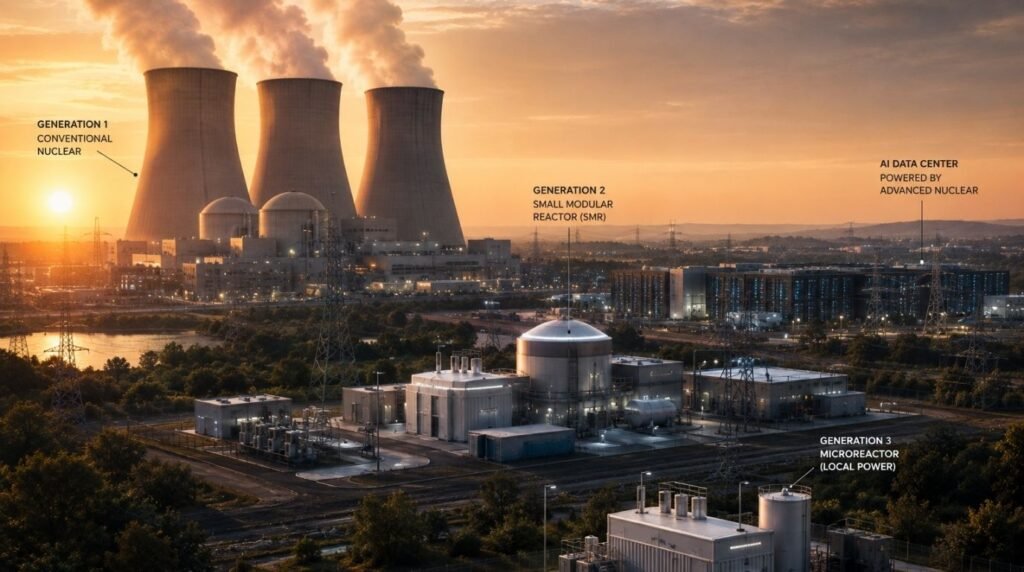
A traditional reactor can generate roughly 593–1,499 MW, according to the graphic.
An SMR is considerably smaller, at around 70–350 MW, while microreactors can be as small as 1–20 MW.
0C28FA16-062E-43B8-B5C6-48FFF85D479D.jpeg
That difference matters.
Instead of building one enormous nuclear plant and connecting it to a massive grid, smaller reactors could potentially be deployed closer to specific industrial facilities or data centres.
The US Energy Information Administration notes that SMRs and microreactors are being considered specifically for AI and data-centre applications where developers may want power without relying entirely on the existing grid.
The Data Centre Could Become Its Own Power Plant
This is the part I find most fascinating.
Imagine a future AI campus where the conversation isn’t simply:
“How much computing capacity do we need?”
It becomes:
“How much computing capacity AND how much dedicated energy capacity do we need?”
That changes the infrastructure equation completely.
The data centre of the future could potentially sit alongside dedicated energy infrastructure—including nuclear generation.
And there are already signs that this isn’t just theoretical.
In July, four US microreactor developers reached a zero-power criticality milestone, with one project even demonstrating electricity generation for AI hardware.
TerraPower’s Natrium project in Wyoming has also received a US Nuclear Regulatory Commission construction permit and is targeting commercial operation in 2031.
But Nuclear Isn’t a Magic Solution
This is where I think we need to separate the excitement from the economics.
Nuclear projects are expensive.
They take time.
They require extensive regulatory approvals.
And SMRs are still moving from development towards commercial-scale deployment.
The US EIA points out that high capital costs and lengthy licensing processes have historically limited nuclear expansion in the US.
So simply saying “AI needs electricity, therefore build nuclear” is an oversimplification.
The real question is whether these new reactor designs can actually deliver reliable power at a commercially competitive cost and on the timeline AI infrastructure requires.
That is still being tested.
The Bigger Business Opportunity
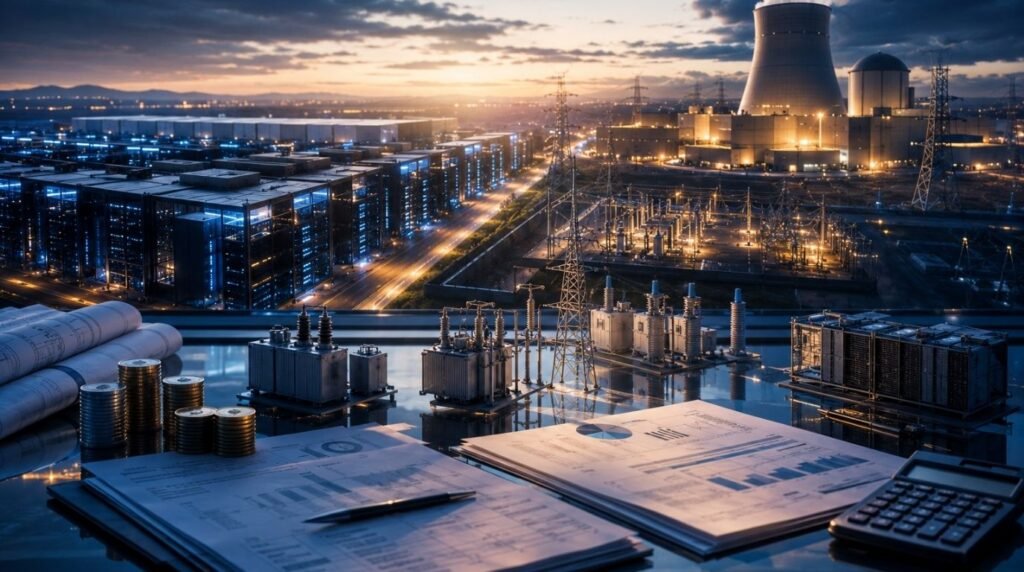
For me, the nuclear story isn’t really about nuclear energy alone.
It is about the infrastructure underneath the AI economy.
Think about the ecosystem:
AI models → Data centres → Chips → Cooling → Electricity → Transmission → Energy infrastructure
If one component becomes a bottleneck, the entire AI ecosystem slows down.
That’s why I think the next generation of AI investment will increasingly move beyond software companies.
We will see more money flowing into:
- Power generation
- Data centres
- Grid infrastructure
- Nuclear technology
- Cooling systems
- Energy storage
- Semiconductor infrastructure
And potentially, companies that can solve the intersection of AI + energy.
What Does This Mean for Marketers?
At first glance, nuclear energy seems very far removed from marketing.
It isn’t.
Every major technology shift eventually creates new categories, new businesses and new consumer behaviour.
The AI revolution is already creating demand for entirely new infrastructure businesses.
For marketers, this means the opportunity isn’t limited to learning how to use ChatGPT or generate AI creatives.
Understanding the businesses being created around AI could be equally valuable.
The marketers who understand the AI ecosystem—from models and chips to data centres and energy—will have a much better understanding of where the next wave of technology spending is going.
My Take
For decades, nuclear energy was largely discussed as a solution to the world’s energy and climate problems.
Now, AI is giving it another reason to exist.
Power the machines that power the intelligence.
I don’t think SMRs will replace every other form of energy. I also don’t think every AI data centre will end up with a nuclear reactor next door.
But I do believe we are entering a period where AI strategy and energy strategy are becoming increasingly connected.
And perhaps the most interesting question of the AI era isn’t:
“Who will build the smartest AI?”
It might eventually be:
“Who will have enough electricity to run it?”
Source
The attached nuclear-energy infographic, supported with current US energy and nuclear-development context from the US EIA, US Department of Energy and NRC. 0C28FA16-062E-43B8-B5C6-48FFF85D479D.jpeg
As the industry shifts, staying informed about AI trends is essential for anyone. Click through to read another thread!