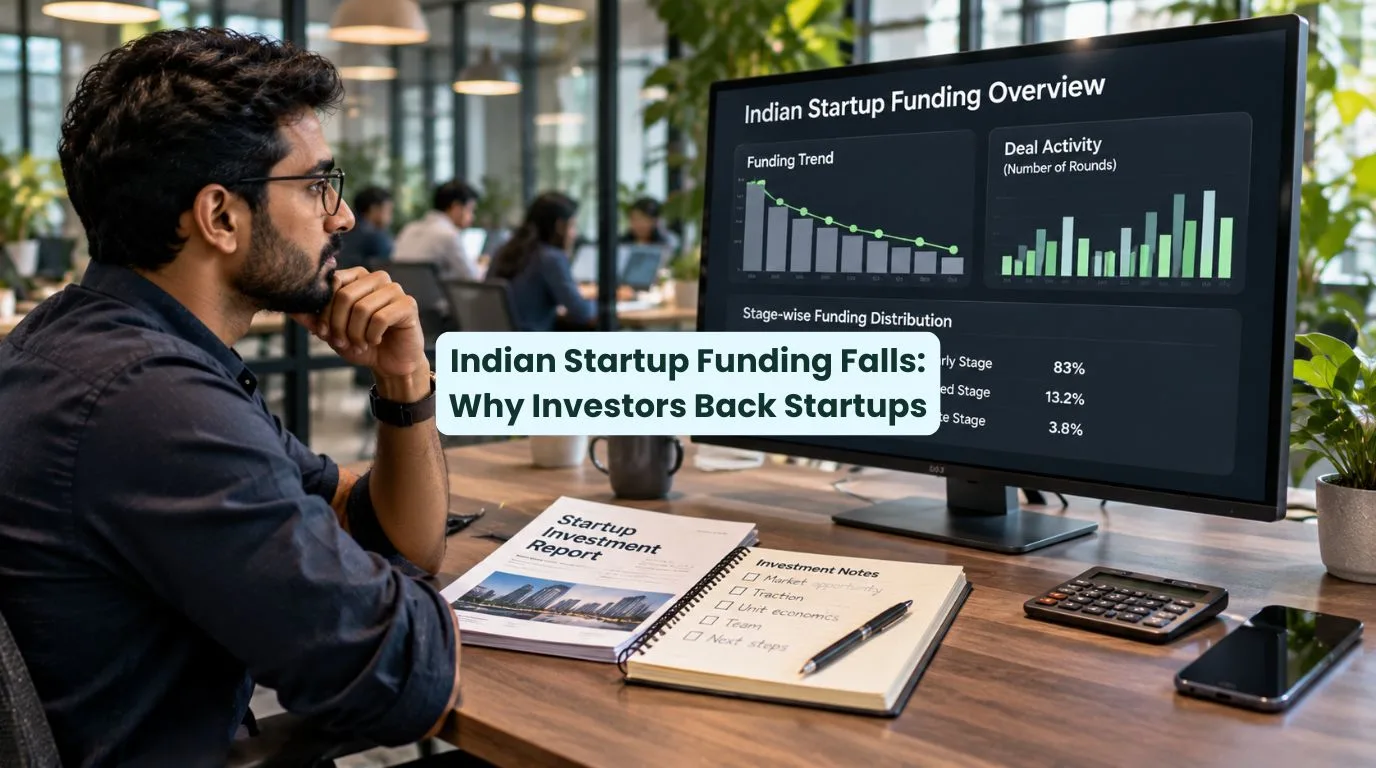


Indian startup funding market appears to be slowing down. Between October 16 and October 31, 2026, Indian tech startups raised $261 million across 46 funding rounds. That is 20.50% less than the previous fortnight and 73.71% lower than the same period last year.
At first, these numbers may make it look like investors are losing interest in startups. But one detail tells a different story. Early-stage companies received 83% of the funding shown in the stage-wise breakdown.
So, if investors are becoming more careful with their money, why are they still investing in young businesses?
The latest Indian startup funding figures raise an interesting question. Are investors leaving the market, or are they simply becoming more careful about which startups they choose?
The Funding Slowdown: What Happened in October?
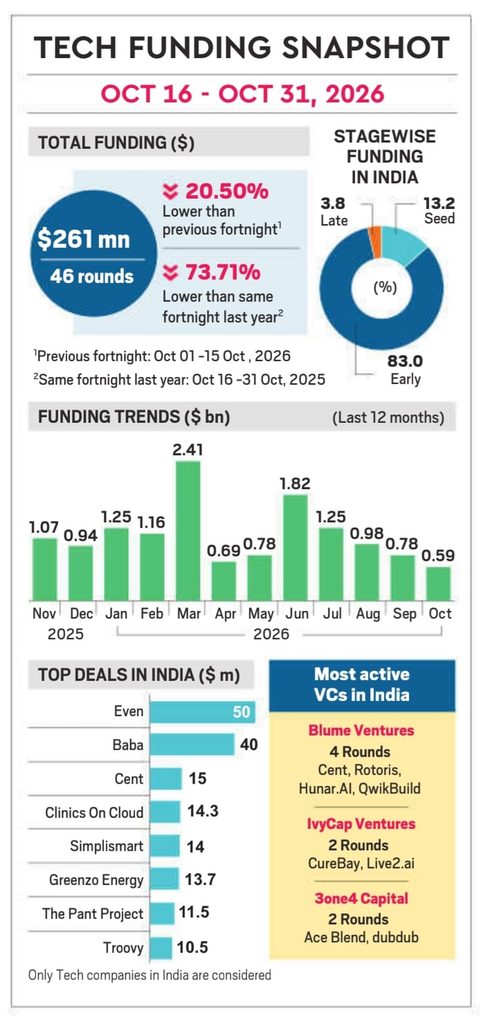
The latest funding snapshot shows that Indian tech startups raised $261 million. They raised this money across 46 deals. These deals took place from October 16 to October 31, 2026.
Compared with the previous fortnight, funding fell by 20.50%. Compared with the same period last year, it was lower by 73.71%. That is a sharp fall. But remember, these figures cover only 15 days and focus on technology companies in India. They do not represent the entire startup market.
The monthly chart in the snapshot also shows that funding has moved up and down over the past year.
For example, funding reached $2.41 billion in March 2026 and $1.82 billion in June. By October, it had fallen to $590 million. This shows why looking at just one period does not tell us the whole story.
Still, the latest Indian startup funding numbers raise an important question. If less money is being raised, which startups are still attracting investors?
Why are Early-Stage Startups Getting Most of The Money?
Here is where the snapshot becomes interesting.
Even though overall funding has fallen, early-stage startups received 83% of the stage-wise funding shown in the graphic. Seed-stage companies received 13.2%, while late-stage companies received just 3.8%.
But what do these stages mean?
An early-stage startup is usually a young company. It is still building its product, finding customers, or testing its business idea.
A seed-stage startup is generally at an even earlier point. It uses its first investments to develop its idea and build the business.
Late-stage startups are more established. They may already have customers, regular income, and a larger team. They often need bigger investments to expand their business.
The figures show that early-stage companies received the largest share of the funding in this breakdown.
This does not mean investors have stopped supporting older startups. However, it does show that early-stage startup funding made up most of the reported investment.
Are Investors Becoming More Careful?
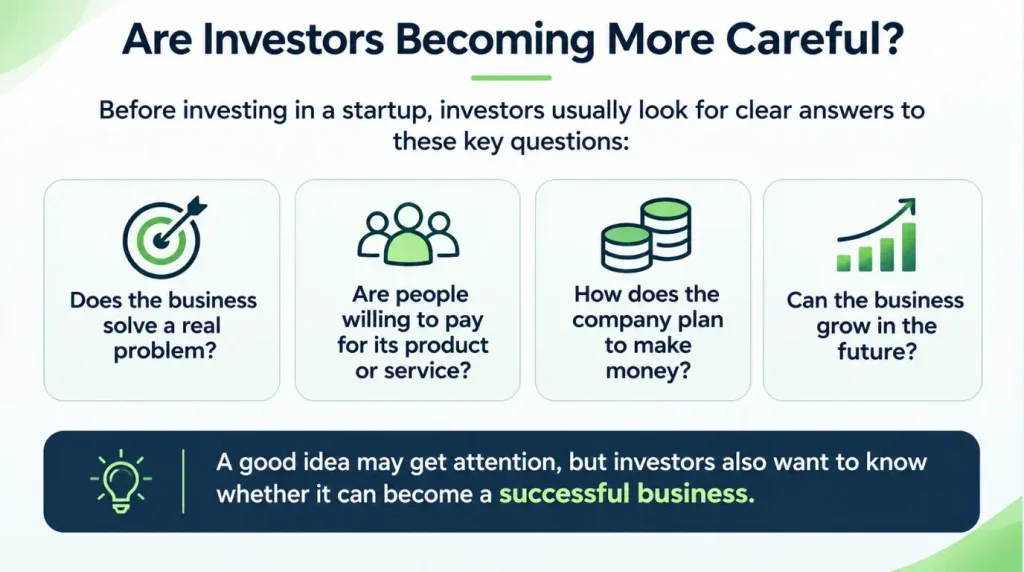
A fall in funding does not automatically mean investors have stopped looking for new opportunities. It could mean they are taking more time before deciding where to invest.
Before putting money into a startup, investors usually want to understand a few things:
- Does the business solve a real problem?
- Are people willing to pay for its product or service?
- How does the company plan to make money?
- Can the business grow in the future?
A good idea may attract attention, but investors also want to know whether it can become a successful business.
This is important because different startups need different amounts of money.
For example, a young company may need a small investment to build its first product. An established company may need a much larger amount to enter new markets or expand its operations.
The risks are different, too. This is why early-stage Indian startup funding deserves attention. Investors may still be interested in new ideas, but that does not mean every young company will receive money.
For founders, the message is simple: having a good idea is only the beginning. They also need to show how their business will work and why customers will choose it.
Some Startups are Still Raising Millions
Even during a funding slowdown, some companies are attracting large investments.
The snapshot lists these as the biggest deals during the second half of October:
| Startup | Funding raised |
|---|---|
| Even | $50 million |
| Baba | $40 million |
| Cent | $15 million |
| Clinics On Cloud | $14.3 million |
| Simplismart | $14 million |
| Greenzo Energy | $13.7 million |
| The Pant Project | $11.5 million |
| Troovy | $10.5 million |
Even raised the highest amount at $50 million, followed by Baba at $40 million. These deals show that large investments are still happening.
However, the snapshot does not explain why these companies received funding or what investors expect from them. A large funding round tells us that investors have backed a company. It does not guarantee that the company will succeed.
The wider Indian startup funding picture is therefore more complicated than simply saying that funding is falling. Some businesses are still raising large amounts, even as the total funding for the period has declined.
Which Venture Capital Firms Are Still Investing?
The snapshot also highlights some of the most active venture capital firms during this period.
Venture capital firms, also called VCs, invest money in startups in exchange for a share of ownership in the business. They hope these companies will grow and become more valuable over time.
According to the snapshot:
- Blume Ventures took part in 4 rounds, including Cent, Rotoris, Hunar.AI, and QwikBuild.
- IvyCap Ventures took part in 2 rounds, including CureBay and Live2.ai.
- 3one4 Capital took part in 2 rounds, including Ace Blend and dubdub.
Blume Ventures was the most active among the three, with four rounds. This shows that some investors are continuing to back startups even when overall funding is lower.
For founders, keeping an eye on active investors can be useful when looking for funding. It helps them understand which firms are currently making investments.
However, the number of deals alone does not tell us how much money each firm invested or whether its investment plans have changed.
What Does This Mean for India’s Startup Market?
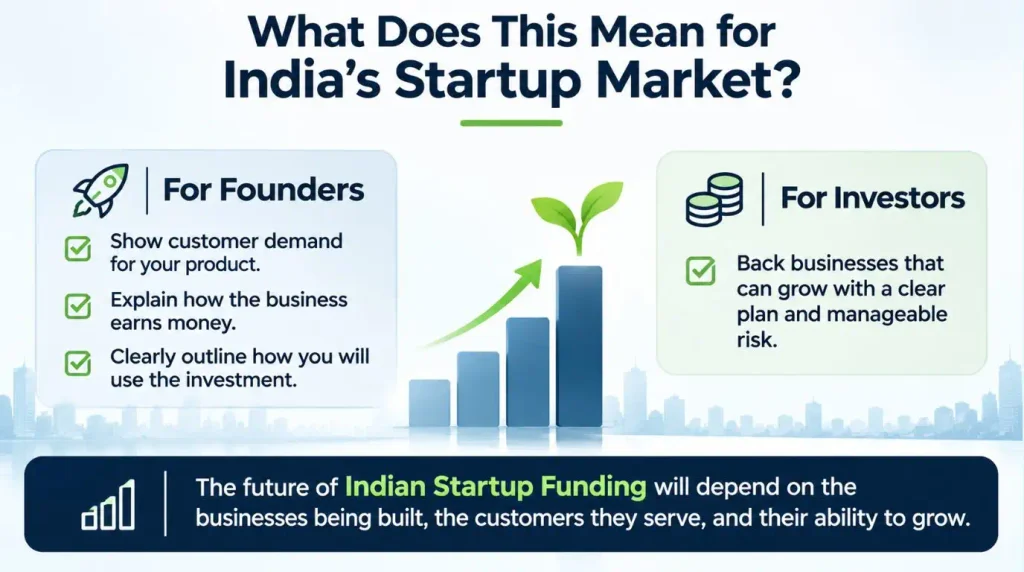
The latest numbers suggest India’s startup market is still active, but funding is not shared equally among companies.
For founders, this could mean preparing better before approaching investors. They may need to show that customers want their products. They must explain how the business earns money. They should clearly describe how they plan to use the investment.
For investors, the challenge is to find businesses that can grow without taking unnecessary risks.
The future of Indian startup funding will depend on more than the amount of money raised in one fortnight. It will also depend on the businesses being built, the customers they serve, and their ability to grow.
DMT Take: Less Indian Startup funding does not mean investors have stopped betting
The latest Indian startup funding snapshot tells two different stories.
On one side, Indian tech startups raised much less money than they did in the previous fortnight and the same period last year. On the other hand, early-stage companies got the largest share of reported funding by stage. Several startups still raised millions.
This suggests that the market is still active, even if the amount and distribution of investment have changed.
But it would be too early to say that investors have completely shifted their attention towards early-stage companies. The snapshot gives us useful clues, but it does not explain every investment decision.
What it does show is that a fall in Indian startup funding does not mean every startup has lost its chance.
The next phase of Indian startup funding may focus less on how much money a company can raise. It may focus more on what it can build with that money.
Because attracting investment is only the first step. Building a business that can stand on its own is the real test.
Sources:
EY-IVCA PE/VC Investment Report, Q3 2026
India Venture Capital Report 2026 – Bain & Company and IVCA
See Also: AI Shopping Agents: Could They Disrupt Amazon’s Business?

Daksh Juneja is a performance marketing expert, trainer, and content creator featured in HT Tech. He helps businesses drive up to 4X ROI through Google and Meta Ads.