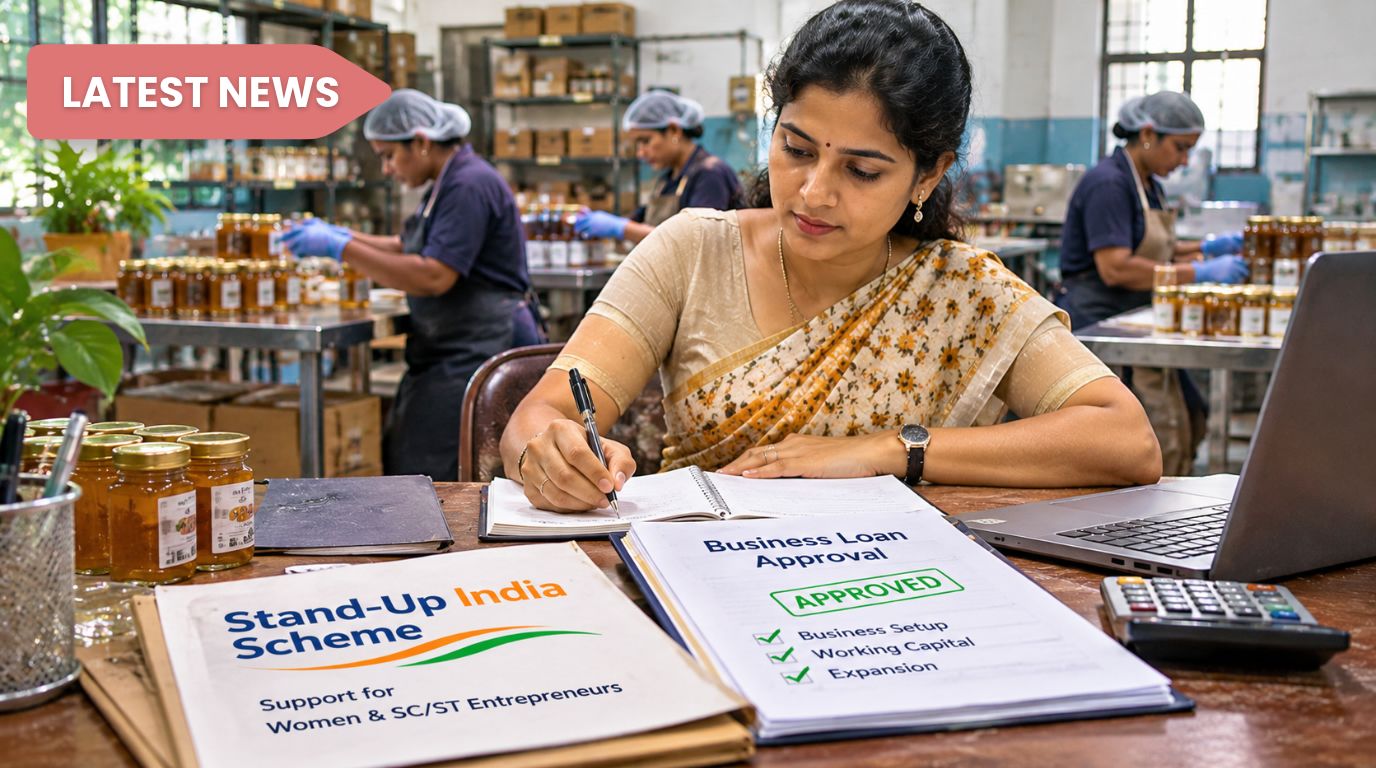


For many years, the career plan for young people was simple: finish college, get a job, earn a salary, and slowly build a career. But some young Americans are beginning to choose a different path. Instead of waiting for an entry-level job, they are starting businesses of their own.
Artificial intelligence, online tools, and easy access to digital services help young people test business ideas. They can do this without a large team or spending a lot of money.
This raises an interesting question for India. With millions of young people joining the workforce, the startup scene is growing. Gen Z is also starting more businesses.
Could Gen Z entrepreneurship play a bigger role in the country’s future?
Quick Answer
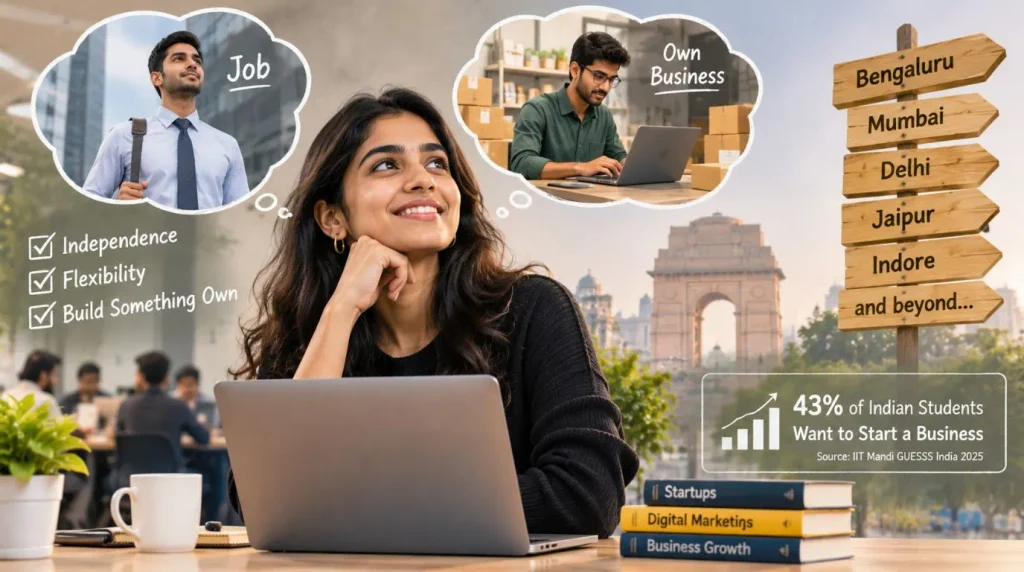
India is already showing signs of growing interest in business ownership among students. IIT Mandi’s GUESSS India 2025 report found that 43% of surveyed college students wanted to start a business. It also found that 22% had already started one. However, wanting to become an entrepreneur and building a successful business are two different things.
What Happened?
A November 2026 report by The Wall Street Journal highlighted how young Americans are moving towards business ownership instead of following traditional career paths.
According to the report, 23% of Americans aged 18–34 ran a business or side hustle in 2025, compared with 19% in 2021. The growing use of AI is also helping young founders manage tasks that once required more people and resources.
But this trend does not affect only America.
India has its own signs of growing interest in Gen Z entrepreneurship. The IIT Mandi GUESSS India 2025 report surveyed 25,783 students. It covered more than 1,200 colleges and institutions. The survey spanned 34 states and Union Territories.
The findings were interesting:
- 43% of surveyed students wanted to start a business.
- 22% had already started a business.
- 16.2% wanted to run their own business immediately after completing their studies, up from 14% in the 2023 survey.
These numbers suggest that business ownership is becoming a serious career option for many Indian students.
Why It Matters
- A salary is no longer the only career goal
For a long time, getting a stable job was seen as one of the biggest signs of career success.
A monthly salary offered financial security, while promotions gave employees a clear idea of how their careers could grow.
But younger people are also looking for independence, flexibility, and the chance to build something of their own.
This is one reason Gen Z entrepreneurship is worth watching. Some young people would rather create a small business than spend years waiting for the right job or promotion.
However, this does not mean every young person wants to become a founder. A stable salary remains important, especially for those with family responsibilities, education loans or other financial commitments.
- India’s students are already thinking about business ownership
The IIT Mandi survey offers an important look at how young Indians view business ownership. More than four in ten surveyed students said they wanted to start a business. Even more interestingly, over one in five had already started one.
This shows that student entrepreneurship is not just an idea discussed in classrooms. Some students are already trying to turn their ideas into real businesses.
However, the report also points to a gap between starting a business and getting customers. Only around one in ten students who were still developing their ventures had made their first sale.
That difference matters. Having an idea is the beginning, but finding customers and earning money are what help a business survive.
For young entrepreneurs in India, learning to sell is important. Managing money is important too. Understanding customers matters just as much as having a good idea.
- Family expectations and money still matter
Starting a business sounds exciting, but it comes with risks.
A regular job usually offers a fixed salary every month. A new business may take months or even years to earn enough money to support its founder. This can make the decision difficult for young Indians.
In many families, people still consider getting a stable job an important step toward financial independence. Parents may prefer a secure salary over an uncertain business idea.
Education loans, household expenses, and the pressure to support family members can also influence career choices.
This means Gen Z entrepreneurship in India may grow differently from the US trend. Young people may want to start businesses, but many will still need financial security before taking that step.
- AI and digital tools are making it easier to start
Starting a business once required several people and a lot of money. Today, digital tools have made some parts of the process easier.
A young founder can use AI to research a business idea. AI can build a website and write marketing content. It can also prepare presentations and manage basic tasks.
A person who wants to sell products online can use e-commerce platforms. They can also use digital payment systems and social media to reach customers.
Research from Gusto in the US found that over 70% of Gen Z entrepreneurs started businesses in 2025. They used AI during the process. This is a US finding, but it shows how technology is changing the way young founders work.
For young entrepreneurs in India, these tools could reduce some of the early costs of starting a business. But technology cannot replace everything. Founders still need to understand customers, manage money, and deliver something people are willing to pay for.
- The next startup story may come from smaller Indian cities
Startup conversations often focus on Bengaluru, Mumbai, Delhi and Hyderabad. But business ideas can come from much smaller cities too.
A student in Lucknow could build an online clothing brand. Someone in Jaipur could start a design business. A graduate in Indore could create a local food delivery service or a digital marketing company.
Better internet access, online payments, and digital platforms make it easier to reach customers beyond local neighbourhoods.
Government figures show that more than 2.23 lakh startups had received official recognition in India by March 31, 2026. These startups had created more than 23.36 lakh direct jobs. This shows how the startup ecosystem has spread across the country. It does not tell us how many businesses Gen Z own.
For Gen Z entrepreneurship, this wider access could create opportunities beyond the country’s biggest business centres.
What Businesses And Marketers Need To Know
The growing interest in business ownership could change how companies connect with younger customers and employees. Businesses may see more young people starting small brands, online stores, service companies and technology ventures.
For marketers, this creates a new group of business owners who need websites, branding, ads, payment systems, and support.
It also means companies may need to rethink how they attract young talent. Offering only a salary may not be enough for people who value independence, learning, and ownership.
However, we should not treat Gen Z entrepreneurship as a replacement for traditional employment. Both can exist together, and many future founders may first gain experience by working for another company.
The Number That Matters
43%.
That is the share of students surveyed in the IIT Mandi GUESSS India 2025 report who said they wanted to start a business.
The survey covered 25,783 students from more than 1,200 higher-education institutions across 34 states and Union Territories.
This is an important sign of interest in student entrepreneurship. But it is not proof that 43% of India’s entire Gen Z population wants to become entrepreneurs.
The gap between wanting to start a business and actually running one remains important.
What Happens Next?
India has a growing startup ecosystem. It has more digital tools. Many young people want to build businesses. But the next stage of Gen Z entrepreneurship will depend on more than ambition.
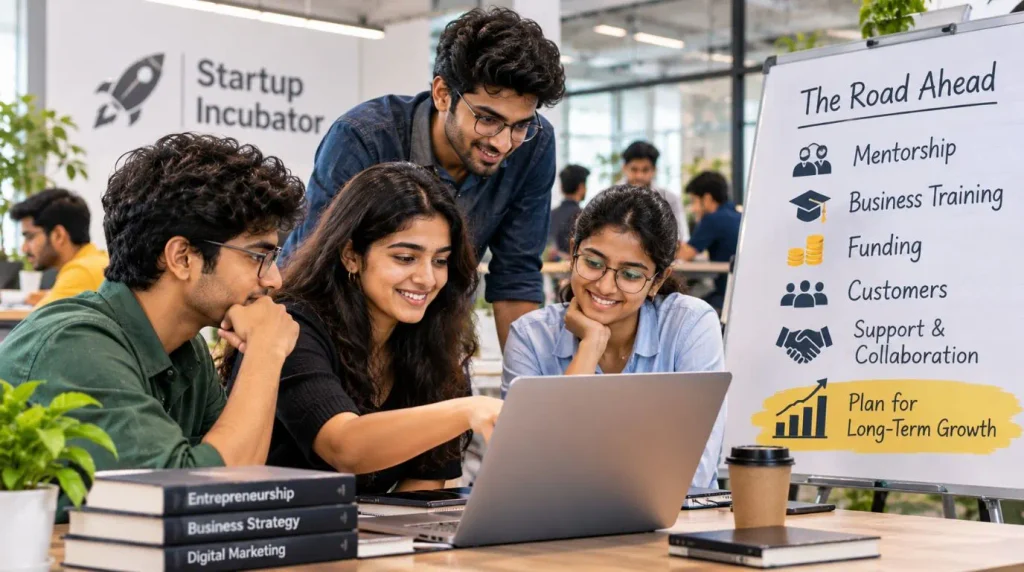
Young founders need mentors, hands-on business training, funding, customers, and support from people who understand business challenges.
Colleges can help by teaching students to test ideas, find customers, and manage money. They should not focus only on business plans and presentations.
Government startup programmes and incubators can also help founders take their first steps.
Most importantly, young people need to know a business is not successful just because it has a good idea. It is also not successful just because it has a popular social media page. It needs customers, revenue, and a plan to survive.
DMT Take
The American trend raises an interesting question for India. But the Indian numbers suggest the conversation has already started here.
More students are thinking about starting businesses, and some are already taking their first steps. That does not mean traditional jobs are going away or that every graduate should become a founder.
A regular job offers experience and financial stability. A business offers independence but also brings risk and responsibility.
The future may not be about choosing one over the other. It may be about giving young people the skills and support to choose the path that works for them.
Maybe the next generation of Indian founders will not wait years of work experience to start something new. Some may begin while they are still in college.
Sources:
- IIT Mandi – GUESSS India 2025 Report: Student entrepreneurship data from India. Press Information Bureau
- GUESSS India: Official research project and report information. guesssindia.in
- Gusto – Gen Z Entrepreneurship 2026: US data on young founders and AI adoption.
See Also: Economic Impact of Air Pollution: 4 Costs India Can’t Ignore

Daksh Juneja is a performance marketing expert, trainer, and content creator featured in HT Tech. He helps businesses drive up to 4X ROI through Google and Meta Ads.