


Imagine you want to buy wireless headphones. Normally, you would open Amazon, search for headphones, compare prices, and read reviews before choosing one.
But what if you could simply tell an AI assistant: “I need wireless headphones under $100 with good battery life. Find me the best option.”
The assistant searches for products, compares their features, and helps you choose. You may not even need to open Amazon. This is the idea behind AI shopping agents. They could change how people find and buy products online. And that could create a new challenge for Amazon.
For years, Amazon has built its business around people visiting its website, searching for products, and making purchases. But what happens when an AI assistant starts doing much of that work for them?
The competition may no longer be just between online shopping companies. It could be between shopping platforms and the AI assistants that help people decide what to buy.
Amazon Built its Business Around People Searching
Think about how you normally shop online.
You open Amazon, type what you need, and get a list of products. You compare prices, check ratings, read reviews, and choose the one you like. During this process, Amazon also gets chances to show you advertisements.
For example, when you search for a laptop, some products may appear at the top with a “Sponsored” label. Brands and sellers place these paid advertisements.
This is a major source of income for Amazon. According to the report behind this story, Amazon earned nearly $70 billion from advertising in the previous year. But this business depends on one important thing: people visiting Amazon and searching for products.
What happens if people no longer need to do that? – This is where AI shopping agents could change the way people shop, giving customers a new way to find products without visiting a marketplace first.
Meet the AI Shopping Assistant
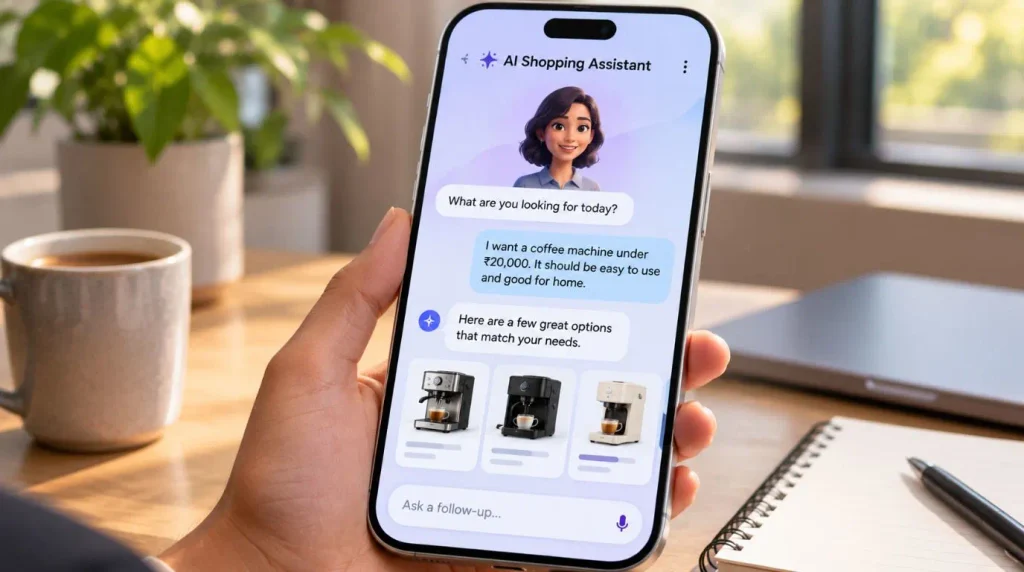
This is where Meta’s Muse comes into the picture.
According to the report, Meta introduced Muse, an animated personal AI assistant, in September 2026. Designers created it to help people with tasks such as shopping, booking travel, and managing budgets.
The report also says that over 10 million people in the United States and Canada set up Muse agents. This happened in its first six weeks. This shows the growing interest in AI tools that can do more than answer questions.
A normal chatbot gives you information. An AI shopping assistant could take things further by helping you find products, compare prices, and complete parts of the shopping process.
For example, instead of searching for a coffee machine yourself, you could tell the assistant your budget and what features you need. It could then look for suitable options.
You explain what you want. The AI does the searching. That is the basic idea behind AI shopping agents.
What Happens When AI Does the Shopping for You?
The biggest change could be in how people discover products.
Today, most people visit shopping websites, search for products, and compare different options. But AI shopping agents could make this process much easier.
Imagine this journey:
You explain what you need → AI searches for products → AI compares prices and features → AI suggests a few options → You choose what to buy.
The customer still makes the final decision, but the AI does much of the research. This could change how people use online shopping websites.
If an AI assistant can compare products from different websites, customers may not need to visit Amazon first. They could simply ask the assistant to find what they need. This creates a problem for Amazon.
Its shopping experience depends on people visiting its website and looking through products. But if an AI assistant does that work elsewhere, Amazon could lose some of those visits.
This is where product discovery becomes important. It simply means how people find new products and decide which ones to buy.
The question is no longer just where people shop. It is who helps them choose what to buy.
Amazon’s Advertising Business Could Face a New Challenge
This is where the story becomes especially interesting.
Amazon makes a lot of money by showing advertisements to people who are already looking for products. But what happens when an AI assistant finds products before the customer visits Amazon?
As AI shopping agents become more common, Amazon may have to rethink how it attracts customers and helps brands reach them.
Consider two shopping journeys.
Traditional shopping:
Customer searches → Sponsored products appear → Customer compares options → Purchase.
AI-assisted shopping:
Customer explains what they need → AI compares products → AI suggests a few options → Customer chooses.
In the second journey, the customer may never see the same sponsored product listings. This could put pressure on Amazon advertising if fewer people use traditional search to find products. It also creates a new challenge for brands.
Earlier, companies paid to show advertisements to people. In the future, they may also need to make sure AI tools can understand and recommend their products. Clear product details, correct prices, useful reviews, and reliable information could become more important.
But there is another concern.
If brands pay to influence AI recommendations, will customers know why the AI suggests a product? Is it suggested because it is truly good, or because a company paid for more visibility?
That is a question both customers and businesses will need to think about.
The Next Battle is About Who Controls the Shopping Journey
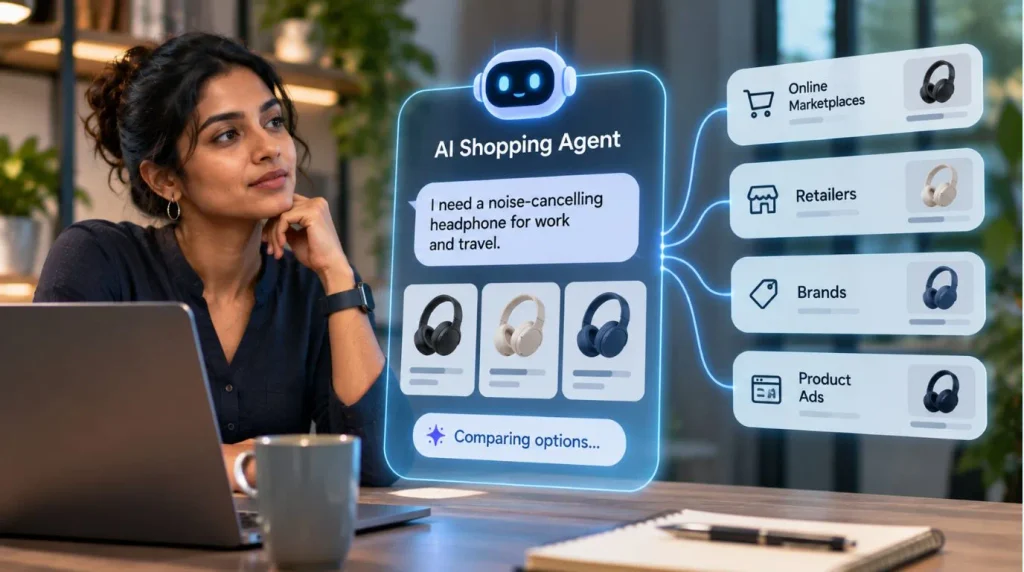
Amazon is not the only company that could be affected.
Retailers, online marketplaces, and brands all want to be part of the customer’s buying journey. But AI shopping agents could become a new middle step between customers and businesses.
Think about it this way.
Earlier, customers decided where to search, which websites to visit, and which products to compare. In the future, they may simply tell an AI assistant what they want. The assistant could decide which websites and products to show them.
That gives AI platforms an important role. They could influence which brands customers discover, which products they compare, and which options they finally consider. This could change product discovery across the internet.
It could also make Amazon advertising less straightforward if fewer customers visit its website to search for products. However, this change will not happen automatically.
People need to trust AI assistants before allowing them to help with important purchases. The assistants must also provide correct information and compare products fairly. And if paid suggestions become part of AI recommendations, companies must clearly explain how those suggestions work.
DMT Take on AI Shopping Agents
For years, online shopping companies have competed to bring customers to their websites. They have invested in search, advertisements, product listings, and customer reviews to help people find what they need.
But AI shopping agents could change where the shopping journey begins.
Customers may ask an AI assistant to find a product for them. They may do this instead of opening Amazon and searching.
This does not mean Amazon will disappear. It still has a large marketplace, millions of products, sellers, and delivery services. But it may have to compete with a different kind of business.
The next battle in online shopping may be about who shapes a purchase before the customer even visits a shopping site.
Amazon spent years building a place where people visit to shop. Now it may have to compete with AI assistants that want to do the shopping on their behalf.
The biggest change may not be where people buy products. It may be who they ask before they buy them.
Sources:
Meta Newsroom – Introducing Muse: The World’s First Personal AI Agent Built for Everyone – Read Meta’s official Muse announcement
Amazon Ads – Sponsored Products – How Amazon Sponsored Products work
Amazon Annual Report 2025 – Read Amazon’s 2025 Annual Report
Meta Muse – User adoption and shopping activity – Meta says Muse has over 10 million users, with shopping a top activity
See Also: Long-form Instagram Videos: Why It Doesn’t Want You to Leave

Daksh Juneja is a performance marketing expert, trainer, and content creator featured in HT Tech. He helps businesses drive up to 4X ROI through Google and Meta Ads.