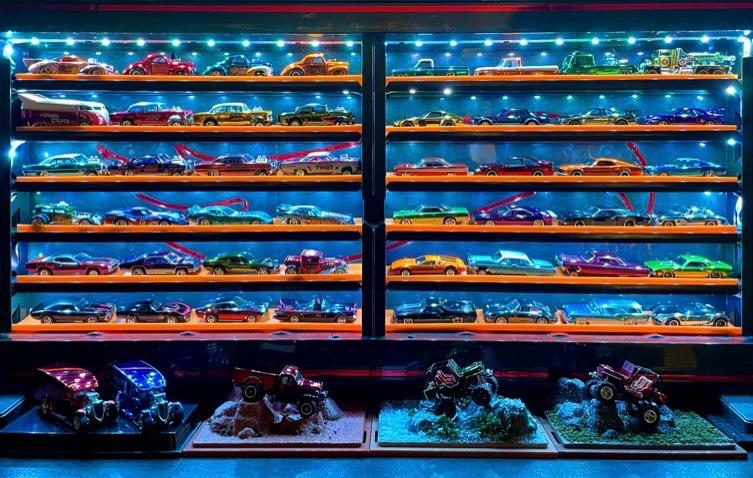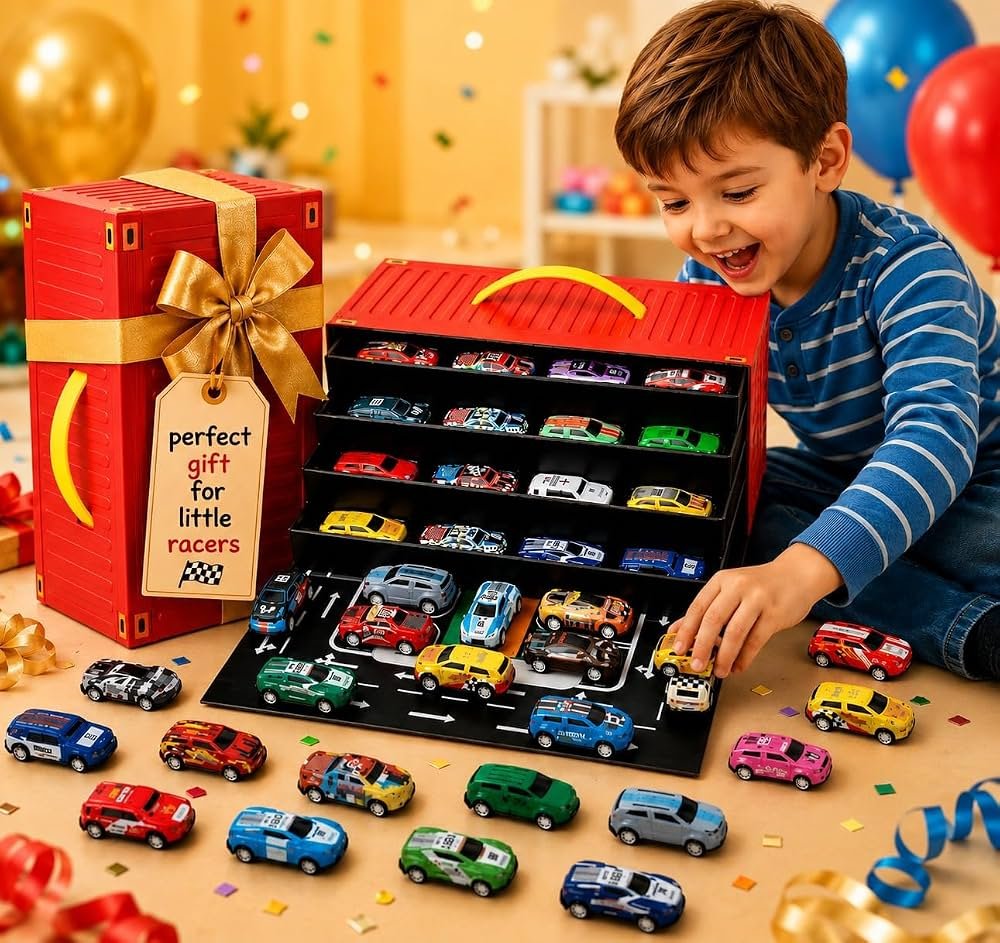
For generations, Hot Wheels has been associated with childhood.
A small die-cast car, an orange track and a race across the living-room floor were enough to make the brand a familiar part of growing up. However, the way people interact with Hot Wheels has changed.
Today, many consumers do not simply buy a Hot Wheels car to play with it.
They search for specific models, compare releases, follow collectors, preserve packaging, display cars and look for rare editions.
That shift is what makes Hot Wheels particularly interesting from a marketing perspective.
Mattel now has a dedicated Hot Wheels Collectors ecosystem featuring collector products, exclusive releases and the Showcase app, which the company says contains an official database of more than 30,000 Hot Wheels cars.
The brand has not stopped being a toy brand. Instead, it has created a path where a consumer can start with an affordable toy and gradually become a collector.
This is where the Hot Wheels marketing strategies become interesting.
The brand combines scarcity, premium products, nostalgia, storytelling, collaborations and community to create something much larger than the physical car.
So, how did Hot Wheels transform an inexpensive toy into a global collectible?
Here are 10 strategies that explain the evolution.
1. Hot Wheels Turned Collecting Into a Hunt
One of the smartest Hot Wheels marketing strategies is the idea of the hunt.
Hot Wheels does not make every model equally difficult to find. Instead, certain models are intentionally harder to discover.
The most famous example is the Treasure Hunt and Super Treasure Hunt concept.
Mattel describes Super Treasure Hunt variations as hard-to-find versions hidden among the regular Hot Wheels assortment. These versions receive premium features such as Spectra flame paint and Real Riders wheels. Mattel Creations
That changes the psychology of purchasing.
A normal toy purchase might look like this:
See → Like → Buy → Play
Collecting works differently:
Search → Discover → Compare → Hunt → Find → Collect → Display
The shopping experience itself becomes part of the product.
Instead of simply asking, “Which Hot Wheels car should I buy?”, collectors can ask:
“Will I find a rare one today?”
That question creates anticipation.
It also encourages consumers to repeatedly check stores and collections. The product becomes a treasure, while the act of finding it becomes a rewarding experience.
In other words, Hot Wheels has effectively gamified retail discovery.
This is an important lesson for other brands: scarcity can be more powerful when it creates a story around the purchase rather than simply restricting availability.
2. It Created Different Levels of Collecting
Another major strategy is the way Hot Wheels has created different levels of participation.
Not every consumer wants the same product.
A child may simply want a cool car.
A teenager might become interested in specific vehicle types.
An automotive enthusiast may want realistic models.
A serious collector might want limited editions that are difficult to obtain.
Hot Wheels can address all of these audiences through different product tiers.
The ecosystem includes regular mainline cars as well as products such as Premium, Elite 64 and Red Line Club releases. The current Hot Wheels Collectors platform specifically positions these as part of its collector offering. Mattel Creations
This creates a natural progression:
Child → Casual buyer → Enthusiast → Collector → Serious collector
The important part is that consumers don’t have to begin at the top.
They can enter the brand at a low price and gradually increase their involvement.
This is an excellent example of customer progression marketing.
The same consumer can therefore have several different relationships with the brand over their lifetime.
3. Premium Products Changed the Perception of the Brand
If Hot Wheels only sold basic toy cars, it would be much harder to build a serious collector ecosystem.
Premium products change that perception.
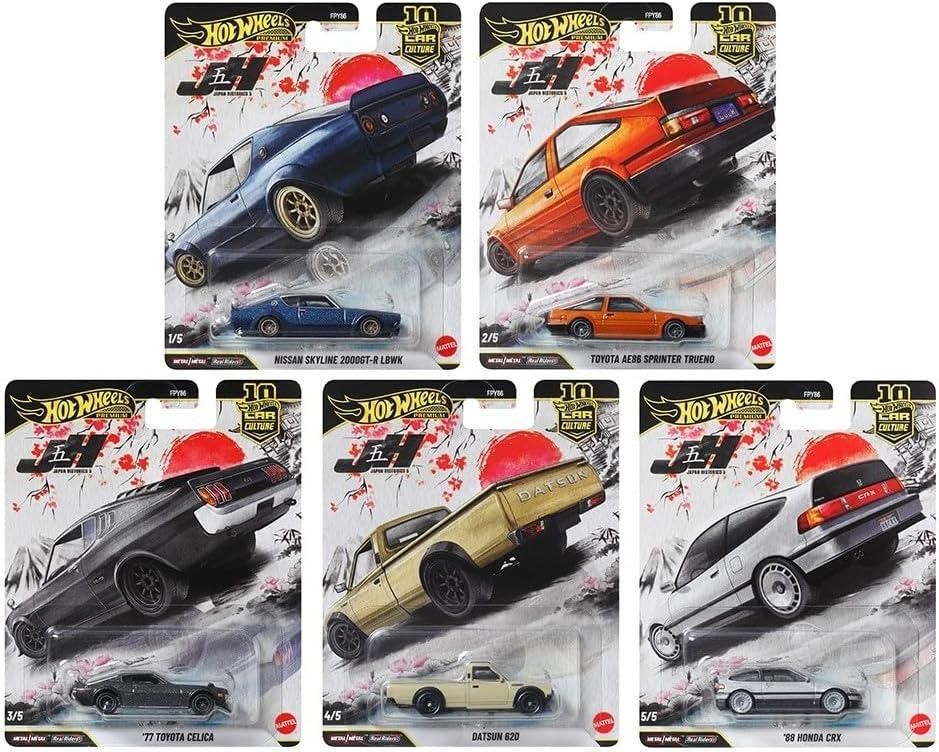
Hot Wheels Premium Car Culture models use features including Real Riders wheels, Metal/Metal bodies and chassis, realistic castings and detailed decorations. Mattel also specifically highlights the packaging’s display value. Mattel Creations
This matters because collectors often look beyond simple play value.
They may care about:
- Accuracy
- Materials
- Paint
- Wheels
- Scale
- Licensing
- Packaging
- Authenticity
- Display value
Consequently, a premium Hot Wheels car can function as both a toy and a miniature automotive model.
That expands the brand’s audience.
A consumer who would never consider buying a children’s toy may still be interested in a highly detailed miniature version of a Porsche, BMW, Nissan or racing car.
Hot Wheels therefore occupies multiple categories simultaneously:
Toy + die-cast model + collectible + automotive merchandise + nostalgia product
That flexibility is one of the strongest aspects of its marketing model.
4. Hot Wheels Uses Limited Editions to Create Exclusivity.
Scarcity is another important part of Hot Wheels’ collector strategy.
The Red Line Club, or RLC, takes this concept even further.
Mattel describes RLC as a premium membership for Hot Wheels fans, providing access to exclusive products, priority sale opportunities, members-only content, community features and voting opportunities. Mattel Creations UK
This is no longer simply about buying a car.
It is about gaining access.
That distinction is important.
The consumer is not only thinking:
“I want this car.”
They can also think:
“I want access to something that isn’t available to everyone.”
Mattel’s current RLC products demonstrate how far this premium strategy has developed. For example, the 2026 RLC 1965 Shelby Cobra 427 S/C features Spectraflame paint, Real Riders wheels, a detailed opening hood and collector-oriented packaging. Mattel Creations UK
The strategy works because exclusivity adds another layer of meaning to the product.
The car is valuable not simply because of what it is, but also because of who can access it and how difficult it is to obtain.Scarcity becomes even more powerful when it is formally built into the product.The Red Line Club (RLC) is one of the clearest examples.Mattel currently describes RLC as a membership program offering high-end members-only cars, early access to selected releases, behind-the-scenes content, forums and voting opportunities. The digital membership is currently listed at $9.99 per year.
This is more than selling another car.It is selling access.And access is one of the most important currencies in modern collector marketing.The consumer isn’t simply asking: “Which Hot Wheels should I buy?” They can start asking: “What can I get that everyone else can’t?” That’s a major psychological shift.Mattel’s Super Treasure Hunt sets provide another example. Its 2025 RLC Super Treasure Hunt set brought together 15 rare variations from the year’s mainline range, with premium features and dedicated collector packaging. The result is a product that feels more like a limited collector edition than a conventional toy.
5. Hot Wheels Sells Stories, Not Just Cars
Another important element of the brand’s marketing is storytelling.
Hot Wheels can attach a story to almost every vehicle.
A Porsche can represent performance.
A Nissan Skyline can represent JDM culture.
A race car can represent motorsport.
A movie car can represent a fictional universe.
A classic vehicle can represent automotive history.
This gives collectors a reason to organise their collections around themes.
For example, someone might collect:
Japanese cars
American muscle
European cars
Race cars
Supercars
Movie vehicles
Formula 1 cars
Off-road vehicles
The collection then becomes an expression of personal interest.
That is much more powerful than simply owning a group of objects.
Hot Wheels Premium Car Culture releases are particularly effective here because Mattel organizes vehicles into themed mixes designed around particular automotive interests. Mattel Creations
Therefore, the consumer isn’t just collecting cars.
They are curating a story.
This is one reason collecting can become emotionally meaningful. One of the biggest advantages of Hot Wheels is that the brand can attach a story to almost every vehicle. A Porsche isn’t just a Porsche. A Nissan Skyline isn’t just a Nissan Skyline. A race car can represent motorsport. A movie car can represent a fictional universe. A classic car can represent automotive history. This allows Hot Wheels to use storytelling as a marketing tool. Its Premium Car Culture ranges, for example, are organized around themes and mixes, while individual models often reference automotive history, racing culture, tuning culture or specific vehicle communities.
This creates another reason to collect. Instead of thinking: “I own five toy cars. “A collector can think: ” I have a JDM collection.” Or: “I collect Porsche models.” Or: “I collect racing cars.” Or: “I collect cars from a particular movie. “The consumer is no longer simply collecting products. They are curating a story. And curation is at the heart of collecting culture.
6. Collaborations Expanded the Hot Wheels Audience
Collaborations have also helped Hot Wheels reach audiences outside traditional toy consumers.
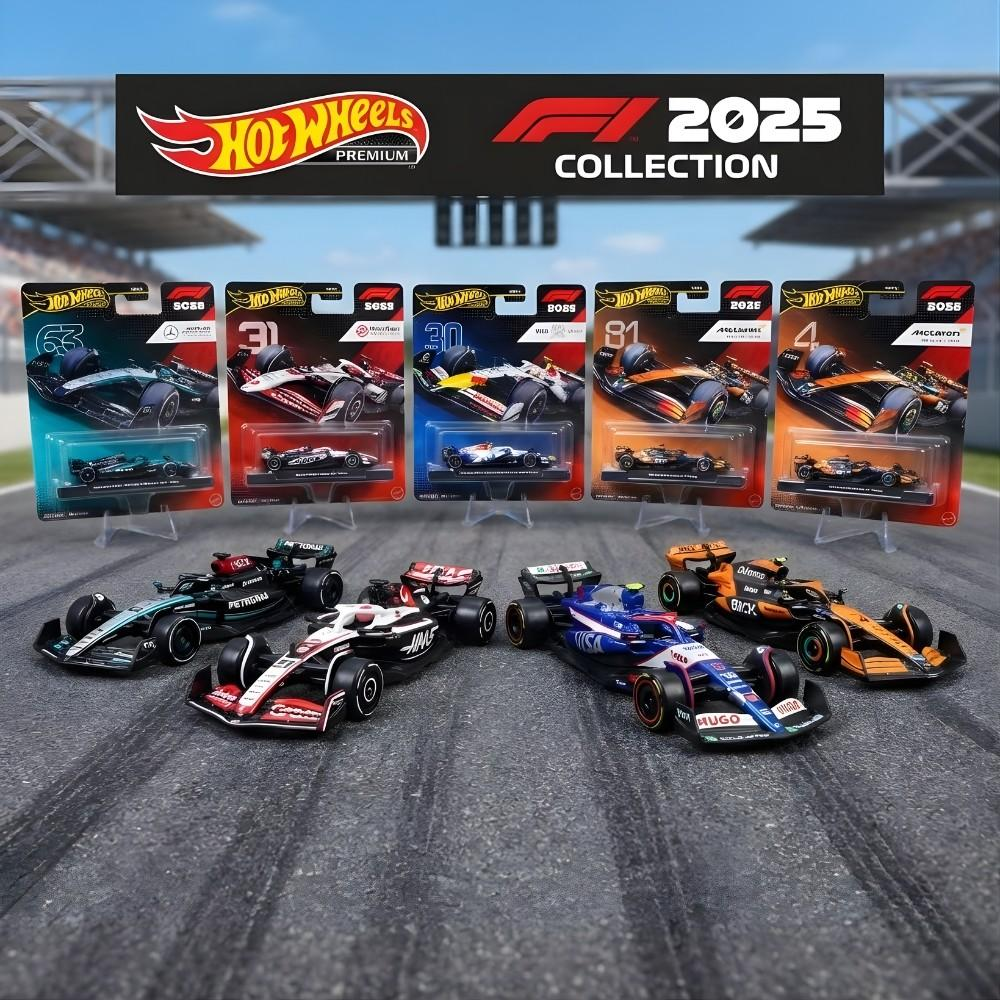
The Formula 1 partnership is a strong example.
Hot Wheels and Formula 1 have developed 1:64-scale vehicles inspired by the sport, with premium versions featuring details such as Real Riders tires, full-metal construction, authentic liveries and display stands. Mattel Creations
The strategy is simple:
Don’t build every audience from scratch. Connect with audiences that already exist.
A Formula 1 fan may discover Hot Wheels through an F1 model.
A Fast & Furious fan may become interested through a movie vehicle.
A Porsche enthusiast may discover the Premium Car Culture range through a specific casting.
The collaboration therefore acts as a bridge between two communities.
Hot Wheels also benefits because automotive culture already has strong emotional connections with its audiences.
This makes collaborations more than licensing deals.
They become audience acquisition tools.Collaboration is another powerful Hot Wheels marketing strategy.Instead of limiting itself to its own brand universe, Hot Wheels connects with existing fan communities.The Formula 1 partnership is a strong contemporary example.Hot Wheels and Formula 1 have created 1:64-scale products incorporating motorsport-inspired design and premium detailing. Mattel describes the partnership as bringing Formula 1 together with Hot Wheels’ die-cast format. The same principle appears in entertainment collaborations.Hot Wheels Premium Fast & Furious products, for example, reproduce cars inspired by or featured in the franchise, with premium construction intended to appeal to collectors.
This strategy works because Hot Wheels doesn’t always have to create a new audience.It can borrow relevance from an existing community.A Formula 1 fan may become interested in a Hot Wheels F1 model.A Fast & Furious fan may want the car associated with a favourite film.A JDM enthusiast may want a particular Skyline.The collaboration therefore becomes a bridge between two fandoms.
7. Hot Wheels Made Packaging Part of the Collectible
For most toys, packaging is designed to protect the product and attract attention on a retail shelf.
For collectors, packaging can become part of the product.
Hot Wheels has increasingly leaned into this idea.
Mattel’s Premium Car Culture products specifically highlight packaging art as something that increases display value. Mattel Creations
That creates two different consumer experiences.
Open it
The consumer gets a miniature car that can be played with, handled and raced.
Keep it packaged
The consumer gets a display object.
This distinction is incredibly important for collectible marketing.
The card, graphics and presentation become part of the perceived value.
Hot Wheels’ premium collector sets take this even further. Current display sets use distinctive window packaging and themed groupings intended to be displayed as well as played with. Mattel Creations
Packaging therefore communicates an important message:
This product is worth keeping.
That is a subtle but powerful shift from traditional toy marketing.
8. Nostalgia Became a Marketing Asset
Nostalgia may be one of Hot Wheels’ biggest long-term marketing assets.
A child who receives Hot Wheels today can potentially encounter the same brand decades later.
But their relationship with the product may change.
As a child:
“I want to play with this car.”
As an adult:
“I remember having Hot Wheels when I was younger.”
That emotional connection gives the brand something extremely valuable: continuity across generations.
Mattel itself describes Hot Wheels as one of its iconic brands with deep emotional connections and a global consumer base. Mattel
Nostalgia also changes the reason for purchasing.
An adult collector may buy a car because:
- It reminds them of childhood.
- They love the real vehicle.
- They collect a particular series.
- They want to recreate an old collection.
- They associate the car with a film or game.
- They appreciate its design.
Therefore, the consumer does not necessarily outgrow the brand.
Instead, the relationship can evolve with age.
This is an extremely valuable lesson in brand building.
9. Hot Wheels Built a Community Around the Product
A collectible product needs more than collectible objects.
It needs people who care about them.
Hot Wheels has built community infrastructure around collecting through platforms such as the Red Line Club and Hot Wheels Collectors.
RLC members can access exclusive forums, interact with other enthusiasts, view behind-the-scenes content and participate in certain voting processes. Mattel Creations UK
This changes the consumer’s role.
Instead of simply being a buyer, they can become:
Fan → Member → Collector → Contributor → Community participant
That creates a powerful marketing loop.
Collectors discuss:
New releases
Rare models
Packaging
Custom cars
Displays
Upcoming drops
Personal collections
Vehicle history
The product becomes a reason for people to communicate with one another.
This is particularly valuable in an age where consumers increasingly discover products through community recommendations and creator content rather than traditional advertising alone.
The community essentially extends the brand’s marketing beyond the company itself.
For a related article, visit:
Digital Marketing
10. Hot Wheels Is Connecting Physical Collecting With Digital Experiences
The final strategy is perhaps the most modern.
Hot Wheels is connecting physical collecting with digital tools.
The current Hot Wheels Collectors platform promotes the Showcase app, which Mattel says provides access to an official database of more than 30,000 Hot Wheels cars and allows collectors to organise their collections and highlight favourites. Mattel Creations
This addresses a real problem for collectors:
How do you keep track of hundreds of cars?
A digital collection can help consumers track:
- What they own
- What they are missing
- Favourite models
- Collection categories
- New additions
This creates a phygital experience — a connection between physical ownership and digital engagement.
The physical car starts the relationship.
The digital ecosystem keeps the relationship active.
That is particularly powerful because the consumer can interact with the brand even when they are not buying anything.
Conclusion: From Toy Box to Collector Shelf
Hot Wheels’ transformation is not really about abandoning its identity as a toy.
It is about expanding what a toy can mean.
Through Treasure Hunts, premium products, limited editions, collaborations, nostalgia, community building, collector-focused packaging and digital tools, Hot Wheels has created a pathway from casual play to serious collecting.
The most important lesson is simple:
Hot Wheels doesn’t just sell cars. It sells the experience of finding, owning, displaying and collecting them.
That is why the brand can appeal to a child playing with a track, a teenager searching for a rare model, an automotive enthusiast interested in a particular casting and an adult collector displaying hundreds of cars.
The physical product is small.
The ecosystem around it is not.
Hot Wheels has successfully transformed the humble die-cast car from something that can be played with into something that can be searched for, talked about, displayed and collected.
And that may be the brand’s biggest marketing achievement.
Hot Wheels didn’t stop being a toy brand. It became a collector brand without losing the excitement that made people love it in the first place.