
THE EMOJI I SEND IS NOT NECESSARILY THE EMOJI YOU SEE
I have started to realise that there is a new generation gap hiding inside our WhatsApp chats.
It isn’t about language.
It isn’t about technology.
It is about emojis.
I can send a 😂 thinking, “That’s hilarious.”
Someone younger might read it as something completely different.
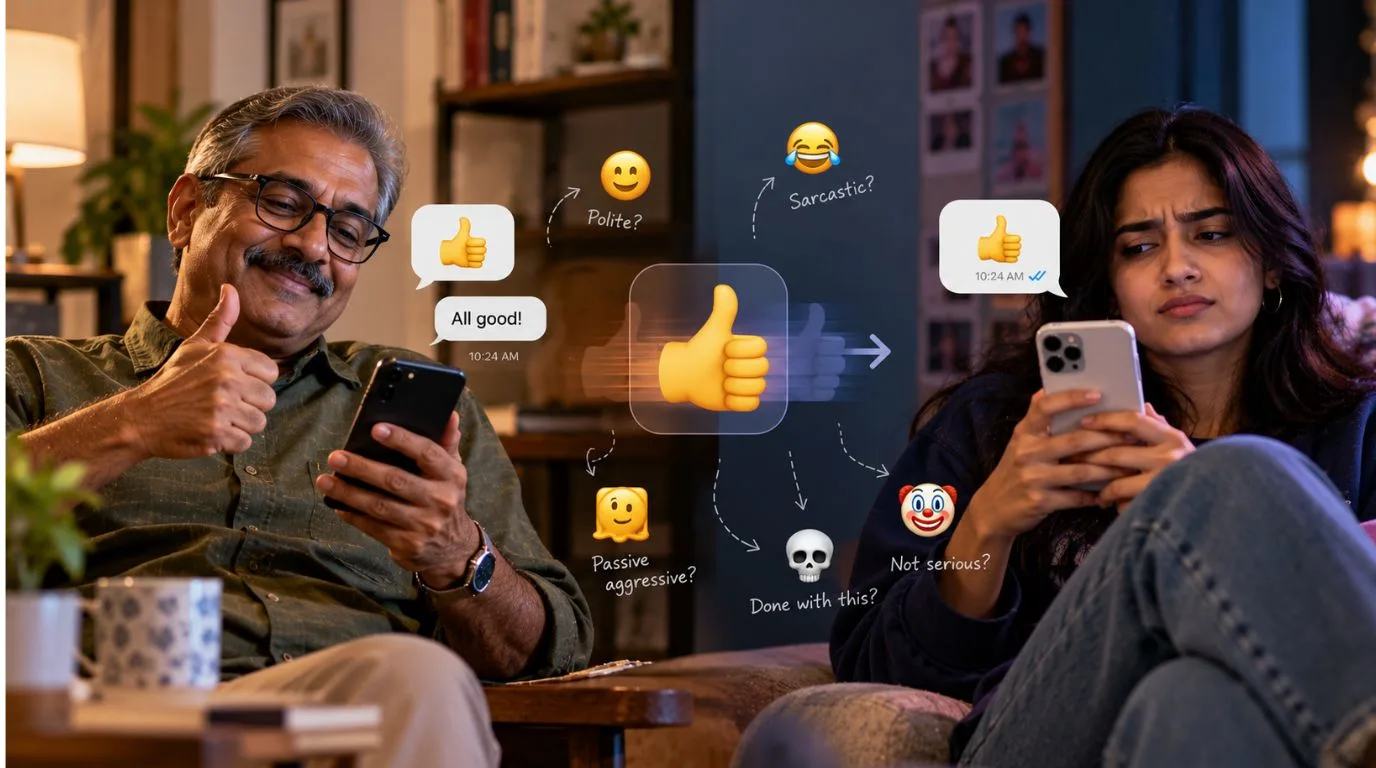
I can send a 👍 thinking, “Sure, sounds good.”
They might interpret it as passive-aggressive.
And if someone replies with 💀, nobody has actually died.
Welcome to the strange world of Gen Z emoji language.
A recent analysis highlighted how emojis that originally had fairly straightforward meanings have acquired completely different meanings among younger internet users.
And as someone who spends a lot of time thinking about communication, marketing and digital culture, I find this fascinating.
Because emojis were supposed to make communication simpler.
Apparently, we’ve managed to complicate them too.
😂 Emoji DOESN’T ALWAYS MEAN “FUNNY”
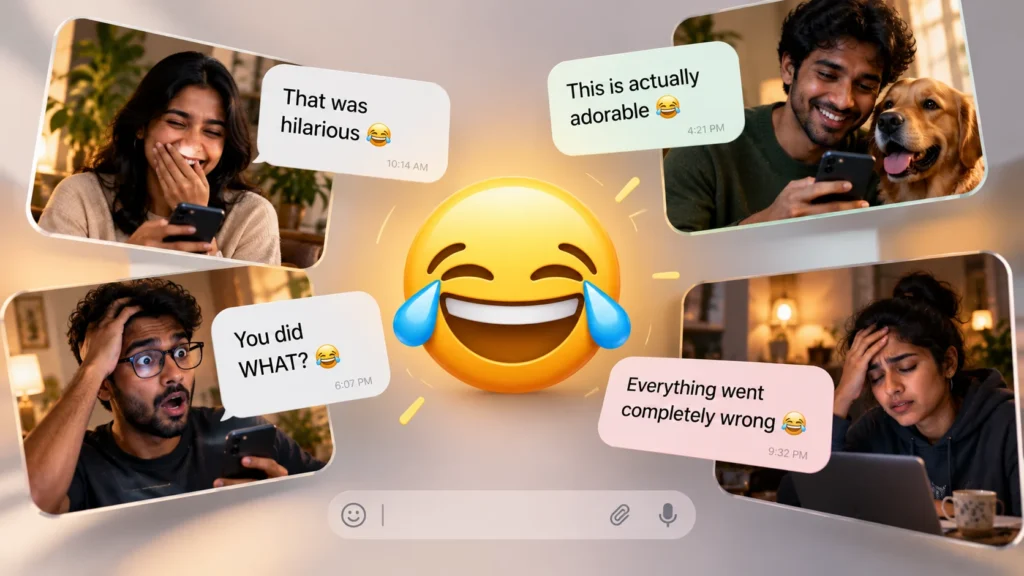
The loudly crying emoji 😂 originally represents intense laughter or sadness depending on context.
But in Gen Z usage, it can express positive overwhelm, disbelief, cuteness or joy.
Essentially:
Something is funny → 😂
Something is unbelievable → 😂
Something is ridiculously cute → 😂
Something has gone completely wrong → 😂
Sometimes the emoji isn’t even describing the emotion.
It is simply adding a certain internet tone.
And that is the important distinction.
💀 NOBODY DIED
The skull emoji is probably one of the clearest examples of how internet language evolves.
Traditionally:
Skull = death.
Gen Z interpretation:
“I’m dead.”
Meaning:
That was extremely funny, embarrassing, ridiculous or unbelievable.
So when someone says:
“Dad just sent another ancient meme 💀”
They’re not reporting a family tragedy.
They’re saying:
“This is painfully funny.”
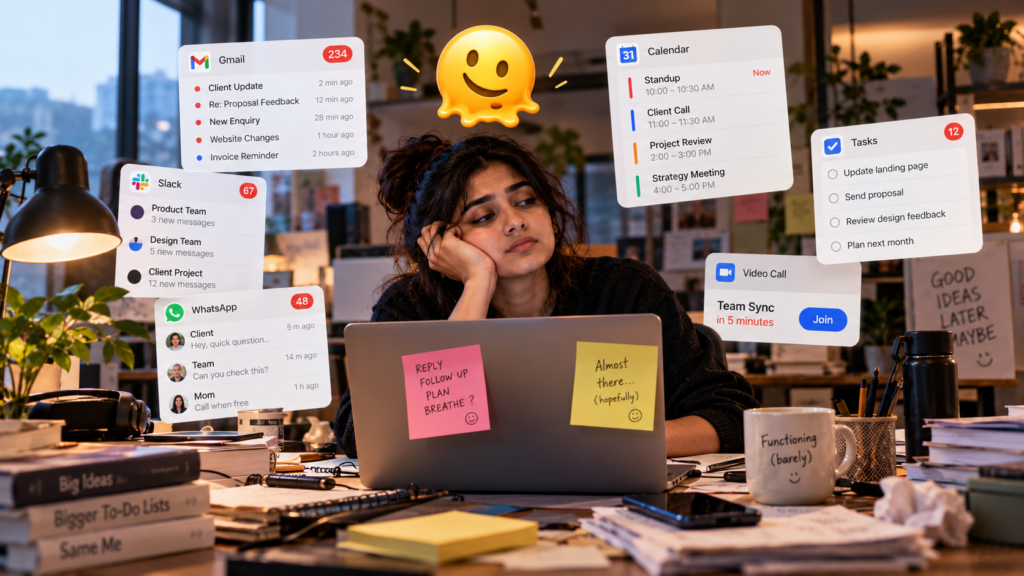
🫠 THE MELTING FACE: “I CAN’T DO THIS ANYMORE”
The melting face emoji represents a very modern emotional state.
Embarrassment.
Exhaustion.
Wanting to disappear.
Barely coping.
It is basically the emoji equivalent of:
“Everything is fine.”
When absolutely nothing is fine.
🤡 THE CLOWN IS NOW YOU
The clown emoji has become a way of saying:
“I played myself.”
Or:
“I look foolish.”
You thought your crush liked you.
You were wrong.
🤡
You believed your boss when they said, “This will only take five minutes.”
🤡
You bought something because it was “70% off” even though you didn’t need it.
🤡
Sometimes the clown isn’t mocking somebody else.
It’s self-awareness.
👁️👁️ THE EYES MEAN: “I’M WATCHING”
The eyes emoji is straightforward — but its modern usage has become more nuanced.
It can mean:
I’m watching.
Tell me more.
I’m curious.
Something interesting is happening.
It’s essentially the digital equivalent of leaning forward in your chair.
🪻 THE WILTED FLOWER: DIGITAL HEARTBREAK
The wilted flower represents heartbreak, disappointment, emotional drama or sadness.
I find this one interesting because the internet has created a visual vocabulary for emotions that previously required an entire sentence.
Instead of:
“I am emotionally devastated by how that conversation went.”
You can apparently send:
🥀
Done.
🗿 MOAI: WHEN WORDS HAVE FAILED
The Moai emoji depicts the famous stone statues of Easter Island.
Its Gen Z usage can indicate:
Deadpan.
Unfazed.
Absurd.
Or simply:
“This is so stupid I don’t even know how to respond.”
Which, honestly, may be one of the most useful emotions the internet has invented.
🫣 “I SHOULDN’T LOOK, BUT I ABSOLUTELY AM”
The face peeking through hands is another beautifully specific piece of internet communication.
It means:
“I know I shouldn’t be looking.”
But…
I absolutely am.
Celebrity gossip?
🫣
Office drama?
🫣
Your ex has posted something suspicious?
🫣
Someone says, “I have an announcement tomorrow.”
Everyone:
🫣
🥲 SMILING THROUGH THE PAIN
The smiling face with tear is perhaps one of my favourites.
It essentially means:
“What else can I do?”
Something hurts.
Something is awkward.
Something isn’t going according to plan.
But you’re trying to remain positive.
🥲
It is the emoji version of:
“Haha… anyway.”
🫡 “UNDERSTOOD, SIR.”
The saluting face can mean:
Understood.
It can also convey obedient acceptance or mock-obedience.
Someone says:
“Please finish this by 9 AM tomorrow.”
You:
“Absolutely. 🫡”
What you may actually mean:
“Apparently I am working tonight.”
🤌 THE PINCHED FINGERS ARE DOING A LOT
The pinched fingers emoji can mean:
Perfect.
Emphasis.
“What is this?”
And depending on context, it can communicate very different things.
This is perhaps where emoji communication becomes closest to body language.
The same gesture can mean different things depending on tone, culture and context.
🔥 FIRE MEANS IT’S “LIT”
This one is relatively straightforward.
Something impressive?
🔥
A great performance?
🔥
A fantastic outfit?
🔥
A brilliant idea?
🔥
A campaign that finally worked?
🔥🔥🔥
Although I suspect marketers may have been using this one for quite some time.
🙂 THIS ONE IS DANGEROUS
The slightly smiling face looks innocent.
But according to the interpretation shown in the graphic, it can communicate something much colder:
restrained approval or passive aggression.
So:
“Sure, no problem 🙂”
may not necessarily mean:
“Sure, no problem.”
It might mean:
“There is absolutely a problem.”
This is where emoji literacy becomes genuinely useful.
👍 IS THUMBS-UP STILL SAFE?
Apparently not always.
The thumbs-up emoji can represent approval or acknowledgement.
But in some Gen Z contexts, it can also be interpreted as sarcastic or passive-aggressive.
Imagine:
Boss: “Can you work on this tonight?”
Employee: “👍”
Boss:
“Great!”
Employee:
“That was not a great.”
✨ SPARKLES AREN’T JUST SPARKLES
The sparkles emoji can add emphasis or aesthetic flair.
It can make something feel exciting, dramatic or intentionally over-the-top.
For example:
Work-life balance ✨
Translation:
There is absolutely no work-life balance.
Sometimes the sparkles are sincere.
Sometimes they’re ironic.
Sometimes they’re there purely for aesthetic reasons.
And that’s exactly what makes modern emoji communication so interesting.
🙏 IS IT PRAYING OR SAYING THANK YOU?
The folded-hands emoji can represent:
Please.
Thanks.
Sorry.
Respect.
A request.
Hope.
Or even a genuine plea.
Again, context is everything.
Which brings me to what I think is the most important lesson from all of this.
THE EMOJI ISN’T THE MESSAGE. THE CONTEXT IS.
The fascinating thing about modern emoji usage is that the symbol itself is only half the communication.
The other half is:
Who sent it?
Who received it?
What was said before it?
What is the relationship between the two people?
What generation are they from?
Is the conversation serious or ironic?
That’s why the exact same emoji can mean completely different things.
And this has a surprisingly important implication for brands.
MARKETERS: PLEASE STOP USING GEN Z SLANG LIKE A DICTIONARY
This is where I think brands need to be careful.
Learning what an emoji means isn’t the same as understanding how a community uses it.
You can’t simply download a list of Gen Z terms and start putting 💀🔥✨🤡 into your next campaign.
That doesn’t make a brand culturally relevant.
It can make the brand look like your uncle who discovered Instagram yesterday.
The real skill is understanding the culture behind the language.
Why is a word being used?
Why has an emoji changed meaning?
What is ironic?
What is genuine?
What is deliberately exaggerated?
What is part of an inside joke?
And most importantly:
Would the audience actually speak this way?
THE BIGGER STORY: LANGUAGE IS ALIVE
What I love about this whole phenomenon is that it proves something we sometimes forget.
Language is not fixed.
It changes with culture.
It changes with technology.
It changes with generations.
It changes with humour.
And now, it changes with social media.
The dictionary can document language.
But the internet often creates it first.
A generation takes an existing symbol and gives it a new meaning.
Another generation interprets it differently.
And suddenly, a simple 👍 can require a cultural translation.
MAYBE WE NEED EMOJI ETIQUETTE NOW
Perhaps this is where we’re heading.
We already have business etiquette.
Email etiquette.
WhatsApp etiquette.
Social media etiquette.
Maybe the next one is:
Emoji etiquette.
Because apparently sending the wrong emoji can now communicate an entirely different emotional message.
So before I send that thumbs-up to someone younger, perhaps I should think twice.
And before I send 💀 to my parents…
I may need to explain that nobody has actually died.
That’s probably the safest place to end.
The internet didn’t just give us new ways to communicate. It changed the meaning of the symbols we were already using.
And if you’re still using every emoji exactly the way you learned it ten years ago…
I’m sorry. You’re probably the one who needs the translation.
Go to Homepage & check Emojipedia