
“You Are Under Digital Arrest”: The Scam That Is Turning A Phone Call Into A Crime Scene
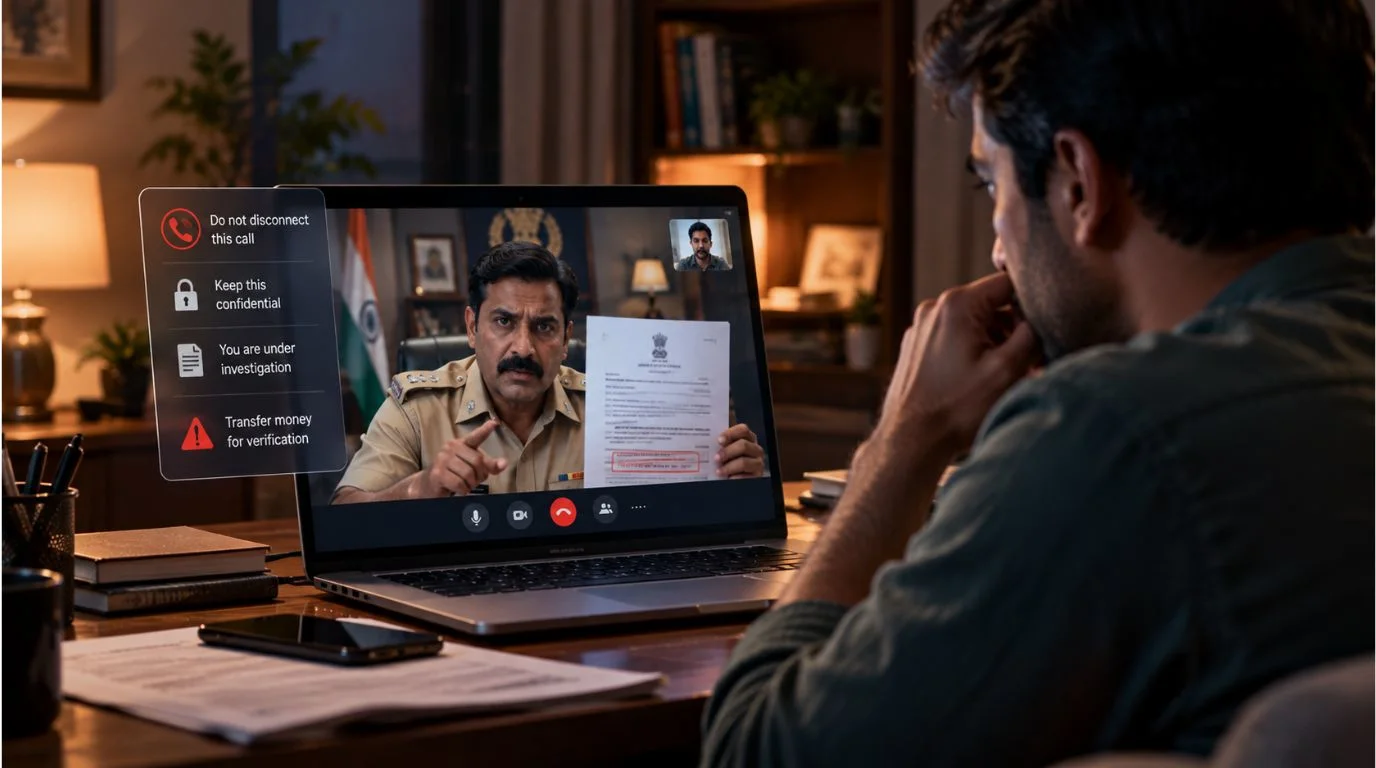
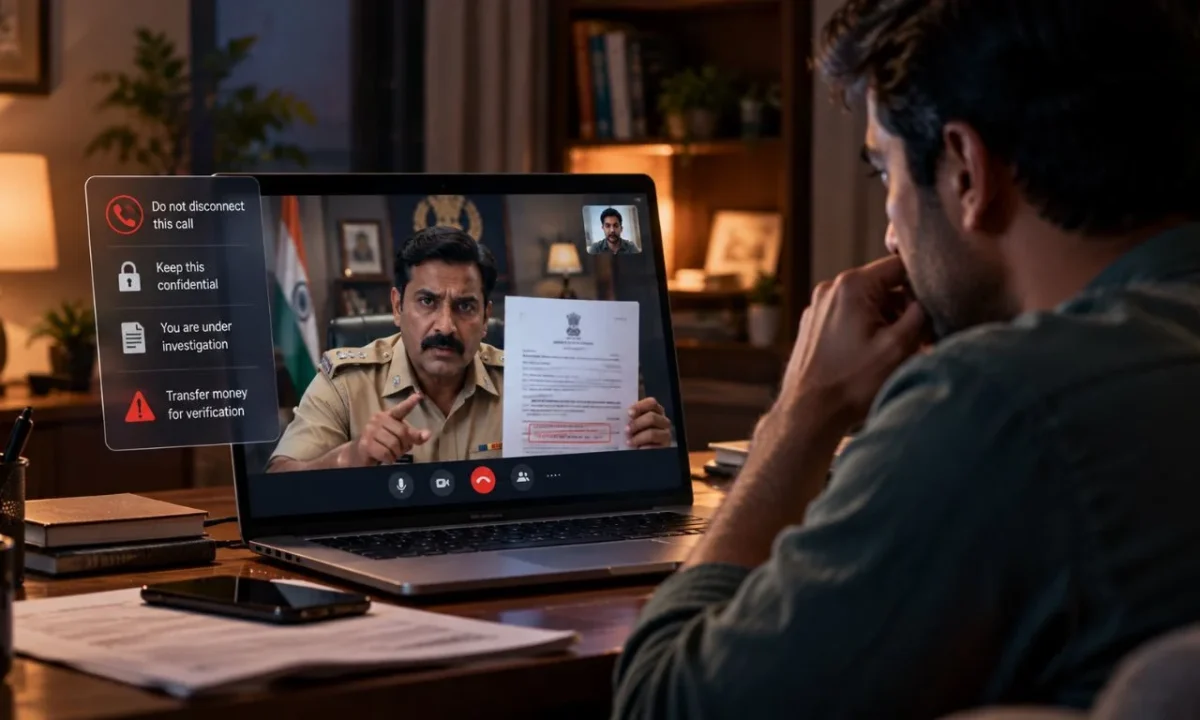
There was a time when a scammer needed to meet you, steal your documents or somehow get access to your bank details. Today, all they need may be a WhatsApp video call, a fake uniform, a convincing background and a few minutes of fear.
The so-called digital arrest scam has become one of the most frightening forms of cyber fraud because it doesn’t begin with an offer that sounds too good to be true. It begins with a threat. “Your Aadhaar is linked to a money-laundering case.”
“Your account has been used for terrorism. “You are being investigated by the CBI.“Do not disconnect this call. and suddenly, an ordinary person is made to believe that they are no longer talking to a stranger — they are talking to the government.
Recent cases in Mumbai show just how devastating this tactic can be. A 68-year-old woman was allegedly cheated of more than ₹3 crore after fraudsters posed as Mumbai Police, NIA and ATS officials.Another Mumbai senior citizen was allegedly defrauded of ₹1.12 crore, with the accused using WhatsApp video calls and even a fake Supreme Court notice to make the threat appear legitimate.
And just days ago, another Mumbai senior citizen was allegedly forced to transfer ₹33 lakh after fraudsters claimed he was connected to a ₹6.68-crore money-laundering case. This is no longer an occasional cybercrime story. It is a social engineering problem.
The Scam Doesn’t Hack Your Computer. It Hacks Your Mind.
This is what makes digital arrest scam fraud so clever. Traditional cybercrime often tries to exploit a technical weakness. The widespread digital arrest scam exploits a psychological weakness.
The scammer creates three emotions almost simultaneously:
- Fear
You are told that you are connected to a serious crime.
- Authority
The person on the screen claims to be from the police, CBI, ED, NIA, RBI or another government agency.
- Urgency
You are told that you cannot disconnect, speak to anyone or delay the process. Once those three things come together, rational decision-making becomes much harder and that’s exactly what the scammer wants.
Why Senior Citizens Are Being Targeted
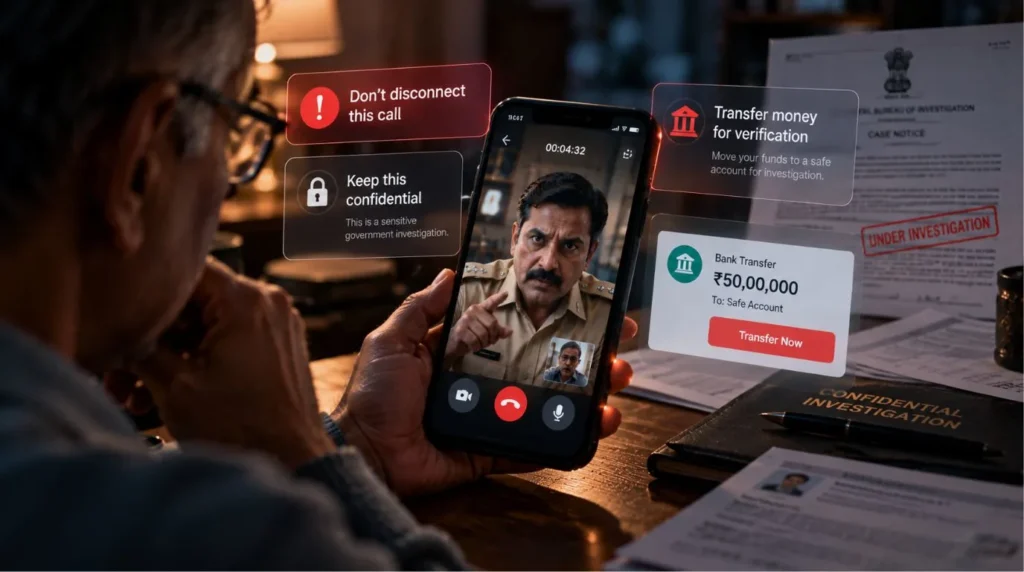
The newspaper report particularly highlights senior citizens, including retired teachers, bankers and government employees who fall victim to the digital arrest scam. I don’t think this is simply because older people are “less tech savvy.”
That’s an oversimplification. Many senior citizens today use smartphones, online banking, UPI, WhatsApp and investment platforms every single day, yet they still get trapped in a digital arrest scam.
The bigger vulnerability may be trust in institutions. If someone appears on a video call wearing a police uniform, shows a government-looking document and uses official terminology, the interaction can feel frighteningly real.
The scammer isn’t necessarily trying to convince the victim that they are technologically sophisticated. They are trying to convince them: “You are in trouble, and I am the person who can decide what happens next.”
The Most Dangerous Instruction: “Don’t Tell Anyone”
This is perhaps the biggest red flag of a digital arrest scam. Fraudsters frequently create isolation. They may instruct victims not to speak to family members. They may tell them to stay on a video call.
They may create a fake investigation environment. They may even tell the victim that talking to someone else could compromise the investigation. Think about how powerful that is.
The victim has: Fear + authority + isolation + urgency and now there is nobody around to say: “Wait. This doesn’t sound right.” That is why families have an important role to play in preventing the digital arrest scam.
There Is No Such Thing As A “Digital Arrest”
This is the single most important message I would want every reader to remember to avoid a digital arrest scam. A government agency does not arrest you through a WhatsApp or video call.
Mumbai Police have explicitly warned that police and government agencies, including the CBI, ED and RBI, do not conduct arrests or investigations through video calls. So if someone says:
“You are under digital arrest.” The correct response isn’t to cooperate with the digital arrest scam. It is to disconnect.
And Never “Transfer Money For Verification”
This is another classic part of the digital arrest scam. Victims may be told that their money needs to be transferred to a “safe account” so authorities can verify whether it is legitimate.
This sounds official.
It isn’t. A government official calling you and asking you to move your savings into an account for “verification” should immediately trigger alarm bells that it is a digital arrest scam. The same applies to requests for:
- OTPs
- PINs
- Banking passwords
- Aadhaar details
- PAN details
- Fixed deposit information
- Investment account details
- Screenshots of banking applications
No legitimate investigation requires you to surrender control of your bank account to a stranger on a video call.
AI Is Making The Problem Even More Serious
There is another dimension we cannot ignore when discussing the digital arrest scam.
Fraudsters now have access to increasingly sophisticated tools for creating fake documents, images, voices and videos. India’s Data Security Council of India has recently launched a nationwide cyber-awareness campaign specifically highlighting emerging threats including AI-powered voice cloning, deepfakes and digital fraud. That means the old advice of: “If it looks fake, you’ll know.”
may no longer be good enough to spot a digital arrest scam. A scammer may be able to make the experience look increasingly authentic. Which means our defence against a digital arrest scam has to shift from spotting bad technology to questioning unusual behaviour.
The New Cybersecurity Rule: Don’t Panic, Pause
I think this is the simplest advice we can give people to counter the digital arrest scam. If someone calls and tells you that you are involved in a crime:
STOP.
Don’t transfer money. Don’t share information. Don’t install anything. Don’t stay on the call because they demand it. Don’t be embarrassed. Don’t assume the caller is genuine because they know your name, Aadhaar number, address or bank details and most importantly:
Call someone you trust. A 30-second conversation with a family member can sometimes break the psychological hold of the digital arrest scam.
Families Need To Start Talking About This
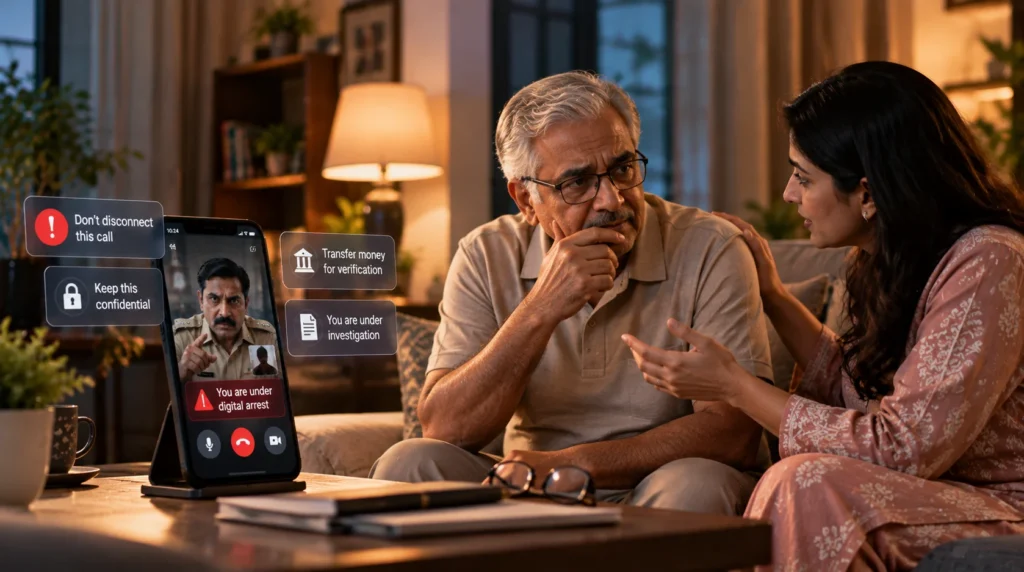
This is where I think the responsibility extends beyond senior citizens. If your parents, grandparents or older relatives use smartphones and online banking, talk to them about the digital arrest scam before they receive such a call.
Not after.
Tell them: Police won’t arrest you through WhatsApp. You don’t need to transfer money for investigation. No legitimate official will demand secrecy from your family.
If someone threatens you on a video call, hang up and verify independently and perhaps most importantly: If you make a mistake, call us immediately. Don’t hide it because you are embarrassed. That last sentence may save someone a fortune from a digital arrest scam.
My Take
What worries me about the digital arrest scam isn’t just the amount of money being stolen. It is the fact that the scam is becoming increasingly psychological.
The criminal doesn’t need to convince you that they have a fantastic investment opportunity. They simply need to convince you that you are in trouble and once fear takes over, people can make decisions they would never normally make.
So I think the most important cybersecurity skill for 2026 isn’t knowing every new scam. It is learning to pause when someone is trying to make you panic because the moment someone tells you:
“Don’t disconnect.”
“Don’t tell anyone.”
“Transfer the money immediately.” That may be exactly when you should do the opposite. Disconnect. Call your family. Verify independently and if you have been targeted by a digital arrest scam, report it immediately through India’s cybercrime helpline 1930 or the National Cyber Crime Reporting Portal.
Because in the world of digital fraud, your greatest defence against a digital arrest scam may simply be refusing to let a stranger control the conversation.
official Digital Arrest scam advisory
As the industry shifts, staying informed about digital trends is essential for anyone. Click through to read another thread!