

First read on X
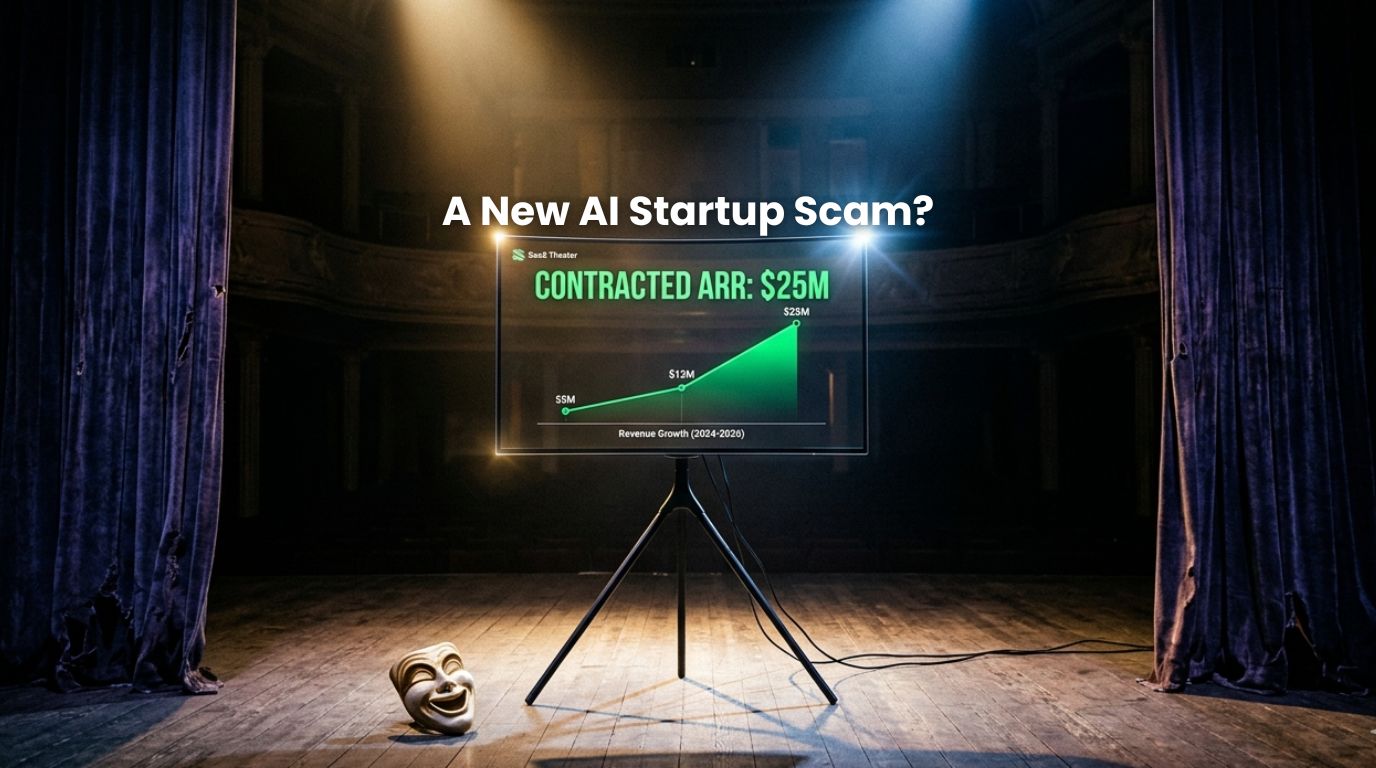
“Contracted ARR” Is the New AI Startup Scam
I came across this post by Scott Stevenson and had one immediate reaction:
Oh… we’re doing this now?
Because if you’ve been anywhere near the AI/startup ecosystem recently, you’ve probably heard founders casually drop: “Yeah, we’re at $2M ARR.”
And everyone nods. Investors nod. Twitter nods. LinkedIn especially nods.
But what if I told you… A big chunk of that ARR isn’t real?
Let’s talk about the “Contracted ARR” illusion
Here’s the game, instead of saying: “We’re making $X per month”
Startups say: “We’ve contracted ARR $X for the year.”
Sounds impressive, right? Except…
- The customer may not fully use the product
- They might churn early
- They might never renew
- Or worse… they barely even needed it
But hey — it’s signed. So it counts. In the high-stakes world of Silicon Valley, contracted ARR has become a convenient placeholder for actual success. It’s signed, so on paper, it counts. But “signed” and “used” are two very different metrics.
This is SaaS theater at its finest
It’s like: You signed up for a gym for 12 months. You went… 4 times. But the gym tells investors: “This customer is highly engaged and committed to fitness.”
This is exactly how contracted ARR functions in a pitch deck. It’s a projection of hope disguised as a financial fact.
Why is this happening?
Because in the AI gold rush, metrics matter more than reality. Founders need to show:
- Growth
- Scale
- Momentum
And ARR is the easiest number to inflate without technically lying.
Notice the wording
Not “Revenue”
Not “Collected cash.”
Not even “Active usage.”
Contracted ARR. Which basically means: “Someone agreed… at some point… under some conditions…”
The uncomfortable truth about AI startups

A lot of them are:
- Overvalued
- Overhyped
- Over-reporting
And under pressure to prove they’re not just: Fancy wrappers on existing models.
So what do you do?
You play the metrics game. Because everyone else is.
And this is where it gets dangerous
Investors start believing inflated signals. Founders start building for optics. Teams start optimizing for:
- Demo value
- Not real value
And suddenly…
You’re not building a business.
You’re building a narrative.
Teams stop optimizing for real-world value and start optimizing for demo value. Suddenly, you’re not building a business; you’re building a narrative fueled by contracted ARR.
The satire writes itself (again)
Startup pitch: “We have $5M ARR.”
Reality: “We have $5M worth of hope. Annualized.”
But let’s be fair
Not all startups are faking it. Some are genuinely:
- Growing fast
- Delivering value
- Retaining customers
But the problem is…the signal-to-noise ratio is broken.
As a marketer, this hits close
Because we’ve seen this before.
- Vanity metrics
- Fake engagement
- Inflated reach
Now it’s just evolved into: Vanity revenue.
So what should you actually look at?
If you’re evaluating a startup, ask:
- What’s the retention rate?
- Are customers actually using the product?
- What’s the churn?
- Is revenue collected or just promised?
Because signed contracts don’t build businesses. Usage does. Relying solely on contracted ARR is a dangerous gamble for any investor.
My take
We’re in that phase of every tech wave where: Hype > Reality
And metrics are… creatively interpreted.
Final thought
If your ARR needs a disclaimer explaining that it’s actually contracted ARR…It’s not ARR. It’s marketing.
Also, just saying—
If startups start reporting: “Emotionally committed revenue”, we’re officially done.
As the industry shifts, staying informed on AI-related news is essential for any person. Click through to read more such threads!