
When a Battery Becomes a Cybersecurity Risk
Across major cities, pranksters began uploading videos under the trend “tirri control,” demonstrating how they could stand on a sidewalk, open a smartphone, and instantly shut down moving electric rickshaws (locally called “tirris”).
Under the hood of this disturbing trend is the BAT-BMS app, a legitimate utility that was rapidly transformed into a tool for public disruption and roadside extortion. If we look closely, this situation isn’t just about a few mobile apps. It is a loud wake-up call about how connected physical hardware can become a dangerous liability if security is treated as an afterthought.
Electric vehicles are often discussed in terms of range, charging speed, battery technology, and affordability. Cybersecurity rarely makes it to the top of that list.
That changed when the Indian government reportedly ordered the removal of certain Chinese battery management applications amid concerns that they could be misused to disable electric rickshaws remotely.
Understanding the Impact of the BAT-BMS App
At its core, a Battery Management System (BMS) is the brain of a lithium-ion battery pack, designed to monitor voltage, temperature, current, and overall cell health. To interface with these systems, developers built the BAT-BMS app to display battery data in real time.
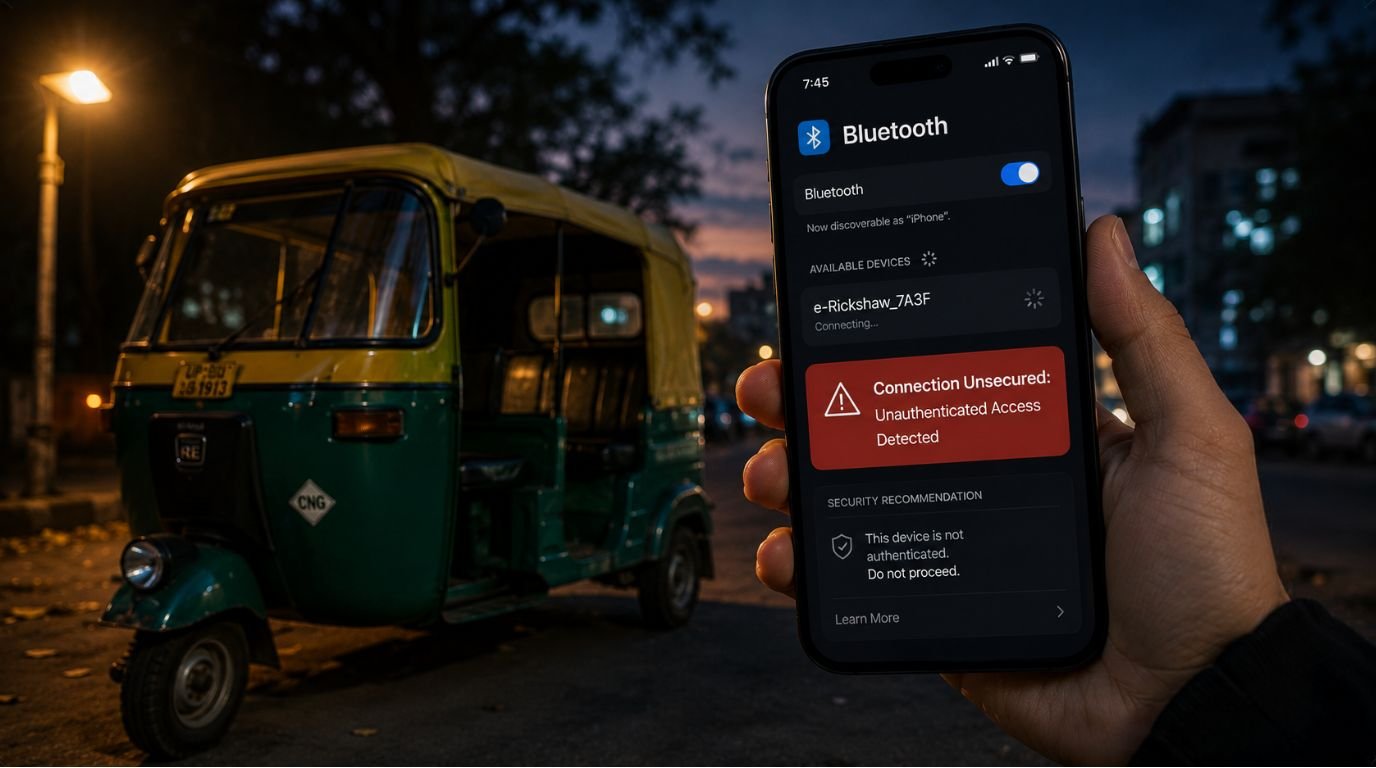
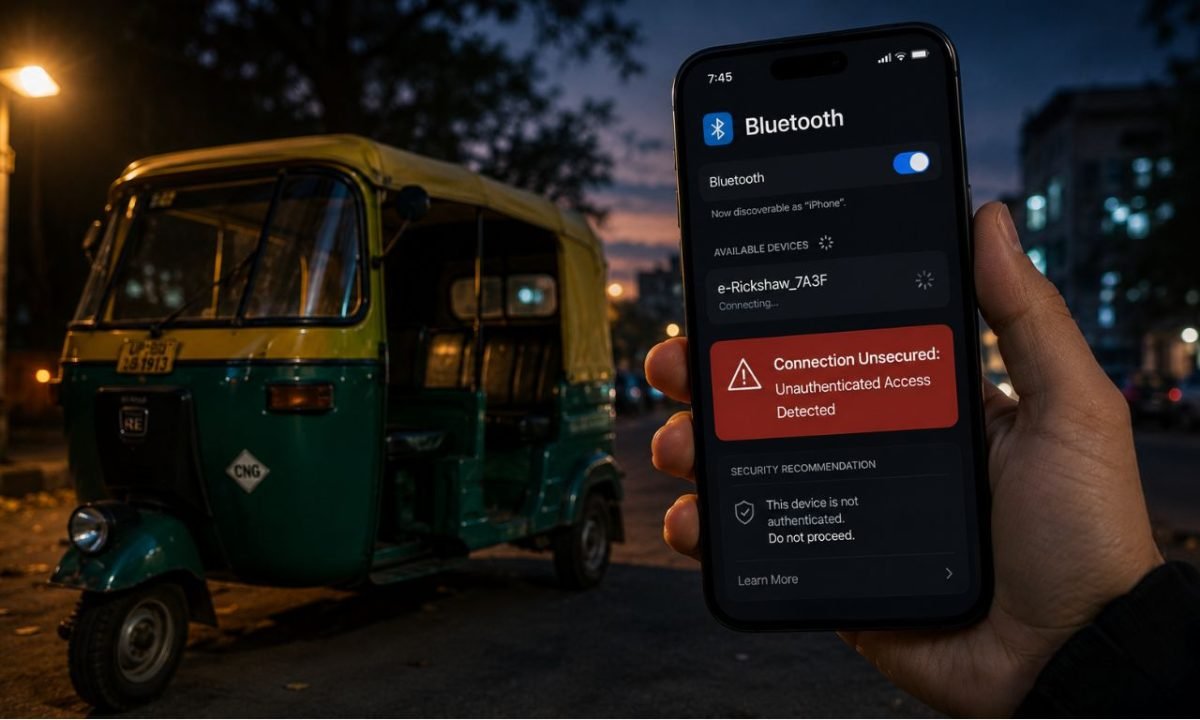
However, a massive security loophole emerged. Thousands of low-cost, aftermarket battery packs fitted onto Indian e-rickshaws were deployed with default factory settings and absolutely zero Bluetooth authentication.
Because there was no password prompt or pairing PIN, anyone standing within a 10-15 m range could open the BAT-BMS app, connect directly to a passing rickshaw’s battery, and flip the master “discharge” switch. The vehicle’s power cut out instantly, leaving vulnerable drivers stranded in high-velocity traffic.
The Next Cyber Battlefield Is Hardware
Most people associate cybersecurity with phishing emails, leaked passwords, or hacked bank accounts. But today’s connected world extends far beyond laptops and smartphones.
Cars, scooters, smart TVs, CCTV cameras, medical devices, industrial machines, and even battery management systems are all connected through software. Every connected device creates another potential point of entry for attackers.
When software has the ability to control physical hardware, cybersecurity is no longer just an IT issue—it becomes a public safety issue.
The “tirri control” trend quickly turned serious. In Ujjain, Madhya Pradesh, police apprehended individuals who were using the BAT-BMS app to shut down e-rickshaws, only to approach the stranded drivers and demand cash under the guise of “fixing” the vehicle.
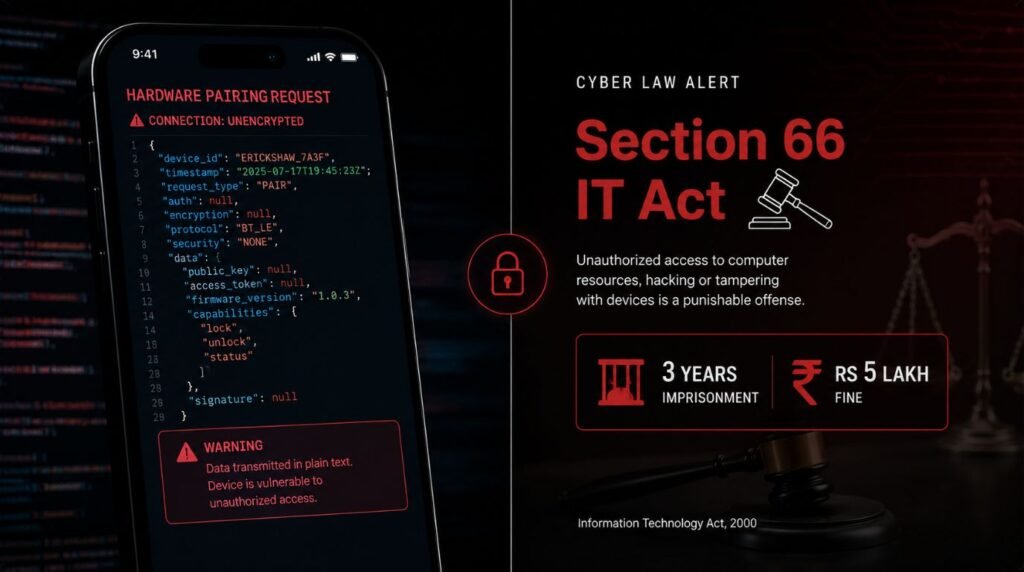
Cyberlaw experts warn that using the BAT-BMS app or similar tools to tamper with someone else’s vehicle is a major criminal offense.
As safety concerns escalated, the Union government intervened. On Friday, July 3rd, 2026, the Ministry of Electronics and Information Technology (MeitY) directed the immediate removal of 7 battery-monitoring applications—including the BAT-BMS app, Lossigy, Epoch Li-ion, and SMART BMS—from the Google Play Store and Apple App Store.
While removing these applications from app stores stops casual pranksters from downloading them, cyber experts point out that a software ban only treats the symptom, not the disease. Because these Bluetooth modules do not require an active internet connection to execute command inputs, any sideloaded copy of the BAT-BMS app can still compromise unpassworded batteries.
The Hidden Cost of Smart Devices
Consumers love smart products because they offer convenience. Manufacturers love them because they provide diagnostics, remote updates, and better customer experiences. But every connected feature also increases responsibility.
Questions every manufacturer should ask include:
- Who can access the device remotely?
- How strong is the authentication process?
- Can commands be misused?
- Is the communication encrypted?
- What happens if the software is compromised?
Security cannot be an afterthought once products are already in the market.
India’s EV Ecosystem Is Growing Rapidly
India is one of the fastest-growing electric mobility markets in the world.
Affordable electric two-wheelers and e-rickshaws are transforming transportation across cities and towns. Thousands of livelihoods now depend on these vehicles operating reliably every day. That makes cybersecurity an infrastructure challenge rather than just a technology challenge.
A compromised battery management system could disrupt businesses, transportation, and public confidence in EV adoption.
Trust Will Become a Competitive Advantage
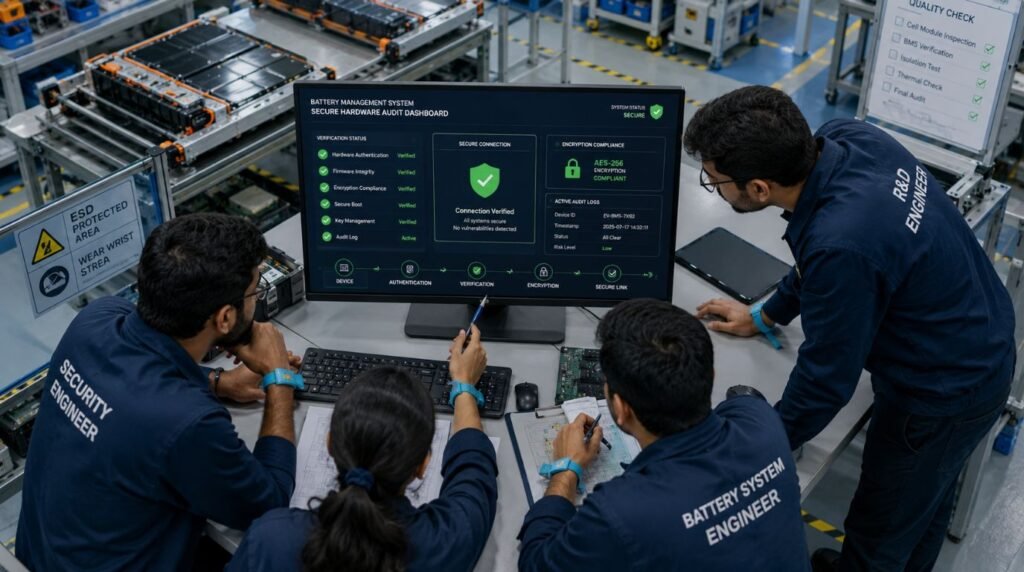
The discussion shouldn’t become about one country, one company, or one application. Instead, it should encourage every technology company to build products that are secure by design.
As consumers, we rarely ask how secure an app is before downloading it. As businesses, we often prioritize features over security.
That mindset is slowly changing.
What This Means for Marketers
Technology marketing has entered a new phase. Customers no longer buy only on features and price. They increasingly evaluate trust, privacy, reliability, and security. The brands that openly communicate how they protect users will build stronger long-term relationships than those that only advertise specifications.\\
The rise of the BAT-BMS app exploit proves that a brand’s reputation built over years can be severely damaged by a single unsecured Bluetooth chip.
Cybersecurity is quietly becoming a brand differentiator. And that’s a trend I expect to grow across every connected industry.
Sometimes, the biggest innovation isn’t adding another feature. It’s ensuring the existing ones can’t be misused.
As the industry shifts, staying informed about the latest tech news is essential for anyone. Click through to read another thread!