
Source: The Wall Street Journal article shared above
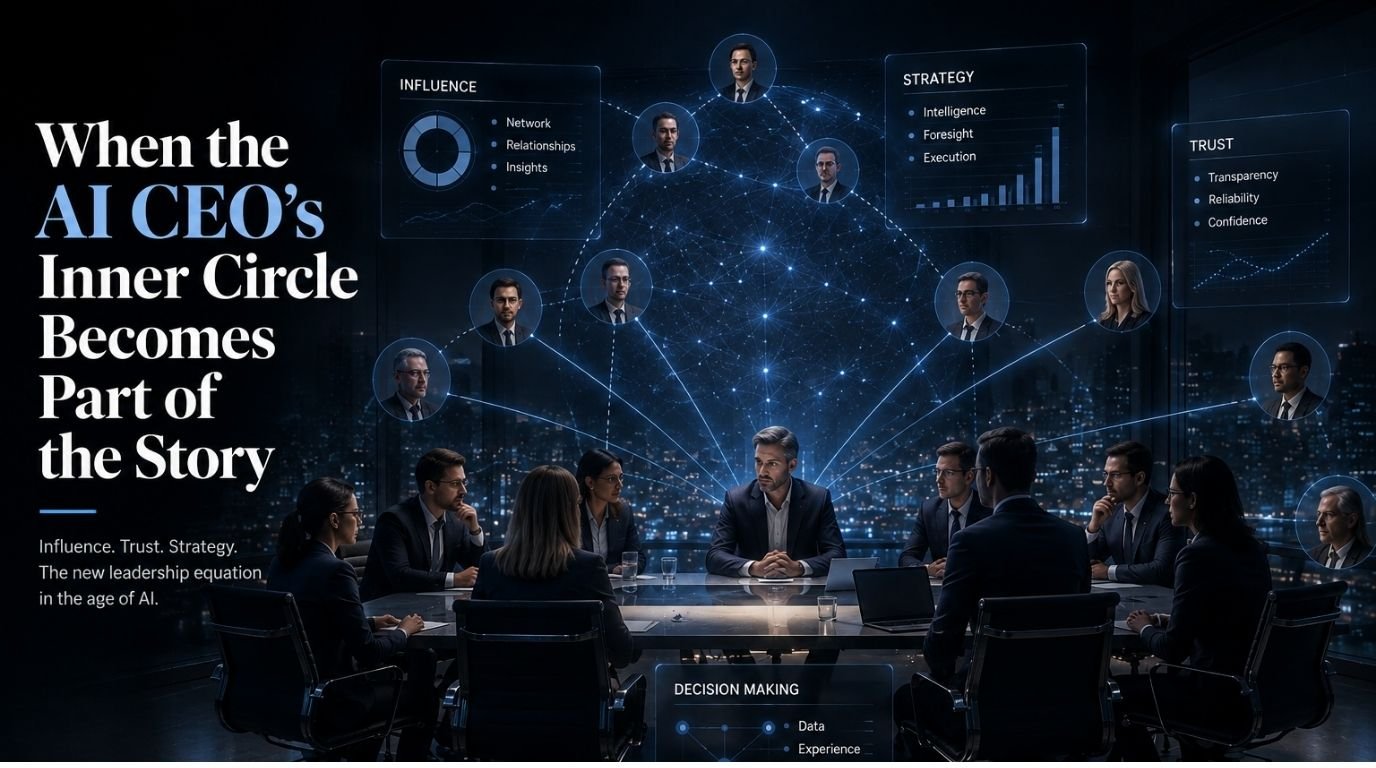
I find the most interesting thing about the AI industry right now is that the technology is only half the story.
The other half is the people building it, funding it, advising it and influencing the decisions behind it.
A recent report about Anthropic CEO Dario Amodei and his wife, Cami Clark, caught my attention for precisely this reason.
According to the article, Clark does not work at Anthropic but is described by people close to the company as a sounding board and strategic adviser to Amodei. The report also says she helped bring former Google CEO Eric Schmidt into Anthropic as an early investor.
That raises a fascinating question:
In an industry moving at the speed of AI, how much influence sits outside the organisational chart?
The power of the unofficial adviser

Every CEO has people they trust.
Some have formal titles. Others don’t.
There are mentors, former colleagues, friends, investors, spouses and people who simply have the CEO’s ear.
They may never appear on the company website, but their influence can still be significant.
And this isn’t unique to Anthropic.
In fact, I would argue that as companies become more founder-led and the technology becomes more complex, the CEO’s personal network can become almost as important as the formal leadership team.
The interesting part is that these relationships are usually invisible from the outside.
We see the CEO.
We see the board.
We see the executives.
But we rarely see the informal conversations that happen behind closed doors.
AI leadership is becoming a different kind of leadership
The AI industry is moving incredibly fast.
Companies are making decisions about billions of dollars of infrastructure, talent, research, partnerships and acquisitions while simultaneously dealing with regulation and enormous public expectations.
In such an environment, CEOs don’t just need technical expertise.
They need people who challenge their thinking.
People who can tell them when an idea is bad.
People who understand investors.
People who understand society.
And sometimes, simply people they trust enough to have an honest conversation with.
That is why the idea of a “sounding board” interests me more than the personal details surrounding the story.
Because every successful leader needs one.
The real lesson for businesses
There is a lesson here for marketers and business leaders too.
We spend a lot of time discussing organisational structures.
Who is the CMO?
Who is the CEO?
Who reports to whom?
Who owns the budget?
But influence doesn’t always follow hierarchy.
A junior employee with the right relationship can influence a major decision.
An investor can influence strategy without being involved in daily operations.
A trusted adviser can change a CEO’s perspective without having a formal position.
And increasingly, in founder-led technology companies, the distinction between formal authority and informal influence is becoming important.
Influence also requires transparency

There is another side to this.
The more influential someone becomes, the more important transparency becomes.
If someone has significant influence over corporate decisions, investors, employees and stakeholders naturally want to understand the nature of that relationship.
Not because every private relationship needs to become public.
But because modern companies operate on trust.
And trust becomes particularly important when a company is developing technology that could fundamentally change how we work and live.
My takeaway
For me, the biggest story isn’t about who is married to whom.
It is about how decisions are actually made at companies shaping the future of technology.
The AI revolution is often presented as a story about models, GPUs, funding and benchmarks.
But behind every model is a group of humans making choices.
And behind those humans are networks of relationships, advisers, investors and trusted voices.
The organisational chart tells us who has the job.
It doesn’t always tell us who has the influence.
And in the AI race, that distinction may become increasingly important.
Because ultimately, the future of AI won’t be decided by algorithms alone.
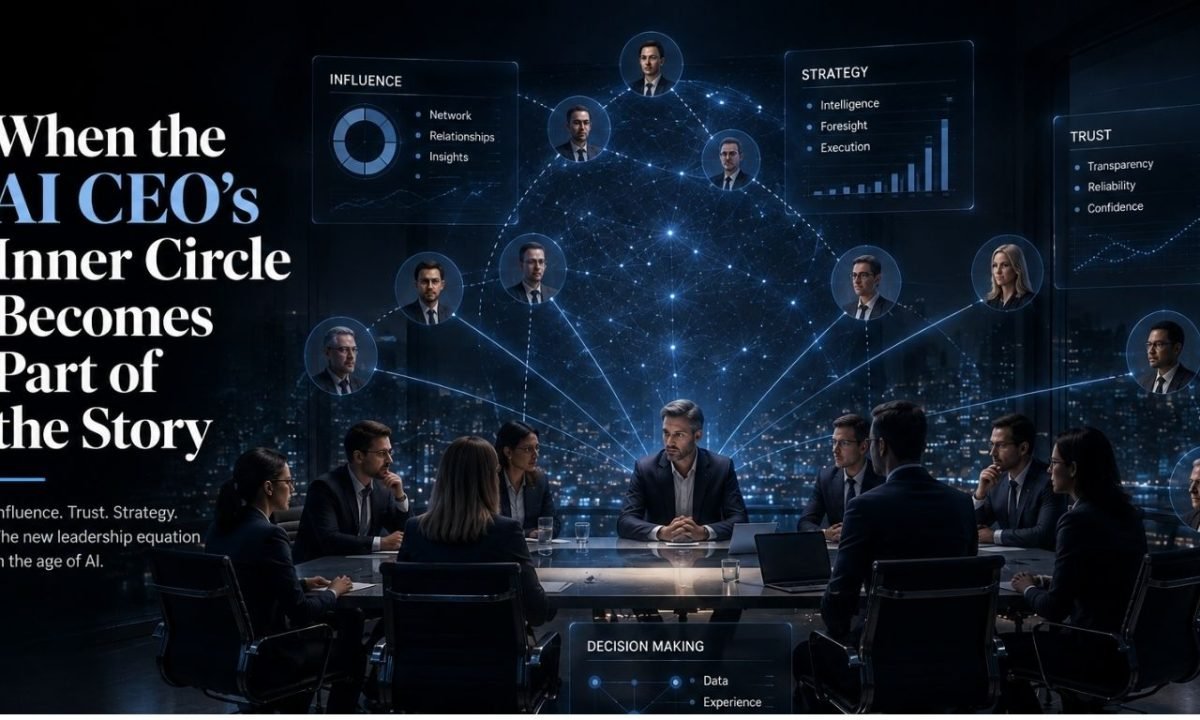
It will be decided by the people sitting around the table — including some whose names may never appear on the company’s website.
As the industry shifts, staying informed about AI trends is essential for anyone. Click through to read another thread!