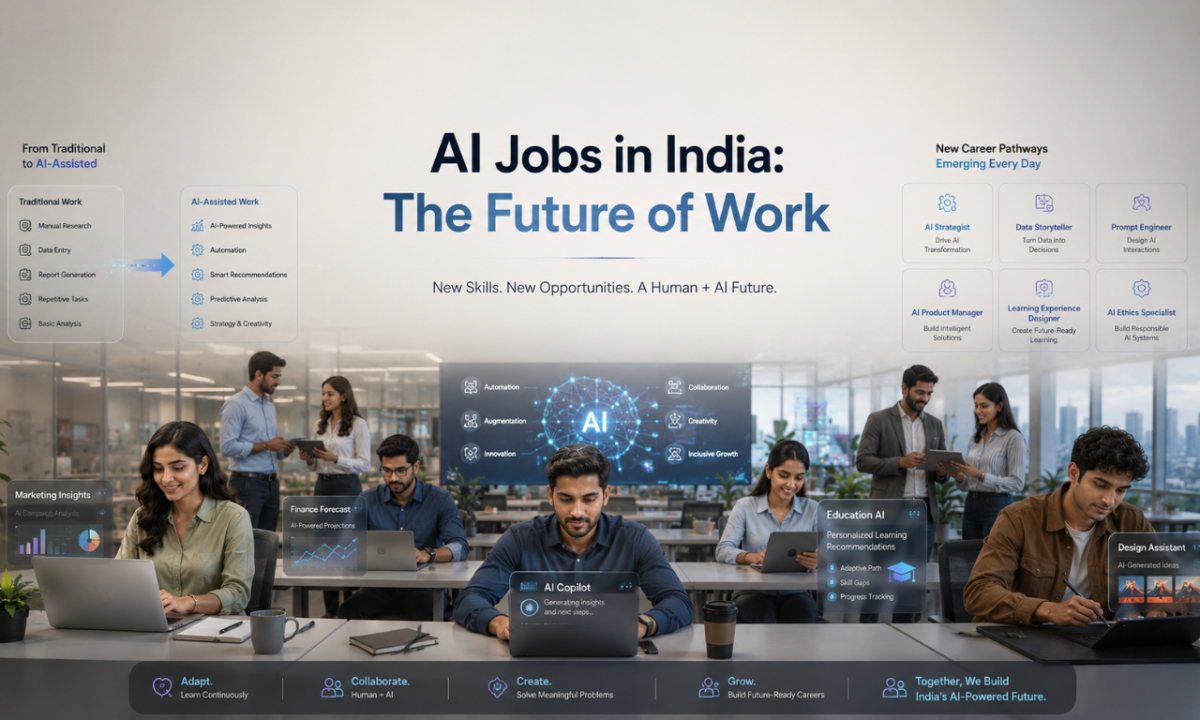

For the last couple of years, I have repeatedly heard the same question: “Will AI take away our jobs?”
It is a legitimate question. Chatbots are writing content. AI is generating designs. Software is being written with AI assistance. Customer-service teams are being automated, and even routine financial and administrative work is increasingly being handled by machines.
But the conversation around AI jobs in India is more complicated than “humans versus robots.”
Recent analysis cited by Bloomberg, based on research from Nomura Holdings, offers an interesting perspective on AI jobs in India. According to the figures presented in the report, India recorded approximately 83,100 AI-related hires, compared with 31,921 layoffs and attrition during the period studied.
That is more than two and a half times as many AI-related hires as job losses and suddenly, the conversation becomes much more interesting.
AI Jobs in India Are Not Just About Replacing People
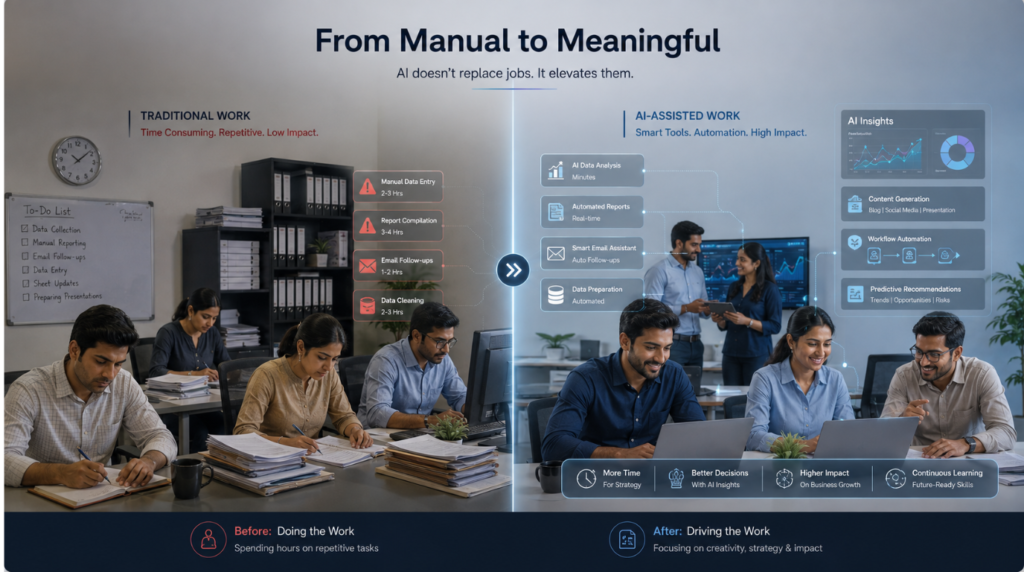
I think we have made the AI conversation unnecessarily binary. We imagine a robot sitting across the table from a human employee and eventually replacing them.
But that isn’t necessarily what is happening.
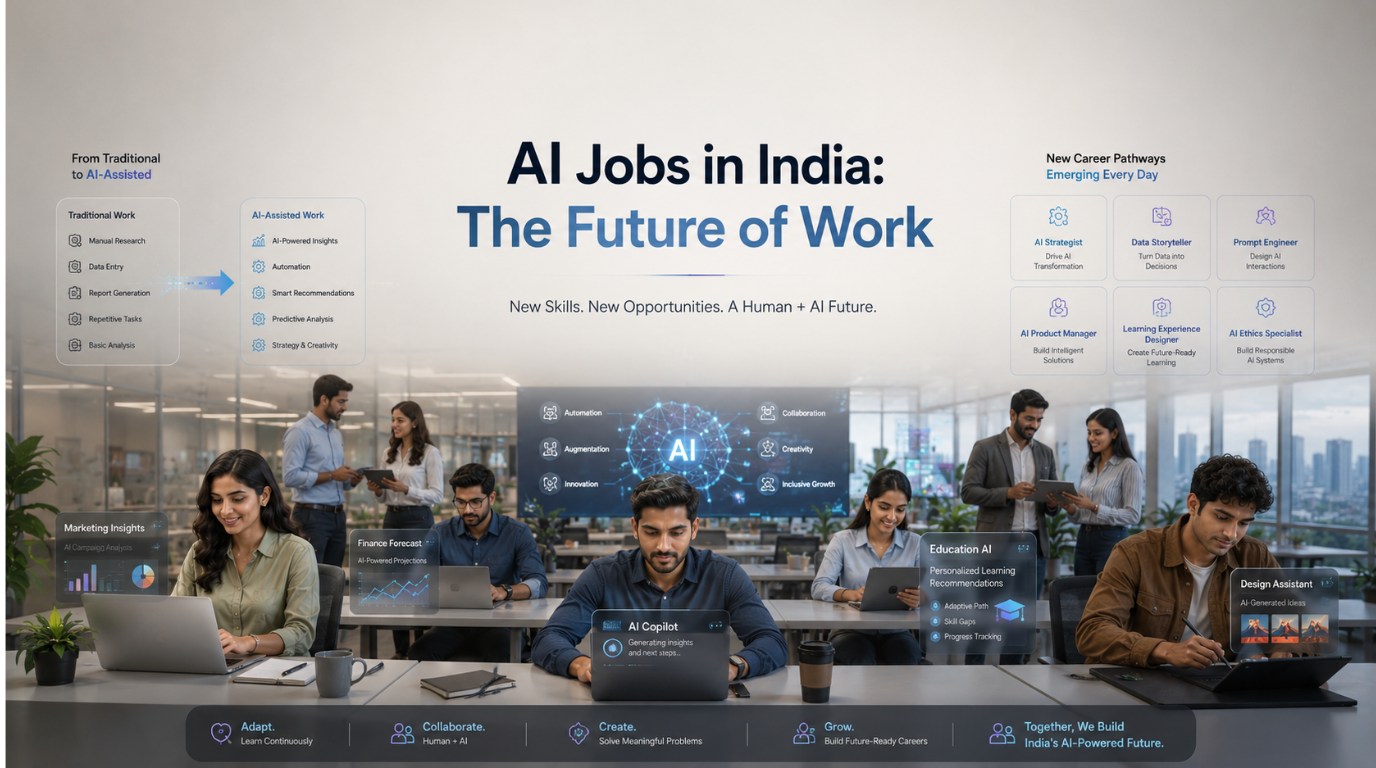
AI jobs in India is creating entirely new categories of work while changing existing ones. The data in the report points toward a workforce being redistributed rather than simply eliminated.
Some jobs disappear, some get redesigned and entirely new jobs emerge. That distinction matters because AI can automate tasks without necessarily eliminating entire professions.
The internet did something similar.
It disrupted traditional publishing, retail, advertising and communication, but it also created digital marketing, e-commerce, SEO, social media, app development and countless roles that barely existed before.
AI jobs in India is likely to follow a similar pattern.
The difference is the speed of change.
Why India Could Benefit From the AI Job Market
There is another reason why I find the growth of AI jobs in India particularly interesting.
India has spent decades positioning itself as a technology and business-services hub for global companies. That means we already have a large workforce familiar with technology, analytics, software, finance, business processes and outsourcing.
That foundation could become a significant advantage for AI jobs in India.
Recent 2026 hiring trends show that Indian companies are increasingly looking beyond traditional data-science roles toward areas such as AI engineering, AI architecture, agentic AI and enterprise AI implementation.
But opportunity doesn’t automatically mean preparedness.
AI jobs in India could create thousands of new roles while simultaneously making certain existing skills less valuable.
That makes reskilling critical.
The Real Risk Isn’t AI. It’s Being Unprepared
The biggest danger I see isn’t simply job loss.
It’s the widening gap between people who know how to work with AI and people whose roles consist largely of repetitive, predictable tasks that creates a two-tier workforce.
People who understand AI, technology and their industry deeply become more valuable. People whose work can be easily automated become more vulnerable.
This is why I don’t think the right question for a student or young professional is: “Will AI take my job?” I would ask: “What part of my job can AI do better than me?” And then: “What can I learn that AI cannot easily replace?”
That is a much more useful question.
The current Indian workforce is already moving in this direction. A 2026 workplace report found that 73% of Indian professionals, recruiters and job seekers surveyed use AI regularly at work, showing how quickly AI has moved from an experimental technology to an everyday workplace tool.
The Best AI Jobs Will Combine Technology With Expertise
One of the biggest mistakes I see is treating AI as a standalone career skill. “I know ChatGPT.”, “I know prompting.” “I use Gemini.” “I can generate images with AI.”
That is a start. But it isn’t a career strategy. The real advantage will come from combining AI with another domain.
A marketer who understands AI + consumer psychology is more valuable.
A finance professional who understands AI + financial modelling is more valuable.
A lawyer who understands AI + legal research is more valuable.
A designer who understands AI + brand strategy is more valuable.
A teacher who understands AI + pedagogy is more valuable.
The winning combination isn’t: Human vs. AI. It is increasingly going to be: Human + domain expertise + AI.
What AI Jobs in India Mean for Marketers

For me, this is where the story becomes particularly relevant. For AI jobs in India, marketing is already being transformed by AI.
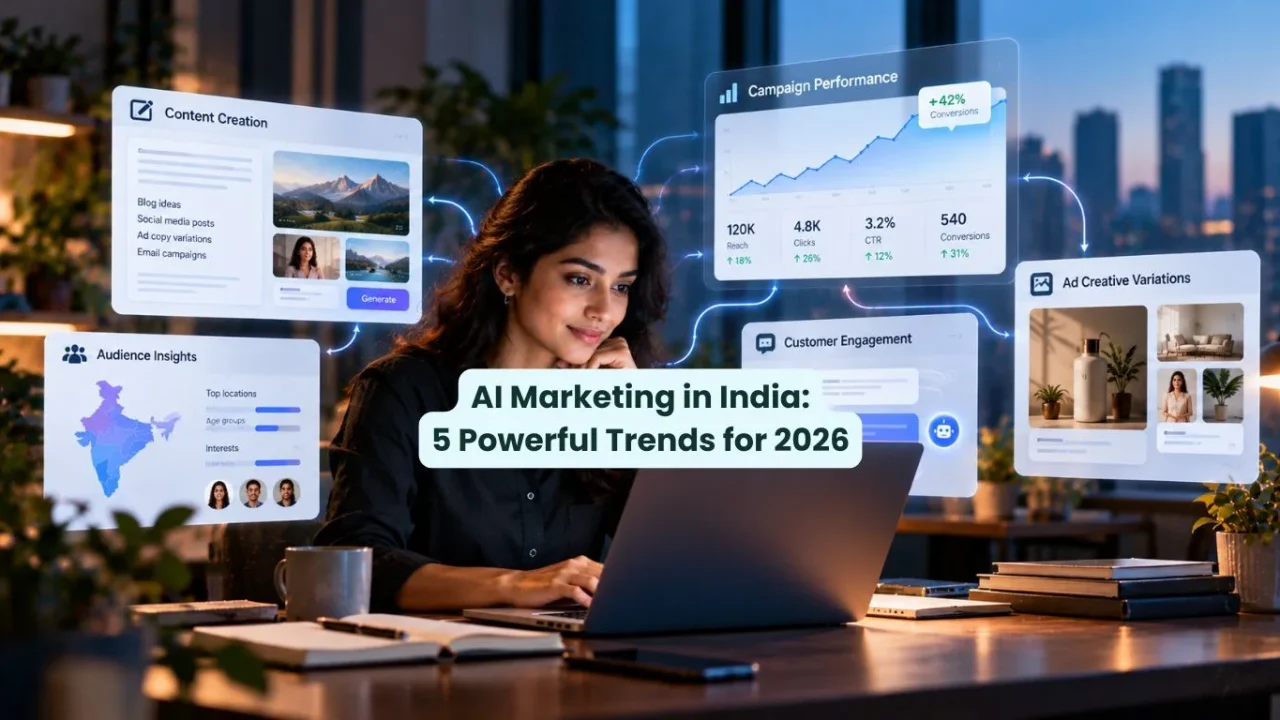
We can create campaigns faster, generate multiple creative variations, analyse customer data, write first drafts, build audience segments, create presentations, generate images and videos, automate reporting. But I don’t believe this means marketers become irrelevant.
It means execution becomes cheaper. And when execution becomes cheaper, strategy becomes more valuable.
If everyone can create 50 ad copies in five minutes, the competitive advantage isn’t the ability to create 50 copies. It is knowing which one should actually be used.
If everyone can generate an image, the advantage isn’t generating an image. It is understanding the brand, audience, cultural context and business objective behind it.
AI is therefore pushing marketers up the value chain.
From doing the work to deciding what work should be done.
My Take
I don’t think the future of work is going to be a simple story of humans losing jobs to robots.
It will be much messier.
Some jobs will disappear. Some will change dramatically. Some will become more valuable. And entirely new roles will emerge around technologies we haven’t even fully defined yet.
The growth of AI jobs in India is encouraging, but I wouldn’t use it as an excuse to become complacent. Hiring numbers can tell us where the market is moving, but they don’t tell us whether today’s workforce is ready to make the transition.
The bigger question isn’t whether AI creates more jobs than it cuts.
It’s whether the people losing yesterday’s jobs will have the skills required for tomorrow’s jobs.
That, in my opinion, is the real AI employment story.
And perhaps the future isn’t: “AI will take your job.”
Perhaps it is: “Someone who knows how to use AI will take the job of someone who doesn’t.”
That is a much more uncomfortable but much more useful way of looking at it
As the industry shifts, staying informed about the latest skills-first hiring news is essential for anyone. Click through to read more such threads!