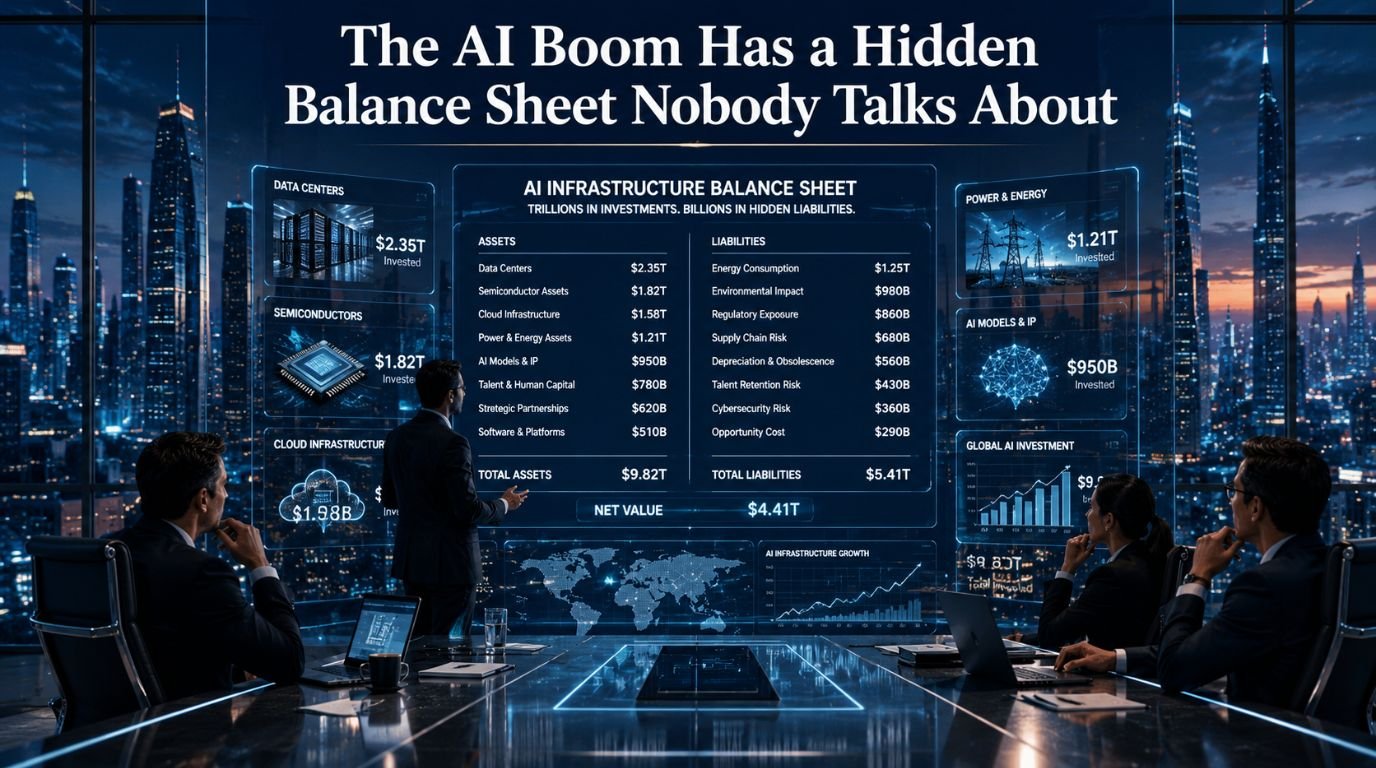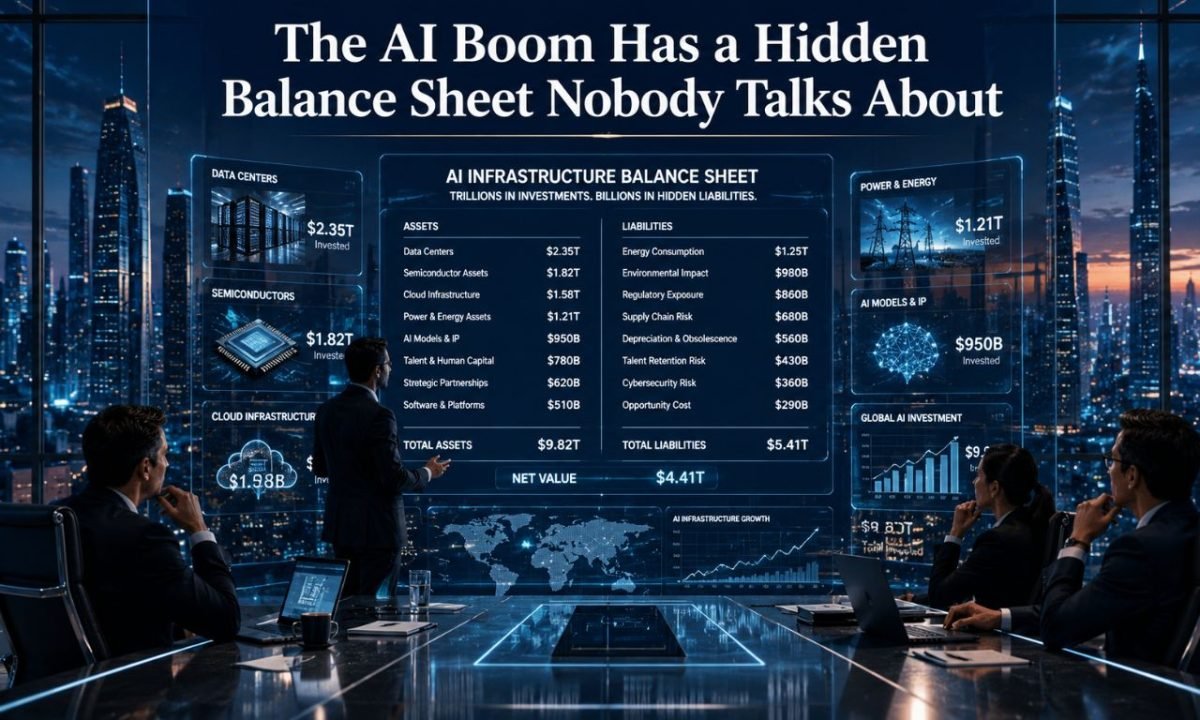

The AI Boom Has a Hidden Balance Sheet Nobody Talks About
Every earnings season, we hear the same headlines.
“AI investments are accelerating.”
“Cloud infrastructure is expanding.”
“CapEx is at record highs.”
But this chart highlights something far more interesting.

It suggests that the world’s biggest AI companies may collectively have over $1.65 trillion in off-balance-sheet commitments—obligations that don’t immediately appear as traditional debt on financial statements.
Companies like Meta, Microsoft, Amazon, Alphabet and Oracle are committing enormous amounts toward future data centres, AI chips, energy infrastructure and long-term cloud capacity.
These aren’t necessarily loans.
They’re long-term contractual commitments.
And they’re becoming one of the biggest strategic bets in corporate history.
The AI Race Is No Longer Just About Better Models
What’s fascinating is that the hidden commitments are, in several cases, larger than the reported debt.
That tells me something important.
The AI race is no longer about building better models.
It’s about building the infrastructure that powers those models.
- GPUs.
- Electricity.
- Data centres.
- Cooling systems.
- Semiconductor supply chains.
- Cloud capacity.
These have become the new oil fields of the AI economy.
Every AI Prompt Runs on Billion-Dollar Infrastructure
As marketers, we often celebrate new AI features without thinking about what it takes to make them available.
Every AI prompt we type travels through an incredibly expensive infrastructure that someone has already committed billions to build.
This investment extends beyond technology companies.
Utilities, renewable energy providers, chip manufacturers, construction firms, and networking companies are all becoming critical players in the AI value chain.
In many ways, the AI economy is creating an entirely new industrial ecosystem.
This investment extends beyond technology companies.
Utilities, renewable energy providers, chip manufacturers, construction firms, and networking companies are all becoming critical players in the AI value chain.
In many ways, the AI economy is creating an entirely new industrial ecosystem.
Infrastructure Is Becoming AI’s Biggest Competitive Advantage
For businesses, this also changes how we evaluate AI companies.
The winners won’t necessarily be the companies with the smartest chatbot.

They’ll be the ones capable of financing decades of infrastructure while still generating healthy cash flows.
Investors are increasingly evaluating AI companies on more than product innovation.
Long-term capital allocation, infrastructure partnerships, energy security, and supply chain resilience are becoming equally important indicators of competitive strength.
The Biggest AI Story Is Happening Behind the Balance Sheet
It’s a reminder that technological revolutions are never built on software alone.
They’re built on capital.
The internet needed fibre optics.
Streaming needed content delivery networks.
Electric vehicles needed charging infrastructure.
And AI?
AI needs trillions of dollars worth of computing infrastructure before it becomes truly ubiquitous.
For business leaders, this serves as an important reminder that disruptive technologies often require equally disruptive investment strategies.
The companies shaping the future of AI are making decisions today that may not generate returns for years, but those commitments could define the next decade of technological leadership.
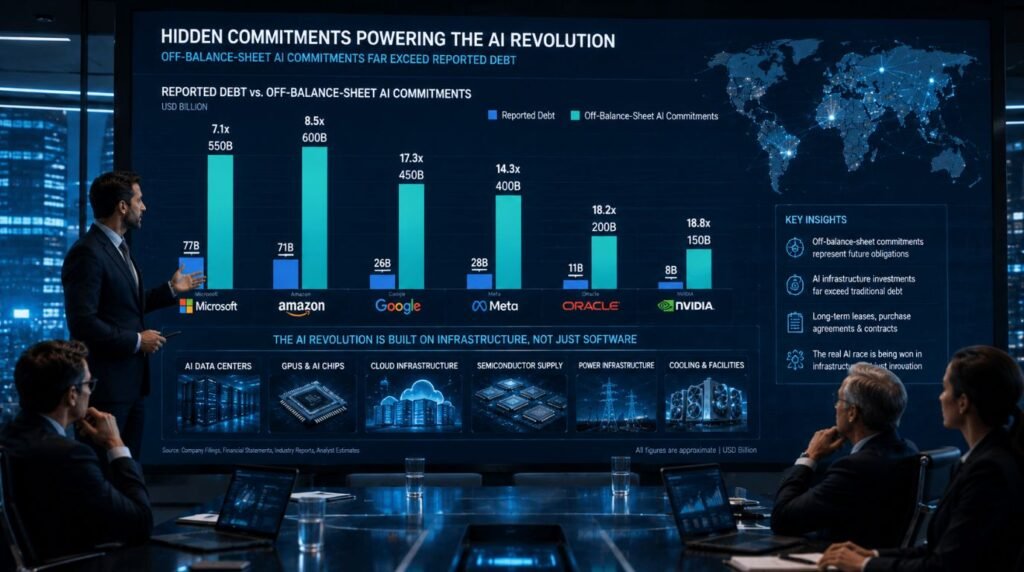
The chart also reminds us that balance sheets don’t always tell the complete story.
Sometimes the biggest commitments are hidden in long-term contracts, future purchase agreements and infrastructure investments that only become visible when you look beyond traditional debt metrics.
For business leaders, this serves as an important reminder that disruptive technologies often require equally disruptive investment strategies.
The companies shaping the future of AI are making decisions today that may not generate returns for years, but those commitments could define the next decade of technological leadership.
The AI revolution is incredibly exciting.
But behind every groundbreaking model is an even bigger financial story unfolding quietly in boardrooms around the world.
And in my opinion, that’s the story worth paying attention to.
Source: Nikkei analysis based on company filings and BIS data, as summarized in the below chart.
As the industry shifts, staying informed about AI trends is essential for anyone. Click through to read another thread!