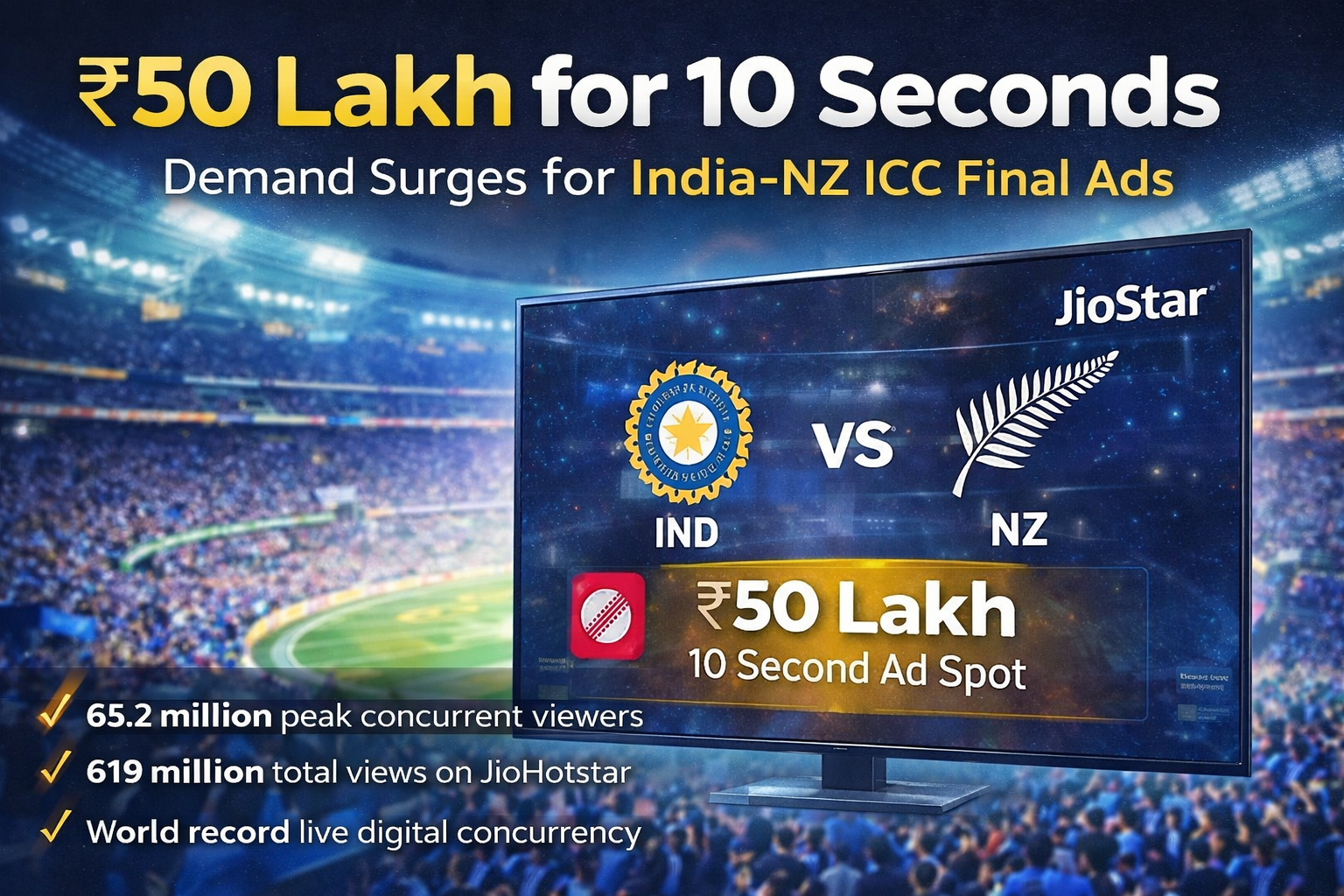
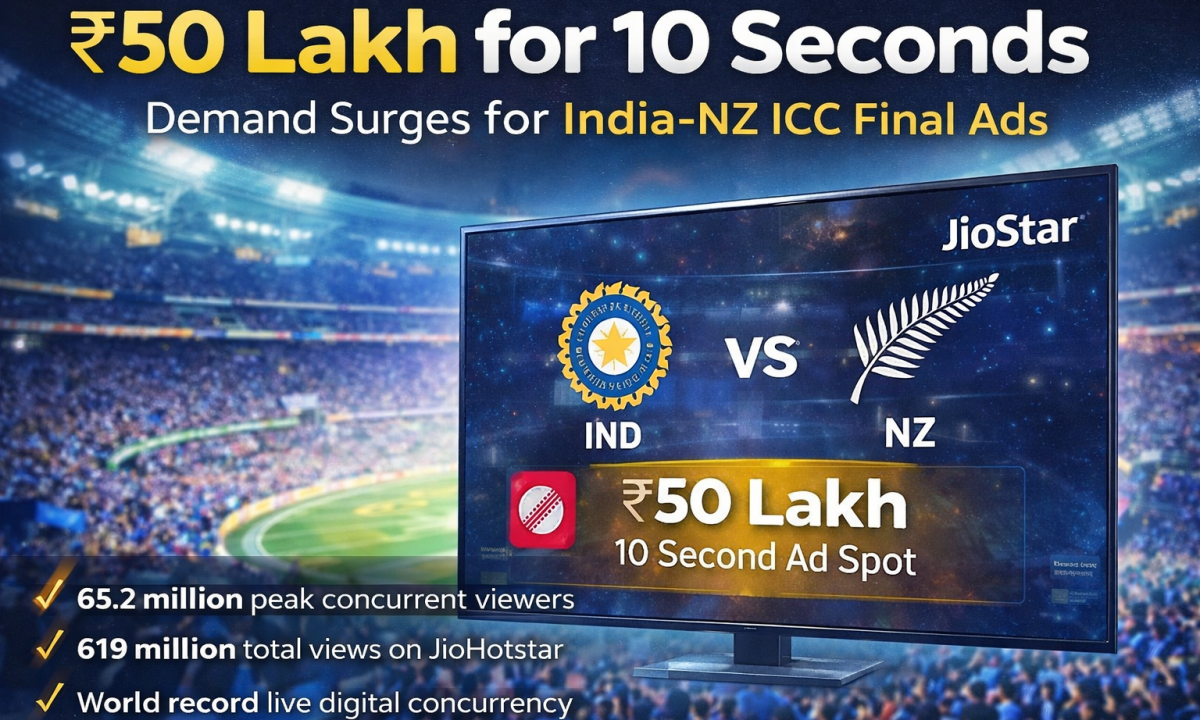

JioStar is reportedly seeking ₹50 lakh for a 10-second ad spot during the India–New Zealand ICC final.
Let that sink in.
That’s ₹5 lakh per second.
Why the premium? Two words: attention scarcity.
The context
- 65.2 million peak concurrent viewers during the India–England semi-final
- 619 million total views on JioHotstar
- A world record for live digital concurrency
This isn’t just cricket. It’s mass-scale digital television.
Inventory for the final is limited. Demand is peaking. And brands know that finals aren’t just about impressions — they’re about cultural moments.
What’s really happening here?
We’re witnessing a structural shift.
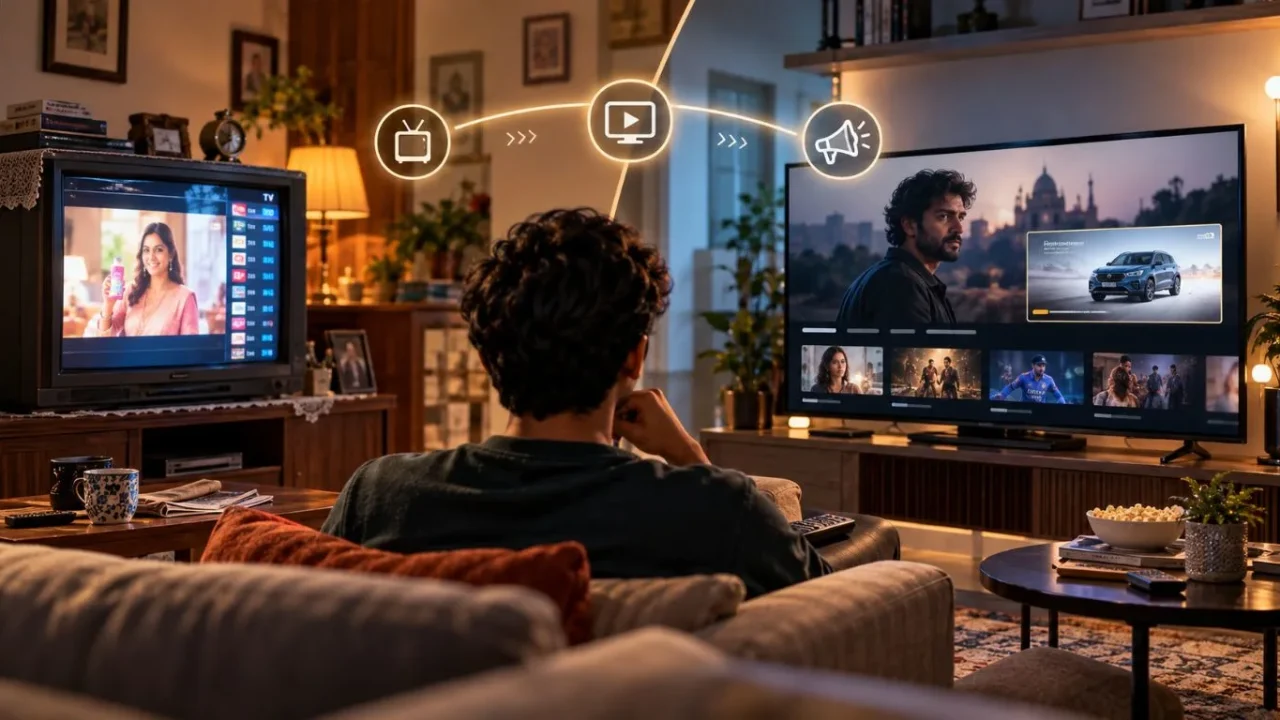
Digital is no longer the “cheaper alternative” to TV.
For marquee events, it is the main stage.
High concurrency + live emotion + national relevance = premium pricing power.
And unlike traditional TV, platforms now offer targeting, attribution, and real-time optimization layered on top of scale.
What this means for marketers
This signals three things:
- Live events are still unbeatable in capturing collective attention.
- Digital platforms can now command television-level pricing — and justify it with data.
- Big brands will continue to pay for peak moments. Performance marketers may sit this one out.
The bigger takeaway?
In a fragmented media world, rare mass-attention moments become exponentially more valuable.
₹50 lakh for 10 seconds isn’t just an ad rate.
It’s the price of being part of a national memory.