
I’ve been tracking how AI is evolving inside Indian enterprises, and one thing is clear — we’re moving beyond assistive AI. The shift now is toward agentic systems that don’t just support work, but actively execute it.
This isn’t incremental change. It’s structural.
Key highlights
The data signals acceleration:
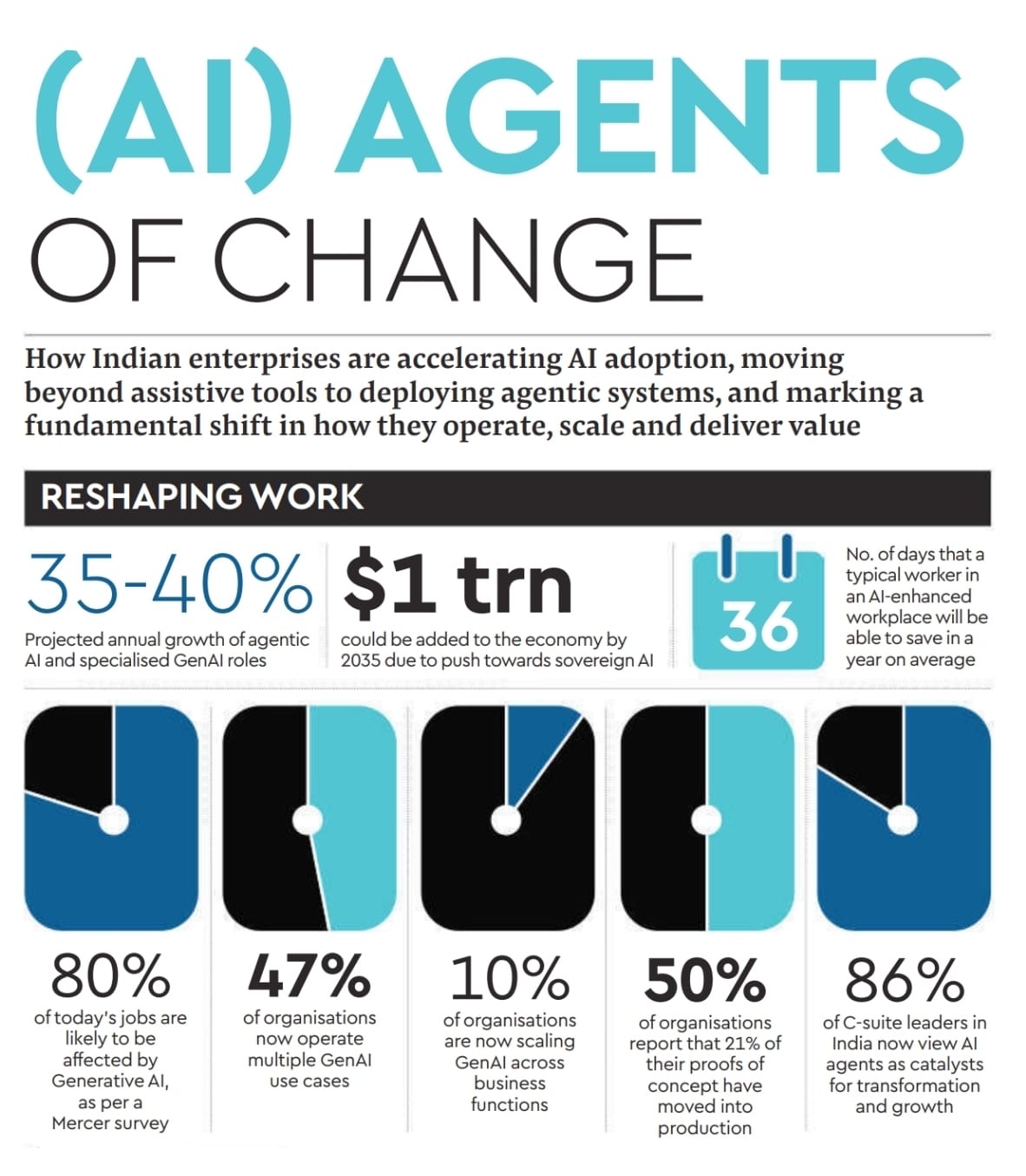
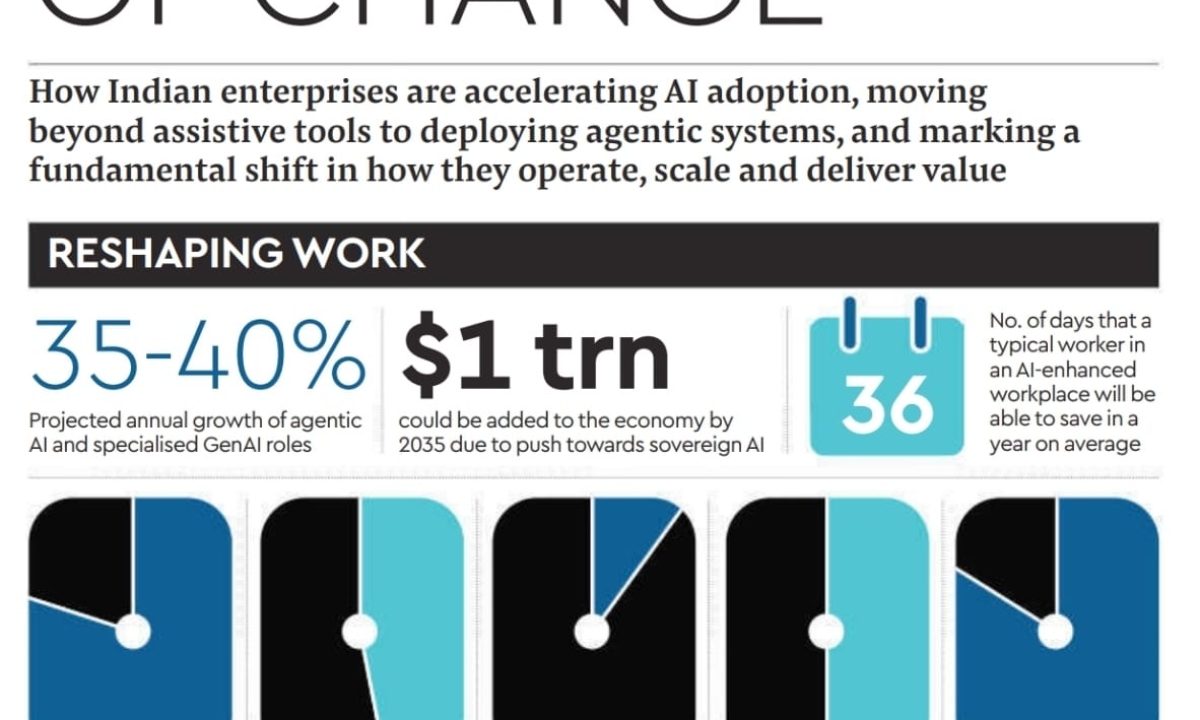
- 35–40% projected annual growth in agentic AI and specialized GenAI roles
- $1 trillion potential economic impact by 2035 driven by sovereign AI push
- AI-enhanced workers could save 36 days per year on average
- 80% of today’s jobs are likely to be affected by Generative AI
- 47% of organizations now operate multiple GenAI use cases
- But only 10% are scaling GenAI across business functions
- 86% of C-suite leaders view AI agents as catalysts for growth
What stands out to me is the gap between experimentation and scale. Many companies are piloting AI. Far fewer are fully operationalizing it.
What this means for a marketer
For marketers, this shift changes two things.
First, AI is no longer just a content or automation tool. Enterprise AI agents will increasingly handle workflows — from campaign optimization to predictive analytics and even autonomous decisioning.
Second, the competitive advantage won’t lie in using AI. It will lie in integrating AI into core processes. That’s where scale and cost efficiency emerge.
The organizations that treat AI agents as long-term infrastructure — not short-term experiments — will reshape how work is defined.
My takeaway is simple: AI agents are not replacing work. They are redefining it. And for Indian enterprises, the real transformation begins when pilots turn into systems.