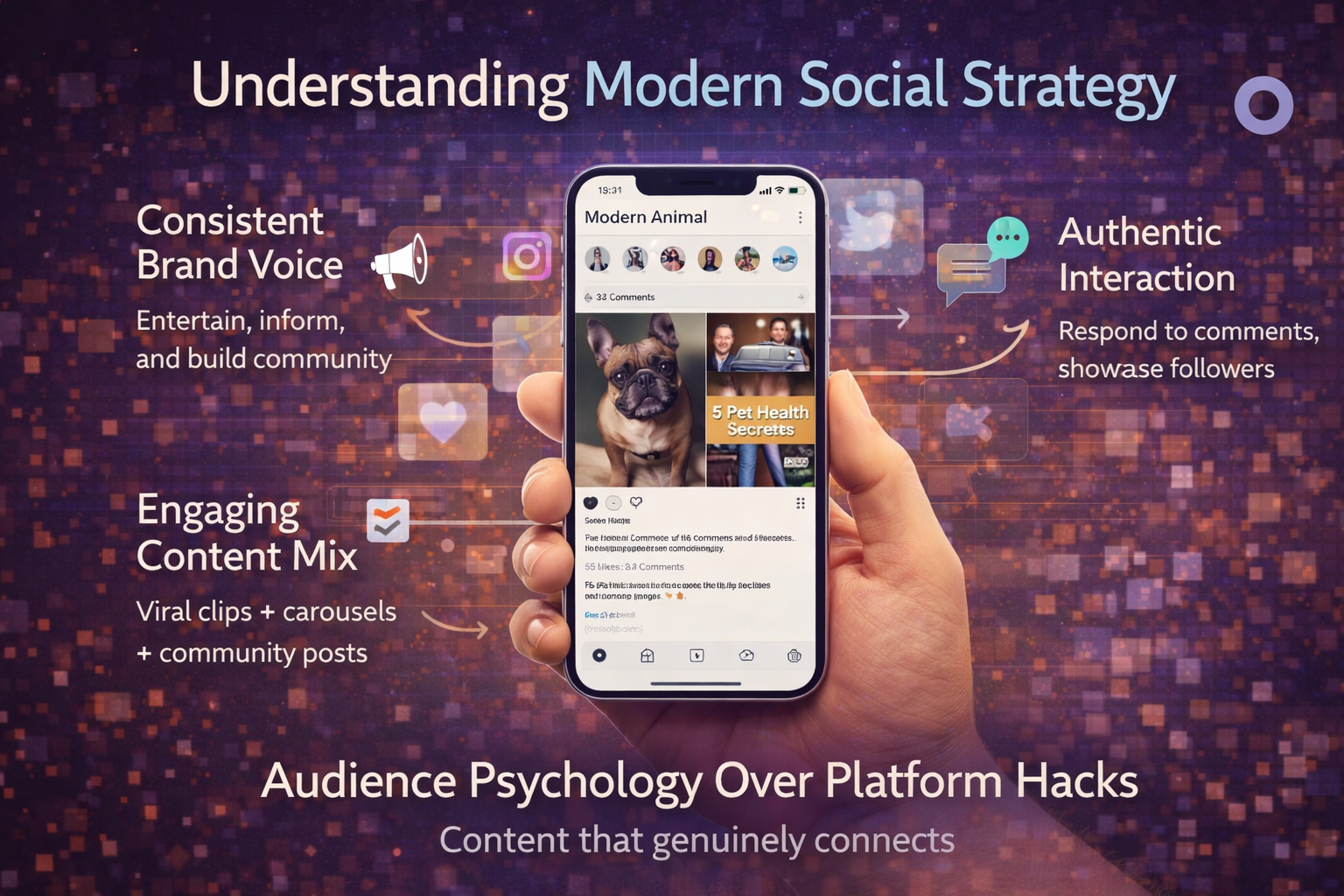

I recently came across a deep dive on Modern Animal’s social strategy, and it’s a great example of how brands can succeed by focusing less on algorithm hacks and more on audience psychology.

What stands out immediately is this: Modern Animal doesn’t chase every trend. Instead, they build social content with consistency, clarity, and a distinct brand voice. Their posts aren’t random — they’re deliberately crafted to entertain, inform, and create community. Whether it’s pet care tips or humorous takes on pet behavior, the content always feels purposeful.
Another insight is how they treat content formats. Instead of expecting every post to go viral, they use a mix of short clips, carousel posts, and community prompts that each serve a different role in the audience journey. Short, snackable posts attract initial attention, while longer, value-rich pieces build deeper engagement.
The strategy also emphasizes authentic interaction. The Modern Animal team responds to comments, highlights user-generated content, and strengthens real relationships — not just metrics.
What this means for a marketer
For marketers, Modern Animal’s approach is a reminder that social success isn’t about gaming platforms — it’s about understanding people. Algorithms amplify what already resonates with real users. If your content doesn’t genuinely connect, no amount of optimization will fix it.
The takeaway is simple: Build social strategies rooted in audience insight, consistency, and real engagement — not just trends and hacks.
Source: https://www.milkkarten.net/p/modern-animal-social-strategy