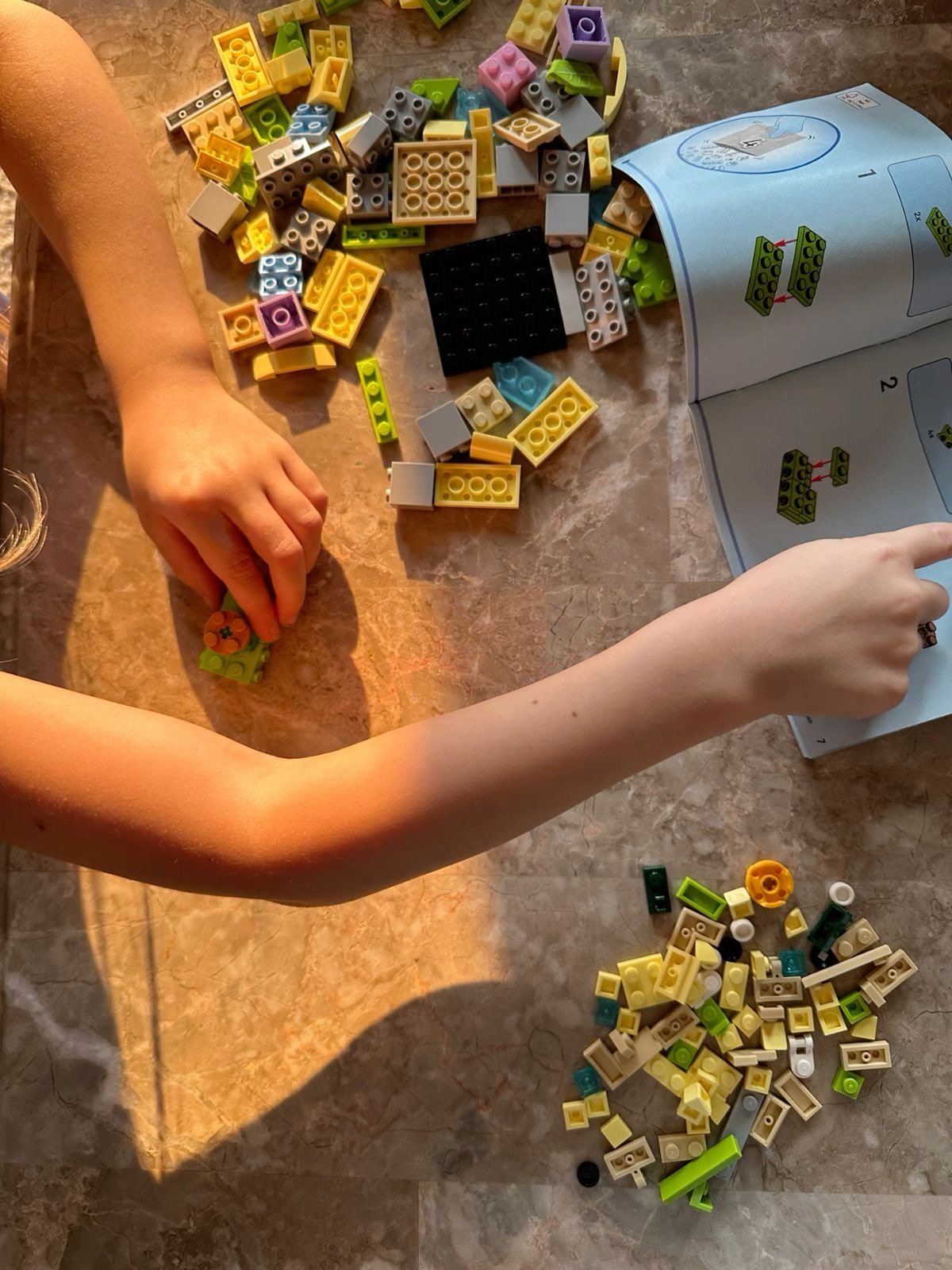
When most people hear the word LEGO, they probably picture a box of colourful LEGO bricks and a child sitting on the floor trying to build something.
That image feels increasingly outdated.
Today, LEGO can be a Harry Potter collector’s item, a piece of home décor, a date-night activity, a nostalgic trip back to childhood, a creative hobby, or even an entire room.
There are LEGO fans who dedicate spaces in their homes to enormous collections and detailed LEGO cities, complete with buildings, roads, trains, vehicles, landscapes and tiny everyday scenes. Some displays are so elaborate that they look less like toy collections and more like miniature cities.
And that says something important about LEGO’s marketing.
LEGO is no longer simply selling a set of bricks. It is selling stories, experiences, nostalgia, creativity and the satisfaction of building something that feels like your own.
LEGO doesn’t just sell a product. It gives people a reason to buy it.
One of the smartest things LEGO has done is expand the situations in which its products make sense.
Take its themed collections.
Harry Potter is an obvious example. When LEGO releases a Harry Potter set, it isn’t starting from zero and trying to convince someone that LEGO is exciting. The Harry Potter fan already has an emotional connection to Hogwarts, the characters and the Wizarding World.
LEGO gives that person a physical way to bring part of that world into their own space.
In 2025, LEGO launched the Hogsmeade Village – Collectors’ Edition, a 3,228-piece set designed to recreate locations from the Wizarding World. It was also designed to work with previous Harry Potter collector sets, including Diagon Alley and Gringotts Wizarding Bank.
In 2026, LEGO continued the Harry Potter anniversary strategy with a 3,491-piece Ministry of Magic Collectors’ Edition, timed around the annual Back to Hogwarts moment. The launch also included LEGO Insiders early access and a limited gift with purchase.
The important part isn’t simply putting Harry Potter characters on LEGO packaging.
It’s creating an ecosystem.
One set can lead to another. A display can become larger. A collection can eventually become an entire miniature Wizarding World.
The customer isn’t just buying a LEGO set. They’re building a world.
But LEGO’s appeal goes far beyond themed sets
You don’t need Harry Potter, Star Wars or Marvel for LEGO to become exciting.
Some of the most impressive LEGO content online is simply… LEGO.
People build houses, streets, train systems, restaurants, airports, landmarks and entire fictional cities. Some projects take months or even years to develop, and enthusiasts regularly share their progress on YouTube, Instagram, TikTok, Reddit and dedicated LEGO communities.
At the extreme end, some fans dedicate entire rooms, basements or large sections of their homes to LEGO displays.
What starts as a set can turn into a hobby, then a collection, then a long-term project and eventually a personal world.
That is an unusual lifecycle for a product.
And LEGO doesn’t have to manufacture everything people eventually see.
Its customers do a lot of the creating themselves.
LEGO is almost built for the internet
This is one of the biggest advantages of the LEGO format.
The finished product is visual. So is the process of making it.
A huge LEGO city is naturally shareable. So is an intricate custom creation, a room-sized collection or a time-lapse of someone assembling a complicated set.
Someone can post the beginning of a LEGO city and then keep returning with updates:
Day 1: one building.
Month 3: a railway.
Month 6: an entire neighbourhood.
The audience gets to watch the project grow.
That turns a product into ongoing content, while the person who bought the LEGO becomes a creator without necessarily thinking of themselves as one.
It is difficult to manufacture that kind of organic engagement through advertising alone.
Then LEGO started speaking to adults in a completely different way
LEGO has also become much better at communicating with adults, rather than positioning itself only as something parents buy for children.
One of the clearest examples is LEGO Botanicals.
Flowers aren’t something you would traditionally associate with LEGO. That’s exactly what makes the idea interesting.
LEGO launched its Botanical Collection in 2021 with products including the Flower Bouquet and Bonsai Tree. The collection expanded into orchids, succulents, wildflowers and other botanical builds before becoming its own dedicated theme.
Suddenly, LEGO had entered territory that had little to do with traditional children’s toys.
Gifting.
Home décor.
Hobbies.
Relationships.
And, importantly, experiences.
LEGO changed what “date night” can look like
This may be one of LEGO’s cleverest marketing moves.
The Botanical sets aren’t only presented as objects that happen to look like flowers. LEGO has also marketed them as something couples can actually do together.
Its own date-night content suggests building Botanical sets as an alternative to conventional date activities, with ideas for turning the experience into a planned evening.
That’s a very different proposition from simply advertising a product.
LEGO isn’t saying:
“Here’s a flower bouquet. Buy it.”
It’s saying:
“Here’s something you can build together.”
The product becomes the activity.
That opens up entirely new occasions: Valentine’s Day, birthdays, weekends, date nights, gifts between friends, or simply an evening spent making something together.
The set hasn’t fundamentally changed.
The context around it has.
LEGO has become very good at occasion marketing
A Botanical set can be marketed around Valentine’s Day or Mother’s Day. It can be a birthday present, a piece of home décor, a creative hobby or something bought simply because someone likes flowers.
LEGO’s own Botanical marketing frames the products around different relationships, including partners, parents, friends and yourself.
The same product can therefore enter several different conversations without needing to be redesigned for each one.
And LEGO has gone beyond advertising those occasions.
For Valentine’s Day 2025, it launched the LEGO Botanicals Le Florist Flower Truck, a mobile experience that travelled through cities including New York, London, Toronto, Paris, Hamburg and Milan.
The experience included workshops, botanical activities and installations designed around flowers and connection. LEGO also collaborated with celebrity florist Jeff Leatham for an online botanical workshop.
Instead of simply placing a Valentine’s Day advertisement in front of people, LEGO created something people could actually interact with, photograph and share.
The campaign became part of the experience.
LEGO sells nostalgia, but it also gives people a way to express themselves
Harry Potter demonstrates the power of nostalgia particularly well.
A Harry Potter fan isn’t necessarily thinking, “I want some plastic pieces.”
They’re thinking:
“I love Harry Potter.”
LEGO gives that emotion a physical form.
The same principle applies to other entertainment partnerships, from Star Wars to other major franchises. But the more interesting part is that LEGO doesn’t need an external franchise to create an emotional connection.
A person can build their own house.
Their own street.
Their own train network.
Their own city.
Their own world.
That makes ordinary LEGO sets just as important to the brand’s long-term appeal as the headline-grabbing licensed collections.
The LEGO city phenomenon is a marketing dream
Imagine the difference between selling a finished miniature city and selling the components to build one.
With the first, the experience largely ends when the product is purchased.
With LEGO, it can keep going.
A person might start with one building, then add a road, a train, a fire station, trees, cars, lights and another neighbourhood.
There is no obvious finish line.
Online communities make this even more compelling. Builders can share progress, take inspiration from other people’s cities and develop increasingly ambitious projects.
For some fans, the result is a dedicated LEGO room filled with a miniature world that has taken years to build.
The original LEGO set was simply the starting point.
That creates a different kind of customer relationship
A customer who buys a product once has a very different relationship with a brand from someone who turns that product into a hobby.
A child might start with a small LEGO set. Years later, that same person might become an adult collector, build a LEGO city, buy a Botanical set, collect a particular theme or dedicate an entire room to LEGO.
The relationship has shifted from:
“I bought a toy.”
to:
“LEGO is one of my hobbies.”
That is a much deeper form of engagement.
The product becomes content, and the customer becomes the creator
LEGO gives people something that is:
buildable, visual, customisable and shareable.
That combination works exceptionally well online.
A LEGO city can become a YouTube video.
A speed build can become a TikTok.
A custom creation can become an Instagram post.
A building technique can become a Reddit discussion.
A LEGO room can become a home-tour video.
A new Harry Potter set can become an unboxing.
A Botanical set can become a date-night post.
The same brand can therefore generate completely different kinds of content depending on what its customers choose to build and share.
And LEGO doesn’t have to create all of it itself.
Its community does.
So, is LEGO’s marketing genius simply about making more sets?
Not really.
The more interesting strategy is that LEGO keeps finding new meanings for the same basic product.
Harry Potter turns LEGO into nostalgia and collecting.
Botanicals turn LEGO into gifting, décor and shared experiences.
Date-night campaigns turn LEGO into an activity.
LEGO cities turn it into a long-term creative hobby.
Adult-focused collections turn it into a lifestyle product.
Online communities turn customers into creators.
And themed sets give people a physical way to enter worlds they already love.
The LEGO brick hasn’t changed much.
The context around it has.
The bigger marketing lesson
LEGO’s strategy offers a useful lesson for almost any consumer brand:
Don’t only market what your product is. Market what your product can become in someone’s life.
A flower LEGO set isn’t just a flower LEGO set.
It can be a Valentine’s Day gift, a date, a decoration, a weekend project or something someone buys for themselves.
A Harry Potter set isn’t simply a collection of LEGO bricks shaped like Hogwarts.
It can be a physical way of revisiting a childhood memory.
And a regular LEGO city set doesn’t have to remain the city shown on the box.
It can become the first building in someone’s own miniature world.
That is what makes LEGO’s marketing so interesting.
The company isn’t only asking:
“What should we sell next?”
It is continually finding new answers to a bigger question:
“What role can LEGO play in people’s lives next?”
And perhaps that is the real reason LEGO has remained relevant across generations.
It doesn’t just sell LEGO bricks.
It gives people a reason to build.