
Summary
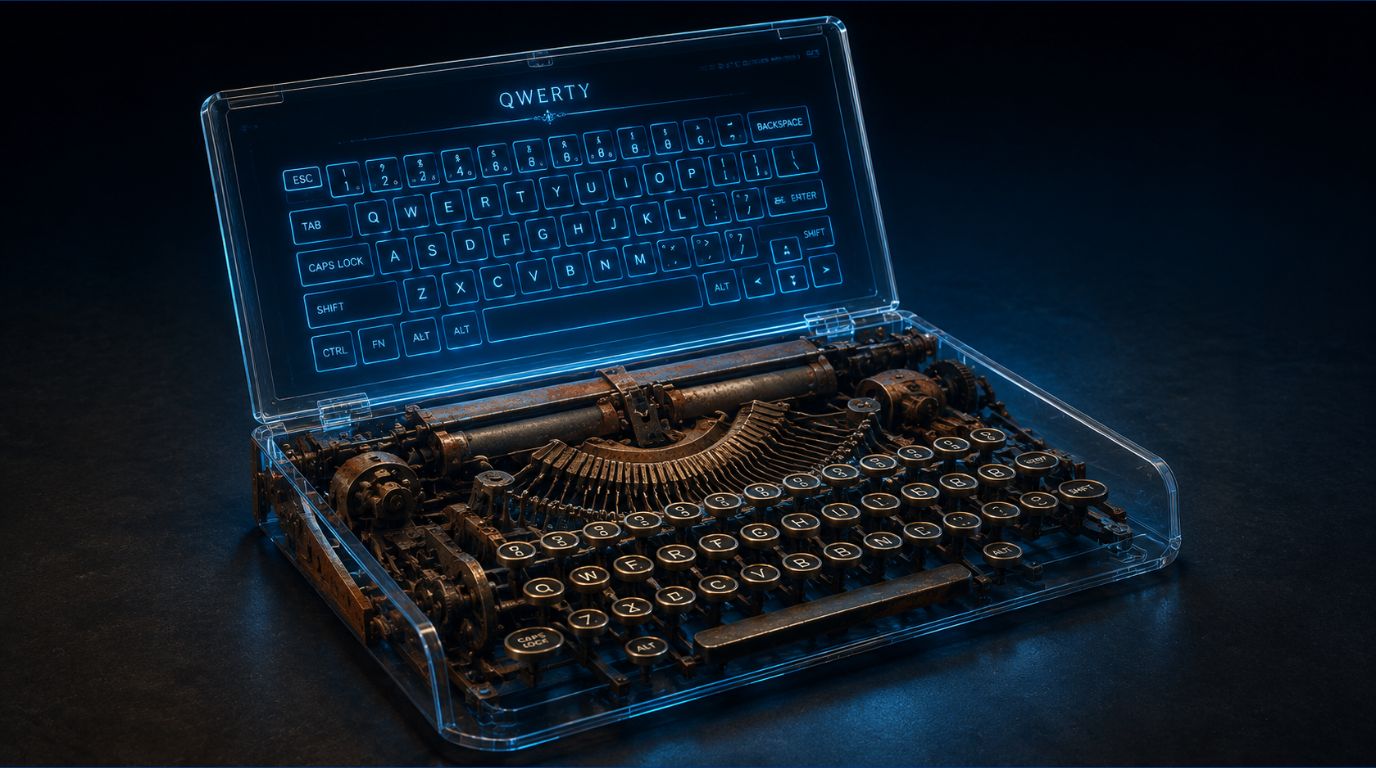
In 2026, we are still using a keyboard layout designed to slow us down. The story of QWERTY is perhaps the most successful UX scam in history—a hardware workaround from the 1870s that we’ve mistaken for a productivity standard. This post explores why we cling to irrational habits and how “legacy UI” continues to dominate our digital lives.
The Origins of The UX Scam
The Greatest UX Scam In History Is Sitting On Your Desk Right Now!
I had a random existential crisis today while typing. Who looked at the alphabet…A, B, C, D…and decided “Yeah, let’s completely ignore this order forever.”
Because honestly, keyboards make absolutely no sense.
QWERTYUIOP.
Looks less like a typing system and more like Elon Musk naming his child.
What’s even funnier is that this classic layout, which is a UX scam we all use daily, was basically designed around a hardware problem from the 1870s.
Not productivity. Not ergonomics. Not user experience. A traffic management issue for typewriters. Its inventors simply rearranged the letters to create friction.
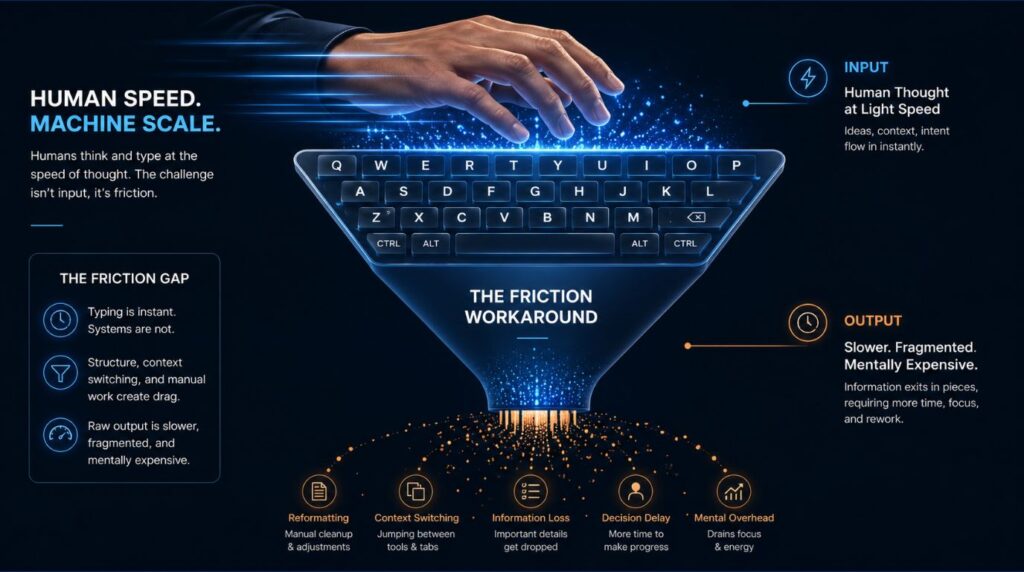
Imagine building modern civilization around a workaround – that is exactly how this UX scam became a permanent fixture of our desks. The original typewriters had mechanical arms that would jam if people typed too fast. So instead of making better hardware immediately, inventors said, “What if we just slow humans down a little?”
Peak engineering behavior.
Why Tech Habits Become Permanent?
150 years later…I’m still smashing the same weird key combinations while writing emails and pretending to be productive.
This is honestly one of the best examples of how technology habits become permanent. This illustrates how a UX scam survives, not because they’re the best, but because they became standard first.
And this happens everywhere in tech.
- The floppy disk icon still means “save.”
- We say “hang up” on phones
- Video call buttons still look like old telephones
- We use QWERTY even though typewriter jams died before WiFi existed
Humanity runs on legacy UI.
The Craziest Part
Most of us can type insanely fast on QWERTY…but would fail a kindergarten alphabetical keyboard test instantly.
I just imagined someone introducing keyboards today from scratch.
Investor pitch: “Okay, hear me out. We randomize the letters. People will eventually adapt.”
That startup would get roasted on LinkedIn by UX designers within minutes.
Also, let’s be honest. Typing itself is becoming weirdly temporary.
AI voice tools are exploding. People are whispering prompts into laptops.
Teenagers type like: “pls snd pdf asap lol.”
Meanwhile, Gen Alpha may never properly learn “typing posture” because they’ll mostly talk to AI agents. Which means future generations might look at QWERTY keyboards the way we look at ancient farming tools.
Useful once. Emotionally iconic. Completely irrational.
And yet…
I guarantee that if Apple launched an alphabetical keyboard tomorrow, the internet would collapse.
People would return MacBooks like: “I can no longer locate the letter M emotionally.”
That’s the real lesson here.
The Lesson Here: The Future of The Keyboard
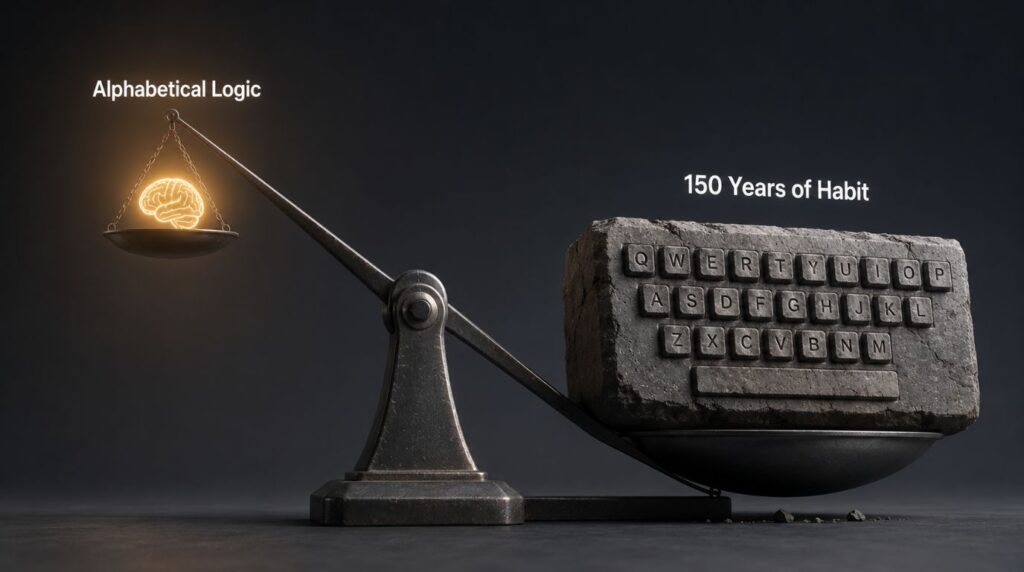
Humans don’t optimize for perfection. We optimize for familiarity. Which is honestly why so many terrible apps survive.
Why old software refuses to die. Why do people still use Excel as:
- a CRM
- a database
- a project management tool
- probably a therapist soon
QWERTY is proof that once behavior scales globally, logic stops mattering. Habit wins. Every single time.
Also, somewhere out there…there’s probably one engineer who spent his whole life designing the perfect keyboard layout…only to lose to:
“Yeah, but everyone already knows QWERTY.”
As the industry shifts, staying informed about tech trends is essential for anyone. Click through to read more such threads!