
Summary
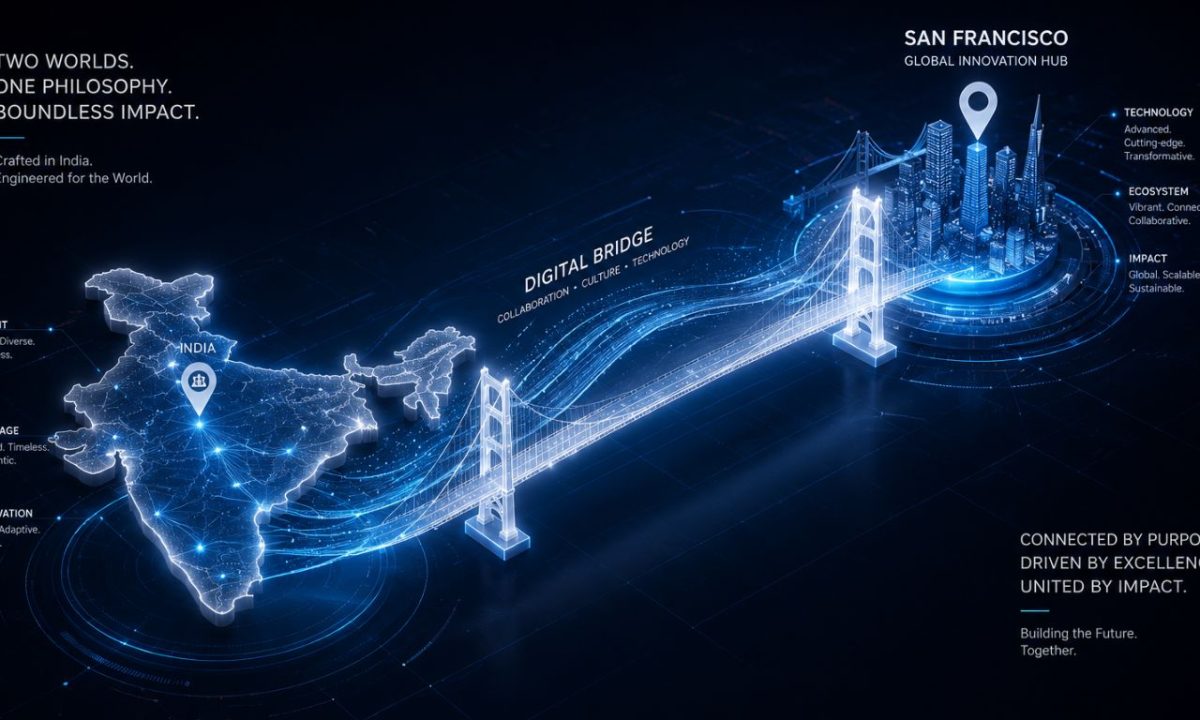
In 2026, Indian startup founders are discovering that the “build from anywhere” SaaS model doesn’t apply to the AI revolution. The Silicon Valley AI ecosystem is exerting a powerful geographic gravity, pulling founders back to San Francisco to capture market momentum. This shift highlights why physical proximity remains a critical advantage in high-speed technology cycles.
The Gravity of the Silicon Valley AI Ecosystem
Indian AI Startups Are Learning an Old Silicon Valley Truth: Geography Still Matters
For years, Indian startup founders proudly said: “You can build globally from anywhere.”
And honestly, for the SaaS era? That was mostly true. You could:
- Build from Bengaluru
- Sell remotely
- Raise over Zoom
- Hire globally
- Scale asynchronously
But AI seems to be changing the equation. Today, the Silicon Valley AI ecosystem is moving too fast for distance. Now investors are telling Indian AI founders something very different: “Move closer to Silicon Valley.”
Not eventually. Early. And that shift is bigger than most people realize. Because this isn’t just about office location. It’s about where:
- Capital flows
- Talent clusters
- Product conversations happen
- And where the future gets decided first
The Fascinating Part
Here’s the part I find fascinating.
For years, technology has reduced the importance of geography. Remote work exploded. Zoom became normal. Global teams became common.
And then AI arrived…
And suddenly, everyone started flying back to San Francisco. That irony is incredible.
Why Is This Happening?
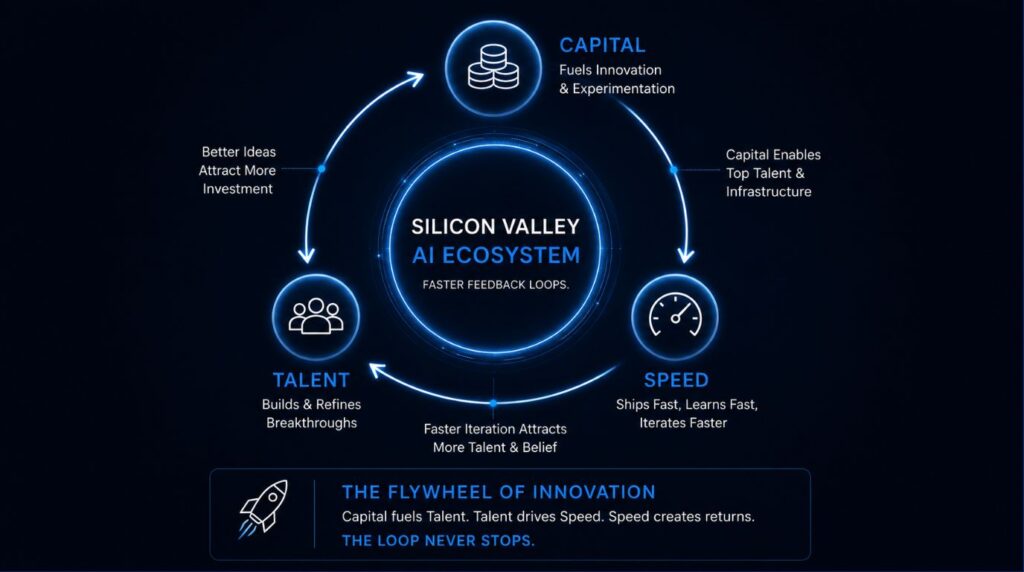
Because AI is moving too fast for distance. In SaaS, product cycles were slower. You had time to:
- Build
- Iterate
- Sell remotely
But AI markets evolve almost weekly, which means founders now want:
- Faster feedback loops
- Closer investor access
- Better hiring networks
- Real-world customer conversations
And according to investors, those signals are still strongest in Silicon Valley.
My Take on Silicon Valley AI Ecosystem
This proves something very important: In breakthrough technology cycles, ecosystems matter more than ever.
People underestimate how powerful physical proximity becomes during major innovation waves. When smart people gather in one place:
- Ideas move faster
- Trust builds quicker
- Opportunities compound
That’s difficult to fully recreate remotely.
The most underrated insight in the article?
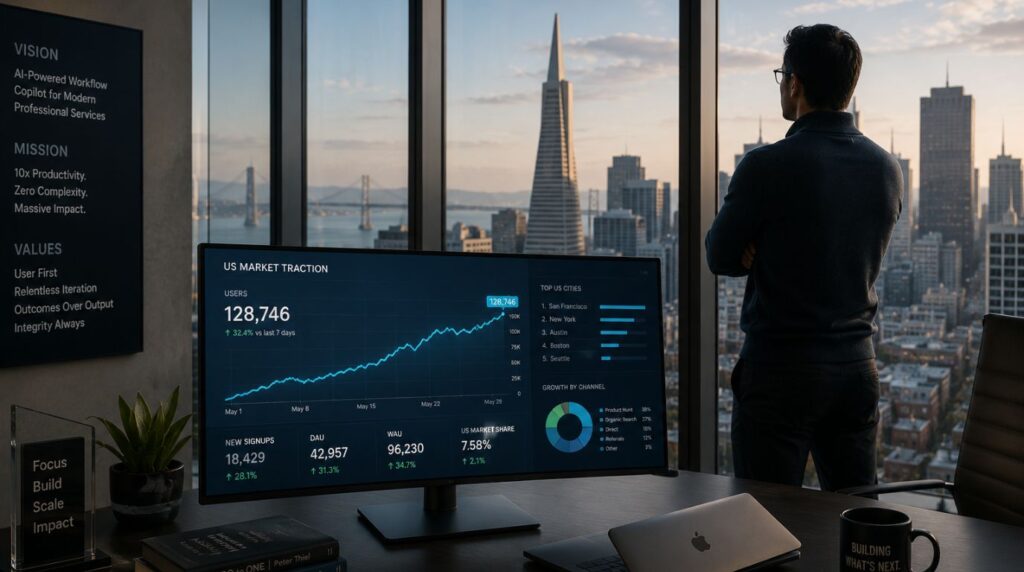
US customers are more willing to pay for AI products.
And honestly…That changes everything. Because startups don’t survive on:
- Hype
- Downloads
- Twitter engagement
They survive on: Revenue. And right now, the US market still offers:
- Higher spending power
- Faster enterprise adoption
- Bigger AI budgets
- Stronger monetization opportunities
So naturally, founders follow the money. That’s startup gravity.
The Twist No One is Talking About
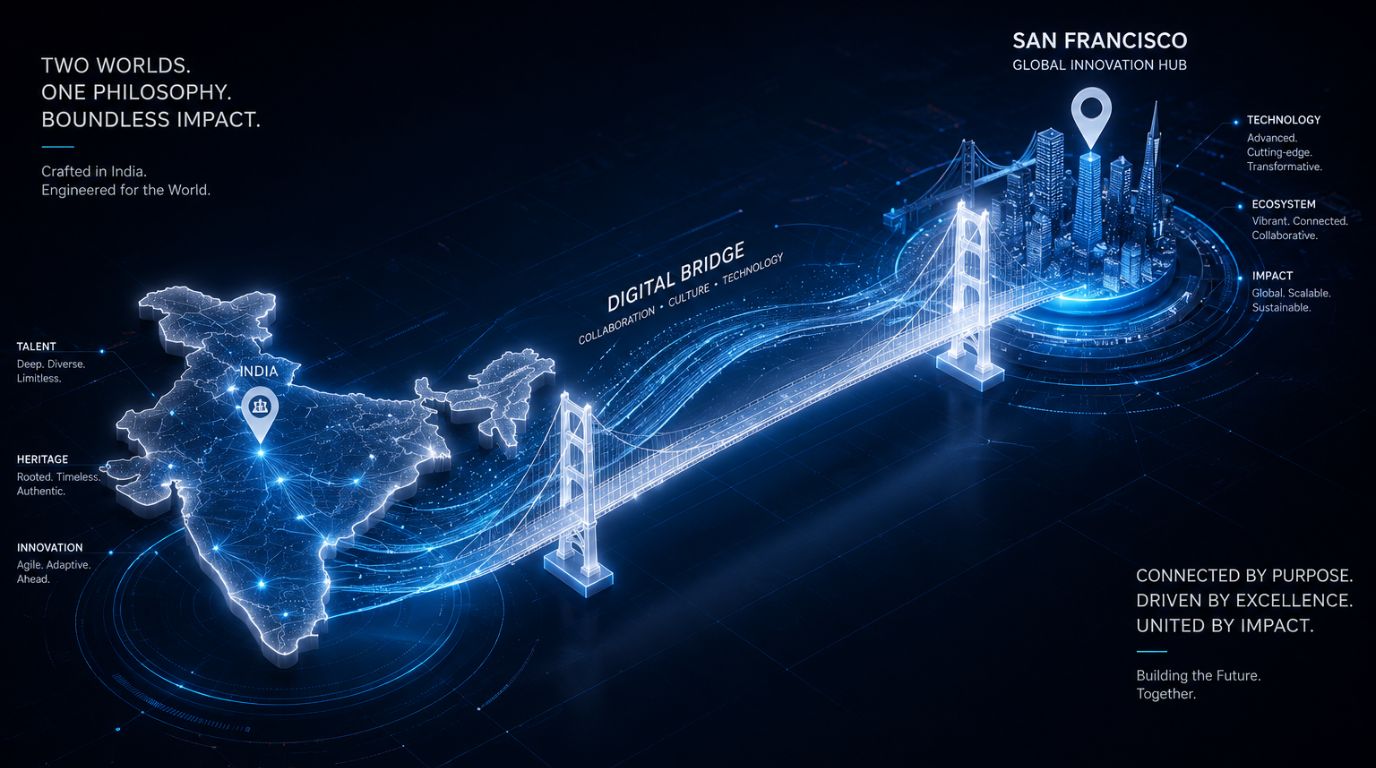
This doesn’t mean India is losing. Far from it. India may become:
- The talent engine
- The experimentation layer
- The operational backbone
While the Silicon Valley AI Ecosystem remains:
- The distribution hub
- The capital center
- The AI narrative machine
And honestly?
That hybrid model might dominate the next decade.
I also think this creates a cultural shift. For years, Indian founders optimized for:
- Efficiency
- Lean teams
- Cost advantages
Now AI startups are optimizing for:
- Speed
- Access
- Network density
- Market proximity
Very different game.
The Funny Part
We spent years saying, “The internet removed borders.”
Now the AI boom is quietly proving: Some rooms still matter more than others. And Silicon Valley remains one of those rooms.
Final Thought on Silicon Valley AI Ecosystem
I don’t think Indian AI founders are moving west because India lacks talent. India clearly has the talent. They’re moving because AI rewards proximity to momentum. And right now, a huge amount of that momentum still lives in San Francisco.
The real lesson here isn’t: “Move to America.”
It’s this: In every major tech revolution, the winners usually position themselves where the conversations happen first.
And in AI…
Those conversations are getting louder in the Silicon Valley AI ecosystem again.
As the industry shifts, staying informed about the latest AI news is essential for anyone. Click through to read this thread!