

Summary
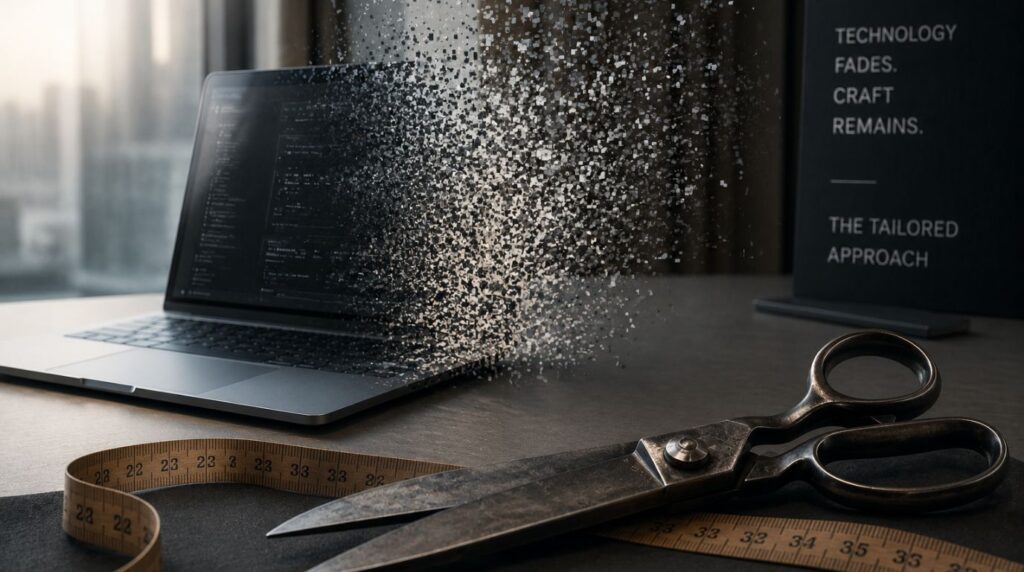
One of the strangest shifts in 2026 is the resurgence of old-school craftsmanship. While white-collar sectors face massive automation, certain tactile professions are proving to have the ultimate AI-resistant skills.
This blog explores why physical precision and human-experience-driven work—like tailoring—are becoming the new gold standard in a world dominated by software.
The Irony of AI-Resistant Skills
AI Might Be Killing White-Collar Jobs… But It’s Accidentally Reviving Tailors
One of the strangest things happening in 2026?
The more AI grows…
The more certain old-school human skills suddenly become valuable again.
I recently came across a story about tailors. Yes, actual tailors. The kind of profession most people thought was slowly disappearing.
And now?
There’s a shortage. After decades of glamorizing “laptop careers,” we are realizing that sewing and handcrafted alterations are actually high-value, AI-resistant skills.
Big retailers, fashion brands, and dry cleaners are actively looking for skilled tailoring professionals because sewing, alterations, and handcrafted precision are becoming harder to find.
And honestly?
This says a lot about where the world is heading.
Why Digital Roles Are Vulnerable?
We spent years glamorizing “digital careers.”
- Coding
- Marketing
- Corporate jobs
- Startup culture
- LinkedIn hustle posts
Meanwhile, practical skills quietly lost attention. Not because they weren’t valuable.
But because they weren’t: “Instagram glamorous.”
The Irony
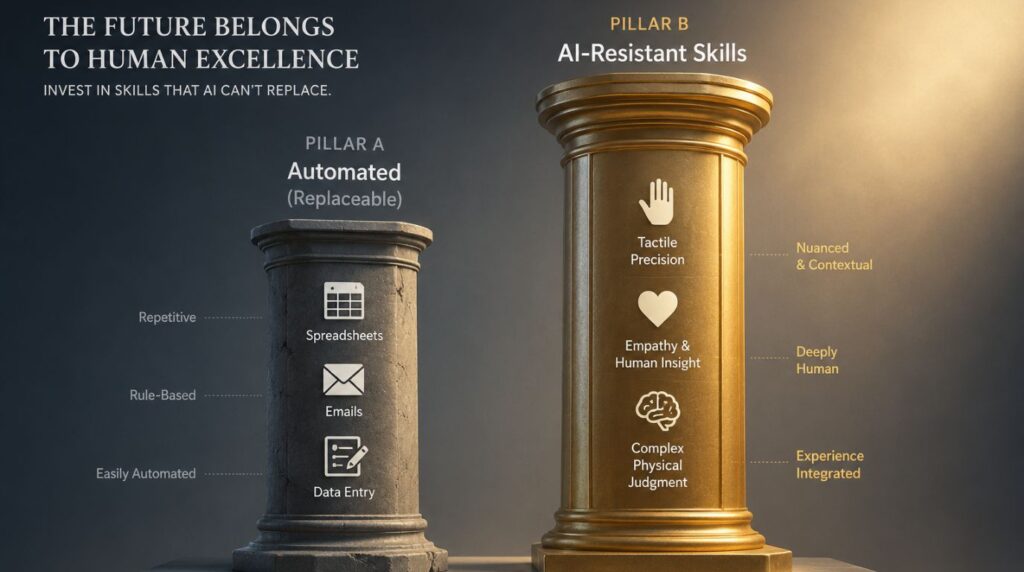
And now the irony is incredible. As AI starts automating:
- Reports
- Emails
- Coding assistance
- Presentations
- Analysis
The jobs becoming harder to replace are those rooted in AI-resistant skills, often:
- Physical
- Hands-on
- Precision-based
- Human-experience-driven
Like tailoring.
Think about this for a second.
AI can generate:
- A logo
- A campaign
- A strategy deck
- A resume
But can it perfectly alter a wedding suit overnight before an event? Not really.
Can it understand:
- Fabric feel
- Body shape
- Personal preference
- Human comfort
At a deeply physical level? Not yet.
And that’s where the conversation gets interesting.
Because for years, society made young people believe: “Success only exists behind a laptop.”
Now we’re slowly realizing that some of the most future-proof skills may actually be deeply human and tactile.
My Observation
AI is changing the prestige economy. Earlier, people chased jobs that looked:
- Modern
- Corporate
- Tech-enabled
Now we may start valuing jobs that are:
- Difficult to automate
- Experience-driven
- Craft-based
- Trust-based
And tailoring is a perfect example of how AI-resistant skills are reviving old-world professions that society once deemed “unglamorous.”
There’s another hidden lesson here, too
The article mentioned younger generations avoiding tailoring because it takes years to master. And honestly, that’s the bigger societal problem. The real challenge is that AI-resistant skills often take years to master.
We’ve become addicted to:
- Speed
- Virality
- Instant gratification
But real craftsmanship is slow. It’s repetitive. It takes patience. And AI is ironically making those human traits valuable again.
The Funniest Part
For years, people feared that “machines will replace factory workers.”
Instead, AI first walked straight into:
- Offices
- Agencies
- Tech companies
- Corporate workflows
Meanwhile, the tailor quietly survived. This doesn’t mean tech is dying. Far from it.
AI will absolutely dominate the future. But I think we’re entering a hybrid economy where the biggest winners are people who combine:
- Human craftsmanship
with - Digital leverage
Imagine:
- Tailors using AI for design previews
- Artisans using AI for customer acquisition
- Handmade businesses scaling through content
That combination is powerful.
The biggest winners in 2026 will be those who combine human craftsmanship with digital leverage, ensuring they possess a portfolio of AI-resistant skills that cannot be copied by software.
Final Thought on AI-Resistant Skills
The world spent a decade worshipping scalable digital work.
But AI is reminding us of something important: Not everything valuable scales easily.
Sometimes the most future-proof skill is still:
- A human hand
- Years of practice
- And work that cannot be copied instantly by software.
As we navigate this transition, it is clear that identifying and cultivating your own AI-resistant skills is the only way to outlast the spreadsheet worker.
Funny enough…
The tailor might outlast the spreadsheet worker.
As the industry shifts, staying informed about the latest AI news is essential for anyone. Click through to read this thread!