
RBI Digital Fraud Compensation Rules are good news. But There’s a Catch.
Every few weeks, we hear another story of someone losing money to an online banking scam. A fake payment link. A phishing SMS. A fraudulent banking app. Or a call pretending to be from your bank.
Until now, victims of these crimes were often left navigating a long, painful complaint process with absolutely no certainty of ever recovering their stolen funds. However, the discussion surrounding the RBI digital fraud compensation rules has sparked a massive sigh of relief across the country, introducing a structured safety net for digital banking users.
But before you assume you are fully insured against all online scams, it is vital to read the fine print.
Understanding the RBI Digital Fraud Compensation Rules
Under the new RBI Digital Fraud Compensation Rules, victims of fraudulent digital banking transactions involving losses of up to ₹50,000 may be eligible for compensation of up to ₹25,000, subject to certain conditions.
However, the implementation has been deferred and will now come into effect from January 1, 2027.
While this isn’t an immediate benefit, it is a significant step towards strengthening consumer protection in digital banking.
The Fine Print Matters
The compensation isn’t automatic.
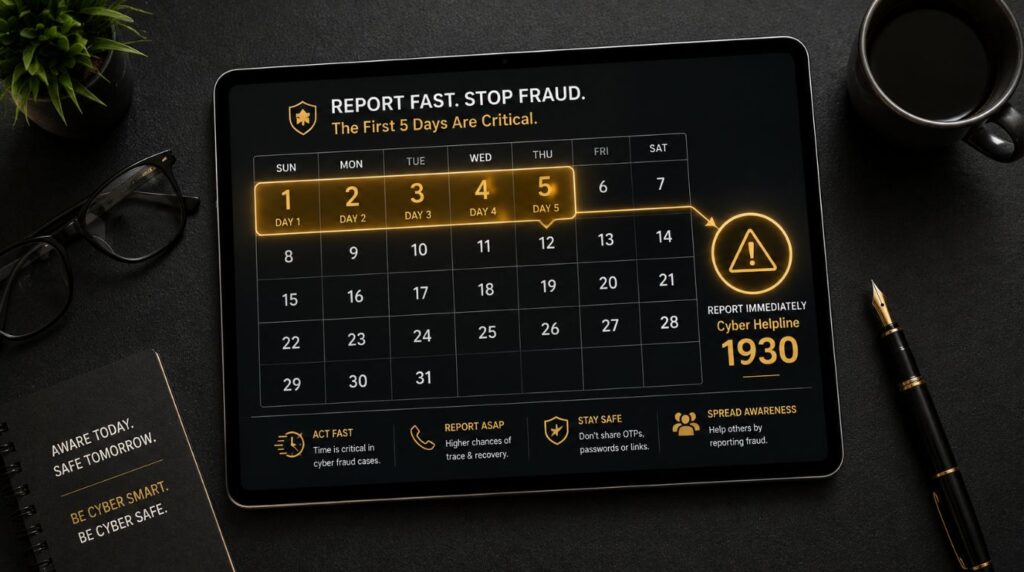
Customers must report the fraud to both their bank and the National Cyber Crime Helpline (1930) or the Cyber Crime Reporting Portal within five calendar days of discovering the fraud.
The benefit is also available only once in a lifetime and is limited to eligible cases.
In other words, the speed at which you report the fraud could determine whether you receive compensation.
Prevention Is Still Better Than Compensation
As encouraging as these updated regulations are, the ultimate goal should always be to avoid becoming a victim in the first place. Relying on a once-in-a-lifetime compensation process should be your absolute last resort.
Most digital banking scams can be prevented by cultivating a few simple, daily habits:
- Never share OTPs, UPI PINs, or banking passwords with anyone—even if they claim to be a bank official or a police officer.
- Avoid clicking on unknown SMS links or downloading unverified remote access applications.
- Verify the sender’s identity before approving any UPI collect requests.
- Enable real-time transaction alerts on your mobile phone to spot unauthorized debits instantly.
The Marketing Lesson

Trust is the single most valuable currency of the digital payment economy.
For financial institutions, fintech platforms, and e-commerce players, aligning with the RBI digital fraud compensation rules is more than a compliance obligation—it is a massive trust-building opportunity. When consumers know there is a legal safety net protecting their small-value transactions, their anxiety around adopting digital payments drops dramatically.
Confidence is what drives long-term technological adoption. By enforcing shared financial accountability across both sender and receiver banks, the central bank is actively forcing the entire industry to upgrade its cybersecurity posture.
My Take
India has built one of the most advanced, high-velocity digital payment systems in the world. But as transaction volumes scale, fraud tactics will inevitably evolve alongside them.
While the RBI digital fraud compensation rules offer a brilliant legal buffer for retail consumers, the strongest form of defense isn’t a post-facto regulation—it is active, real-time awareness.
The best fraud recovery process is always the one you never have to use. Stay alert, report suspicious activities immediately to $1930$, and treat your digital credentials with the same security you would apply to physical cash.
As the industry shifts, staying informed about the latest news is essential for anyone. Click through to read another thread!