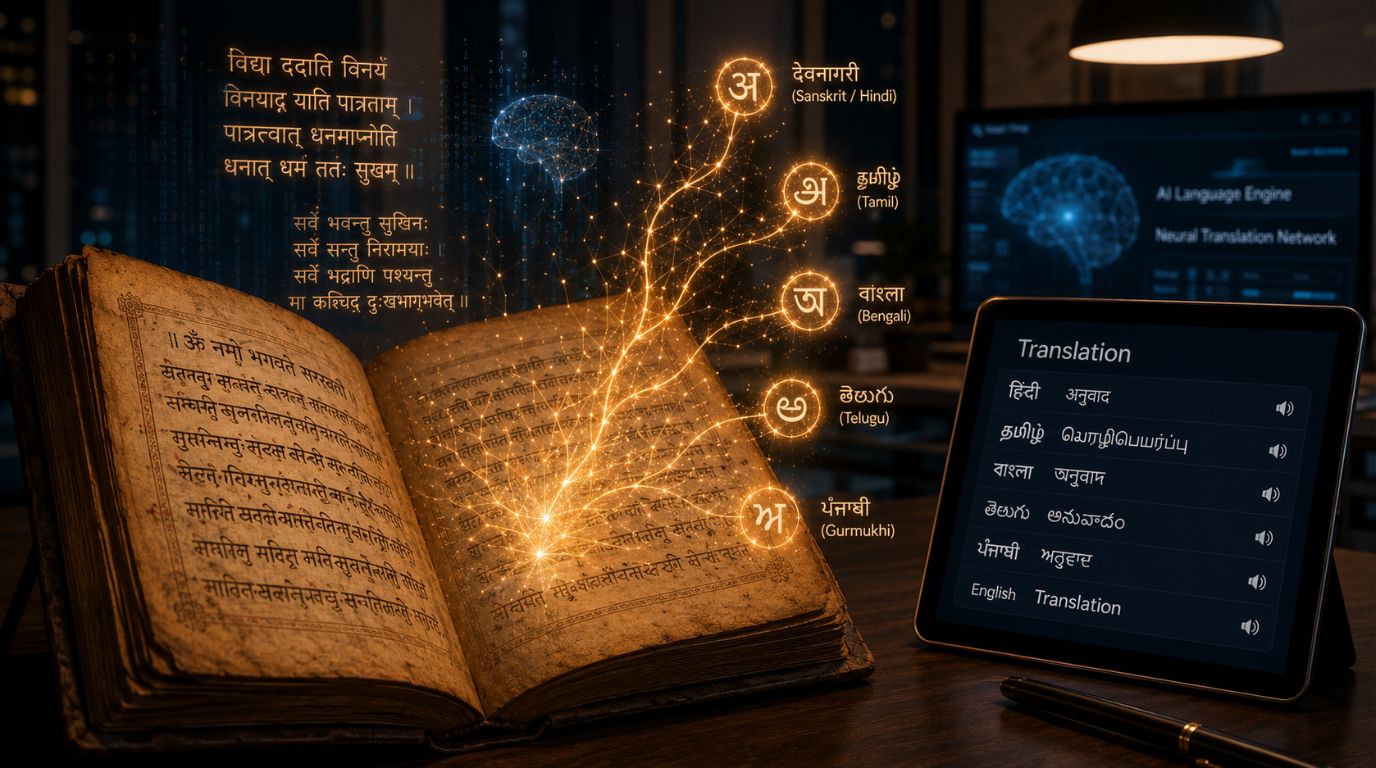

India’s Greatest Untapped Asset Isn’t AI. It’s Language
Every few weeks, we see discussions about India’s AI potential, startup ecosystem, digital economy, and technology exports. But I came across a story that reminded me of something far more fundamental: the immense, untapped potential of regional languages in India.
Language. Not English. Not Hindi. All of India’s languages.
And more importantly, the stories, knowledge, ideas, poems, research, folklore, and literature locked inside them.
The Hidden Value of Regional Languages in India
India is home to nearly 19,000 languages and dialects. Think about that for a moment.
While we often celebrate our diversity, managing the sheer scale of regional languages in India without centralized accessibility creates cultural silos.
A brilliant Bengali novel may never reach a Malayalam reader. A groundbreaking Tamil work may never be discovered by someone in Punjab. A century-old Marathi text may remain buried in a library archive, unknown to most Indians.
The issue isn’t that these works don’t exist. The issue is that many of them are invisible.
How Translation Unlocks Regional Languages in India
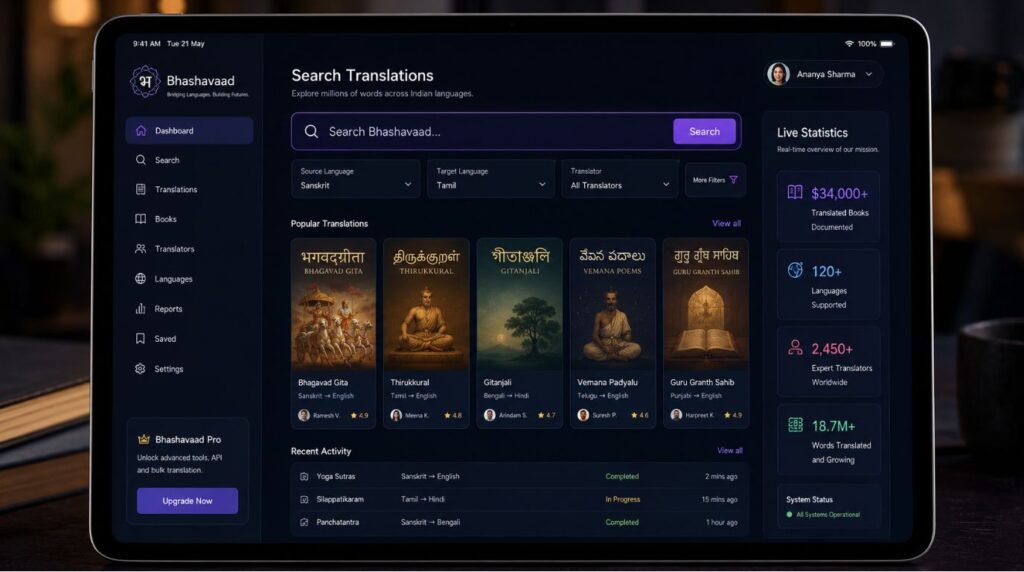
That’s why I found the work of Ashoka University’s translation initiative fascinating. Their open-access database, Bhashavaad, has already documented over $34,000 translated works, establishing a robust bridge across the major regional languages in India.
At first glance, this may sound like a niche academic project. I think it’s much bigger than that. It’s infrastructure.
Just as roads connect cities and the internet connects devices, translations connect cultures. Without translation, knowledge stays local. With translation, it becomes national.
What Surprised Me Most
The database reveals interesting patterns. Some languages are translated far more often than others. Some languages act primarily as “sources” of literature, while others become major recipients. And then there is English.
Many Indian works are first translated into English before finding their way into other Indian languages. While this helps distribution, it also creates a bottleneck.
Sometimes nuances get diluted. Sometimes context gets lost. And sometimes valuable works never make it beyond that first translation.
Why This Matters More Than Ever
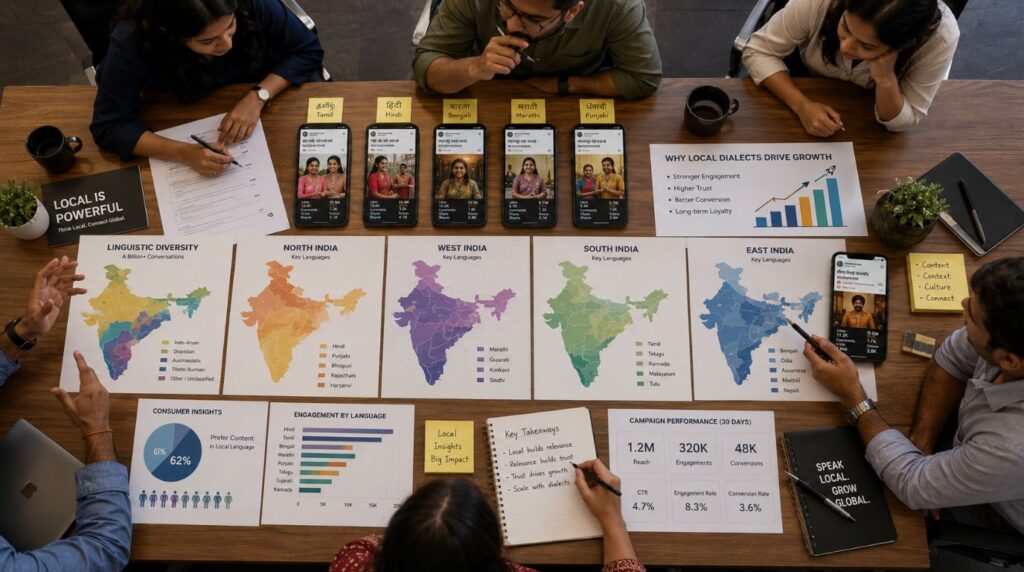
We’re entering an era where AI is translating faster, cheaper, and more accessible than ever before, completely redefining how we interact with regional languages in India. For years, language barriers limited the spread of ideas.
Today, those barriers are beginning to disappear. Imagine:
- Regional literature reaching global audiences.
- Local folklore is becoming searchable and discoverable.
- Ancient texts becoming accessible to younger generations.
- Researchers are uncovering forgotten knowledge hidden in archives.
The opportunity isn’t just cultural. It’s economic. It’s educational. It’s technological.
The Marketing Lesson
As marketers, we often underestimate the power of regional languages in India when building digital strategies. We assume translation is simply converting words from one language to another. It isn’t.
Translation is market expansion. Every language represents a community, a culture, and a potential audience. The brands that truly understand India won’t just localize campaigns. They’ll learn how people think, speak, and express themselves across languages.
That’s where real connection happens.
My Take
For years, we’ve spoken about India’s diversity as if it were a challenge to overcome. I think it’s one of our greatest competitive advantages.
Every language carries centuries of stories, wisdom, humour, and cultural context. The more we translate, preserve, and share these works, the richer our collective knowledge becomes.
I loved one line from the article: “Translation is the glue that binds us together.”
I couldn’t agree more.
In a country as diverse as India, translation isn’t just about language. It’s about ensuring that ideas can travel farther than geography ever allows. And perhaps that’s one of the most important forms of infrastructure we can build.
As the industry shifts, staying informed about the latest news is essential for anyone. Click through to read another thread!