

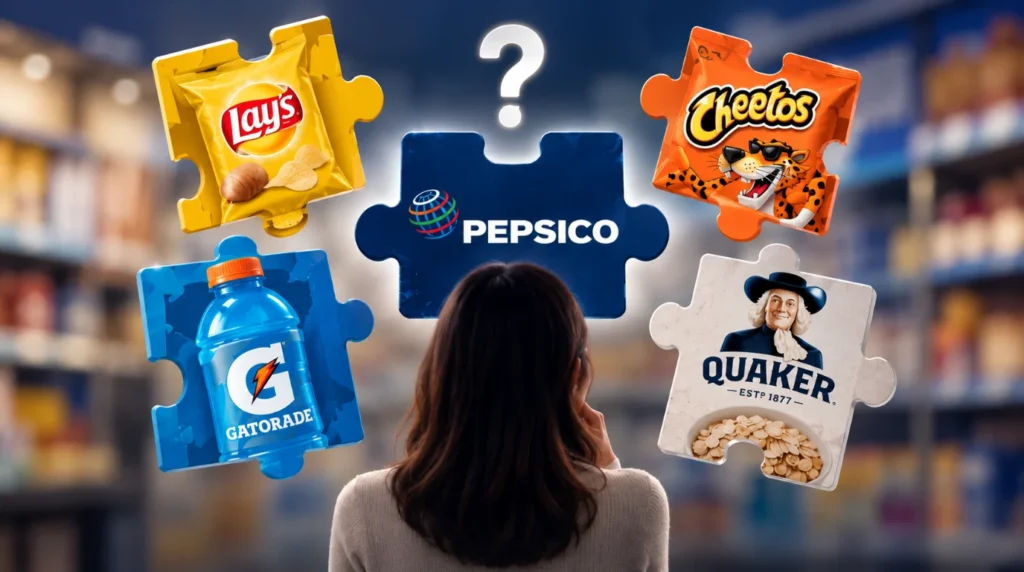
Consumers recognise Lay’s, Cheetos, Gatorade and Quaker, but many do not connect these familiar products to the same company. PepsiCo says only 18% of people associate its corporate name with brands beyond Pepsi. For a business with over 500 brands, this creates a clear marketing challenge.
How do you turn recognition of each product into recognition of the company behind it?
Quick Answer
PepsiCo launched its first-ever corporate brand campaign, House of Brands, on September 17, 2026. This marks a new direction in PepsiCo marketing, as the company uses a masterbrand strategy to strengthen the connection between its corporate identity and broad product portfolio without changing its name or making every product look the same. The campaign uses humour, social-first storytelling and brand familiarity to make that connection easier to understand.
What Happened?
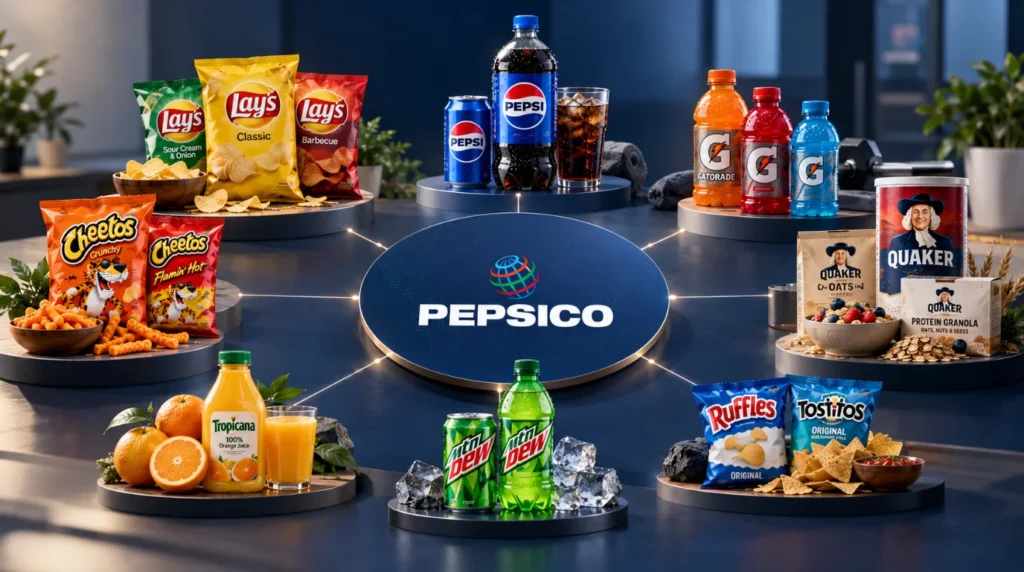
PepsiCo introduced House of Brands to address the gap between its product brands and its corporate identity. The company says its product portfolio contains more than 500 brands and reaches consumers more than one billion times a day worldwide.
The campaign begins with a playful suggestion that PepsiCo could change its name to Lay’s-Co, Cheetos-Co, Gatorade-Co or Quaker-Co. It then develops the idea through The Pitch, a campaign video. In it, individual brands compete to become the company’s namesake.
The apparent name-change announcement was a deliberate social media tease, not a real corporate rebranding. PepsiCo confirmed that its name would remain unchanged. Reporting on the campaign identifies BBDO Worldwide as the creative partner behind the execution.
The launch builds on a corporate visual identity introduced in October 2025. They designed that earlier refresh to reflect a business that had grown far beyond its original cola association. PepsiCo’s broader One PepsiCo approach aims to bring its brands together under a more recognisable corporate identity.
The campaign’s purpose is simple: help consumers see that familiar products belong to a larger brand family.
Why it Matters
The strategic problem becomes clearer when viewed through brand architecture. A house of brands is a business structure. In it, each product keeps its own identity.
Each product also builds its own customer relationships. A branded house, by contrast, places the corporate brand prominently across products and services. Companies can also combine elements of both approaches.
PepsiCo has historically benefited from powerful individual brands. Lay’s can own a snacking moment, Gatorade can speak to sports hydration, and Quaker can fit another part of daily routines. Each brand can communicate with its audience in its own voice.
However, strong product recognition does not automatically create corporate brand recognition.
This is the problem PepsiCo is trying to solve. Its products can reach consumers across multiple categories and occasions without those consumers understanding the common company behind them.
For PepsiCo marketing, the opportunity is to make that shared ownership more visible. A stronger corporate identity can help show the product portfolio’s full scale. It can link different product categories. It can also help sponsorships and communications feel closer to brands consumers already recognise.
The important distinction is that PepsiCo is not abandoning its individual brands. But is trying to make the parent company more recognisable alongside them.
What Businesses and Marketers Need to Know
1. Diagnose the awareness gap before developing the campaign.
PepsiCo’s reported 18% figure gives its campaign a defined starting point. Businesses should identify whether customers recognise their products, remember the parent company or understand how different offerings fit together. Research should establish the problem before creative work begins.
2. Connect individual brands without erasing their identities.
A shared corporate identity does not require every product to use the same message or visual style. Businesses with multiple offerings can preserve distinct brand personalities while creating consistent links to the company behind them.
3. Make the strategy understandable through creativity.
BBDO’s reported execution turns a complicated corporate branding issue into a fictional competition between familiar products. The audience does not need a lesson in brand architecture to understand the joke. The story makes the strategic message accessible.
4. Use social attention to introduce the message, not replace it.
The name-change tease creates curiosity, while The Pitch explains the connection between the brands. This gives the campaign a clear progression from attention to understanding. Other marketers can use a similar structure, provided the creative hook leads back to a genuine business objective.
5. Measure whether the audience remembers the right thing.
Views and shares can show engagement. But they do not prove that consumers link a product to its parent company. Marketers should track corporate brand awareness, correct brand associations and consideration before and after a campaign. Evaluate commercial impact separately rather than assume it.
The Number That Matters
18%: the share of people PepsiCo says associate the company with brands beyond Pepsi.
This is the central metric behind the campaign. PepsiCo says its product portfolio contains more than 500 brands and reaches consumers over one billion times a day. Yet that scale does not automatically translate into recognition of the corporate name.
The figure suggests an opportunity to connect existing product familiarity with the parent brand. It does not, on its own, show how much more awareness the campaign can create. It also does not show if higher awareness will boost sales.
An important research limitation also exists. PepsiCo’s public campaign announcement does not disclose the sample size, fieldwork dates or detailed methodology behind the 18% figure. In October 2025, the company reported a different measure. It said 21% of surveyed consumers could name a PepsiCo brand besides Pepsi.
The two figures describe similar awareness challenges. However, different wording and no published methods to compare mean there is no clear improvement or decline.
What Happens Next?
The next thing to watch is whether PepsiCo can keep a clearer link between its corporate identity and its brands. This should hold across advertising, packaging, and sponsorships.
The campaign provides a memorable introduction, but long-term recognition requires consistency. Consumers may enjoy the fictional name-change debate without remembering which company owns the products.
For PepsiCo marketing, strong evidence of success would include higher corporate brand recall. It would also include more accurate links between PepsiCo and its product portfolio.
It would also show a better understanding of the company’s full range. We still need to determine whether these changes translate into stronger consideration or commercial results.
DMT Take on PepsiCo Marketing
PepsiCo’s most interesting decision is to treat corporate recognition as a marketing problem rather than simply a design problem.
A new logo can make a company look different. A masterbrand strategy attempts to change what people understand about that company. PepsiCo is using the familiarity of its individual brands to make its larger identity easier to recognise.
Our view is that this is a useful lesson for product portfolio-led businesses. Strong individual products can create an opportunity for the parent brand. But the connection will not happen automatically.
Judge the campaign’s success by whether more consumers link the brands they buy to the company behind them. You should not judge it only by how much attention the masterbrand strategy gets. Read more about branding strategies.
Sources
- PepsiCo: Inside its first-ever corporate brand campaign
- PepsiCo: Its refreshed corporate brand identity
- Marketing-Interactive: PepsiCo steps out from behind its household names
- The Stable: BBDO’s PepsiCo name-change campaign

Daksh Juneja is a performance marketing expert, trainer, and content creator featured in HT Tech. He helps businesses drive up to 4X ROI through Google and Meta Ads.