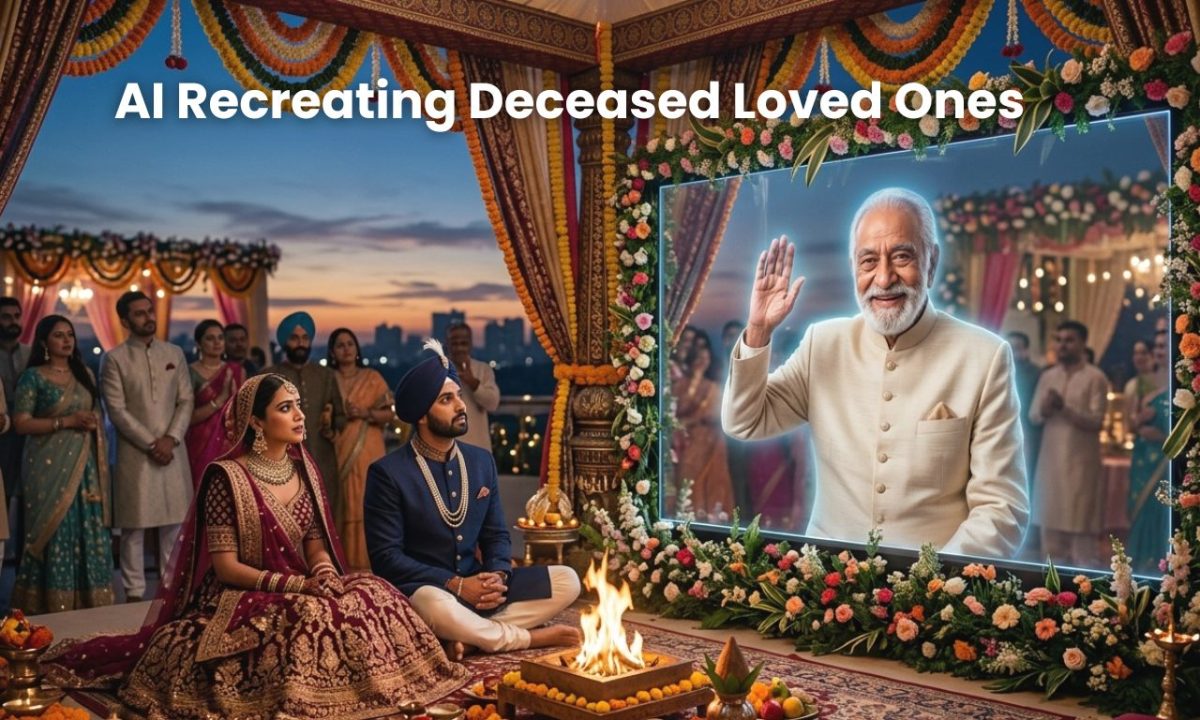

I came across this viral video of a loved one that AI recreated and paused for a second.
Not because it was shocking. But because it felt… strangely normal.
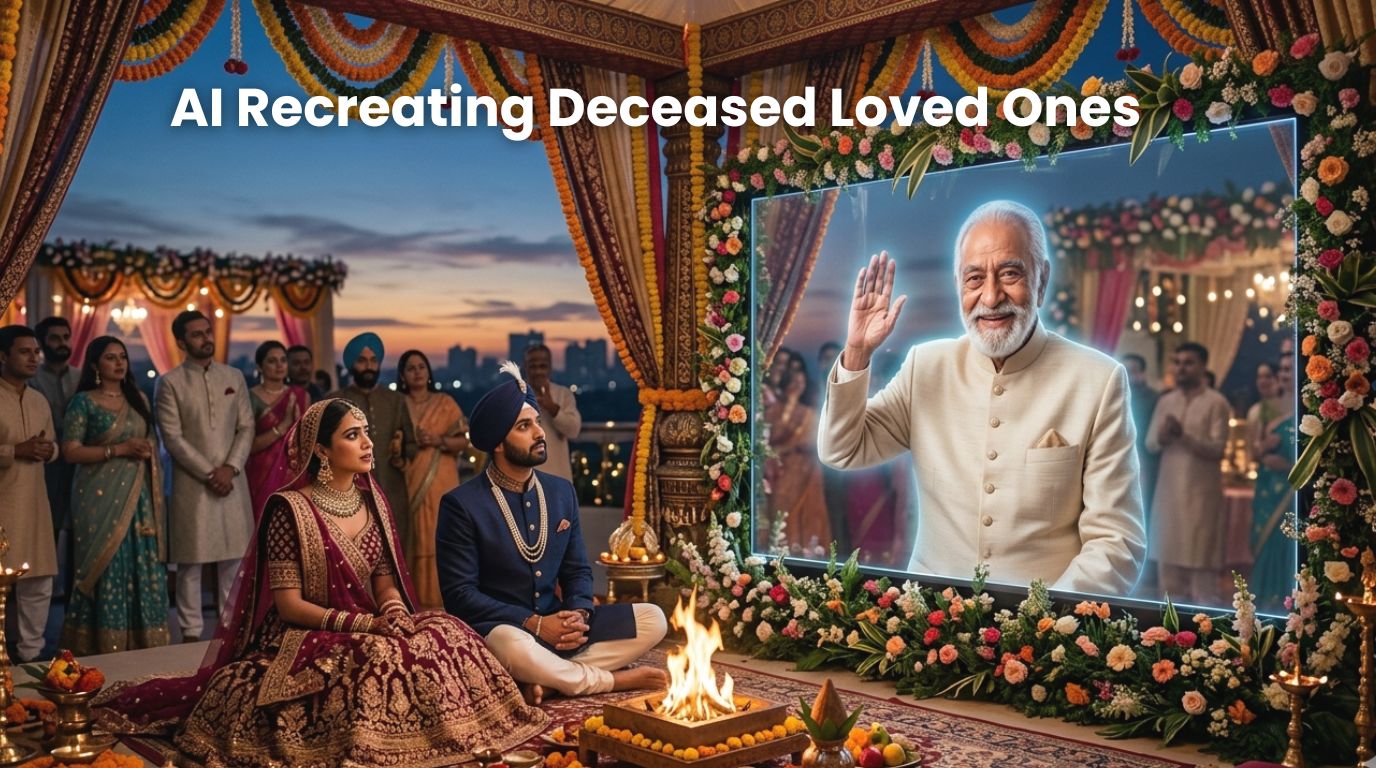
Families are now using AI to recreate deceased loved ones—grandparents, siblings, parents—and making them “attend” weddings. Not as photos. Not as memories. But as moving, talking, blessing avatars.
And somehow, this is being celebrated.
Let’s Start with What’s Happening
Picture this.
A wedding is going on. Music is playing. People are smiling. And suddenly, a screen lights up. Clouds part. A familiar face appears. Someone who isn’t alive anymore…Walks in. Blesses the couple. Smiles. Speaks.
Exists. Digitally.
This phenomenon of a loved one that AI recreated is no longer a sci-fi trope; it’s a premium service in the 2026 wedding market.
My First Reaction to what the AI Recreated
This is beautiful.
My second reaction? This is also slightly terrifying.
Because this isn’t just technology. This is emotion engineering. We’re not using AI to:
- Write emails
- Generate ads
- Automate workflows
We aren’t just playing with pixels; we are seeing a loved one that AI recreated to engineer a sense of presence. We’re using it to recreate grief. To soften it. To reshape it. To extend it.
The Uncomfortable Question
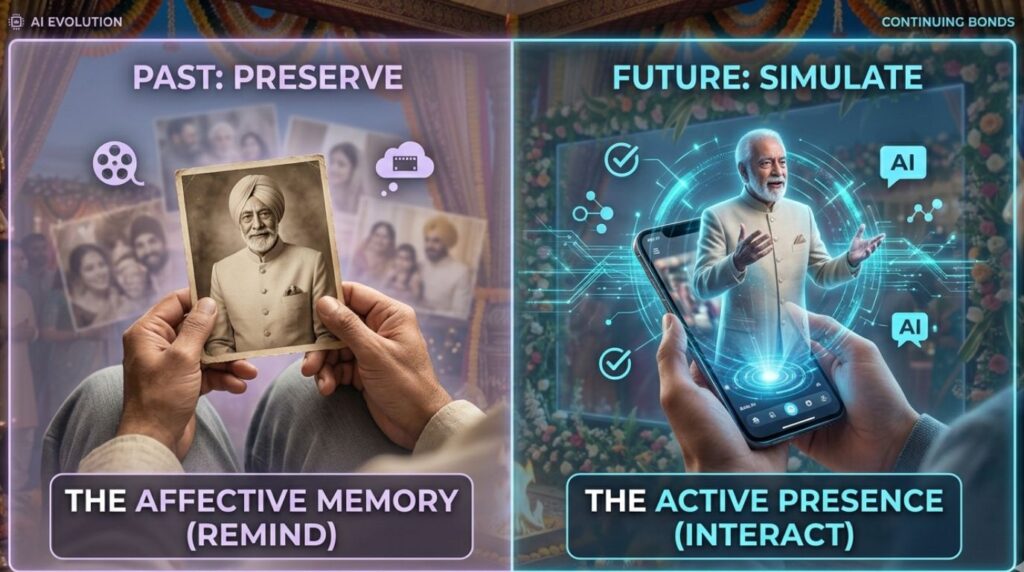
Are we preserving memories, or are we simulating presence? Because those are two very different things.
A photograph reminds you. An AI avatar… interacts with you.
And that changes everything.
Grief, traditionally, has a process.
- Loss
- Acceptance
- Memory
But what happens when technology interrupts that cycle? What happens when you can:
- See them again
- Hear them again
- “Experience” them again
At will?
The Satire Writes Itself (but this time, it’s darker)
We’ve officially entered a phase where:
- You can generate content with AI
- Build businesses with AI
- And now…
- Bring back relatives with AI
At this rate, shaadis will soon have:
- Live band
- Catering
- Photographer
- AI ancestors package (premium add-on)
Let’s Not Dismiss It So Quickly
Because I get it. I really do. If you’ve lost someone close, the idea of seeing them one more time—even digitally—can feel priceless. This isn’t about novelty. It’s about closure.
Or maybe…Avoiding it.
The Real Shift (and why this matters more than we think)
AI is no longer just changing industries. It’s entering:
- Culture
- Rituals
- Emotions
And Indian weddings, of all places, are deeply emotional ecosystems. So when AI recreated the loved ones here, it’s not just innovation, it’s an intervention.
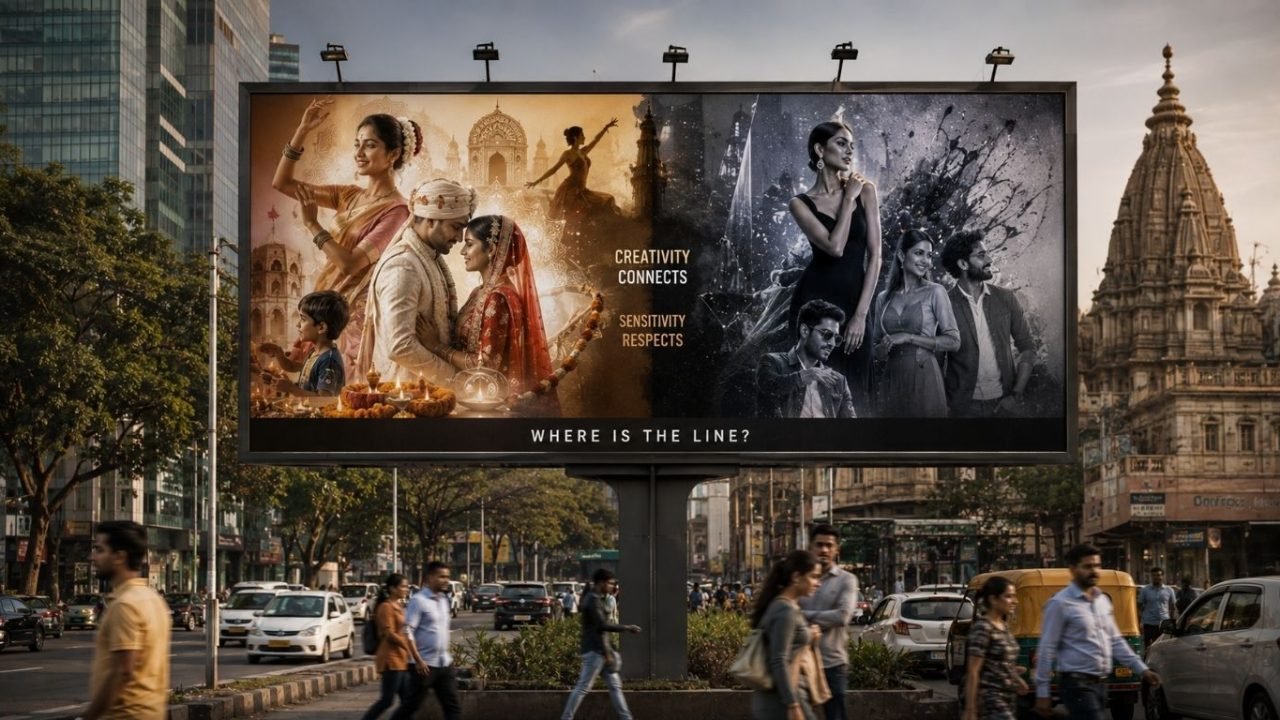
Where Do We Draw The Line?
This is where I struggle. Because today, it’s:
- A blessing video
- A recreated presence
Tomorrow?
- Full conversations?
- Interactive personalities?
- AI versions that “live on”?
At what point does memory become… replacement?
My Honest Take
I don’t think a loved one that AI recreated is right or wrong. I think it’s inevitable.
But I do think we need to be careful. Because the more real something feels, the harder it becomes to let go.
What Does This Mean for The Future?
We’re entering a world where:
- Technology doesn’t just solve problems
- It reshapes human experiences
And not always in ways we fully understand.
Final Thought
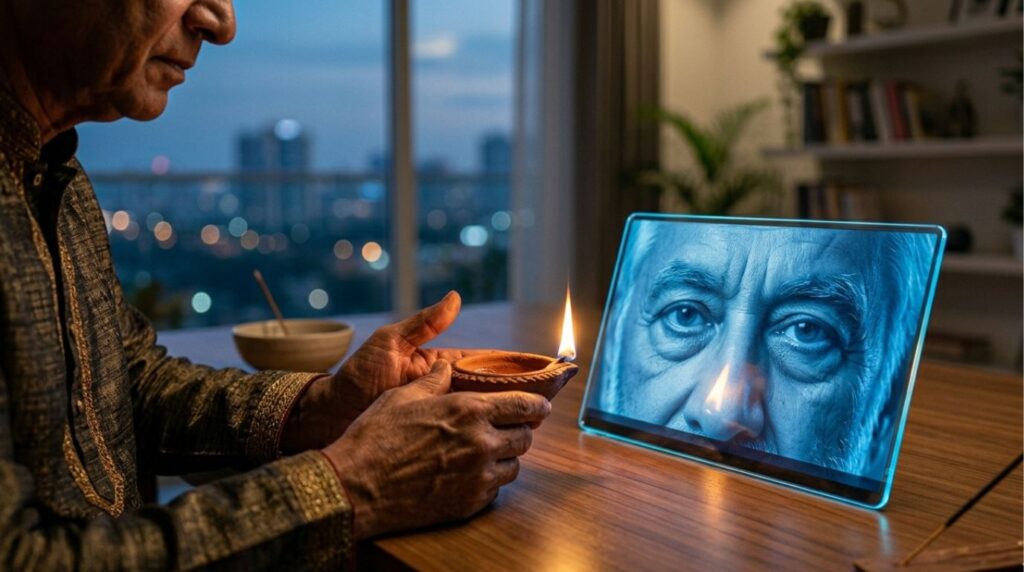
AI didn’t just show up at the wedding. It changed what the wedding meant. Because earlier, weddings were about:
Who is present?
Now, they might also be about:
Who can be recreated?
And honestly, that’s both incredible and a little unsettling. Also, just putting this out there—
If memories could always stay memories, maybe they’d hurt less. But they’d also mean less.
As the industry shifts, staying informed on AI-related news is essential for any person. Click through to read more such threads!