

AI can generate a Diwali advertisement in minutes. It can create glowing diyas, beautifully decorated homes, festive outfits and a family gathered around a box of sweets. The image may look convincing. But does it remind anyone of their own Diwali?
AI in Indian Advertising is becoming an important question for festive advertising. As brands experiment with AI-generated visuals and faster creative production, the challenge is no longer just making more ads. It is making ads that feel distinctive, culturally relevant and worth remembering.
For legacy brands, the stakes are particularly high. Their advantage often lies in years of familiarity, distinctive brand cues and emotional associations built over generations. If AI makes festive advertising faster but also more interchangeable, those brands risk losing the very quality that sets them apart.
Quick answer
AI in Indian advertising can help legacy brands produce festive campaigns faster, personalise messages across regions and create interactive experiences. However, technology alone cannot guarantee emotional connection. Brands still need authentic cultural insights, recognisable identities and stories rooted in real consumer experiences. The opportunity is to use AI to extend a creative idea, not replace the human understanding behind it.
At the same time, the growing volume of AI-generated content raises concerns about ad fatigue, as audiences encounter increasingly similar visuals and repetitive festive messaging. For legacy brands, the challenge is to stand out in this crowded environment without losing the cultural memories and emotional connections that make their advertising distinctive
What is Changing in AI in Indian Advertising?
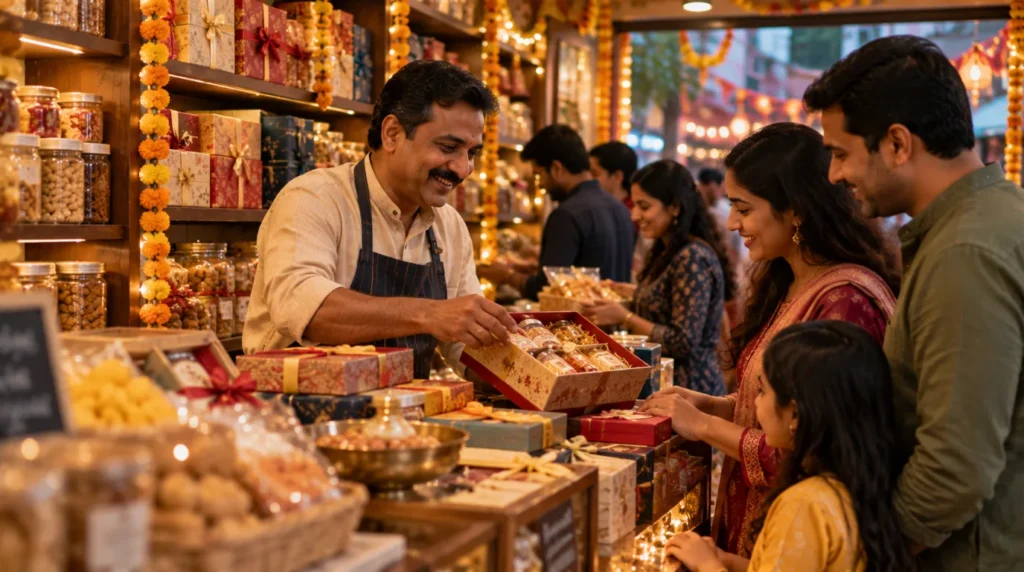
India’s festive season brings together shopping, gifting and family traditions, making it a major opportunity for brands. At the same time, consumers are discovering products through increasingly varied digital journeys.
Google’s 2026 festive research highlights how search, video and visual inspiration influence festive shopping decisions. Consumers may research a purchase carefully before acting quickly when something catches their attention.
For marketers, this creates two connected challenges. They need creative that can adapt to different audiences and moments while still giving people a reason to notice and remember the brand.
Generative AI can help with creative variations, language adaptation, visual exploration and faster production. But producing more versions of an advertisement does not automatically make a campaign more relevant.
The real question is whether each version carries a meaningful idea or simply changes the surface of the same generic festive template.
Why Festive Nostalgia is Difficult to Automate
Festive advertising often works through details that appear ordinary but carry years of meaning.
It might be the sweets a family buys every Diwali, the familiar smell of a freshly painted home, the relative who arrives unexpectedly or the ritual of visiting a neighbourhood shop before a celebration.
These moments vary by region, language, generation and family experience. An AI tool can generate convincing versions of these scenes. The harder part is understanding which detail matters to a particular audience and why.
Legacy brands have a potential advantage here. Their identities may already be associated with specific occasions, products, rituals or memories. But a long history does not make every new campaign emotionally effective. Brands still need to understand which associations consumers care about and how those associations can be expressed in contemporary ways.
Festive advertising can contain every familiar symbol and still feel empty. The diyas, sweets and family gathering may be visually correct, but without a distinctive observation, the result can resemble hundreds of other campaigns.
This is the risk behind what we can call the “nostalgia deficit” in AI advertising: the gap between reproducing the visual signs of a memory and understanding the human experience that gives those signs meaning. We can take Nostalgia Deficit as a proposed way to frame the challenge, since it is not an established industry metric.
Is AI Ad Fatigue Becoming a Problem?
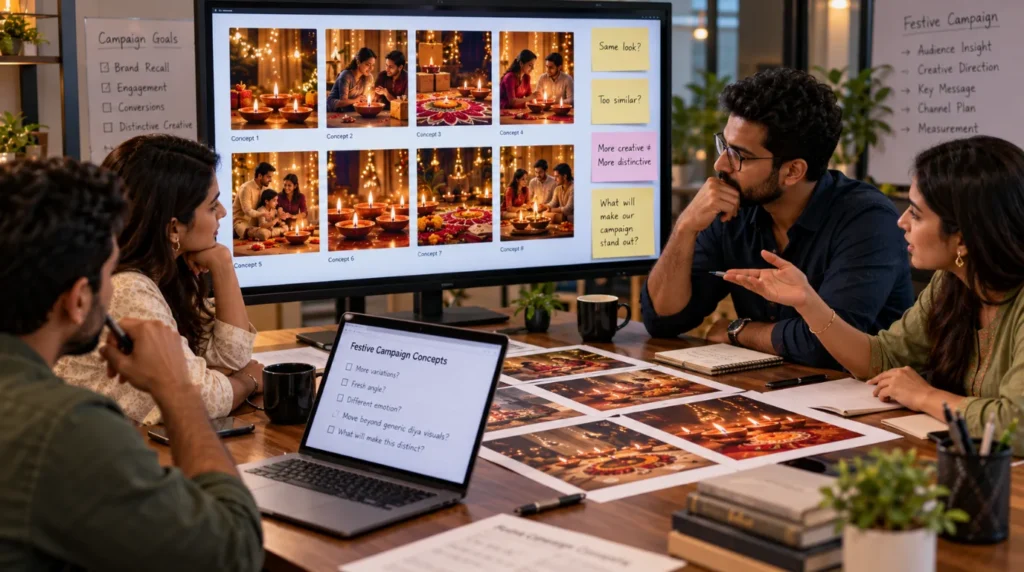
The concern is not simply that consumers dislike AI-generated advertising. The bigger risk is that brands begin producing creative that looks increasingly similar, particularly when they rely on the same prompts, visual conventions and production shortcuts.
In January 2026, the Interactive Advertising Bureau reported a gap between advertiser expectations and consumer sentiment towards AI-generated ads.
While 82% of surveyed advertising executives believed Gen Z and Millennial consumers felt positively about these ads, only 45% of surveyed consumers in those generations reported positive feelings. Although the findings reflect a specific survey, they do not all Indian consumers.
The difference matters because advertisers may interpret faster production and greater creative output as progress, while consumers judge the final advertisement on how it makes them feel.
AI use is not proof of poor creative quality. A thoughtful AI-assisted campaign can be more relevant than a conventional advertisement. Equally, a beautifully filmed campaign can feel generic if its central idea is weak.
The risk of AI creative fatigue emerges when efficiency becomes the main objective: more variations, more assets and more placements, but little that audiences have not already seen.
How Legacy Brands Can Use AI Without Losing Their Identity
The strongest strategy is not to reject AI. It is to decide where the technology adds value and where human judgement must remain central.
- Start with a cultural insight, not an image prompt
A campaign should begin with a specific human observation. What does the festival mean to the intended audience? Which ritual, tension or shared experience could make the brand relevant?
“Create a beautiful Diwali family scene” is a production instruction, not a campaign idea. Understanding the emotional significance of returning home, preparing for guests or visiting a neighbourhood shop gives creative teams a stronger foundation before AI enters the process.
- Protect distinctive brand cues
Legacy brands should identify the elements that make their advertising recognisable. These might include a familiar character, a consistent tone, a product association or a long-running connection with a particular occasion.
AI can help reinterpret these elements for different formats and audiences. It should not erase them in the pursuit of novelty. The goal is to make the brand feel current without making it unrecognisable.
- Personalise for relevance, not just scale
AI can make it easier to adapt creative for different regions, languages and local contexts. But personalisation adds value only when the variation means something to the audience.
Changing a city name, adding regional decoration or translating a headline may improve relevance in some situations. It does not automatically create cultural insight. Marketers need to decide what should change for each audience and what should remain consistent so the brand is still recognisable.
- Measure more than output volume
AI can reduce production time and make experimentation easier. Those benefits matter, but the number of assets produced is not a measure of creative effectiveness.
Brands should compare variations using measures such as attention, recall, qualified engagement and conversion, depending on the campaign objective. They should also test whether AI-assisted creative performs better than existing work rather than assuming faster production delivers better results.
Two Indian Campaigns That Offer Useful Lessons
Cadbury Celebrations’ Shah Rukh Khan My Ad campaign, developed for Diwali 2021, used AI and dynamic creative optimisation to feature local retailers in advertisements with Shah Rukh Khan.
Wavemaker’s case study reports that the campaign reached more than 500 pincodes and featured over 2,500 local business owners. Its strength was not simply the technology. It connected a recognisable brand ambassador and the familiar ritual of festive shopping with a practical local purpose.
A more recent example is Shoppers Stop’s Dasara campaign in October 2026, described by technology provider AliveNow. The campaign invited newspaper readers to use a generative AI experience through WhatsApp to create a personalised festive look.
Rather than using AI only to generate an advertisement, the campaign made it part of the consumer experience. Both examples illustrate how technology can support relevance and participation, although neither alone proves that AI ad fatigue is widespread.
What Happens Next?
AI will continue to make creative production faster and give advertisers more ways to personalise campaigns. As generating festive visuals becomes easier, the value of a distinctive insight may increase.
For Indian legacy brands, the challenge is to preserve the emotional associations they have built over time while finding new ways to make those associations relevant to younger audiences and changing consumer habits.
The brands that manage this balance will not necessarily be those that use the least AI or the most AI. They will be the ones that know what should never become generic.
DMT take on AI in Indian Advertising
The question is not whether an algorithm can create a convincing Diwali advertisement. It already can. The more important question is whether it can help a brand say something that another brand cannot say in quite the same way.
Festive nostalgia is not just a collection of familiar images. It is the meaning people attach to rituals, relationships, places and products over time. AI can help brands reproduce and distribute creative expressions of those memories, but it cannot replace the strategic work of understanding why they matter.
For marketers, the takeaway is simple: use AI to scale the idea, not to substitute for one. In a festive season filled with increasingly polished creative, the most memorable campaign may be the one that understands a familiar feeling better than its competitors do.
To see how these creative challenges fit into the larger landscape, explore the top AI marketing trends in India reshaping the industry.
Sources
- Google, Festive advertising and consumer behaviour in India, 2026
- Interactive Advertising Bureau, AI Transparency and Disclosure Framework
- Wavemaker, Shah Rukh Khan My Ad
- AliveNow, Shoppers Stop’s Dasara GenAI campaign

Daksh Juneja is a performance marketing expert, trainer, and content creator featured in HT Tech. He helps businesses drive up to 4X ROI through Google and Meta Ads.