
AI in Healthcare: Finally Solving a Real Problem (Not Just Writing Emails)
I read this and thought: Finally… AI is doing something that actually matters.
Not writing LinkedIn posts.
Not generating 100 ad copies.
But helping people get diagnosed faster.
Let’s Start With The Problem
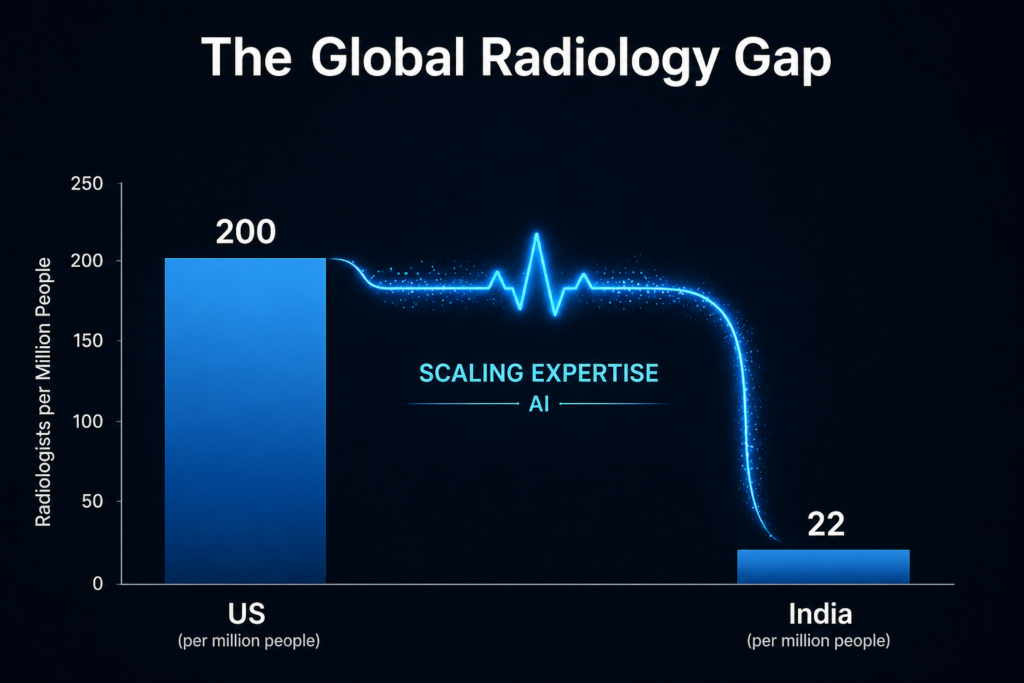
India has ~22 radiologists per million people.
The US? ~200 per million.
That’s not a gap. That’s a canyon.
What Does That Actually Mean?
If you’re in a Tier 2 or Tier 3 city:
- You get a scan done
- Then you wait… and wait… and wait
- Sometimes days
All this just to answer questions like:
- Is it serious?
- Do I need treatment urgently?
Now imagine this.
You’re anxious.
You’re googling symptoms (big mistake).
Your family is worried.
And the report is still “pending.” In many rural parts of India, a ‘pending report’ isn’t just a delay; it is a period of agonizing uncertainty that can mean the difference between a treatable condition and a medical emergency.
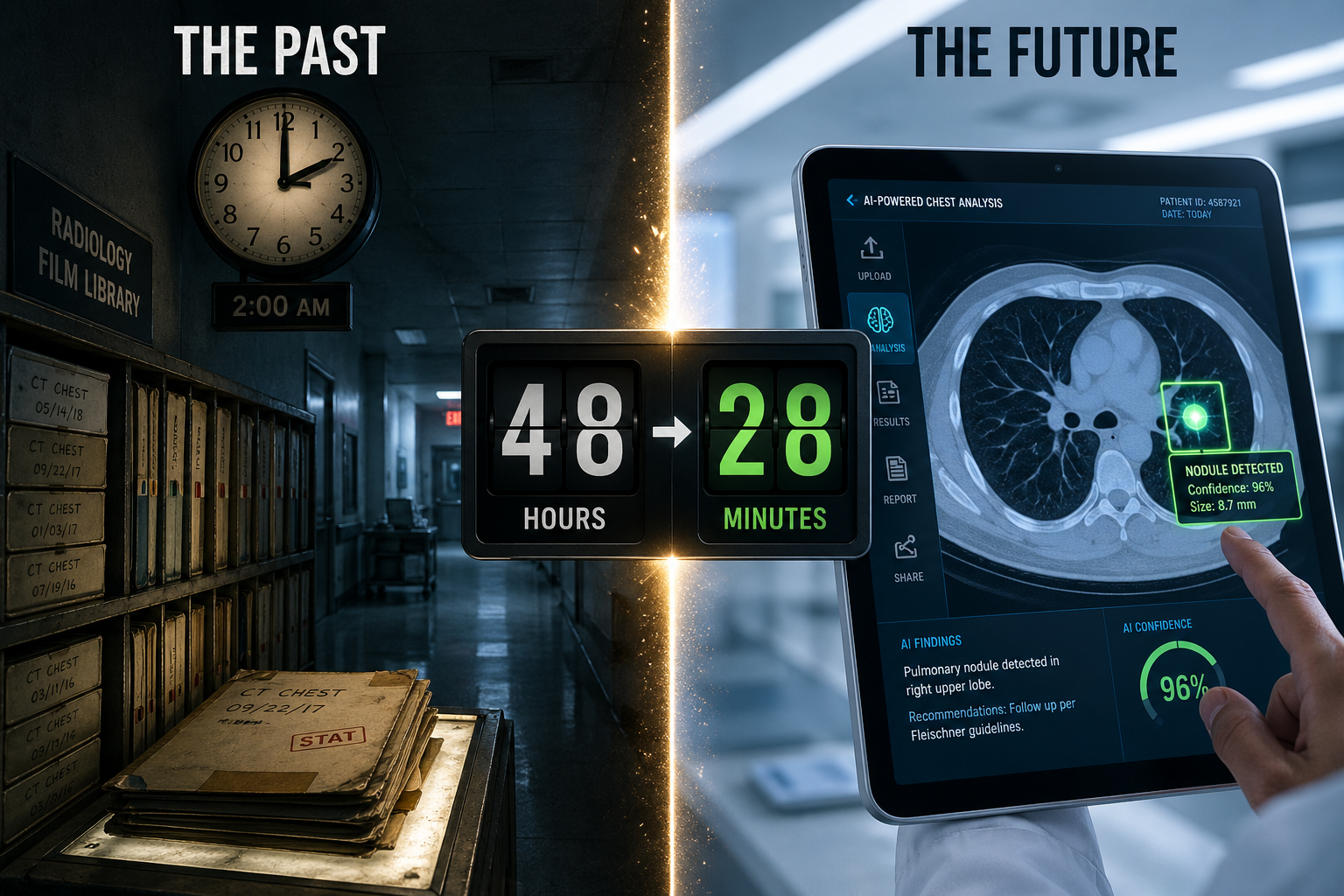
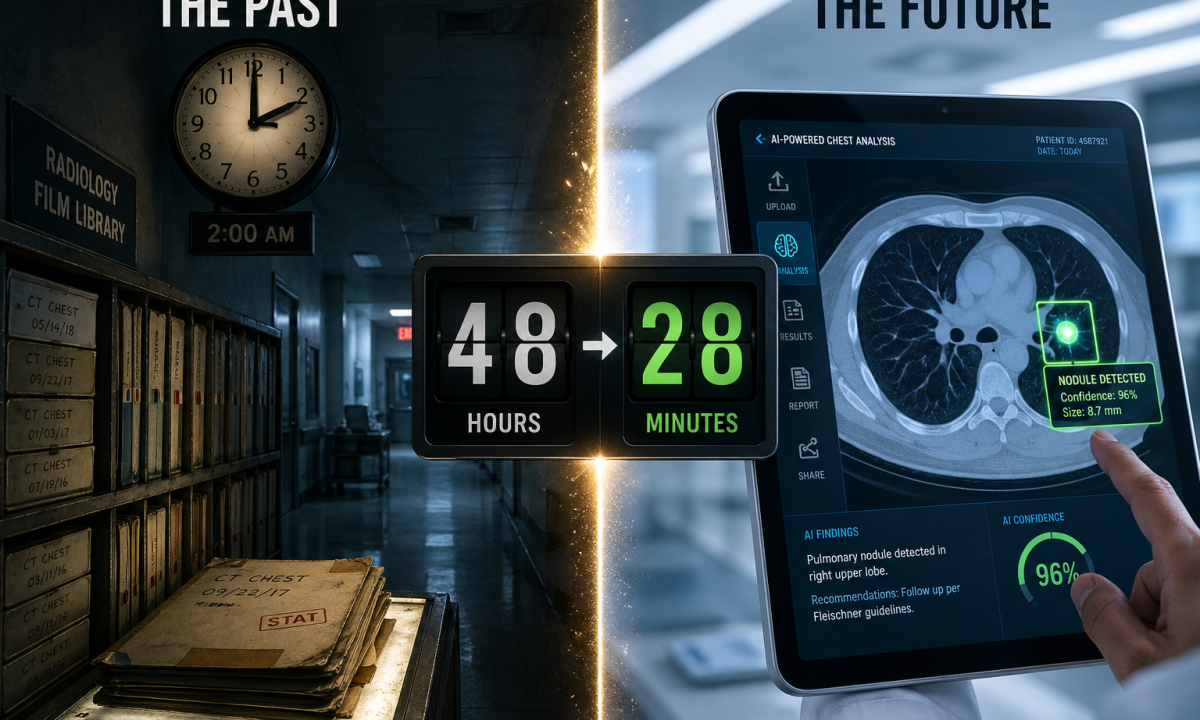
This is where AI in medical diagnosis actually shines. Not in replacing doctors, but in ruthlessly reducing that waiting time.
What AI in Healthcare Systems is Doing is Pretty Insane.
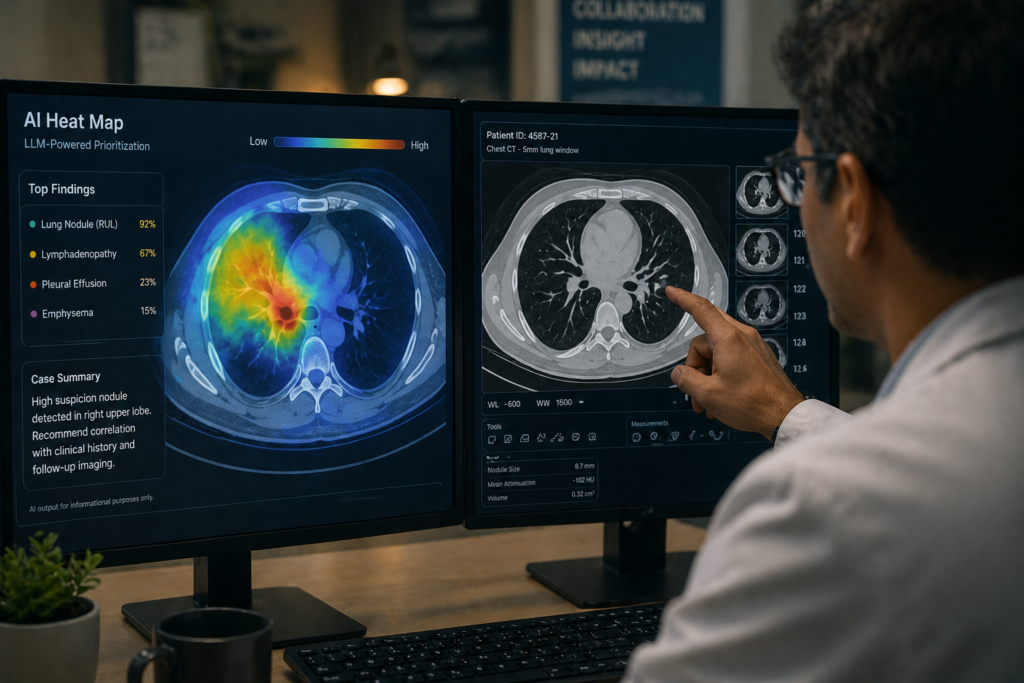
The shift we are seeing in the system is pretty insane.
- Scan reports in under 30 minutes (vs 48 hours earlier)
- Serving 1500+ healthcare centers
- Covering 300+ cities
That’s not “cool tech.”
That’s: Real-world impact using AI in healthcare.
The smartest part? It’s not replacing radiologists, it’s assisting them. This synergy is the gold standard for AI in medical diagnosis.
AI:
- Flags abnormalities
- Drafts reports
Humans:
- Make final decisions
Basically:
AI does the heavy lifting
Doctors do critical thinking
And this is the AI model I actually believe in.
Not: “AI will replace humans.”
But: “AI will remove bottlenecks.”
Let’s Be Honest
Doctors aren’t slow. The system is.
And AI is fixing the system by:
- Reducing backlog
- Speeding up workflows
- Making expertise scalable
Unlike humans, AI in medical diagnosis never gets tired. It doesn’t miss a hairline fracture because it’s at the end of a 12-hour shift. It doesn’t delay a report because the backlog is too high.
This is where things get interesting for marketers, too.
Because we always talk about: “AI will disrupt industries.”
But disruption doesn’t always look flashy.
Sometimes it looks like: A patient getting their report faster. And that’s powerful.
Because:
Faster diagnosis = Faster treatment
Faster treatment = Better patient outcomes
Better outcomes = Lower healthcare costs and saved lives.
Let’s Address The Obvious Fear of AI in Healthcare
“Can AI in healthcare be trusted?” Valid question.
But here’s the nuance: AI is not the decision-maker.
It’s: The assistant who never gets tired.
Unlike humans, AI:
- Doesn’t miss patterns due to fatigue
- Doesn’t delay due to workload
- Doesn’t take breaks
But it also doesn’t have judgment, which is why: Humans are still in control.
The Satire
The satire here is subtle. We built AI to:
- Write poems
- Generate images
- Reply to emails
And now we’re like: “Oh, wait, it can also save lives.”
It took us long enough.
My Take on AI in Healthcare
This is the kind of AI adoption we need more of. Not hype. Not gimmicks.
Real problems. Real solutions.
Because the real promise of AI was never: “Make work cooler.”
It was: “Make life better.”
Final Thought on AI in Healthcare
If AI can reduce a patient’s anxiety from 48 hours to 30 minutes…That’s not innovation.
That’s: Impact.
We need to stop treating AI as a luxury for the tech-savvy and start seeing it as a fundamental utility that bridges the gap between limited resources and human life.
And honestly…
If AI replaces anything in our healthcare system, I hope it replaces the one thing that kills hope: waiting.
As the industry shifts, staying informed on the latest AI news is essential for any person. Click through to read more such threads!