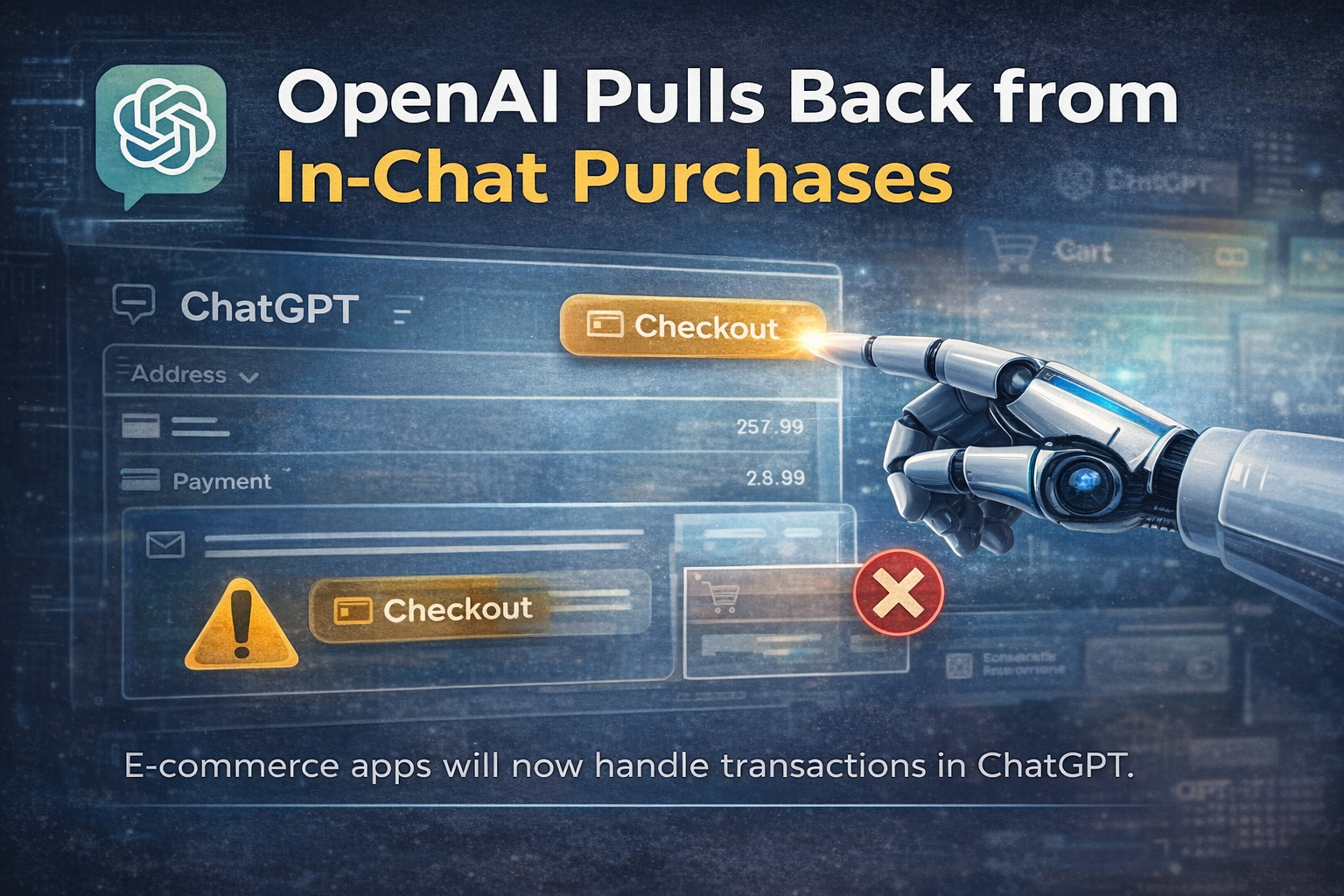

OpenAI’s attempt to enable direct purchases inside ChatGPT hasn’t worked out the way many expected. It launched a checkout feature in late 2025 with the idea that users could research and buy products without ever leaving the chatbot. But the reality of commerce inside AI proved far more complex.
Key highlights
In theory, integrating purchases into ChatGPT made sense. Users are already asking the model for product recommendations, comparisons, and buying advice. If that journey ended with a seamless checkout inside the same interface, the assumption was that conversions would naturally follow.
But the data told a different story.
People do research products heavily inside ChatGPT. They ask about features, pricing, pros and cons. But when it comes to purchasing, usage drops off sharply. Few merchants actually signed up for the in-chat checkout, making the feature underutilized. OpenAI’s process was hands-on and manual: each merchant needed individual onboarding, and key commerce infrastructure — like collecting and remitting state sales taxes — wasn’t in place. That made scaling the feature operationally difficult.
As a result, OpenAI is retreating from processing purchases directly. Instead, it will let app partners handle transactions. In other words, ChatGPT will remain a discovery layer, but checkout will happen through integrated commerce apps rather than OpenAI itself.
What this means for a marketer
For marketers, this pivot is telling in two ways.
First, intent doesn’t equal conversion. AI can expertly model interest, but that doesn’t guarantee transactional behaviour within the same interface. Product research and purchasing remain separate mental modes.
Second, infrastructure matters. Commerce isn’t just API calls and recommendation engines — it’s tax remittance, payment rails, settlement flows, and merchant onboarding. Platforms built for search and discovery are not automatically built for commerce.
My takeaway? AI will increasingly influence discovery and consideration, but mobile apps, web experiences, and traditional transaction systems still hold an edge in conversion. The next phase of AI commerce will be less about doing everything in one place and more about orchestrating user journeys across specialised systems.
That’s not a step back. It’s a lesson in where AI adds the most value — and where specialised platforms still win.