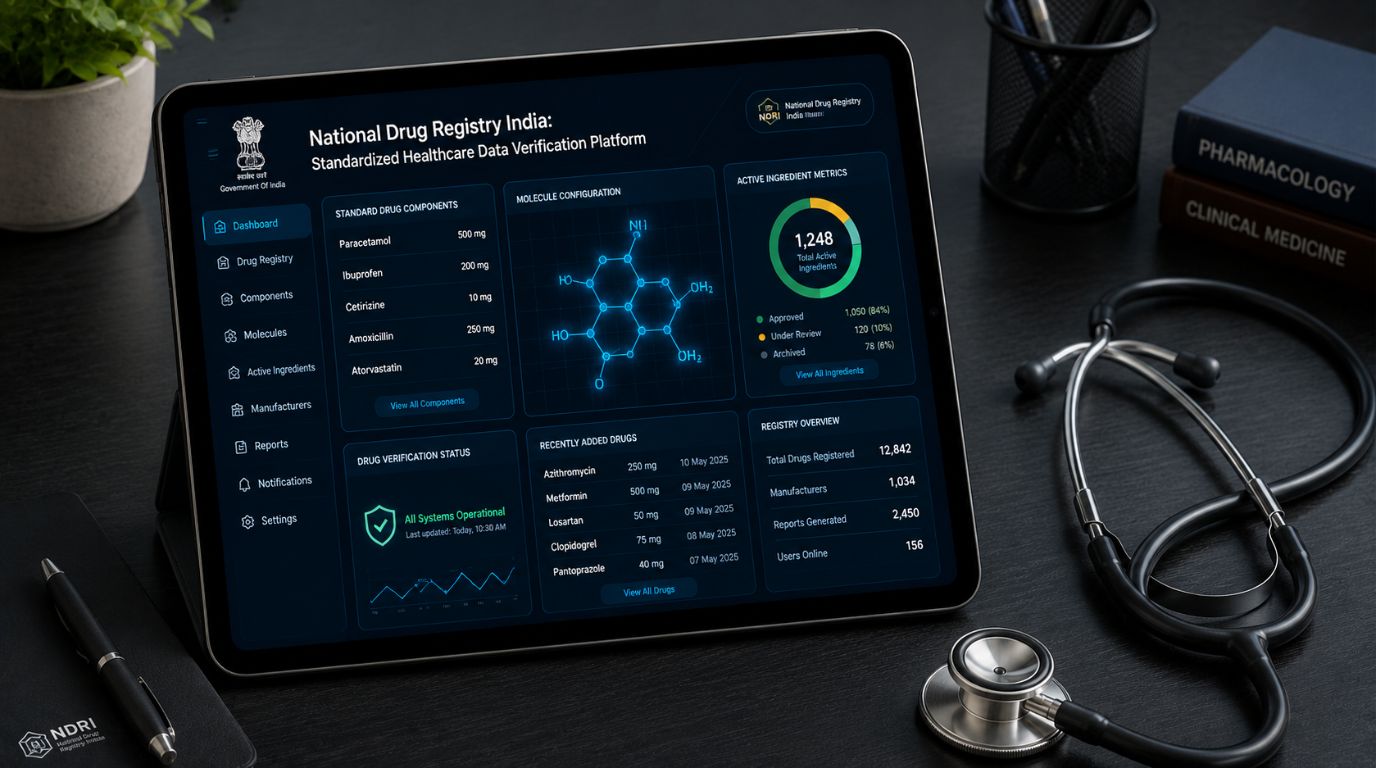

India’s Digital Medicine Database Could Quietly Transform Healthcare
Not every digital innovation makes headlines. Some don’t come with flashy AI announcements or billion-dollar valuations. Yet they have the potential to improve millions of lives.
The official launch of the newly standardized National Drug Registry India is one such initiative.
At first glance, it sounds like just another administrative government database. But look a little deeper, and you will realize that the National Drug Registry India is poised to become one of the most important building blocks of India’s digital healthcare ecosystem.
The Reality of the National Drug Registry India
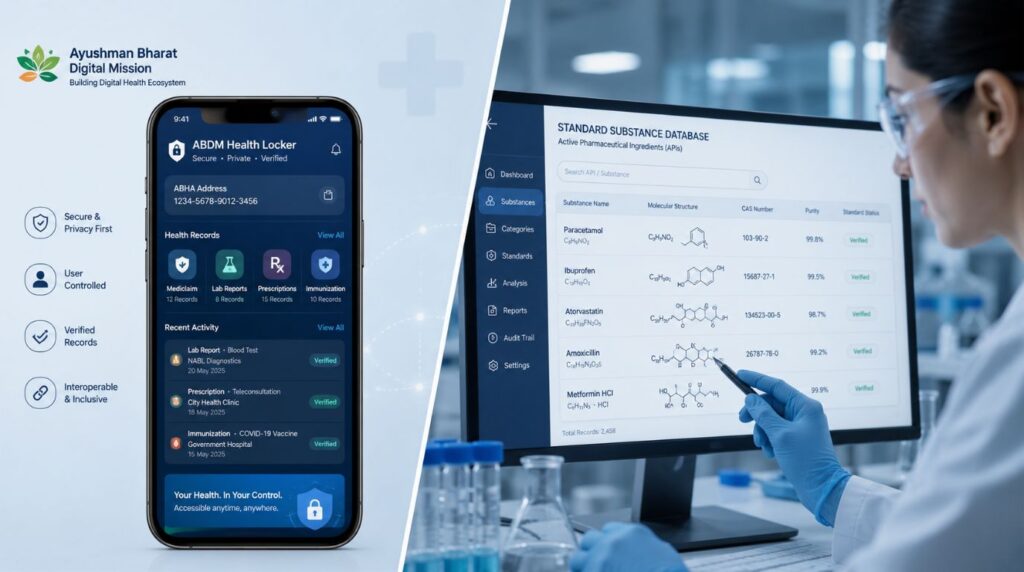
Launched as a central component of the Ayushman Bharat Digital Mission (ABDM) in 2026, the platform acts as the country’s first unified, authoritative single source of truth for pharmaceutical formulations.
Developed in collaboration with the Central Drugs Standard Control Organisation (CDSCO) and the National Resource Centre for EHR Standards (NRCeS) in Pune, the National Drug Registry India maps, validates, and indexes medical data using international SNOMED CT terminology.
One Medicine, Many Names
One of the biggest challenges in healthcare is surprisingly simple.
The same medicine is often listed under different brand names, generic names, abbreviations, or manufacturer-specific formats. For doctors, pharmacists, hospitals, insurers, and even patients, this creates confusion.
Sometimes it leads to duplicate records. Sometimes prescription errors. And in rare cases, incorrect medication.
Healthcare depends on accurate information, and inconsistent drug data has remained a persistent problem.
A Single Source of Truth
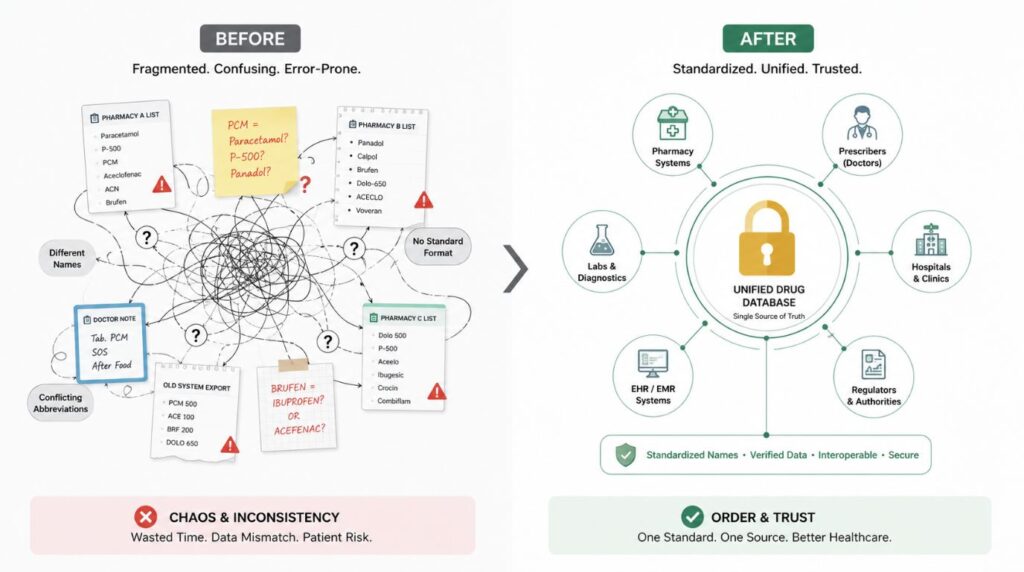
The National Drug Registry India solves this fragmentation by creating a standardized database where medicines can be cross-referenced using:
- Generic names
- Brand names
- Active chemical substances
- Verified manufacturers
Instead of fragmented information spread across multiple systems, healthcare providers now have access to a common reference point.
It may sound like a backend improvement, but backend improvements often create the biggest real-world impact.
Better Healthcare Through Better Data
Because the National Drug Registry India is built to integrate with modern clinical systems, hospitals, e-prescription platforms, and healthcare applications, the benefits flow down the entire value chain:
- Doctors can search and verify chemical alternatives faster, reducing clinical risk.
- Hospitals can automate inventory matching, lowering operational documentation errors.
- Pharmacists can identify safe, generic alternatives more accurately for cost-sensitive patients.
- Insurers can process claims with
$100\%$accuracy, eliminating long reimbursement disputes.
The patient may not even realize the National Drug Registry India exists, but they will benefit directly from fewer mistakes, faster treatment, and better continuity of care.
The Marketing Lesson
Digital transformation isn’t always about adding new features. Sometimes it’s about organizing existing information better.
Every successful digital ecosystem—whether it’s Google, Amazon, UPI, or healthcare—depends on clean, standardized, and reliable data. Without that foundation, even the smartest AI systems struggle.
Data quality has quietly become one of the most valuable competitive advantages.
My Take
Everyone talks about AI transforming healthcare. But AI is only as good as the data behind it.
A centralized medicine registry may not feel exciting today, but it’s exactly the kind of digital infrastructure that enables smarter healthcare tomorrow. If India wants to build world-class digital health services, standardized data isn’t optional. It’s essential.
The biggest health innovations of the next decade won’t begin with spectacular artificial intelligence models. They will begin with getting the basics right—and the implementation of the National Drug Registry India is an incredible step in that direction.
As the industry shifts, staying informed about the latest tech news is essential for anyone. Click through to read another thread!