
NGOs, Social Media & Transparency: A New Chapter Under FCRA Amendment Rules 2026
For years, social media has been treated as an optional communication channel by many NGOs. Some organisations actively share their work, while others barely post online. That is about to change.
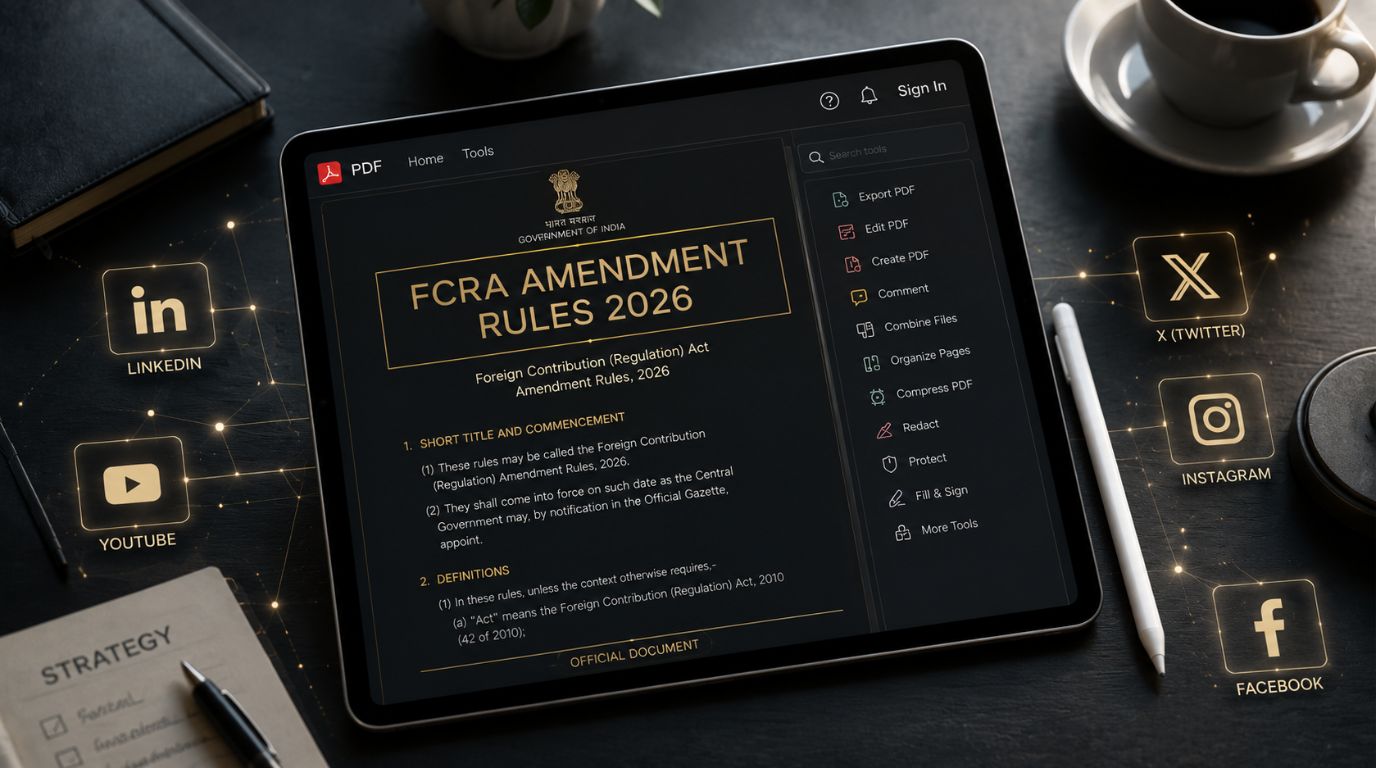
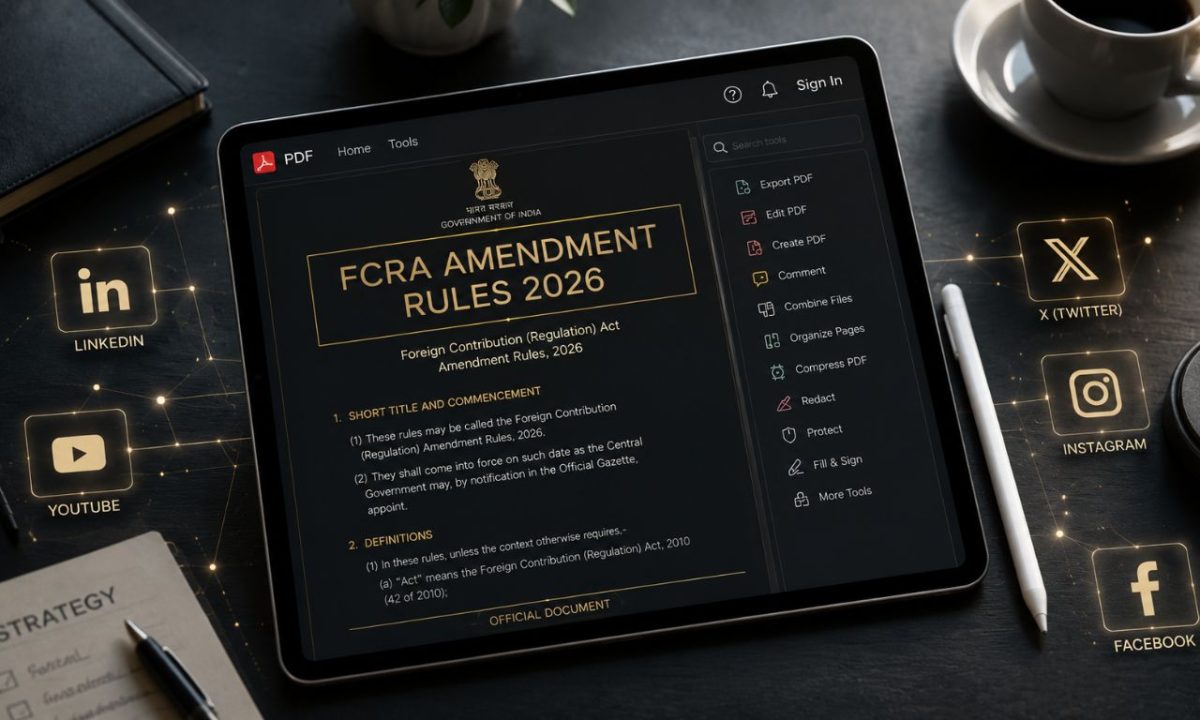
With the Ministry of Home Affairs (MHA) notifying the latest FCRA Amendment Rules 2026, digital presence has officially transitioned from a modern branding exercise to a critical administrative benchmark. Under the new guidelines, NGOs receiving foreign funds must mandatorily disclose their official websites, active social media accounts, and publications during registration, renewal, and annual filing.
At first glance, this may seem like another compliance requirement. But I believe it signals something much bigger—the beginning of digital accountability becoming as important as financial accountability.
The Rise of Digital Governance: Contextualizing the FCRA Amendment Rules 2026
Until now, an NGO’s impact has been measured through reports, audits, and on-ground work. Going forward, its digital presence will also become part of the compliance ecosystem.
Whether your organization communicates on Facebook, Instagram, LinkedIn, YouTube, or X, those channels are no longer just optional marketing tools. Under the FCRA Amendment Rules 2026, they are treated as public records of your organization’s daily activities.
That means NGOs will have to think more strategically about what they publish and how consistently they communicate.
Why This Matters
Trust has always been the biggest currency for non-profit organisations.
Donors want transparency.
Volunteers want credibility.
Government agencies want accountability.
A verified digital presence helps address all three.
For organizations genuinely creating real-world impact, the FCRA Amendment Rules 2026 present a massive opportunity. A well-designed website, an active social media feed, and a transparent digital portal are the ultimate tools to showcase:
- Live project progress and beneficiary testimonials.
- Open-source financial reporting and audits.
- Direct accountability to global and local stakeholders.
The organizations that view this shift as a path to build credibility—rather than a regulatory burden—will naturally attract more trust, funding, and partnerships.
But There Are Challenges Too
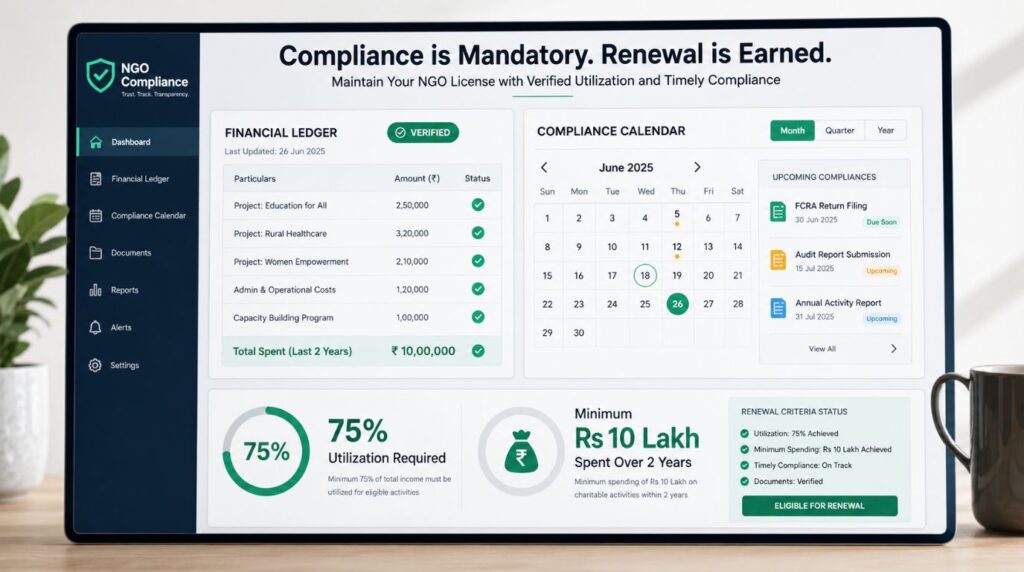
One of the most talked-about updates in the FCRA Amendment Rules 2026 is that organizations must now pay separate, individual fees for each category and State or Union Territory they choose to operate in.
Not every NGO has a dedicated marketing team.
Many smaller organisations operate with limited budgets and rely entirely on volunteers. For them, maintaining websites, managing social media, and ensuring regular updates could become an additional operational burden.
Several organisations have also expressed concerns that the revised rules increase compliance requirements, especially for NGOs working across multiple states.
The debate is understandable. The challenge will be finding the right balance between transparency and administrative complexity.
The Bigger Digital Shift

As someone who works in digital marketing, I find this development fascinating.
We’re witnessing a world where digital presence is no longer optional—not for businesses, educational institutions, political leaders, or even NGOs.
Your online identity is increasingly becoming your public identity.
The organisations that communicate consistently, document their work, and build trust online will naturally stand apart from those that don’t.
My Take
We are entering a new phase of digital existence where your online identity is your public identity.
Whether you are a startup business, a major corporation, or a grassroots non-profit, the internet is no longer a separate, lawless virtual space. The implementation of the FCRA Amendment Rules 2026 demonstrates that digital visibility is now a recognized pillar of regulatory governance.
For NGOs in $2026$, social media is no longer just a place to share smiling success stories. It is a structured platform for accountability, transparency, and public trust.
The organizations that adapt early, build secure owned platforms, and communicate with consistent authenticity won’t just survive the compliance wave—they will define the future of civil society.
As the industry shifts, staying informed about digital trends is essential for anyone. Click through to read another thread!