
The DGCA has asked domestic airlines to provide Wi-Fi connectivity to passengers on board. While only a limited number of aircraft currently offer this service, the regulatory direction is clear: in-flight wi-fi in India is transitioning from a premium luxury to a basic expectation.
I came across this news, and honestly, I think it is one of the most customer-friendly moves the Indian aviation sector has seen in years.
The Passenger Has Changed
A decade ago, air travel was about getting from Point A to Point B. Today, passengers want to remain connected throughout the journey.
We work from airports. We attend meetings from cabs. We order food from trains. We manage businesses from our smartphones. The only place where many of us are still forced into digital silence is the aircraft.
That gap feels increasingly outdated, and the wider rollout of in-flight Wi-Fi in India aims to solve this digital disconnect.
The Real Winner Is Productivity
As someone who spends a lot of time travelling, I can see the immediate benefits.
Imagine being able to:
- Reply to important emails mid-flight
- Attend a quick Zoom call
- Upload a presentation before landing
- Continue working on cloud-based tools
- Stay connected with family during longer journeys
For business travellers, a two-hour flight suddenly becomes productive work time rather than dead time. That’s a huge shift.
Why Deploying In-Flight Wi-Fi in India Is a Challenge
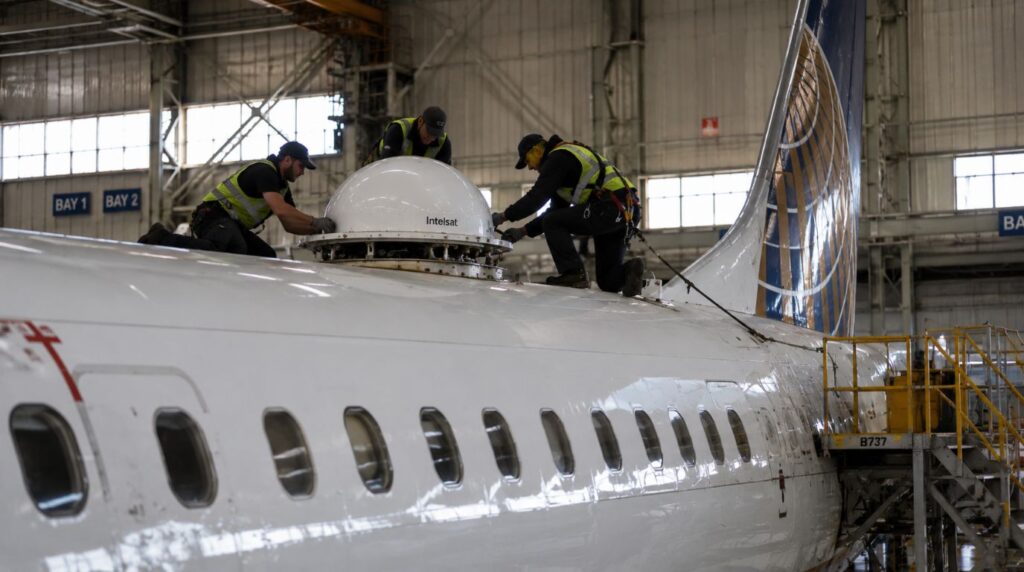
Of course, the airlines are not wrong. Retrofitting existing aircraft is expensive. Installing antennas, modifying aircraft structures, obtaining certifications, and temporarily removing planes from service all entail high costs.
For older aircraft, the economics may not always make sense. But every major technology upgrade has initially faced similar resistance.
A few years ago, USB charging ports were considered premium. Today, passengers expect them. The same thing happened with seat-back entertainment, mobile boarding passes, and digital check-ins. The implementation of in-flight Wi-Fi in India will likely follow the same path.
The Bigger Opportunity
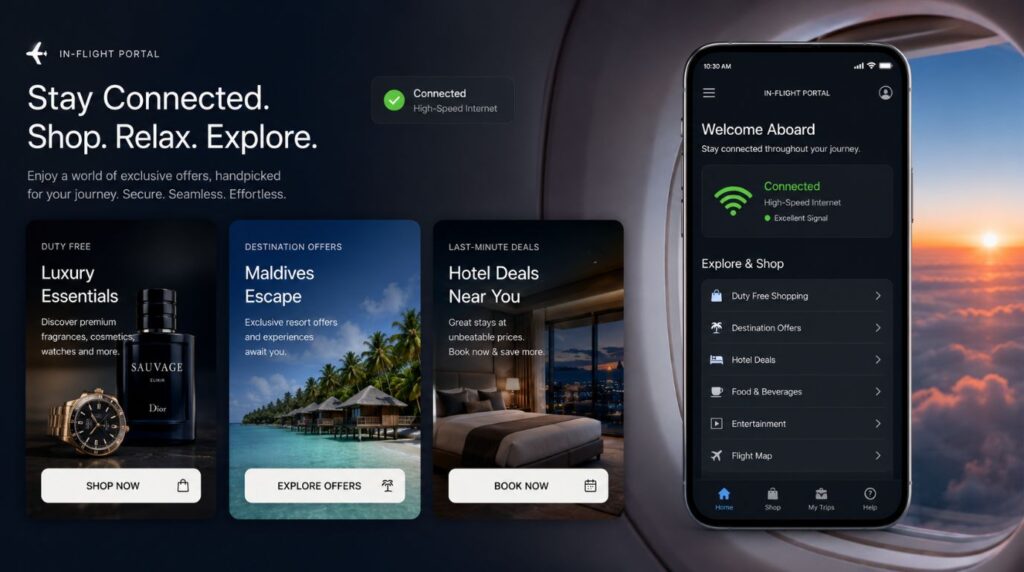
I think airlines may be looking at this from the wrong angle. Instead of seeing Wi-Fi as a cost, they should see it as a revenue opportunity.
The moment passengers come online through in-flight Wi-Fi in India, airlines gain an active, captive digital touchpoint. Connected passengers can:
- Purchase premium entertainment
- Shop during flights
- Upgrade services
- Access destination offers
- Engage with airline loyalty programmes
The moment passengers come online, airlines gain an entirely new digital touchpoint. That creates opportunities far beyond internet charges.
What This Means For Marketers
This is where things get fascinating. If in-flight Wi-Fi in India becomes standard across domestic fleets, the interior of an aircraft cabin effectively transforms into a premium, high-intent media channel.
Imagine:
- Destination-specific promotions
- Hotel offers before landing
- Tourism advertisements
- Duty-free recommendations
- Airline partner campaigns
The passenger is literally a captive audience sitting with a connected device. That’s valuable real estate for marketers.
My Take
I believe this is one of those structural upgrades that will feel expensive today but will be completely obvious in $5 from now.
Nobody asks whether airports should provide free Wi-Fi, and nobody debates whether a premium hotel should charge extra for internet access. Soon, nobody will ask whether aircraft should have Wi-Fi either. The internet has become a core utility of modern life, and consumers expect it wherever they are.
The airlines that embrace in-flight Wi-Fi in India early won’t just improve their customer satisfaction metrics; they will redefine what air travel looks like in the digital age. And as a frequent flyer, I am all for it.
As the industry shifts, staying informed about the latest tech news is essential for anyone. Click through to read another thread!